


Multiple sclerosis is a lifelong neurological condition affecting millions of people worldwide, and managing its symptoms remains one of the most significant challenges in modern neurology. For many patients, conventional medications offer only partial relief or cause side effects that reduce quality of life. That has driven surging interest in cannabis for multiple sclerosis therapy, as a growing body of clinical evidence now demonstrates that cannabinoids can meaningfully reduce two of the most debilitating MS symptoms: spasticity and chronic neuropathic pain. The research supporting multiple sclerosis for cannabis treatment has evolved dramatically over the past two decades, moving from anecdotal reports to well-controlled clinical trials and comprehensive systematic reviews.
The cannabis plant contains more than 60 biologically active cannabinoids, and scientific interest in their therapeutic potential has expanded rapidly alongside regulatory reform in the United States and internationally. Today, MS patients and their physicians have access to a range of cannabinoid formulations, from pharmaceutical-grade oromucosal sprays to state-dispensary products, and the science guiding their use has never been more robust.
This guide explores the history, science, clinical evidence, safety considerations, formulation options, and practical access pathways for cannabis in MS care. Whether you are a patient, caregiver, or clinician, understanding the current landscape of cannabis for multiple sclerosis treatment can help you make better-informed decisions about your health.
A Brief History of Cannabis in Medicine and Its Role in Multiple Sclerosis For Cannabis Treatment
The medicinal use of cannabis is far from a modern phenomenon. According to a review published, cannabis use in Western medicine dates back to the first half of the 19th century. Irish physician William Brooke O’Shaughnessy recommended it for a wide variety of therapeutic purposes, including muscle spasms, menstrual cramps, rheumatism, and convulsive disorders such as tetanus and epilepsy. French psychiatrist Jean-Jacques Moreau de Tours documented the plant as hypnotic, analgesic, and anticonvulsant following experiments on its therapeutic use in mental disorders.
By the second half of the 19th century, over 100 scientific articles had been published on the therapeutic value of cannabis, and cannabis extracts were listed for their sedative and anticonvulsant properties in both the British and United States pharmacopeia. However, the early decades of the 20th century saw declining medical interest due to the social stigma of recreational drug use and eventual prohibition. The discovery of the endocannabinoid system in the 1990s reignited scientific attention, and today the field of multiple sclerosis for cannabis research stands on decades of foundational pharmacological work.
The first endocannabinoid to be isolated was anandamide (AEA) in 1992, followed three years later by 2-arachidonoylglycerol (2-AG). The subsequent identification of CB1 and CB2 receptors, and the enzymatic pathways responsible for endocannabinoid synthesis and degradation, created a roadmap for understanding how plant-derived cannabinoids like THC and CBD interact with the human body. This breakthrough opened the door to systematic investigation of cannabinoids as therapeutic agents for neurological diseases including MS.
In addition to AEA and 2-AG, several other compounds with endocannabinoid-like activity were subsequently isolated, including 2-arachidonylglyceryl ether (noladin), O-arachidonylethanolamine (virodhamine), and N-arachidonyldopamine (NADA). The biochemical processes responsible for endocannabinoid synthesis and degradation were also identified: AEA is derived from the cleavage of N-arachidonoylphosphatidylethanolamine and hydrolyzed by phospholipase D, while 2-AG is primarily formed from the hydrolysis of 1,2-diacylglycerol by the phospholipase C and diacylglycerol lipase pathway. This detailed mechanistic understanding now serves as the scientific foundation for developing targeted therapeutic agents that modulate the ECS in MS.
Understanding Multiple Sclerosis and Why Symptom Management Remains So Challenging
| Symptom Category | Symptoms |
|---|---|
| Neurological & Cognitive | Fatigue, brain fog, slowed thinking, memory problems, difficulty concentrating, mood changes (depression, anxiety, irritability), emotional instability (pseudobulbar affect) |
| Vision Problems | Blurred vision, double vision, partial or complete vision loss (often one eye), pain with eye movement, optic neuritis, light sensitivity, difficulty distinguishing colors |
| Muscle & Movement | Muscle weakness, spasticity, muscle stiffness, spasms, cramping, tremors, poor coordination, balance problems, difficulty walking, paralysis (advanced cases) |
| Sensory Symptoms | Numbness, tingling, burning or stabbing nerve pain, electric-shock sensations (Lhermitte’s sign), reduced sensitivity to touch, heat, or cold, itching without rash |
| Bladder, Bowel & Sexual | Frequent urination, urinary urgency, incontinence, difficulty emptying bladder, constipation, bowel incontinence, sexual dysfunction (reduced sensation, erectile dysfunction, vaginal dryness) |
| Fatigue & Sleep Issues | Chronic fatigue, poor sleep quality, insomnia, restless legs syndrome, sleep disruption due to pain or spasms |
| Speech & Swallowing | Slurred speech, slow or unclear speech, difficulty swallowing (dysphagia), choking episodes |
| Heat Sensitivity | Symptom worsening with heat (Uhthoff’s phenomenon), intolerance to hot weather, baths, or fever |
| Pain-Related Symptoms | Neuropathic pain, trigeminal neuralgia, musculoskeletal pain, headaches |
| Other Symptoms | Dizziness, vertigo, hearing problems, seizures (rare), reduced endurance, changes in handwriting |
Multiple sclerosis is an immune-mediated inflammatory disease of the central nervous system (CNS). It affects approximately 2.3 million people worldwide and is the most common neurological disorder in young adults. Importantly, MS is more common in women than in men, with a prevalence ratio of approximately 3:1. Both genetic and environmental factors are believed to contribute to the onset and development of the disease.
MS is a chronic inflammatory condition characterized by demyelination of axons in the CNS. It gradually leads to progressive neurodegeneration that damages myelin, resulting in neuronal dysfunction and a broad spectrum of neurological symptoms that depend on the location and extent of lesions. According to the ASRA Pain Medicine News, spasticity and pain alone affect between 60% and 84% of all MS patients, and both are closely associated with impaired activities of daily living and reduced health-related quality of life.
Despite significant advances in disease-modifying therapies (DMTs) that slow MS progression, symptom management remains complex and often inadequate. Many patients require multiple pharmacological agents simultaneously, creating problematic polypharmacy. Even with opioids, muscle relaxants, benzodiazepines, and other agents, many patients continue to suffer. The International Journal of MS Care identified this unmet need as one of the primary drivers of growing medical cannabis adoption among MS patients.
The Most Disabling Symptoms That Multiple Sclerosis for Cannabis Therapy May Address
Neuropathic pain in MS arises from corticospinal disinhibition or chronic activation of nociceptive afferents. Spasticity results from damage to CNS pathways regulating muscle tone. Both are notoriously difficult to treat with conventional agents. Anti-spasticity medications like baclofen and tizanidine and analgesics including opioids are often only partially effective or poorly tolerated at doses sufficient to provide relief.
Beyond pain and spasticity, cannabis for multiple sclerosis research also addresses sleep disturbance, bladder dysfunction, tremor, fatigue, and depression. Each of these symptoms is highly prevalent in MS and associated with significant disability burden. The appeal of cannabinoid therapy lies in part in its potential to address multiple symptoms simultaneously, reducing the need for multiple separate medications.
The Science Behind Cannabis for Multiple Sclerosis Treatment: The Endocannabinoid System
How the Endocannabinoid System Relates to MS Pathophysiology
To understand why cannabinoids may benefit MS patients, it is essential to understand the endocannabinoid system (ECS). The ECS is a widespread signaling network that regulates inflammation, immune function, pain transmission, and neurological activity throughout the body. Research highlights the emerging role of the ECS in controlling both MS symptoms and disease progression. Studies have found dysregulation of the ECS in MS patients, which strongly supports a therapeutic rationale for cannabinoid use.
| Compound Name | Origin | Receptor Activity | Animal Model and Observed Effects |
|---|---|---|---|
| Δ9-THC | Phytocannabinoid | CB1R partial agonist | In EAE rats: amelioration of EAE progression. In CREAE mice: reduction of tremor and spasticity. |
| Δ8-THC | Phytocannabinoid | CB1R ligand | In EAE rats: amelioration of clinical manifestations of EAE. |
| WIN-55212 | Synthetic cannabinoid | CB2R agonist | In CREAE mice: reduction of tremor and spasticity. In TMEV-infected mice: improved motor function, stimulation of remyelination, reduced microglial activation, and decreased CD4+ T-cell infiltration. |
| JWH-133 | Synthetic cannabinoid | CB2R agonist | In CREAE mice: amelioration of tremor and spasticity. Intrathecal administration in EAE mice: dose-dependent reduction of mechanical and cold hypersensitivity without ataxia or sedation. |
| Methanandamide | Endocannabinoid | CB1R / CB2R agonist | In CREAE mice: amelioration of tremor and spasticity. |
| Palmitoylethanolamide (PEA) | Endocannabinoid | CB1R / CB2R agonist | In CREAE mice: transient inhibition of spasticity. |
| Arachidonyl-2-chloroethylamide (ACEA) | Synthetic cannabinoid | CB1R agonist | In TMEV-infected mice: improved motor function, stimulation of remyelination, reduced microglial activation, and decreased CD4+ T-cell infiltration. |
| JWH-015 | Synthetic cannabinoid | CB2R agonist | In TMEV-infected mice: improved motor function, stimulation of remyelination, reduced microglial activation, and decreased CD4+ T-cell infiltration. |
| O-1966 | Synthetic cannabinoid | CB2R agonist | In chronic EAE model: improved motor function; reduced leukocyte rolling and adhesion to pial microvasculature. |
| GP-1a | Synthetic cannabinoid | CB2R agonist | In EAE mice: reduced clinical scores and improved recovery. |
| Compound 21 | Synthetic cannabinoid | CB2R agonist | In EAE mice: reduced clinical scores and symptoms; decreased leukocyte infiltration and demyelination in spinal cord white matter. |
| PM-226 | Synthetic cannabinoid | CB2R agonist | In TMEV-infected mice: dampened neuroinflammation and reduced microglial activation. |
| Compound 57 | Synthetic cannabinoid | CB2R agonist | In EAE mice: alleviation of clinical symptoms; protection of CNS from immune damage; reduced leukocyte infiltration and demyelination. |
| VCE-004.8 | Synthetic cannabinoid | CB2R agonist | In EAE and TMEV models: immunomodulatory effects; inhibition of inflammatory cytokines, chemokines, and adhesion molecules (VCAM, ICAM-1); induction of hypoxia-inducible factor (HIF). |
| β-Caryophyllene (BCP) | Phytocannabinoid | CB2R agonist | Experimental evidence suggests anti-inflammatory and neuroprotective activity (effects under investigation in MS models). |
The two primary receptors of the ECS are CB1 and CB2. The CB1 receptor is present mainly in the CNS, including sensory neurons of the dorsal root and trigeminal ganglion, as well as immune system cells such as macrophages. CB1 plays a well-established role in modulating spasticity and is also responsible for cannabinoid-induced psychoactivity. CB2 receptors are located predominantly in peripheral tissues and immune cells, and are primarily involved in immunomodulation and anti-inflammatory signaling.
A key neuroprotective mechanism involves CB1 receptor activation regulating glutamate homeostasis. Glutamate is a critical mediator of neuronal and oligodendrocyte damage in MS, and CB1 receptor agonists exert direct neuroprotective effects by limiting glutamate release and the excitotoxic damage characteristic of several neurodegenerative disorders. Meanwhile, CB2 receptor activation in microglial cells has been demonstrated in preclinical models of MS to protect against inflammatory-induced CNS damage. The multiplicity of action of cannabinoids allows for simultaneous targeting of excitotoxicity via neuronal CB1R, toxic microgliosis via microglial CB2R, and trophic support to neurons via astroglial CB1R and CB2R.
THC vs. CBD: Distinct Mechanisms in Multiple Sclerosis for Cannabis Therapy
| Feature | Δ9-Tetrahydrocannabinol (THC) | Cannabidiol (CBD) |
|---|---|---|
| Psychoactivity | Psychoactive; primary intoxicating component of cannabis | Non-psychoactive |
| Primary Receptor Targets | CB1 and CB2 receptors (direct agonist activity) | Indirect modulation of CB1; minimal direct CB2 activity |
| Key Therapeutic Effects | Antinociceptive (pain relief), antispasmodic, muscle relaxation | Anti-inflammatory, antioxidative, neuroprotective, antipsychotic, antiemetic |
| Effect on MS Symptoms | Highly effective for pain and spasticity | Supports symptom control by reducing inflammation and neurodegeneration |
| Cognitive Effects | Can cause memory impairment, impaired attention, and slowed cognition | Does not impair cognition; may protect against cognitive decline |
| Psychotropic Side Effects | Euphoria, anxiety, psychotic-like symptoms at higher doses | Reduces THC-induced anxiety, psychosis, and memory impairment |
| Tolerability in MS Patients | Limited by psychoropic effects, especially in patients with baseline cognitive impairment | Well tolerated even at high doses (up to 1,500 mg/day) |
| Cardiovascular Effects | May alter heart rate and blood pressure | No significant effect on heart rate, blood pressure, or body temperature |
| Additional Mechanisms of Action | Primarily cannabinoid receptor–mediated | Interacts with serotonergic receptors and TRP channels (TRPV1, TRPM8, TRPA1) |
| Role in Combination Therapy | Provides strong symptom relief but with dose-limiting side effects | Enhances therapeutic effects of THC while mitigating adverse effects |
| Clinical Relevance | Effective but often requires careful dose management | Broadens therapeutic window and improves safety of THC-based treatments |
Delta-9-tetrahydrocannabinol (THC) is the primary psychoactive component of cannabis. It exerts antinociceptive and antispasmodic effects by binding CB1 and CB2 receptors. While highly effective for pain and spasticity, THC is responsible for euphoria, memory impairment, and other psychotropic effects that can limit tolerability, especially in MS patients who already experience cognitive impairment.
Cannabidiol (CBD) is non-psychoactive with a distinct pharmacological profile. According to a review published in Frontiers in Neurology, CBD is anti-inflammatory, antioxidative, antiemetic, antipsychotic, and neuroprotective. High doses up to 1,500 mg per day have been repeatedly shown to be well tolerated by humans without altering heart rate, blood pressure, or body temperature. Crucially, CBD may reduce the negative psychotropic effects, memory impairment, anxiety, and psychotic-like states associated with THC, while simultaneously enhancing its positive therapeutic actions through interactions at CB1 receptors in the CNS.
CBD also interacts with serotonergic receptors and channels of the Transient Receptor Superfamily (TRPV1, TRPM8, TRPA1), broadening its potential therapeutic profile beyond simple CB receptor binding. This multiplicity of action makes the combination of THC and CBD particularly attractive for cannabis for multiple sclerosis treatment, as it captures the benefits of both compounds while reducing adverse effects.
Emerging Targets: MAGL and FAAH Inhibitors in MS Research
Beyond direct CB receptor agonism, researchers are increasingly interested in modulating the ECS through enzyme inhibition. Monoacylglycerol lipase (MAGL) inhibitors and fatty acid amide hydrolase (FAAH) inhibitors both work by preventing the breakdown of endogenous cannabinoids, effectively amplifying the body’s own ECS signaling. AEA (arachidonoylethanolamine) reuptake inhibitors represent a third category of indirect ECS modulators. These targets are highlighted in the Medicines (Basel) University of Pisa review as new potentially viable therapeutic strategies for multiple sclerosis for cannabis research, offering the possibility of symptom management and neuroprotection without the psychoactive effects associated with direct THC administration.
What Clinical Trials and Systematic Reviews Say About Multiple Sclerosis for Cannabis Therapy
The Cochrane Systematic Review: Highest-Level Evidence
One of the most rigorous evaluations of cannabinoids for MS is the 2022 Cochrane systematic review published in the Cochrane Database of Systematic Reviews. This landmark review analyzed 25 randomized controlled trials (RCTs) involving 3,763 participants, of whom 2,290 received cannabinoids. Studies ranged from 3 to 48 weeks and included nabiximols (a 1:1 THC:CBD oromucosal spray), synthetic cannabinoids mimicking THC, oral THC extracts from Cannabis sativa, and inhaled herbal cannabis.
The findings for spasticity were compelling: nabiximols probably increases the number of people reporting an important reduction in perceived spasticity severity compared to placebo, with an odds ratio of 2.51 (95% CI 1.56 to 4.04; moderate-certainty evidence). In absolute terms, this translates to 216 more people per 1,000 reporting meaningful benefit with cannabinoids compared to placebo. For chronic neuropathic pain, only one small trial provided data, yielding very low-certainty evidence and highlighting the need for larger, better-designed studies. Overall, the Cochrane review found that cannabinoids may slightly increase treatment discontinuation due to adverse events, but the evidence for serious adverse events was of low certainty.
The Retrospective Study: Real-World MS Patient Outcomes
While RCTs provide the highest level of controlled evidence, real-world studies offer critical insights into how patients actually use and respond to medical cannabis. A retrospective review analyzed 141 MS patients receiving medical cannabis for symptom management at a large outpatient neurology practice in New York State. Patients were evaluated over up to four follow-up appointments after initiating cannabis therapy.
The results were notable. Pain was alleviated in 72% of patients, spasticity improved in 48%, and sleep quality improved in 40%. These are substantial proportions demonstrating cannabis’s potential to address multiple MS symptoms simultaneously. The study also found a significant reduction in concomitant opioid use, with a statistically significant decrease in daily morphine milligram equivalents (p = .01). This opioid-sparing effect carries significant public health importance. Reductions in muscle relaxant and benzodiazepine use were also observed, though these did not reach statistical significance. The most common adverse event was fatigue, reported by 11% of participants.
Key Randomized Controlled Trial Evidence
Prior RCTs have contributed substantially to the evidence base for cannabis for multiple sclerosis treatment. A double-blind, placebo-controlled study of oral cannabis extract containing combined THC and CBD in 279 MS patients found that those in the cannabis group experienced muscle stiffness relief at nearly twice the rate of the placebo group (29.4% vs. 15.7%). Pain relief rates were also higher in the cannabis group. Adverse events including dizziness, dry mouth, weakness, fatigue, and headache occurred in more than 10% of cannabis recipients but were mild to moderate in 95% of cases.
Another study enrolling 630 MS patients compared oral cannabis extract in a 2:1 THC:CBD ratio, THC alone, and placebo on spasticity and pain. While the Ashworth scale did not show a statistically significant overall spasticity effect, patient-reported outcomes for spasticity, pain, tremor, and bladder symptoms showed observable improvements. This distinction between objective clinical scales and subjective patient experience is important in chronic disease management, where quality of life endpoints often carry as much clinical weight as biomarker outcomes.
Cannabis Formulations and Routes of Administration for Multiple Sclerosis for Cannabis Treatment
Nabiximols (Sativex): The Most Studied MS-Specific Product
Nabiximols, marketed as Sativex, is the most rigorously studied pharmaceutical cannabinoid product for MS. The Medicines (Basel) University of Pisa review provides precise pharmaceutical detail: nabiximols is formulated as an oromucosal spray in an approximately 1:1 fixed ratio of THC and CBD. Each 1.0 mL of solution contains 27 mg of THC and 25 mg of CBD in an aromatized water-ethanol carrier. Sativex is available as 5.5 mL bottles delivering up to 48 sprays, or 10 mL bottles delivering up to 90 sprays. Each individual dose delivers 0.1 mL, providing 2.7 mg of THC and 2.5 mg of CBD.
Nabiximols was developed specifically in response to widespread anecdotal reports that cannabis helped MS-related symptoms. CBD was incorporated into the formulation not merely as an active ingredient but primarily to mitigate the adverse psychotropic effects of THC, improving tolerability. Sativex is approved for MS-related spasticity in Canada, the United Kingdom, Spain, Germany, and other European countries. Despite this international approval, it remains unavailable in the United States as of this writing.
FDA-Approved and Legally Available Cannabinoid Products
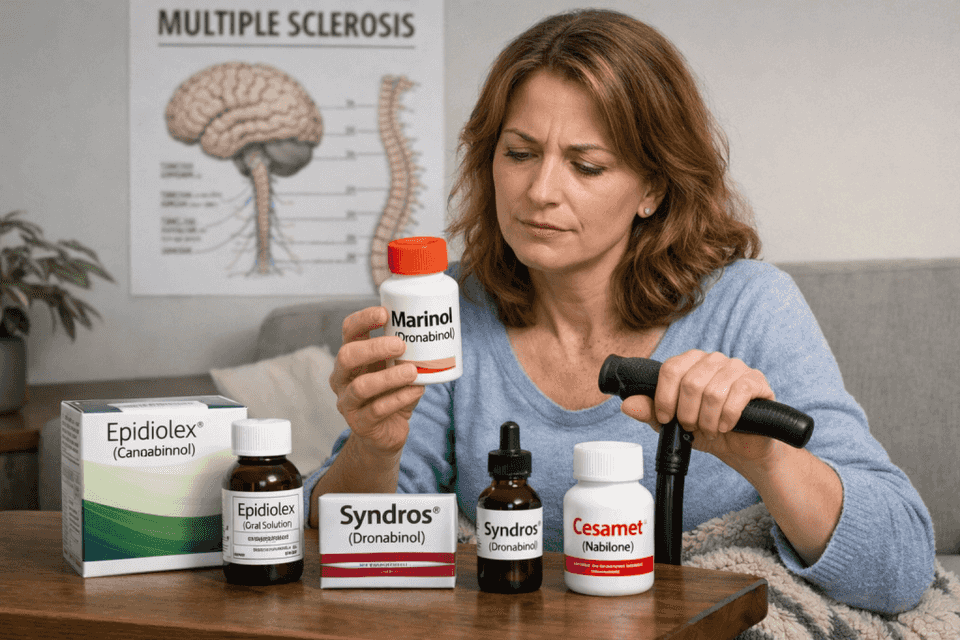
In the United States, the FDA-approved cannabinoid formulations include Epidiolex (cannabidiol oral solution, approved for certain epilepsy syndromes), and three synthetic cannabis-related products: Marinol (dronabinol capsules), Syndros (dronabinol oral solution), and Cesamet (nabilone capsules). None are specifically FDA-approved to treat MS symptoms, but physicians in states with active medical cannabis programs routinely certify MS patients to access state-dispensary products under qualifying condition provisions.
Dronabinol and nabilone are synthetic THC analogues with established anti-nausea and appetite-stimulating indications, but both also carry antispasmodic and analgesic properties relevant to MS. Off-label use of these agents for MS-related symptoms is practiced by cannabis-informed neurologists and pain specialists.
Delivery Methods and Patient-Centered Formulation Choices
One practical advantage of multiple sclerosis for cannabis therapy is the variety of available delivery methods. Patients can choose from inhalation (vaporizing or smoking), oral ingestion (oils, capsules, edibles), sublingual or oromucosal sprays, transdermal patches, and cannabinoid-infused foods. Each route has distinct pharmacokinetic properties: inhaled cannabis produces rapid onset within minutes but shorter duration, while oral products have slower onset (30 to 90 minutes) but longer-lasting effects.
Patient-specific factors should guide formulation selection. Patients with dysphagia or severe motor impairment may benefit from sublingual drops or cannabinoid-infused soft foods. Those seeking rapid relief from acute spasticity episodes may prefer inhaled or oromucosal products. Patients managing chronic neuropathic pain may prefer the sustained effect of oral formulations. This individualized approach is a genuine advantage of cannabis for multiple sclerosis treatment over more rigid pharmaceutical protocols.
THC:CBD Ratios: Clinical Implications for MS Patients
The ratio of THC to CBD in any given formulation has important clinical implications. High-THC products deliver stronger antispasmodic and analgesic effects but are more likely to produce psychoactive side effects. Balanced 1:1 THC:CBD products like nabiximols capture the benefits of both compounds while CBD’s modulating effect reduces THC-induced psychotoxicity. High-CBD, low-THC formulations are preferred for patients concerned about cognitive side effects or those with psychiatric vulnerabilities, though their evidence base for MS-specific endpoints is currently less robust than for THC-containing products.
Safety Profile and Potential Risks of Cannabis for Multiple Sclerosis Treatment
Common Adverse Events
While the therapeutic promise of cannabis for multiple sclerosis treatment is significant, a thorough understanding of its safety profile is essential for responsible clinical use. Across clinical trials and real-world studies, the most consistently reported adverse events include dizziness, dry mouth, fatigue, nausea, cognitive slowing, and occasionally headache or gastrointestinal discomfort. Most of these are dose-dependent and resolve with dose reduction or treatment discontinuation.
Fatigue requires particular attention in MS because it is already one of the most prevalent and disabling disease symptoms. In the IJMSC retrospective study, fatigue was the most frequently reported adverse event from medical cannabis, affecting 11% of participants. Dizziness is another concern in MS patients who already experience gait impairment and elevated fall risk. Baseline assessment of fall risk is advisable before initiating cannabis therapy, and dose escalation should proceed cautiously in patients with balance problems.
Cognitive Considerations
MS itself causes cognitive impairment in 40% to 65% of patients, and concerns exist that THC could exacerbate existing deficits. CBD appears to mitigate many of THC’s cognitive adverse effects, and the Frontiers in Neurology review confirmed that CBD does not negatively affect psychomotor or psychological functions. For patients with significant pre-existing cognitive impairment, low-THC or CBD-dominant formulations may be preferable. The MAGL and FAAH inhibitor approaches identified in emerging multiple sclerosis for cannabis research may eventually offer anti-spasticity and analgesic effects without any psychoactive component, representing an important future direction for cognitively vulnerable patients.
Drug Interactions and Contraindications
Cannabis can interact with several medications commonly used in MS. CBD is a known inhibitor of cytochrome P450 enzymes and may affect the metabolism of disease-modifying therapies, anticoagulants, and anticonvulsants. THC combined with CNS depressants including baclofen, benzodiazepines, and opioids may produce additive sedation. Patients and prescribers should conduct a thorough medication review before initiating any cannabis product. Absolute contraindications include active psychosis, schizophrenia or a first-degree family history of schizophrenia, pregnancy, breastfeeding, and severe cardiovascular disease. Relative contraindications include significant pre-existing cognitive impairment, history of cannabis use disorder, and adolescence.
Long-Term Safety and Dependence Risk
Cannabis use disorder has an estimated prevalence of approximately 9% among all cannabis users, with higher risk associated with daily use of high-THC products and early-life initiation. However, the risk profile in medical MS populations, typically older adults with established chronic disease using physician-supervised, pharmaceutical-grade formulations, is substantially lower than in recreational user populations. Regular reassessment of the ongoing clinical need for cannabis therapy and screening for signs of problematic use are nonetheless important components of responsible prescribing in multiple sclerosis for cannabis care.
Multiple Sclerosis for Cannabis: Who Uses It, Why, and What Outcomes They Report
How Widespread Is Cannabis Use Among MS Patients?
Cannabis use among MS patients is remarkably prevalent. The Frontiers in Neurology review cited a National Multiple Sclerosis Society web-based survey in which 66% of MS patients reported currently using cannabis for symptom treatment. The ASRA review separately cited a recent clinical study quantifying medical cannabis use for chronic pain among MS patients at 27%. In Canada, approximately 50% of MS patients indicated they would consider cannabis if legality and scientific evidence were clear.
These high prevalence rates signal significant dissatisfaction with conventional symptomatic management. Pain and spasticity are the dominant motivations for cannabis use in MS, followed by sleep improvement, bladder dysfunction, and anxiety. The breadth of symptoms that patients report treating with cannabis illustrates the appeal of a single therapeutic agent with multi-symptom potential in a population that already carries a heavy polypharmacy burden.
Pain Relief: The Primary Driver of MS Cannabis Use
Pain relief is the most commonly reported reason for seeking medical cannabis, across virtually all medical cannabis surveys and registries. Although cannabis is rarely positioned as a first-line analgesic in clinical guidelines, the reality of clinical practice is that large numbers of MS patients pursue it after failing or experiencing intolerable side effects from conventional pain medications. Multiple RCTs demonstrate that cannabis is effective for chronic pain reduction, though the number needed to treat tends to be higher than for other analgesics and effect sizes in individual studies have been modest.
The opioid-sparing effect documented in the IJMSC retrospective study reinforces the practical value of cannabis for multiple sclerosis therapy. A statistically significant decrease in daily morphine milligram equivalents after cannabis initiation represents a genuine improvement in patient safety, as long-term opioid use in chronic pain conditions carries well-documented risks including dependence, tolerance, hormonal disruption, immune suppression, and overdose mortality.
Sleep, Fatigue, and Quality of Life Benefits
Sleep disturbance is highly prevalent in MS and closely linked to both pain and spasticity. When these primary symptoms are better controlled overnight, sleep quality often improves as a meaningful secondary benefit. In the IJMSC retrospective study, 40% of patients reported improved sleep after initiating medical cannabis, making it the third most commonly reported benefit. Better sleep, in turn, has downstream benefits for daytime fatigue, cognitive function, mood, and overall quality of life. Since fatigue is itself one of the most disabling MS symptoms, this cascade of benefits makes multiple sclerosis for cannabis therapy particularly attractive in a holistic symptom management framework.
Regulatory Landscape: Accessing Medical Cannabis for Multiple Sclerosis
Legal Status Across the United States
Despite cannabis remaining a Schedule I controlled substance under federal law, the regulatory environment in the United States has shifted dramatically. As of the most recent data, 38 states have passed legislation permitting medical cannabis for MS patients. The Agriculture Improvement Act of 2018 removed low-THC hemp derivatives from the federal definition of marijuana, further easing CBD product access nationwide.
State programs vary in qualifying conditions, allowable product forms, possession limits, and dispensary regulations. However, MS is among the most universally accepted qualifying conditions across nearly all active state programs, reflecting the strength of clinical evidence and the severity of symptom burden. The National MS Society acknowledges the growing evidence base for cannabis in MS management and supports patients’ right to work with their physicians to access treatment options that may benefit their specific symptom profile.
How to Get a Medical Marijuana Card for MS
Obtaining a medical marijuana card for MS is considerably more accessible today than even a few years ago, largely due to telemedicine. Platforms like LeafyRx allow patients to book appointments, meet with licensed physicians via video or phone, and receive certification in minutes, all from the comfort of home. This is a genuine practical advantage for MS patients who may have mobility limitations, fatigue, or cognitive symptoms that make traveling to in-person clinics difficult.
The process at LeafyRx is straightforward: search for your state, book an appointment with a licensed doctor, complete your evaluation via phone or video call, and receive your certification once the state approves your registration. LeafyRx has served over 100,000 approved patients, offers the lowest costs in the US, and guarantees approval or your money back.
Understanding costs is an important part of planning. Medical marijuana card fees vary by state and typically include a physician consultation fee, a state registration fee, and sometimes an annual renewal cost. For a comprehensive breakdown of what to expect financially, the LeafyRx Medical Marijuana Card Costs guide provides detailed, state-by-state cost information to help patients budget appropriately before starting the process.
Ready to explore medical cannabis as part of your MS management plan? LeafyRx connects you with licensed physicians who can certify your eligibility for a medical marijuana card in minutes, from home. Join over 100,000 approved patients. Approved or your money back.
Timing: How Long Does the Process Take?
One question many MS patients have is simply: how long will this take? The answer depends on your state. Some states issue a digital confirmation immediately after physician approval, allowing same-day dispensary access. Others mail a physical card that may take several weeks to arrive. For state-specific timelines, the LeafyRx provides current estimates and state-by-state process details so patients know what to expect from application to first dispensary visit.
International Perspectives
Outside the United States, access to multiple sclerosis for cannabis treatment is most formalized in countries where nabiximols (Sativex) has received specific regulatory approval for MS-related spasticity. These include Canada, the United Kingdom, Spain, Germany, Denmark, and several other European nations. In Australia, the Therapeutic Goods Administration has produced structured clinical guidance for prescribers considering medicinal cannabis for MS, covering indications, dosing principles, monitoring requirements, and patient selection criteria.
The MS Society UK has acknowledged cannabis-based medicinal products as a legitimate option for spasticity management where other treatments have been inadequate. This growing international acceptance of cannabis for multiple sclerosis treatment reflects a broader paradigm shift in clinical neurology toward recognizing cannabinoids as a legitimate therapeutic class for complex neurological conditions.
Evidence Gaps and Future Research Directions in Cannabis for Multiple Sclerosis Science
What the Current Evidence Cannot Yet Tell Us
Despite a growing and increasingly robust body of research, several important evidence gaps remain in the field of cannabis for multiple sclerosis treatment. Most clinical trials have been relatively short in duration, typically 3 to 48 weeks, limiting conclusions about long-term safety and sustained efficacy. Sample sizes in individual trials have often been modest. The heterogeneity of cannabis products, doses, THC:CBD ratios, and delivery methods across studies makes direct comparison and synthesis challenging.
Clinical research describing optimal doses, THC to CBD ratios, and administration routes to relieve specific symptoms in MS patients remains limited. Most trials have focused on spasticity and pain, leaving a significant evidence gap regarding the effects of cannabis on other prevalent MS symptoms including fatigue, depression, bladder dysfunction, tremor, and cognitive dysfunction. Addressing these gaps will require larger, longer, well-powered clinical trials with standardized formulations and validated outcome measures.
There is also a lack of head-to-head comparative studies between different cannabinoid formulations, routes of administration, and THC:CBD ratios in MS populations. Currently, clinical decision-making on product selection relies heavily on pharmacological reasoning, patient preference, and limited indirect comparisons across separate trial populations rather than direct clinical evidence. Generating this type of comparative effectiveness data is an important priority for the next generation of cannabis for multiple sclerosis research.
Patient-reported outcomes and quality of life measures remain underutilized in published cannabis clinical trials relative to objective biomarker endpoints. Yet in chronic, progressive neurological diseases like MS, patient experience of symptoms is often the most clinically meaningful outcome. Future trial designs should prioritize patient-reported pain intensity, spasticity, fatigue, sleep quality, and global impression of change as primary endpoints, alongside functional measures like the Timed 25-Foot Walk test that have validated utility in MS clinical research.
Neuroprotection: The Most Promising Frontier
Perhaps the most scientifically exciting area of emerging multiple sclerosis for cannabis research is the potential neuroprotective role of cannabinoids. As detailed in the Medicines (Basel) University of Pisa review, the activation of CB1R provides neuroprotection by regulating glutamate homeostasis and limiting excitotoxic damage. CB2R activation in microglia protects against inflammatory CNS injury. CBD has well-established anti-inflammatory and antioxidative properties that, in theory, could slow CNS damage progression in MS.
Animal models of MS have shown that cannabinoids can reduce inflammatory markers, modulate microglial activation states (M1 versus M2), and protect myelin. Translating these preclinical findings to human clinical trials has proven challenging. No rigorous RCT has yet demonstrated a disease-modifying or unequivocal neuroprotective effect of cannabinoids in MS patients. However, emerging enzyme-targeting strategies, including MAGL inhibitors and FAAH inhibitors that amplify endogenous cannabinoid signaling, represent potentially cleaner and more targetable therapeutic approaches than broad-spectrum plant extracts.
Personalized Medicine and Biomarkers
Another frontier in cannabis for multiple sclerosis research is personalized medicine. Given the substantial individual variability in cannabinoid response, approaches that can predict which patients will respond to which formulations and doses based on genotype, baseline endocannabinoid tone, or specific symptom phenotype would substantially improve clinical outcomes. Pharmacogenomic research exploring how cytochrome P450 variants affect cannabinoid metabolism, and how endocannabinoid receptor polymorphisms affect treatment response, is still in early stages but holds considerable promise.
Practical Guidance for MS Patients Considering Medical Cannabis
| Category | Key Points / Recommendations |
|---|---|
| Conversation with Neurologist | - Open, evidence-based discussion is first step- Be prepared with symptom goals: reduce spasticity, lower opioid burden, improve sleep- Bring supporting evidence (e.g., Cochrane review, IJMSC study)- Emphasize cannabis as symptomatic management, not a cure or DMT replacement- Highlight patient autonomy and collaborative care |
| Setting Realistic Expectations | - ~25–33% of patients experience meaningful spasticity or pain relief- Not all patients will respond; individual variability is high- Start with low doses and titrate gradually while monitoring benefits and side effects |
| Combination Therapy | - Cannabis is more effective alongside other MS interventions- Include physical therapy, occupational therapy, cognitive rehabilitation, and psychological support- Cannabis should not replace other therapies entirely |
| Product & Formulation Selection | - New users: oral or sublingual products with balanced/moderate THC:CBD ratio- CBD-dominant products for THC-sensitive or cognitively vulnerable patients- Oromucosal sprays may provide consistent dosing for spasticity- Use baseline long-acting oral products + fast-acting rescue products for breakthrough symptoms |
| Symptom Tracking | - Keep a symptom diary during initial therapy weeks- Record pain, spasticity, sleep quality, and overall symptom response- Work with cannabis-informed pharmacists to match products to symptom profile |
| Monitoring & Adjustment | - Regular follow-ups with prescriber to assess effectiveness and side effects- Adjust dose, formulation, or THC:CBD ratio as needed- Use patient-reported outcome measures: numeric rating scales, sleep quality questionnaires, MS QoL instruments- Iterative optimization is standard for responsible prescribing |
| Comprehensive Care Integration | - Cannabis therapy is most effective as part of multimodal symptom management- Combine with physical therapy, CBT, sleep hygiene, and ongoing DMTs- Supports holistic symptom improvement and maximizes overall patient benefit |
Having the Conversation with Your Neurologist
The first step for any MS patient interested in cannabis therapy is an open conversation with their treating neurologist or physician. While the evidence base for multiple sclerosis for cannabis has grown substantially, some clinicians remain cautious, partly due to limited long-term data and partly due to the patchwork regulatory environment. Patients who come to these conversations well-prepared, with specific goals (reducing spasticity, reducing opioid burden, improving sleep) and supporting evidence (citing the Cochrane systematic review or the IJMSC retrospective study), are more likely to have productive discussions grounded in evidence rather than stigma.
It also helps to clarify what cannabis therapy is and is not. It is not a cure for MS, and it is not expected to replace disease-modifying therapy. It is a legitimate symptomatic management option with a meaningful evidence base that, for many patients, can reduce the overall medication burden while improving quality of life. Framing the conversation in these terms, and acknowledging the patient’s preference for autonomy in their own care, tends to generate more collaborative and constructive clinical dialogue.
Setting Realistic Expectations
Clinical trial data suggest that roughly one in four to one in three patients who try cannabinoids will experience a meaningful reduction in spasticity, and similar proportions will achieve pain relief. These are meaningful response rates for a notoriously difficult-to-treat condition, but they also mean that a substantial proportion of patients may not respond. Starting with low doses and titrating upward gradually, while monitoring carefully for both benefit and adverse effects, is the standard approach in most clinical guidance on cannabis for multiple sclerosis treatment.
Combination therapy, using medical cannabis alongside other pharmacological and non-pharmacological MS interventions, is generally more effective than attempting to replace other treatments with cannabis entirely. Physical therapy, occupational therapy, cognitive rehabilitation, and psychological support all remain important pillars of comprehensive MS care alongside any cannabinoid regimen.
Choosing the Right Product and Formulation
For most MS patients new to medical cannabis, starting with an oral or sublingual product containing a balanced or moderate THC:CBD ratio is a reasonable approach. These formulations provide controllable, consistent dosing with more predictable onset than inhaled products. Patients particularly sensitive to THC, or those with cognitive or psychiatric vulnerabilities, may prefer CBD-dominant formulations.
Keeping a symptom diary during the initial weeks of cannabis therapy helps both the patient and prescriber evaluate whether the treatment is providing meaningful benefit and whether adjustments to dose, ratio, or formulation are warranted. Working with a cannabis-informed dispensary pharmacist can also assist in selecting products that match your specific symptom profile and MS history.
Patients who are using cannabis primarily for spasticity management may find that oromucosal spray products deliver a more reliably consistent dose than raw plant products available at dispensaries, whose cannabinoid concentrations can vary between batches. For those managing breakthrough pain or acute spasms, having both a longer-acting oral baseline product and a faster-acting inhaled or sublingual rescue product may provide the most flexible and complete symptom coverage throughout the day.
Monitoring Progress and Adjusting Over Time
Medical cannabis treatment in MS is not a set-and-forget therapy. Because multiple sclerosis for cannabis therapy is highly individualized, regular follow-up with your prescribing physician is important. At each follow-up, your physician should assess whether you are achieving meaningful symptomatic improvement, whether you are experiencing adverse effects, and whether your dose or formulation should be adjusted. This iterative process of dose titration and product optimization is a standard part of responsible cannabinoid prescribing.
Patient-reported outcome measures, such as numeric rating scales for pain and spasticity, sleep quality questionnaires, and standardized MS quality of life instruments, can provide objective anchors for these conversations. If you are not achieving meaningful benefit after an adequate trial at an optimized dose, your prescriber may recommend switching formulations, adjusting the THC:CBD ratio, or trying a different delivery method before concluding that cannabis therapy is not effective for your particular symptom profile.
It is also worth noting that cannabis for multiple sclerosis therapy tends to be more effective as part of a comprehensive, multimodal symptom management plan. Integrating cannabis with physical therapy for spasticity, cognitive behavioral therapy for pain catastrophizing, sleep hygiene interventions for insomnia, and ongoing disease-modifying treatment for MS progression maximizes the overall benefit that any individual component, including cannabis, can deliver.
If you are ready to take the next step, getting your medical marijuana card has never been easier. LeafyRx offers same-day appointments with licensed doctors, a money-back guarantee, and the lowest card costs in the US. Over 100,000 patients trust LeafyRx. Start your evaluation today and find out if medical cannabis is right for your MS care.
The Role of Telehealth in Expanding Multiple Sclerosis for Cannabis Access

Telehealth has transformed medical cannabis access across the United States. Before telemedicine platforms became widespread, obtaining a medical marijuana card often required in-person visits to specialized clinics, long waits for appointments, and geographic constraints that shut out patients in rural or underserved areas. Today, platforms like LeafyRx enable patients to book appointments, consult with licensed physicians via phone or video call, and receive their certifications entirely online, often within minutes of completing their evaluation.
For MS patients specifically, this access model is especially valuable. Mobility impairment, severe fatigue, and cognitive symptoms frequently make travel to medical offices challenging or impossible for people living with MS. The ability to complete a medical cannabis evaluation from home, on a schedule that accommodates disability-related limitations, removes a significant practical barrier that has historically prevented eligible patients from accessing legal treatment options.
All communications and health data on platforms like LeafyRx are processed in compliance with HIPAA standards, ensuring that sensitive patient information is protected throughout the certification process. With over 100,000 patients served, a physician-verified approval process, and a satisfaction guarantee, LeafyRx has established itself as a trusted, accessible partner for MS patients navigating the process of obtaining legal access to multiple sclerosis for cannabis treatment.
Beyond the initial certification, telehealth platforms also reduce friction around annual renewals, which most states require to maintain a valid medical marijuana card. Rather than scheduling an in-person appointment and traveling to a clinic each year, MS patients can complete their renewals from home in the same streamlined process as their initial certification. This ongoing convenience is particularly valuable for patients whose MS symptoms fluctuate over time, since the ability to travel independently may change with disease course.
Telehealth has also created a more equitable access landscape for cannabis for multiple sclerosis therapy. Rural MS patients who previously faced geographic barriers to cannabis-informed physicians now have the same access as patients in major metropolitan centers. For a disease that does not discriminate based on geography or socioeconomic background, this leveling of the access landscape represents a meaningful public health advance in delivering evidence-based symptom management to all MS patients who may benefit.
Summary
The evidence base for cannabis for multiple sclerosis treatment has grown substantially over the past two decades. From the foundational pharmacology of the endocannabinoid system established in the 1990s, to basic science demonstrating CB1R-mediated neuroprotection against glutamate excitotoxicity, to large-scale Cochrane reviews demonstrating moderate-certainty evidence for nabiximols in spasticity, to real-world retrospective data showing multi-symptom relief and opioid-sparing effects in clinical practice, the scientific and clinical case for considering cannabinoids in MS symptom management has never been stronger.
The historical context provided by the University of Pisa’s Medicines (Basel) review reminds us that cannabis has a 200-year documented history in Western medicine and that its current therapeutic application in MS represents a scientifically grounded continuation of that history, not a novel experiment. The endocannabinoid system’s central role in regulating the very pathological processes that drive MS, from neuroinflammation to excitotoxicity to spasticity, provides a compelling biological rationale for cannabinoid therapy that extends beyond symptom suppression to potential neuroprotection.
For many MS patients, particularly those with refractory pain and spasticity who have not achieved adequate relief from conventional medications, multiple sclerosis for cannabis therapy represents a legitimate, increasingly well-evidenced, and legally accessible option. With expanding state-level access, growing telehealth infrastructure, and a solid and evolving research base, cannabis is moving from the margins of MS care into a recognized component of comprehensive, personalized symptom management.





 Ask ChatGPT
  Ask Claude
  Ask Perplexity