
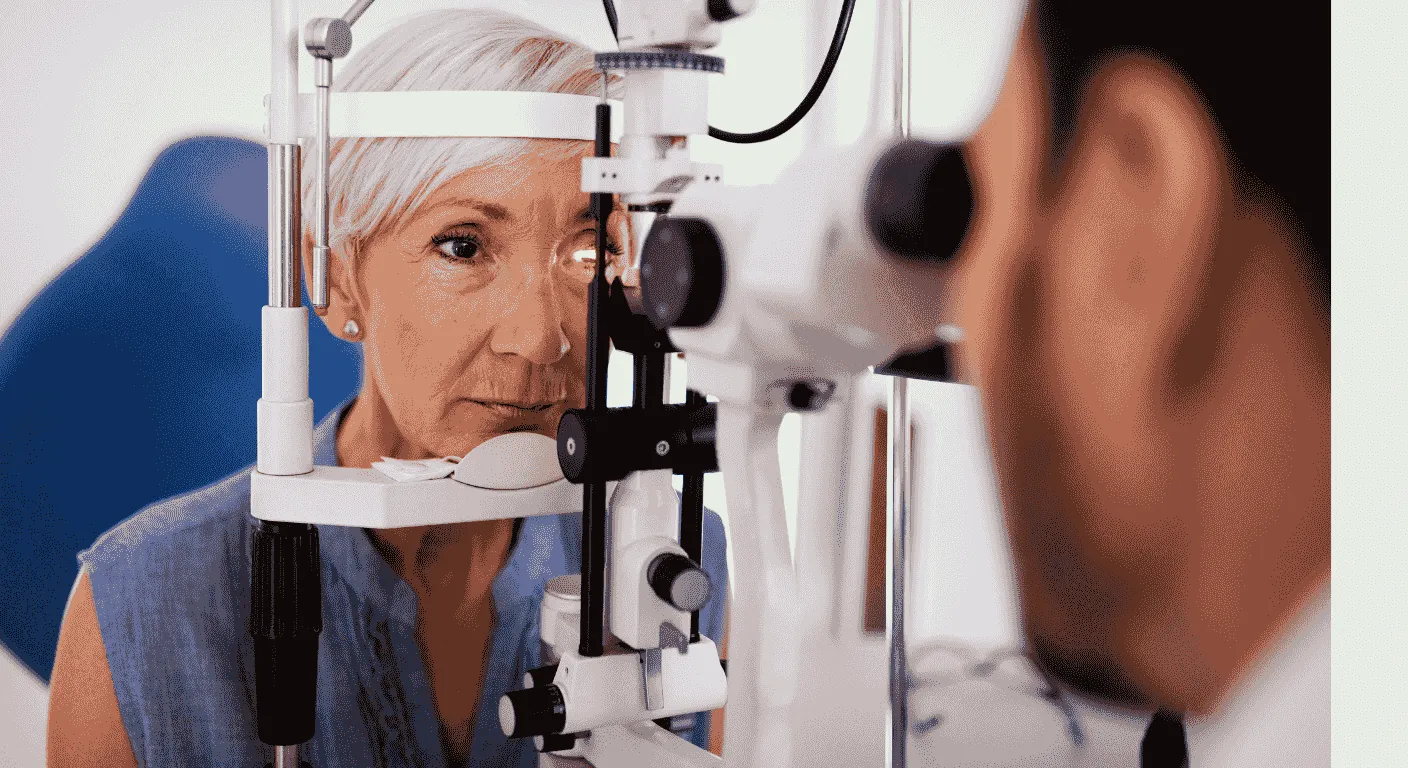

Marijuana For Glaucoma: Can Cannabis Really Treat Glaucoma and Lower Eye Pressure?
The relationship between marijuana for glaucoma treatment has been a topic of serious scientific and clinical debate for more than five decades. Since the early 1970s, when researchers first observed that smoking cannabis could reduce intraocular pressure (IOP), the idea of using marijuana for glaucoma has captured the imagination of patients, advocates, and clinicians alike. Today, as more U.S. states legalize medical cannabis and glaucoma remains one of the leading causes of irreversible blindness worldwide, understanding whether cannabis offers a genuine therapeutic option for glaucoma patients is more important than ever.
This comprehensive guide covers everything you need to know about marijuana for glaucoma research, from the biology of how cannabinoids affect eye pressure to the legal landscape of obtaining a medical marijuana card, the attitudes of specialists, and the limitations that current science has identified. Whether you or a loved one has glaucoma and is curious about cannabis as a treatment option, or you simply want to understand the evidence, this article will walk you through the full picture.
What Is Glaucoma and Why Does Intraocular Pressure Matter?
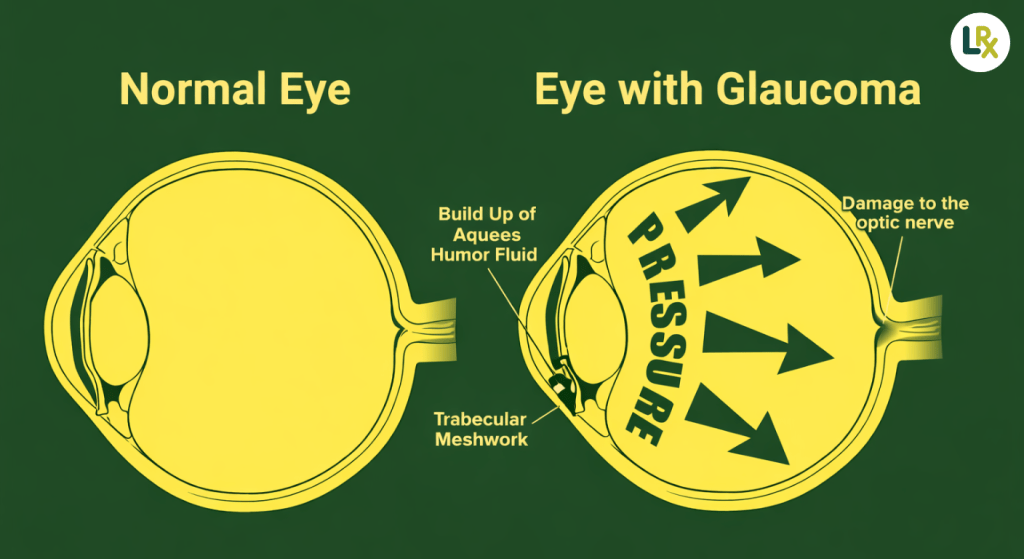
Glaucoma is a group of eye conditions that damage the optic nerve, which carries visual information from the eye to the brain. Research published in JAMA Ophthalmology describes glaucoma as resulting in the progressive degeneration of retinal ganglion cells and their axons, ultimately leading to irreversible vision loss if left untreated. It is estimated that glaucoma affects more than 70 million people worldwide, making it one of the top causes of blindness globally.
The most common form, primary open-angle glaucoma (POAG), is characterized by the slow, painless loss of peripheral vision over time. Elevated intraocular pressure is the most significant and modifiable risk factor for glaucoma progression. A literature review published in the Dalhousie Medical Journal explains that POAG involves the loss of retinal ganglion cells secondary to optic neuropathy, and that most available treatments focus on decreasing IOP to slow or prevent disease progression.
The eye constantly produces and drains a fluid called aqueous humor. When the drainage system does not work properly, fluid builds up and IOP rises. Sustained elevated pressure compresses and damages the optic nerve fibers. Current FDA-approved glaucoma therapies, including topical prostaglandin analogs, beta-blockers, carbonic anhydrase inhibitors, and surgical options such as trabeculectomy, all target IOP reduction. The question that has intrigued researchers for decades is whether marijuana can perform the same function and whether it can do so safely and sustainably.
The History of Marijuana for Glaucoma Research
The story of marijuana and glaucoma begins in 1971, when researchers first documented that smoking cannabis could lower IOP in humans. As detailed in Glaucoma Today, the medical marijuana revolution for glaucoma gained its most famous moment in 1974, when Robert Randall, a 26-year-old man with advanced, poorly controlled glaucoma, observed that the halos around lights caused by his elevated IOP disappeared after he smoked marijuana. Facing federal criminal charges for growing marijuana to relieve his symptoms, Randall won a landmark court case by successfully arguing that his marijuana use was a medical necessity. His case became one of the earliest legal precedents recognizing therapeutic cannabis use in the United States.
Following Randall’s case, research into cannabis and glaucoma expanded through the late 1970s and 1980s. Delta-9 tetrahydrocannabinol (THC) was identified as the primary psychoactive component responsible for IOP reduction. The plant itself contains more than 400 chemicals, most of which are related compounds called cannabinoids, and researchers began investigating not only THC but also cannabidiol (CBD) and synthetic cannabinoid analogs as potential glaucoma treatments.
A landmark editorial published in Archives of Ophthalmology, reviewed the scientific foundation of the marijuana-glaucoma relationship. This editorial helped set the stage for the modern evidence base by emphasizing that while IOP reduction was real, multiple limitations prevented cannabis from being a practical first-line therapy. The same year, Green (1998) in Archives of Ophthalmology argued that marijuana smoking as a glaucoma treatment was undesirable for several clinical and practical reasons, helping frame the debate that persists to this day.
How Does Marijuana Lower Intraocular Pressure? The Science Behind Cannabis for Glaucoma
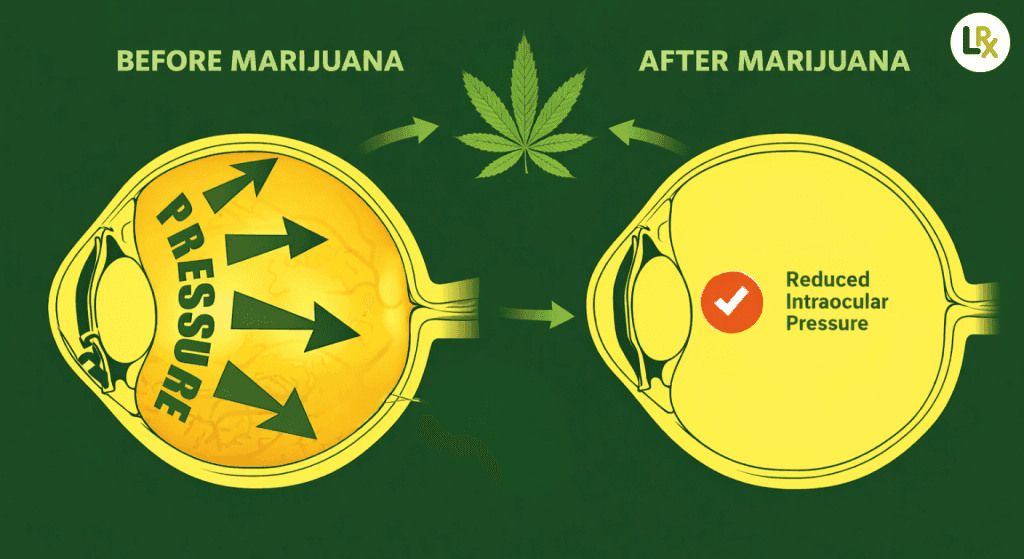
Understanding the biological mechanism by which cannabis for glaucoma works requires a brief look at the endocannabinoid system. The human body contains cannabinoid receptors (CB1 and CB2) distributed throughout many tissues, including the eye. Cannabinoid receptors have been found in the trabecular meshwork, nonpigmented ciliary epithelium, and ciliary muscle of human eyes, which are exactly the structures involved in aqueous humor production and drainage.
When THC binds to these ocular cannabinoid receptors, it appears to reduce IOP through at least two mechanisms: improving uveoscleral outflow (a secondary drainage pathway for aqueous humor) and potentially reducing aqueous humor production. Synthetic cannabinoids have also been reported to decrease aqueous humor production in animal studies. Additionally, some cannabinoids may have neuroprotective properties through inhibition of glutamate release or by blocking glutamate receptors, as well as antioxidant and vasorelaxing properties, which could theoretically benefit the optic nerve directly.
The Yale Journal of Biology and Medicine, conducted a thorough review of medical marijuana’s benefits and shortcomings in glaucoma treatment. Their review summarized evidence showing that marijuana and THC can lower IOP in approximately 60 to 65 percent of both normal individuals and patients with glaucoma. The mean IOP reduction in one study was approximately 25 percent. This effect has been reported when the drug is smoked or ingested, and when THC is inhaled, administered orally, sublingually, or intravenously.
However, the duration of action is a critical limitation: the IOP-lowering effect lasts only about 3 to 4 hours. There appears to be a dose-response relationship between the amount of marijuana consumed and the degree of IOP reduction, but the duration of efficacy does not improve at higher doses. Topical administration of THC directly to the eye does not lower IOP, largely because THC is highly lipophilic (fat-soluble) and cannot be effectively delivered in a water-based eye drop vehicle.
What the Clinical Trials Say About Marijuana for Glaucoma Treatment
Multiple clinical studies have evaluated marijuana for glaucoma treatment, and while the results confirm IOP-lowering effects, they also consistently reveal significant limitations. The Yale Journal of Biology and Medicine reviewed herbal medicines in glaucoma treatment and confirmed that medical marijuana is among the most commonly used medicinal plants by glaucoma patients, yet noted that its clinical utility is constrained by major practical and safety concerns.
A randomized controlled trial evaluating oral THC found that all subjects experienced adverse effects that, in many cases, masked any therapeutic benefit. The Dalhousie Medical Journal review included five randomized controlled trials as the best available evidence, each comparing cannabis to placebo using different routes of administration. All five studies confirmed IOP-lowering effects, but with variable results and notable side ffects across different administration methods. Topical cannabinoid formulations showed particularly inconsistent outcomes, with some placebo-controlled studies showing no IOP reduction at all, while both the placebo and the drug caused significant ocular irritation
One particularly important finding concerns tolerance development. At least one study demonstrated significant development of tolerance to the ocular hypotensive effects of marijuana with chronic use, meaning that the IOP-lowering benefit diminishes over time as the patient uses cannabis regularly. This is a serious concern for a chronic condition like glaucoma that requires consistent, long-term management.
The Problem With Short Duration of Action in Marijuana for Glaucoma Therapy
The 3 to 4-hour duration of IOP reduction is perhaps the single greatest practical obstacle to using marijuana for glaucoma as a primary therapy. Glaucoma management requires consistent 24-hour control of intraocular pressure, since pressure spikes at any time of day or night can damage the optic nerve. To maintain continuous IOP reduction using cannabis, a patient would need to smoke 8 to 10 marijuana cigarettes every day, around the clock, including during sleep hours.
No current dispensary product, delivery route, or cannabis formulation has been shown to extend this duration of action to a clinically useful window. By contrast, a single daily dose of a prostaglandin analog eye drop can lower IOP for 24 hours with minimal systemic side effects. This pharmacokinetic mismatch between the needs of glaucoma management and what cannabis can provide remains a fundamental barrier to its adoption as standard therapy.
Does Glaucoma Qualify You for a Medical Marijuana Card?
Glaucoma is a recognized qualifying condition in many U.S. states. If you have glaucoma and want to explore whether medical cannabis is right for you, LeafyRX connects you with licensed physicians in minutes from the comfort of your home. Join over 100,000 approved patients.[Get Your Medical Marijuana Card at LeafyRX](https://patient.leafyrx.org/register)
Side Effects and Health Risks of Using Marijuana for Glaucoma
The side effect profile of cannabis is a critical consideration when evaluating it as a marijuana for glaucoma treatment. The drug affects many body systems beyond the eye, and several of these systemic effects are especially concerning for glaucoma patients.
The most clinically significant cardiovascular effect is a combination of tachycardia (rapid heart rate) and decreased blood pressure following cannabis use. For glaucoma patients, this is particularly dangerous: a drop in systemic blood pressure reduces blood flow to the optic nerve, which is already compromised by elevated IOP and structural damage. Reduced ocular perfusion pressure may independently accelerate optic nerve damage, counteracting whatever IOP-lowering benefit the cannabis provides.
Additional documented side effects of marijuana relevant to glaucoma patients and general users include cognitive impairment, psychomotor slowing, anxiety, paranoia, dry mouth, red eyes (conjunctival injection), dizziness, and mood disturbances. Long-term heavy use is associated with chronic obstructive pulmonary disease (COPD) and potential increased risk of lung cancer when smoked. Additivity with other glaucoma medications, drug-drug interactions, carcinogenicity, teratogenicity, and penetration into breast milk have not been fully studied, making it difficult for clinicians to counsel patients comprehensively.
A 2021 study published in Ophthalmology Glaucoma found that online discussions often highlighted perceived benefits while underrepresenting these serious risks, contributing to widespread patient misconceptions about the safety of cannabis as an eye treatment.
Patient Perceptions, Misconceptions, and Beliefs About Marijuana for Glaucoma Therapy
One of the most consistent findings in the modern literature on marijuana and glaucoma is the disconnect between patient beliefs and clinical evidence. Belyea et al. (2016) in JAMA Ophthalmology studied marijuana use among patients with glaucoma in a city with legalized medical marijuana and found that many patients held significant false beliefs about marijuana as a treatment for glaucoma, including beliefs that it was a safe alternative to conventional glaucoma medications and that it could serve as a primary treatment.
Higginbotham and Higginbotham (2016), also in JAMA Ophthalmology, argued that within the realm of glaucoma treatment, the legalization of medical marijuana has made it increasingly important for clinicians to proactively shape patients’ perspectives, ensuring that excitement about cannabis does not lead patients away from evidence-based therapies that are more effective and safer for long-term use.
A study in Ophthalmology Glaucoma examined perceptions of marijuana use for glaucoma from patients, cannabis retailers, and glaucoma specialists in a state with legalized marijuana. Their study revealed significant divergence in attitudes: cannabis dispensary staff were generally more positive about marijuana as a glaucoma treatment than were glaucoma specialists, who consistently cited the clinical limitations described above.
What Glaucoma Specialists Think About Cannabis as a Treatment
The Journal of Glaucoma surveyed glaucoma specialists about their attitudes and perceptions toward medical marijuana for glaucoma management. The majority of surveyed ophthalmologists expressed reluctance to recommend cannabis as a primary or adjunctive glaucoma therapy, citing the short duration of action, side effect profile, lack of robust clinical trial data, and the availability of superior FDA-approved alternatives. Notably, a significant proportion indicated their stance on medical marijuana for glaucoma could change with higher-quality evidence from large randomized controlled trials.
The American Glaucoma Society has formally stated that medical marijuana is not an acceptable treatment for glaucoma, a position based on the totality of the current evidence. Pujari and Jampel (2019) in Ophthalmology Glaucoma reviewed the evidence and echoed positions from both the American Glaucoma Society and the Canadian Glaucoma Society that the limitations of marijuana outweigh its benefits when compared to existing treatments.
Increased Glaucoma Diagnoses Following Medical Marijuana Legalization
A fascinating and perhaps unexpected finding in the marijuana for glaucoma research literature involves the impact of medical marijuana legalization on glaucoma diagnosis rates. Sanders et al. (2016) in Investigative Ophthalmology and Visual Science assessed incident glaucoma diagnoses in the 2.5 years before and after states passed medical marijuana legislation that included glaucoma as a qualifying condition. Their findings showed an increased incidence of glaucoma diagnosis following passage of medical marijuana legislation, suggesting that some patients sought a glaucoma diagnosis specifically to obtain legal access to medical marijuana in states where glaucoma was a qualifying condition.
This finding raises important questions about the intersection of cannabis policy and ophthalmologic care. It underscores the need for clinicians to conduct thorough evaluations when patients present seeking a glaucoma diagnosis, and for policymakers to consider how the inclusion of glaucoma on qualifying condition lists affects both access to cannabis and the accuracy of disease surveillance.
Glaucoma as a Qualifying Condition for a Medical Marijuana Card
Despite the clinical debate, glaucoma is recognized as a qualifying condition for medical marijuana in a number of U.S. states. The list of states that include glaucoma on their approved qualifying conditions varies and is subject to change as legislation evolves, but historically it has included states such as Arkansas, North Dakota, New Jersey, and others, as well as states with broad chronic pain provisions that could encompass glaucoma-related symptoms.
Understanding your state’s specific qualifying conditions is the essential first step. Even in states where glaucoma itself is not explicitly listed, patients with significant ocular pain, severe persistent symptoms, or other comorbid qualifying conditions may still be eligible for a medical cannabis card. A licensed physician evaluation is required in every state to determine eligibility.
| State | Glaucoma as Explicit Qualifying Condition | Notes |
|---|---|---|
| Arkansas | Yes | Explicitly listed in state law |
| North Dakota | Yes | Explicitly listed in state law |
| New Jersey | Yes | Explicitly listed in state law |
| California | Yes | Among original qualifying conditions since 1996 |
| Pennsylvania | Via chronic pain | Chronic pain provisions may apply |
| Many other states | Varies | Check your state’s specific list with a licensed physician |
If you are a glaucoma patient considering medical cannabis, knowing the costs and timeline involved is part of making an informed decision. [LeafyRX’s comprehensive guide to medical marijuana card costs in 2026](/resources/cost-pricing/medical-marijuana-card-costs) explains that card costs typically range from $29 to $200 depending on your state, and that telemedicine options have made the process significantly more affordable and convenient than in-person clinic visits.
Cannabinoids Beyond THC: CBD, Synthetic Cannabinoids, and the Future of Cannabis for Glaucoma
While most early research on marijuana for glaucoma therapy focused on THC, modern investigations have explored other cannabinoids, particularly cannabidiol (CBD) and synthetic cannabinoid analogs.
The results for CBD have been mixed and, in some cases, concerning. The Dalhousie Medical Journal review found that CBD dosed at 40 mg was shown in one analysis to significantly decrease IOP (14% reduction vs. 0.04% for placebo), though other studies have found CBD to have no IOP-lowering effect or, more alarmingly, to actually increase IOP in some subjects. One study found that CBD at a dose of 20 mg actually raised IOP, which would be directly harmful in glaucoma patients. This variability makes it difficult for clinicians to recommend CBD-based products for glaucoma management without more controlled evidence.
Synthetic cannabinoids, including nabilone and dronabinol, have been studied in small trials. These agents offer more precise dosing than plant-derived cannabis but similarly suffer from short duration of action and systemic side effects. Research into cannabinoid receptor targeting within the eye, including selective CB1 and CB2 agonists that could potentially be delivered locally without systemic effects, remains an active area of preclinical investigation.
McCarthy (2015) in Optometry Times examined whether marijuana should be indicated for glaucoma, noting that while the pharmacological potential of cannabinoids in ophthalmology is real, the clinical evidence does not yet support their routine use as a replacement for proven standard-of-care therapies.
Complementary and Alternative Approaches: Where Does Marijuana Fit?
It is worth examining marijuana for glaucoma in the broader context of complementary and alternative medicine (CAM) used by eye patients. A study published found that patient-facing online content from marijuana dispensaries sometimes positioned cannabis as a first-line or standalone treatment, directly contradicting the consensus of clinical ophthalmology.
Rhee, Katz, Spaeth, and Myers, in their landmark survey of complementary and alternative medicine in glaucoma published in Survey of Ophthalmology, noted that marijuana can cause a profound short-term reduction in IOP but that its limitations as a sustained, safe therapy categorize it more appropriately as an experimental or adjunctive consideration rather than an established treatment modality. A wide range of herbal remedies and lifestyle modifications, including Ginkgo biloba, bilberry, and others reviewed by Ige and Liu (2020), are used by glaucoma patients, but evidence for most remains limited.
The role of marijuana in CAM for glaucoma should be understood as: a biologically active agent with confirmed short-term IOP effects, meaningful systemic risks, unproven long-term benefit, and a therapeutic profile that currently does not meet the standards required for routine clinical recommendation. That said, for patients in states where it is legal and who have exhausted or cannot tolerate conventional therapies, a discussion with a qualified physician about cannabis as an adjunctive option remains appropriate.
Ready to Speak With a Licensed Doctor About Your Options?
If you have glaucoma and want to explore medical cannabis as part of your care plan, the first step is a consultation with a licensed physician who understands both your condition and your state’s medical marijuana laws. LeafyRX makes this process fast, private, and affordable. Most patients are approved the same day. Find out how long it takes to get your card and what to expect at every step.Learn How Long Your Medical Marijuana Card Takes.
The Social Media and Public Discourse Around Marijuana for Glaucoma
The way that information about marijuana for glaucoma spreads through social media and online channels has become a significant public health issue. A research conducted a systematic analysis of social media content related to marijuana and glaucoma, finding that while tetrahydrocannabinol (THC) is known to be the major psychoactive component responsible for IOP reduction, online medical marijuana dispensaries and lay advocates frequently promoted cannabis as a proven glaucoma treatment without adequately representing its limitations.
The study found that accounts from healthcare institutions and professionals represented only a small fraction of online content on this topic, meaning that patients seeking information about cannabis for glaucoma were disproportionately exposed to pro-cannabis viewpoints from non-clinical sources. This imbalance in the online information environment likely contributes to patient misconceptions and underscores the responsibility of physicians and healthcare organizations to provide accurate, accessible information.
A later study examined public perception of marijuana use for glaucoma treatment through social media analysis, similarly finding that health care worker and institutional accounts were underrepresented in public conversations about this topic, amplifying the voice of patient advocates and dispensary-aligned content relative to clinical evidence.
Medical Use of Cannabis for Glaucoma: The Canadian and International Perspective
The debate over marijuana for glaucoma treatment is not limited to the United States. A research noted that the Canadian Glaucoma Society has issued position papers alongside the American Glaucoma Society affirming that cannabis is not an appropriate treatment for glaucoma based on current evidence. Rafuse and Buys (2019) in the Canadian Journal of Ophthalmology similarly concluded that the clinical utility of cannabis for glaucoma is limited by the inability to separate its potential ocular effects from its systemic pharmacological profile, particularly at doses sufficient to maintain sustained IOP reduction.
Internationally, the conversation has evolved as more countries have approved medical cannabis for various indications. European countries including the Netherlands, Germany, and the United Kingdom have expanded medical cannabis access, and while glaucoma is not typically listed as a primary qualifying condition in European frameworks, patients with refractory or severe conditions may sometimes receive consideration under broader chronic disease categories.
Passani, Posarelli, Sframeli, Perciballi et al. (2020) in the Journal of Clinical Medicine reviewed cannabinoids in glaucoma patients, noting that interest in this area has also risen internationally thanks to the approval of marijuana for medical purposes by several European countries, even as the clinical evidence base continues to show more limitations than benefits for sustained glaucoma management.
What Happens If You Use Marijuana as Your Only Glaucoma Treatment?
Given all of the above, it is worth directly addressing a question many glaucoma patients ask: what are the risks of relying on marijuana for glaucoma as a sole treatment, abandoning or avoiding conventional therapies?
The answer from the clinical literature is clear and concerning. Glaucoma is a condition where inadequate IOP control leads to progressive, irreversible optic nerve damage and vision loss. The short duration of action of cannabis means that IOP will not be consistently controlled throughout the day and night. Periods of inadequately controlled high pressure, even if brief and intermittent, are known to contribute to optic nerve damage over time.
Furthermore, the side effects of the quantities of cannabis required for continuous IOP control, including cardiovascular effects, cognitive impairment, potential tolerance development, and the risks associated with chronic smoking, create a risk-to-benefit ratio that does not compare favorably to FDA-approved alternatives. Valenti (2017), writing in Investigative Ophthalmology and Visual Science, specifically called for better surveillance tools regarding the medical use of marijuana to treat glaucoma, noting that patients electing to use marijuana in place of proven treatments need to be fully informed of these risks by their care providers.
Patients who are curious about cannabis but do not want to abandon their current glaucoma regimen may be best served by discussing it as an adjunctive consideration with their ophthalmologist, in states where it is legally available, rather than as a replacement therapy.
How to Get a Medical Marijuana Card for Glaucoma Through LeafyRX
If you have glaucoma and live in a state where it is a qualifying condition for medical cannabis, obtaining a medical marijuana card is a structured process that begins with a physician evaluation. LeafyRX is a licensed telemedicine platform that connects patients across the United States with board-certified physicians for fast, HIPAA-compliant medical marijuana card certifications. With over 100,000 approved patients and a money-back guarantee if you are not approved, LeafyRX has streamlined what was once an intimidating process into something most patients can complete in under 30 minutes to get a medical marijuana card online.
Here is how the process typically works for a Texas medical marijuana card and other state programs:
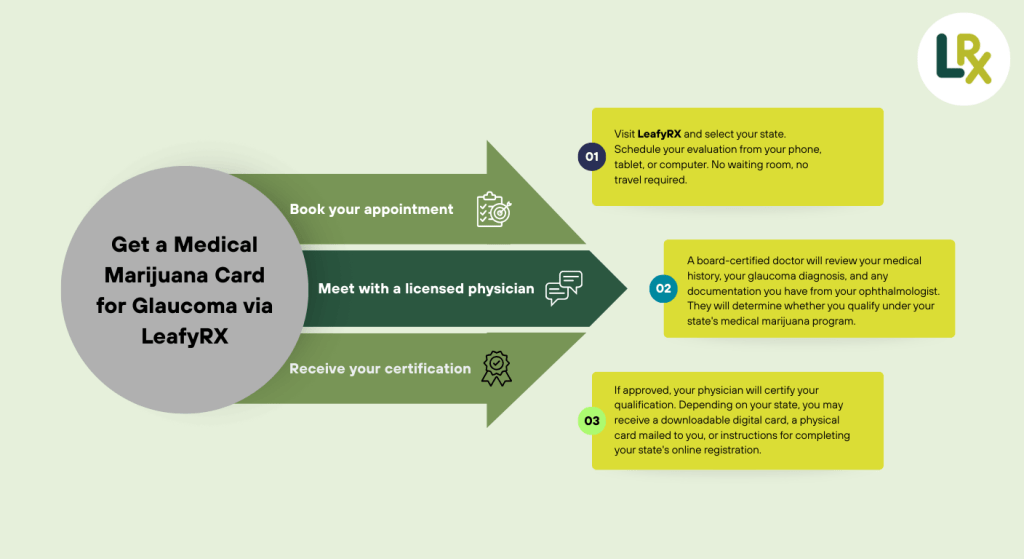
Step 1: Book your appointment. Visit LeafyRX and select your state. Schedule your evaluation from your phone, tablet, or computer. No waiting room, no travel required.
Step 2: Meet with a licensed physician. A board-certified doctor will review your medical history, your glaucoma diagnosis, and any documentation you have from your ophthalmologist. They will determine whether you qualify under your state’s medical marijuana program.
Step 3: Receive your certification. If approved, your physician will certify your qualification. Depending on your state, you may receive a downloadable digital card, a physical card mailed to you, or instructions for completing your state’s online registration.
Understanding medical marijuana card costs before you start is helpful. Costs typically range from $29 to $200 across different states when combining the physician consultation fee and state application fee. LeafyRX advertises the lowest cost in the United States for this process, making it accessible even for patients on fixed incomes or those without comprehensive insurance coverage.
Once you have your card, you will have legal access to licensed dispensaries in your state, where you can purchase cannabis products under the supervision of pharmacists and dispensary professionals trained in medical cannabis counseling. It is important to continue your relationship with your ophthalmologist if you choose to use cannabis as a complement to your standard glaucoma medications, not as a replacement.
Key Takeaways for Glaucoma Patients Considering Medical Cannabis
The evidence on marijuana for glaucoma treatment is more nuanced than most popular media coverage suggests. Here is a brief synthesis of what the research tells us and what it means for you as a patient:
Cannabis does lower intraocular pressure, and this effect is biologically real and well documented across decades of research. However, the effect is short-lived, lasting only 3 to 4 hours, and glaucoma requires sustained 24-hour IOP control. The quantity of cannabis needed to achieve continuous IOP reduction would expose patients to unacceptable levels of systemic side effects, including cardiovascular risks that may directly harm the optic nerve.
Clinical tolerance can develop with regular cannabis use, meaning the IOP-lowering benefit may diminish over time. The American Glaucoma Society and the Canadian Glaucoma Society have both concluded that marijuana is not an appropriate treatment for glaucoma under current evidence. Most glaucoma specialists do not recommend it as a primary therapy, though some remain open to it as an adjunct in carefully selected cases.
In states where glaucoma qualifies for a medical marijuana card, patients retain the legal right to explore cannabis as part of their care, provided they do so with full information, under physician supervision, and without abandoning proven therapies. Online and social media sources have frequently overstated the benefits of cannabis for glaucoma, making it critical for patients to seek information from licensed clinicians and peer-reviewed research.
When your certification expires, you can renew your medical card online with a licensed physician.





 Ask ChatGPT
  Ask Claude
  Ask Perplexity