

Sickle cell disease (SCD) is an inherited blood disorder that can cause anemia, pain crises, and other complications. Cannabis and cannabinoids have been studied as possible approaches to SCD-related pain, but clinical evidence remains limited and mixed. A randomized clinical trial of inhaled THC/CBD cannabis did not find a statistically significant reduction in pain compared with placebo.
Whether sickle cell disease qualifies for a medical marijuana card depends on state law. Some states specifically list sickle cell disease or sickle cell anemia, while others use broader eligibility rules. LeafyRX’s qualifying conditions by state guide can help you check the rules where you live.
What Is Sickle Cell Disease?
Sickle cell disease is a group of inherited blood disorders that affect hemoglobin, the protein in red blood cells that carries oxygen. Abnormal hemoglobin can cause red blood cells to become rigid and sickle-shaped. These cells can have difficulty moving through small blood vessels and may break down faster than healthy red blood cells.
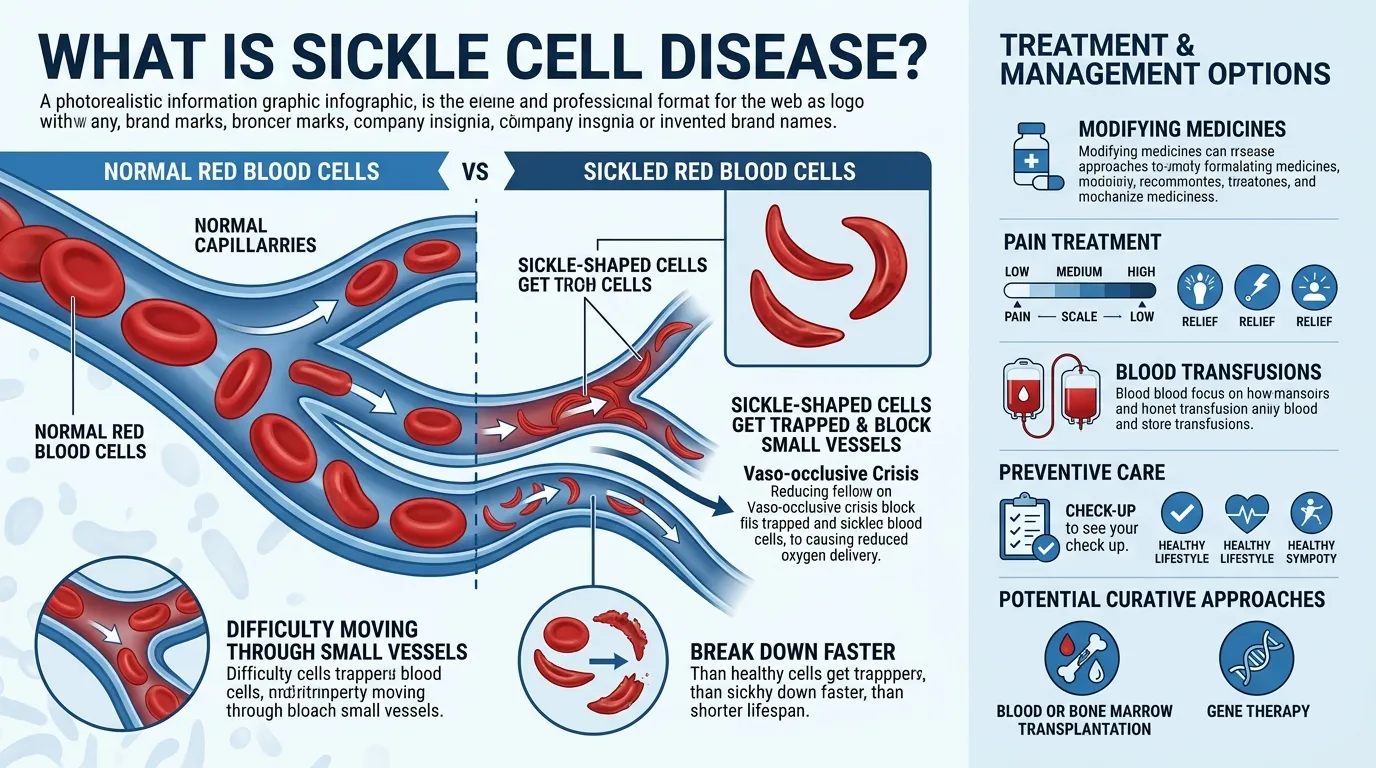
This can lead to anemia, reduced oxygen delivery, blocked blood flow, and complications affecting different organs. Symptoms and severity vary between people and between forms of sickle cell disease.
SCD is lifelong. Treatment may include disease-modifying medicines, pain treatment, blood transfusions, preventive care, and, for some patients, potentially curative approaches such as blood or bone marrow transplantation or gene therapy.
Why Does Sickle Cell Disease Cause Pain?
Pain is one of the most recognized complications of SCD. When sickled cells obstruct small blood vessels, blood flow can become restricted. Tissue stress and reduced oxygen delivery can contribute to pain.

The CDC describes pain as the most common complication of SCD. Vaso-occlusive episodes can begin suddenly and range from mild to severe. Pain may occur in the hands, feet, chest, back, abdomen, arms, or legs.
Pain can also develop from other complications, so not every episode has the same cause or requires the same approach.
What Is a Sickle Cell Pain Crisis?
A sickle cell pain crisis is commonly called a vaso-occlusive episode or vaso-occlusive crisis. During a VOE, sickled cells can obstruct blood flow through small vessels.
The resulting pain may be sharp, intense, stabbing, or throbbing. Episodes can last hours or days and may require treatment in a sickle cell clinic, infusion center, emergency department, or hospital.
The CDC recommends having an individualized pain-management plan with a healthcare provider, so patients know what to do when acute pain begins.
Acute Pain vs. Chronic Pain
Acute pain generally begins suddenly and may occur during a vaso-occlusive episode. Chronic pain can persist between acute episodes and may continue for months.
The CDC describes chronic SCD pain as daily, ongoing pain lasting more than six months. Some people experience acute pain, chronic pain, or both.
Research involving chronic pain should not automatically be applied to an acute vaso-occlusive crisis. The two situations can require different clinical approaches.
Other Sickle Cell Disease Symptoms
Depending on the type and severity of SCD, people may experience anemia, fatigue, shortness of breath, dizziness, swelling of the hands and feet, frequent infections, vision problems, kidney complications, stroke, lung complications, and organ damage.
SCD can also cause acute chest syndrome, a serious complication involving symptoms such as chest pain, coughing, fever, and shortness of breath.
How Medical Marijuana May Help Sickle Cell Disease
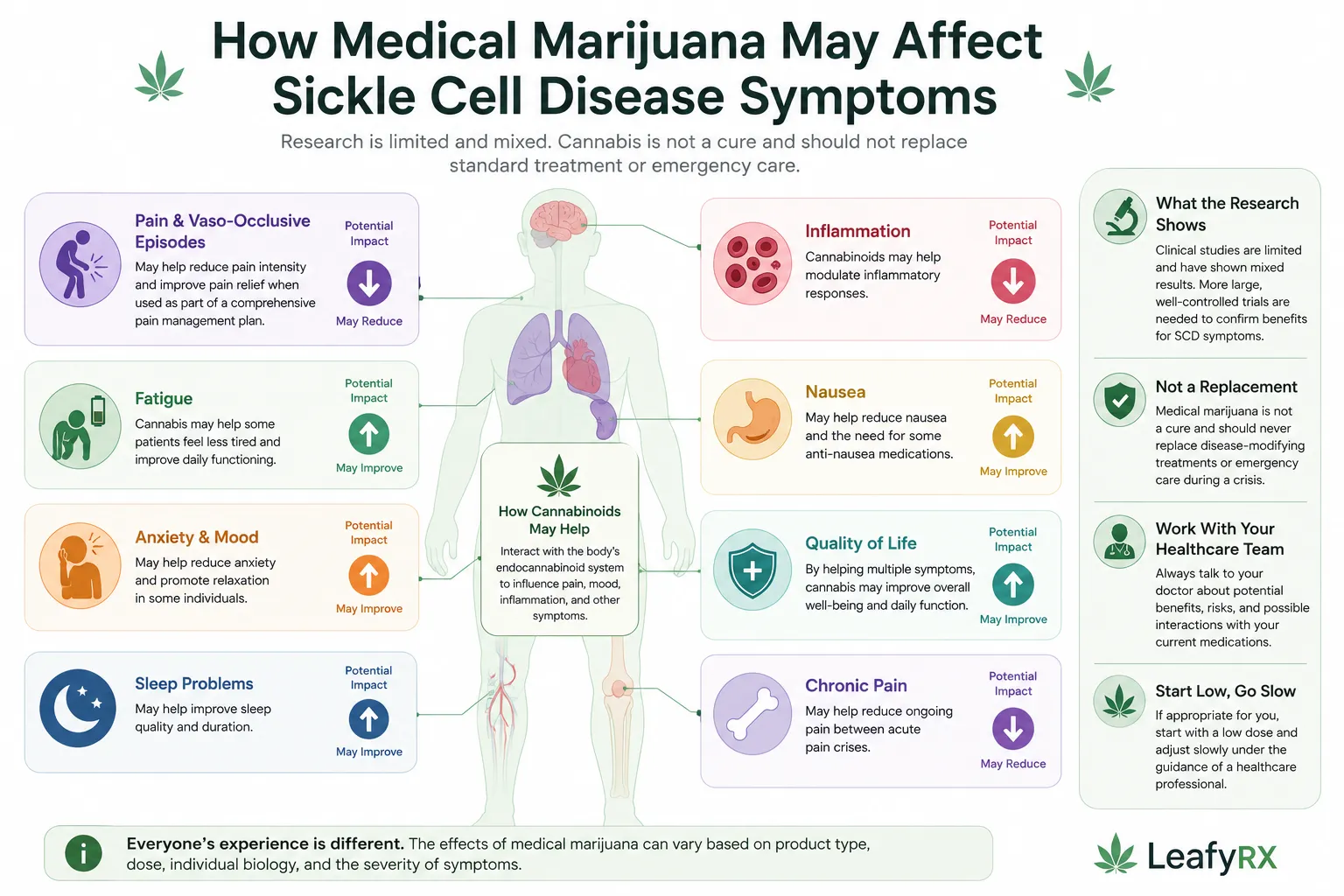
Research into medical marijuana for SCD has focused mainly on pain. Cannabis contains cannabinoids such as THC and CBD, which interact with biological pathways involved in pain signaling.
Researchers are also studying possible effects on inflammation, sensory processing, sleep, mood, and other factors that influence the experience of chronic pain.
Biological plausibility does not establish clinical effectiveness. Human evidence includes randomized trials, observational studies, and reviews, and those types of evidence can produce different results.
What the Randomized Trial Found
Abrams et al., randomized clinical trial of vaporized cannabis for adults with SCD and chronic pain. Twenty-seven adults were enrolled, with 23 completing both treatment periods. Participants received either vaporized cannabis containing approximately equal concentrations of THC and CBD or placebo during two five-day inpatient stays.
The researchers did not find a statistically significant difference in pain ratings between cannabis and placebo. They also did not find statistically significant differences in most pain-interference measures, including general activities, walking, sleep, or enjoyment.
There was a statistically significant difference in interference with mood, but this was a secondary outcome and does not establish that cannabis reduces SCD pain overall. Opioid use was similar during the two treatment periods.
This controlled trial is important because it provides evidence that challenges a simple claim that cannabis is a proven treatment for SCD pain.
What Observational Research Found
Observational studies have produced different findings. One study compared adults with SCD who used cannabis daily with other patients who had similar pain complaints. Daily cannabis users had more severe pain episode scores but fewer annual hospital admissions and emergency-room visits after matching for several clinical factors.
An observational association cannot establish cause and effect. People who use cannabis may differ from people who do not in ways that affect hospitalization, pain management, access to care, or other outcomes.
The study authors called for randomized controlled trials.
What Medical Cannabis Certification Studies Show
A retrospective study of patients with SCD in New York examined emergency-department visits, hospital admissions, inpatient days, and total acute encounters before and after medical cannabis certification.
The researchers observed reductions in some acute-care measures after certification. Some findings lost statistical significance after adjustment for bone marrow transplant history. The study was relatively small.
Patients who renewed certification reported perceived benefits including improvement in pain and other symptoms and reduced opioid requirements. Patient-reported outcomes are useful for identifying research questions, but they are not equivalent to randomized evidence.
What the 2025 Research Review Found
2025 scoping review for pain management in adults with SCD. It identified 12 relevant studies, including one clinical trial, two reviews, seven observational studies, one mixed-methods study, and one qualitative study.
The review concluded that evidence regarding cannabinoid effectiveness remains mixed. Some studies suggested lower pain scores with inhaled cannabis, while findings for other outcomes, including hospitalizations for vaso-occlusive crises, were inconsistent.
The review also identified safety concerns and called for personalized treatment approaches, standardized dosing research, and better long-term safety data.
Medical Marijuana and Chronic Sickle Cell Pain
Chronic SCD pain can persist between acute crises and may involve previous tissue injury, nerve-related pain, musculoskeletal problems, and changes in pain processing.
A review of controlled trials found that the literature remains limited and identified cannabis among approaches associated with improvements in pain scores in some studies.
That finding does not establish cannabis as a treatment. It identifies an area that continues to require clinical research.
Medical Marijuana and Vaso-Occlusive Crises
A vaso-occlusive crisis can require urgent treatment. There is not enough evidence to establish medical marijuana as a treatment for an acute vaso-occlusive crisis.

If severe SCD pain develops, patients should follow the individualized pain plan developed with their healthcare team. The CDC recommends knowing where to obtain SCD-specific acute care and seeking urgent medical attention when pain cannot be managed at home.
Cannabis should not be used as a reason to delay emergency evaluation.
Medical Marijuana and Opioid Use
Opioids are sometimes used for moderate to severe SCD pain, particularly during serious pain episodes. Researchers have investigated whether cannabis could play a role in broader pain-management strategies.
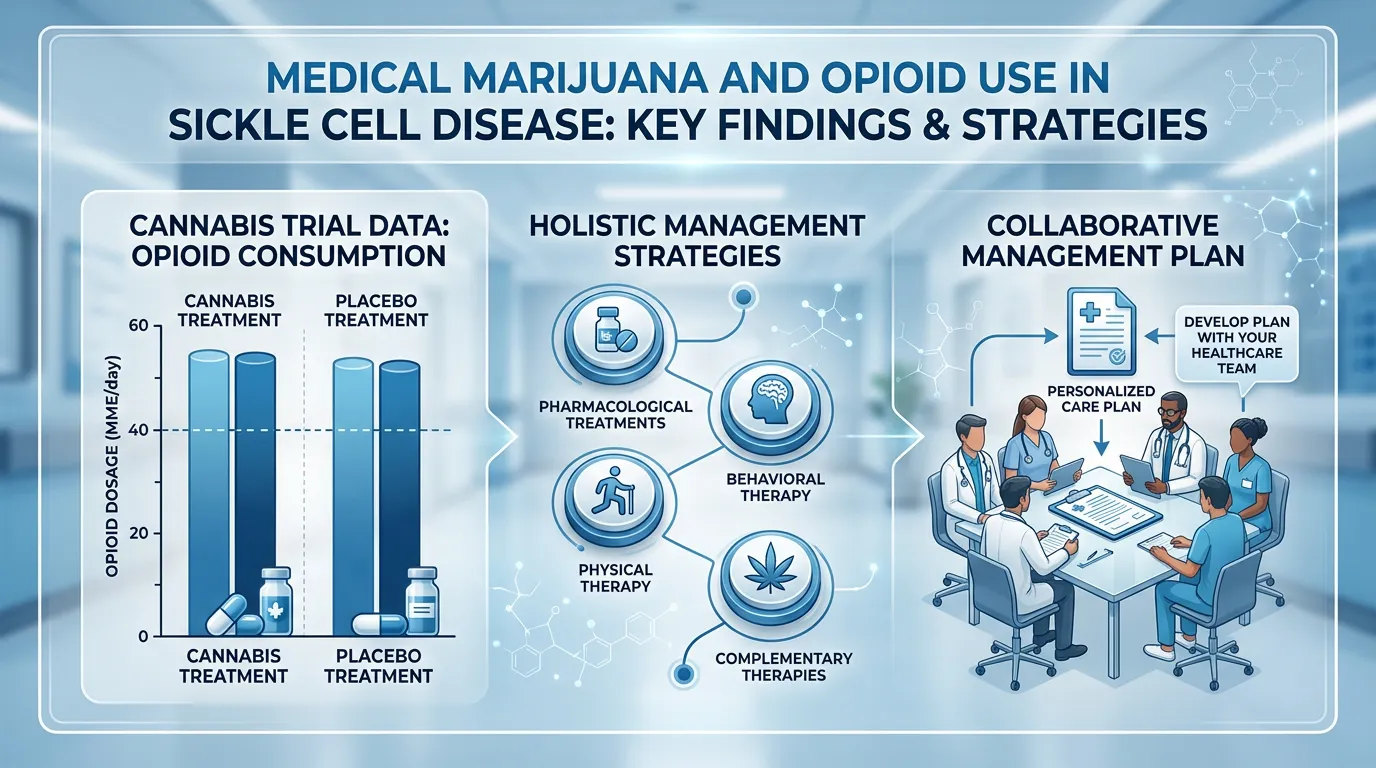
The evidence does not establish cannabis as a replacement for opioids. In the randomized inhaled-cannabis trial, opioid use was similar during cannabis and placebo treatment periods.
A retrospective certification study found that some patients reported decreased opioid requirements after obtaining medical cannabis certification, but the evidence was not randomized.
Do not reduce, stop, or replace prescribed pain medication because you are considering cannabis. Changes to an SCD pain-management plan should be made with the treating healthcare team.
THC vs. CBD for Sickle Cell Disease
THC is the cannabinoid primarily responsible for cannabis’s intoxicating effects. It has been studied directly in SCD, including in the randomized trial of vaporized THC/CBD cannabis.
Potential THC-related effects include drowsiness, dizziness, impaired coordination, changes in attention, memory effects, anxiety, and changes in heart rate.
CBD does not produce the same intoxicating effects as THC. Evidence specifically supporting CBD as an effective treatment for SCD pain remains limited.
There is not enough evidence to say that CBD alone is better than THC or that a particular THC-to-CBD ratio is appropriate for everyone with SCD.
What Are the Risks of Cannabis for People With Sickle Cell Disease?
Possible effects include dizziness, drowsiness, impaired coordination, changes in concentration, memory effects, anxiety, and increased heart rate.
A review focused on cannabis and SCD pain noted concerns about the reliability of unregulated products and highlighted the need for careful consideration of risks.
Tell your healthcare provider about cannabis use, including non-prescription products.
Cannabis and Prescription Medications
People with SCD may take several medications depending on their symptoms and treatment plan. These can include pain medicines, disease-modifying treatments, antibiotics, and supportive therapies.
Cannabinoids may interact with medications or increase sedation when combined with other substances.
Tell your healthcare provider about all prescription medications, supplements, and cannabis products you use.
Medical Marijuana Is Not a Replacement for Sickle Cell Treatment
Sickle cell disease requires ongoing medical management. Depending on the person, treatment may include hydroxyurea, L-glutamine, crizanlizumab, pain medicines, blood transfusions, preventive treatment, transplantation, or gene therapy.
Medical cannabis does not address the underlying genetic cause of SCD. If considered, it should be discussed within the broader treatment plan.
Useful clinical questions include what symptom is being targeted, whether it is acute or chronic, what treatments are already being used, possible interactions, potential side effects, and what state law allows.
State Eligibility for Medical Marijuana and Sickle Cell Disease
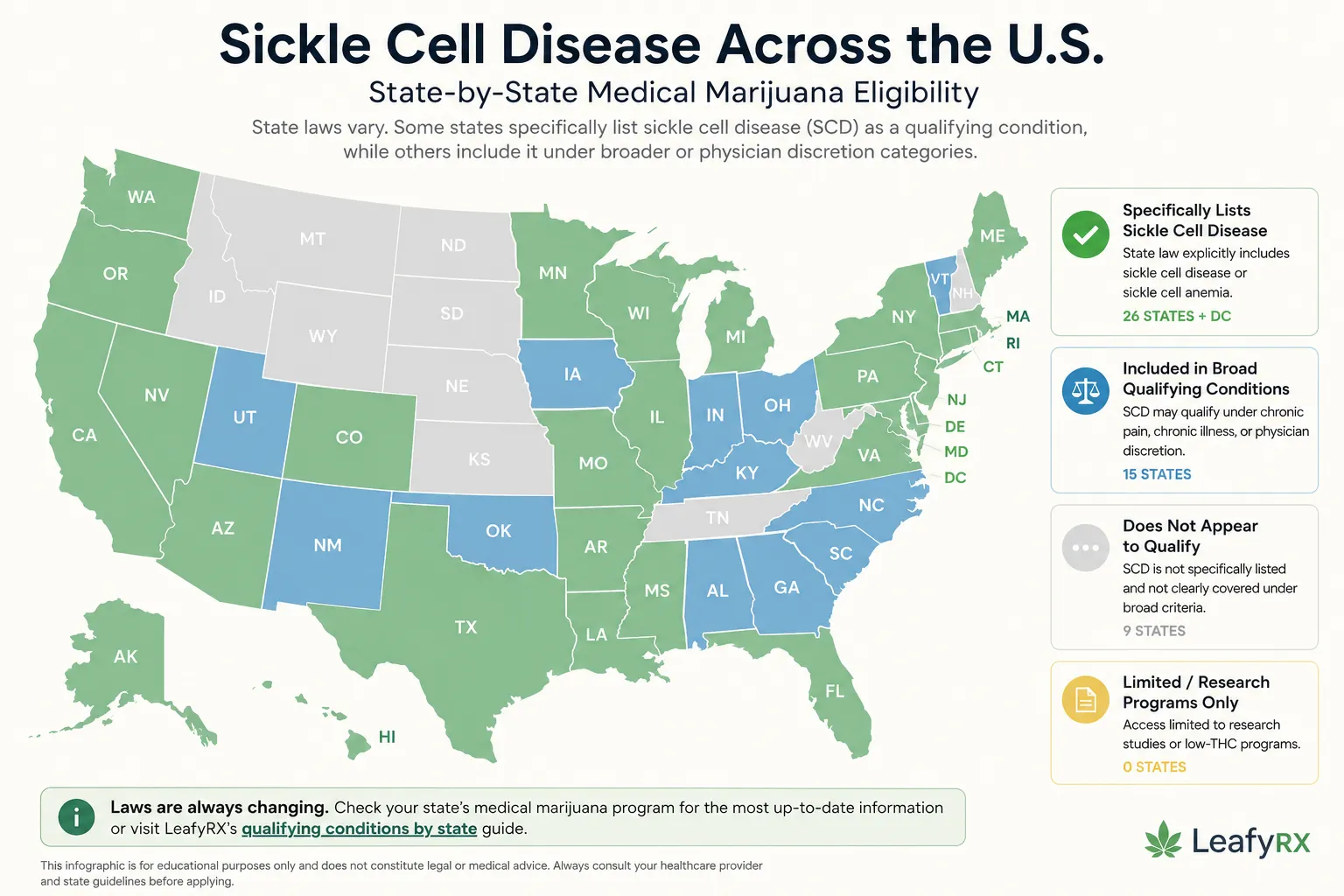
| State | Eligibility |
|---|---|
| Alabama | Sickle cell anemia listed; verify current program status |
| Connecticut | Sickle cell disease specifically listed |
| Georgia | Sickle cell disease specifically listed |
| Minnesota | Sickle cell disease specifically listed |
| Mississippi | Sickle cell anemia specifically listed |
| Missouri | Sickle cell anemia specifically listed |
| Ohio | Sickle cell anemia specifically listed |
| Pennsylvania | Sickle cell anemia specifically listed |
| Texas | Sickle cell disease specifically listed |
| Virginia | Sickle cell anemia specifically listed |
| West Virginia | Sickle cell anemia specifically listed |
What If Sickle Cell Disease Is Not Specifically Listed?
Not being specifically named does not always mean that a patient has no possible pathway. Some states recognize broader conditions such as chronic pain, severe or intractable pain, or other debilitating medical conditions.
For example, Ohio includes sickle cell anemia and chronic severe or intractable pain among its qualifying conditions. State rules differ, so patients should not assume that a diagnosis automatically qualifies.
What Do You Need to Qualify for a Medical Marijuana Card?
A diagnosis of sickle cell disease may satisfy the medical-condition requirement in states that specifically recognize it, but additional requirements may apply.

-
Proof of sickle cell disease
-
Medical records
-
Physician certification
-
Proof of residency
-
Government-issued identification
-
A state application
-
An application fee
-
Caregiver documentation for minors, if applicable
Some states require the certifying healthcare provider to be licensed in that state. Requirements should be checked with the applicable state program.
How to Get Your Medical Marijuana Card for Sickle Cell Disease
For a step-by-step overview, see how to get your medical marijuana card.
- Check Your State’s Requirements
Confirm whether your state specifically lists sickle cell disease or sickle cell anemia. If it does not, check whether broader categories such as chronic or severe pain could apply.
- Gather Your Medical Records
Prepare documentation such as your diagnosis, previous pain crises, chronic pain history, current medications, previous treatments, hospitalization history, and specialist records.
- Complete a Medical Evaluation
If your state permits telehealth certification, you may be able to meet with a licensed provider online. The provider can review your medical history, symptoms, medications, treatment history, and eligibility.
- Receive Physician Certification
If the provider determines that you meet the applicable requirements, they can complete the required medical certification.
- Submit Your State Application
Depending on the state, submit physician certification, government-issued identification, proof of residency, photograph, application fee, and other required documents.
- Receive Your Medical Cannabis Authorization
Once approved, access medical cannabis according to state rules. Some states issue physical cards, while others use digital certificates or patient registries.
When Should Someone With Sickle Cell Disease Seek Emergency Care?
Medical cannabis should never delay emergency treatment for a serious SCD complication.
-
Severe or uncontrolled pain
-
Fever
-
Chest pain
-
Difficulty breathing
-
Sudden weakness or numbness
-
Confusion
-
Difficulty speaking, seeing, or walking
-
A prolonged erection lasting four hours or more
Acute chest syndrome and stroke are medical emergencies. A cannabis product should not be used as a substitute for emergency evaluation.
Conclusion
Research into medical marijuana for sickle cell disease is still developing.
The strongest controlled evidence does not support a simple conclusion that cannabis relieves sickle cell pain. A randomized clinical trial of inhaled THC/CBD cannabis did not produce a statistically significant reduction in pain compared with placebo. Observational studies and newer reviews have produced different findings and support continued research.
Medical cannabis is not a cure for sickle cell disease and should not replace disease-modifying treatment, prescribed pain management, or emergency care.
If you are considering medical cannabis, start by checking whether sickle cell disease qualifies in your state and discussing potential benefits, risks, drug interactions, and treatment goals with a qualified healthcare professional.
Get your medical card online today without leaving home with LeafyRx.





 Ask ChatGPT
 Ask Claude
 Ask Perplexity