


If you live in Texas and suffer from a debilitating medical condition, you may be wondering: what conditions qualify for a medical card in Texas? Texas runs one of the most restrictive medical cannabis programs in the country. The state limits access to patients with specific serious conditions.
It also caps THC content at just 1 percent. But if you have a qualifying condition, the Texas Compassionate Use Program gives you legal access to low-THC cannabis medicine that could improve your quality of life.
Many Texans remain confused about whether they qualify. They don’t know how to apply or what products they can legally access under state law. The rules differ sharply from other states. This creates real barriers for patients who need relief.
This complete guide explains precisely what conditions qualify for a medical card in Texas in 2026.
You’ll learn how the Texas Compassionate Use Program works. We cover the full application process, costs, and legal limits. You’ll also get practical tips for working through the system. If you’re ready to get started, you can apply for your Texas medical marijuana card online.
Whether you have epilepsy, PTSD, cancer, or another qualifying condition, this resource helps you understand your rights and options under current Texas law.
Understanding the Texas Compassionate Use Program (TCUP) and What Conditions Qualify for a Medical Card in Texas
Texas operates one of the most restrictive medical cannabis programs in the United States. The state permits only low-THC cannabis with a maximum of 1 percent THC by weight. This limit is significantly lower than most medical programs nationwide.
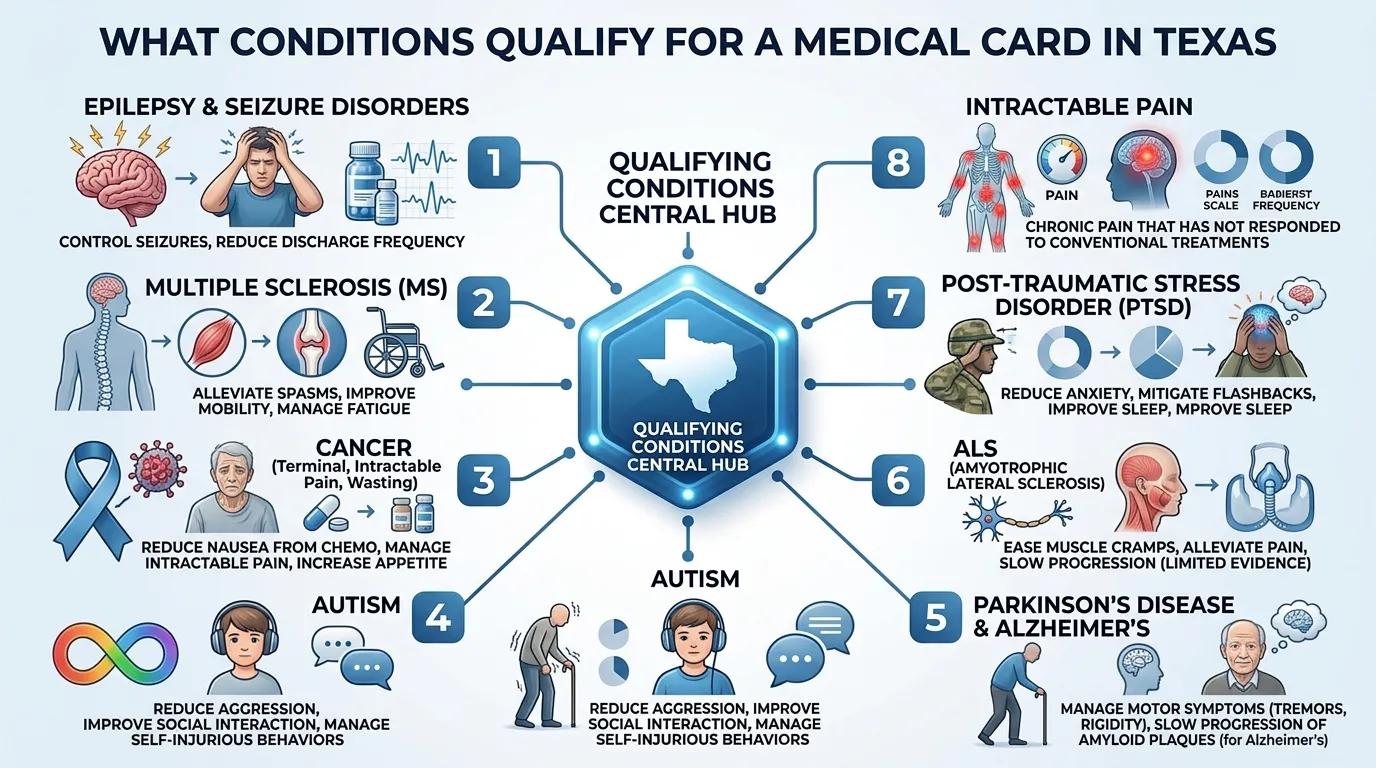
What conditions qualify for a medical card in Texas? The list has expanded over time. Originally limited to intractable epilepsy in 2026, the program now covers conditions including cancer, PTSD, autism, and chronic pain. However, access remains limited compared to comprehensive programs in other states.
What Is Low-THC Cannabis in Texas?
Low-THC cannabis in Texas means products containing no more than 1 percent THC by weight. This restriction makes Texas products far less potent than those available in states like California or Colorado. Most medical programs allow THC concentrations of 10 to 30 percent or higher.
The 1 percent cap limits therapeutic options for patients. Many conditions respond better to higher THC concentrations. Texas patients cannot access the full range of cannabinoid therapies available elsewhere. Products available include:
-
Tinctures and oils for sublingual use
-
Capsules for oral consumption
-
Topical creams and lotions for localized relief
Smokable flower is not permitted under Texas law. This restriction eliminates the fastest-acting delivery method. Patients who need immediate symptom relief face limited options. Vaporization of flower is also prohibited.
How Texas Medical Cannabis Differs from Other States
Texas does not issue physical medical marijuana cards. Instead, patients are registered in the Compassionate Use Registry of Texas (CURT). This digital registry allows dispensaries to verify patient eligibility.
No physical card is mailed or carried.

The state requires two physician visits before a prescription can be issued.
Most states require only one certification. This two-visit requirement adds time and cost to the process. The first visit establishes the patient-physician relationship. The second visit, at least 90 days later, allows the physician to issue the prescription.
Comparing Texas to other states reveals stark differences. Understanding qualifying conditions by state shows how restrictive Texas remains. States like Oklahoma and California allow physicians to recommend cannabis for any condition they believe may benefit. Texas maintains a closed list of specific qualifying conditions.
Texas also limits the number of licensed dispensaries. As of 2026, fewer than 20 dispensaries operate statewide. This creates access barriers for rural patients. Wait times for appointments and products can be lengthy.
Legal History and Recent Expansions
The Texas Compassionate Use Program launched in 2015 with extremely narrow eligibility. Only patients with intractable epilepsy could access low-THC cannabis. The THC limit was set at 0.5 percent.
In 2019, the legislature expanded the qualifying condition list. The new law added conditions like multiple sclerosis, ALS, and terminal cancer. The THC cap was raised to 1 percent. This expansion represented the first significant broadening of the program.
The 2021 legislative session brought further changes. Lawmakers added PTSD and all forms of cancer to the qualifying list. They also removed the cap on THC concentration for patients with certain terminal conditions. However, the 1 percent limit remained for most patients.
The most recent expansion occurred in 2023. The legislature added chronic pain as a qualifying condition. This change dramatically increased the number of eligible Texans. Chronic pain is the most common qualifying condition in comprehensive medical programs nationwide. For a complete overview, the 2026 state-by-state guide to medical card qualifying conditions provides detailed comparisons.
Despite these expansions, Texas remains far behind most medical states. The program serves fewer than 100,000 registered patients. States with similar populations serve hundreds of thousands. Advocacy groups continue pushing for further reforms. They seek higher THC limits, smokable flower access, and an expanded condition list.
The two-visit requirement also dates from the 2021 session. Legislators added this provision to ensure physicians establish ongoing relationships with patients. Critics argue it creates unnecessary barriers. The requirement increases costs and delays access to treatment.
Complete List of Qualifying Conditions for Texas Medical Cannabis
Texas operates one of the most restrictive medical cannabis programs in the country. The Texas Compassionate Use Program (TCUP) allows only low-THC cannabis products. These products contain no more than 1% THC by weight. Despite these limits, the list of qualifying conditions has expanded significantly since the program launched in 2026.
Understanding what conditions qualify for a medical card in Texas helps you determine if you’re eligible. The state has gradually added conditions based on patient advocacy and legislative changes. According to the Vensure program expansion update, recent amendments have broadened access to include chronic pain and PTSD. Here’s the complete breakdown of qualifying conditions by category.
Neurological and Seizure Disorders
Epilepsy was the first condition approved when TCUP launched in 2015. The program initially served only patients with intractable epilepsy who had not responded to conventional treatments. This narrow focus reflected the strong clinical evidence supporting cannabis for seizure control.
Today, the neurological category includes several conditions:
-
Epilepsy and all seizure disorders
-
Multiple sclerosis (MS) with spasticity or nerve pain
-
Amyotrophic lateral sclerosis (ALS)
-
Parkinson’s disease
-
Huntington’s disease
-
Any incurable neurodegenerative disease
These conditions share common symptoms that low-THC cannabis may help manage. Muscle spasms, tremors, and nerve pain respond to cannabinoid therapy in many patients. The state recognizes that conventional treatments often fall short for these progressive conditions.
Cancer and Terminal Illness
Cancer became a qualifying condition in 2021 when Texas expanded the program. The state now includes all forms of cancer, not just terminal cases. This change acknowledged that cancer patients face multiple symptoms throughout treatment, not just at end of life.
Qualifying cancer-related conditions include:
-
All types and stages of cancer
-
Cancer requiring palliative or hospice care
-
Terminal illness with a life expectancy under one year
-
Chemotherapy-induced nausea and vomiting
-
Cancer-related pain and wasting syndrome
Patients undergoing chemotherapy often struggle with severe nausea that standard anti-emetics don’t control. Low-THC cannabis provides an alternative that many find effective. Terminal patients can access the program regardless of their specific diagnosis.
Mental Health Conditions
Post-traumatic stress disorder (PTSD) was added to the qualifying list in 2019. This marked a significant shift in Texas’s approach to mental health treatment. The state recognized that veterans and trauma survivors needed additional treatment options beyond traditional psychiatric medications.
Mental health qualifying conditions now include:
-
Post-traumatic stress disorder (PTSD)
-
Autism spectrum disorder (ASD)
PTSD patients often experience anxiety, sleep disturbances, and hypervigilance that disrupt daily functioning. Autism spectrum disorder was added based on evidence that cannabis may help manage behavioral symptoms and anxiety in some patients. Both conditions require careful physician evaluation before certification.
Chronic Pain and Other Conditions
The 2021 expansion added chronic pain as a qualifying condition. This single change opened the program to thousands of additional Texas patients. The state defines qualifying chronic pain as pain that has not responded to conventional treatment for at least three months.
Additional qualifying conditions include:
-
Chronic pain unresponsive to standard treatment for 90+ days
-
Any condition causing persistent muscle spasms
-
Any condition causing chronic nausea
-
Any condition causing persistent seizures
This broader language allows physicians more discretion in certifying patients. If you’re wondering how to determine if you qualify based on your specific symptoms, a licensed physician can evaluate your treatment history and current condition.
The key requirement is documented failure of conventional treatments over at least three months.
How to Qualify: Medical Documentation Requirements
Getting a medical card in Texas requires more than just a qualifying condition. You need formal documentation and a relationship with a registered physician. The state enforces strict rules to ensure patients receive proper medical oversight.
Understanding these requirements helps you prepare before starting the process.
What Your Doctor Needs to Confirm
Your physician must provide a formal diagnosis of one of the qualifying conditions. This isn’t a casual conversation. The doctor needs to document your condition in your medical records with specific diagnostic codes and clinical findings.
You’ll need to bring medical records that show your diagnosis. These might include:
-
Previous diagnostic test results (MRIs, CT scans, blood work)
-
Hospital discharge summaries if you’ve been hospitalized
-
Specialist reports confirming your condition
-
Prescription history showing treatments you’ve tried
-
Documentation of failed conventional therapies
Your medical history matters here. Bring everything that documents your condition and treatment journey. The more complete your records, the easier the evaluation becomes.
The Two-Visit Requirement Explained
Texas law mandates two separate in-person visits before a physician can prescribe low-THC cannabis. This requirement sets Texas apart from most other medical cannabis states. You can’t complete the process in a single appointment.
The first visit establishes the doctor-patient relationship. Your physician reviews your medical history, confirms your diagnosis, and discusses whether cannabis might help. This visit creates the foundation for treatment. The doctor documents everything in your medical file.
The second visit must occur at least 30 days after the first. This waiting period lets your doctor evaluate whether conventional treatments continue to fail. During this follow-up, the physician assesses your ongoing symptoms and determines if cannabis is appropriate. Only after this second visit can the doctor issue a prescription.
This two-visit rule means the process takes at least a month. You can’t rush it. Plan accordingly if you need access to medical cannabis. The state designed this requirement to ensure thorough medical oversight and prevent hasty prescriptions.
Telehealth evaluations don’t count for initial prescriptions. Both visits must be in person. This differs from states where online evaluations are standard. Texas requires face-to-face consultations to maintain strict medical standards.
Finding a Registered Texas Physician
Not every doctor in Texas can prescribe low-THC cannabis. Your physician must be registered with the Texas Department of Public Safety Compassionate Use Registry. This registration requires specific training and compliance with state protocols.
Start by checking the DPS registry online. The state maintains a list of registered physicians who can prescribe cannabis. You can search by location to find doctors near you. This registry is your most reliable source for finding qualified physicians.
Your current doctor might not be registered. If they aren’t, you’ll need to find a new physician who is. Some doctors specialize in cannabis medicine and see patients specifically for this purpose. Others are general practitioners who’ve added cannabis to their treatment options.
When you contact a physician’s office, ask these questions:
-
Are you registered with the Texas DPS Compassionate Use Registry?
-
How many patients have you certified for medical cannabis?
-
What’s your process for the two required visits?
-
What documentation do I need to bring?
-
What are your fees for the evaluation and follow-up?
Understanding the benefits of medical cards helps you see why this documentation process matters. Once you complete it, you gain legal access to cannabis products that can manage your condition. The upfront work pays off with ongoing relief and legal protection.
Some physicians charge consultation fees for both visits. These fees aren’t covered by insurance in most cases. Budget for these costs when planning your application. Fees typically range from $150 to $300 per visit, though prices vary by practice.
Step-by-Step Application Process for Texas Medical Cannabis
Getting access to medical cannabis in Texas requires patience and careful planning. The state’s Compassionate Use Program has specific requirements you must follow. Here’s how the process works from start to finish.
Initial Physician Consultation
Your first step is scheduling an appointment with a TCUP-registered physician. Not all doctors can prescribe medical cannabis in Texas. You need a physician who has registered with the state program.
Bring all relevant medical records to your appointment. This includes diagnostic reports, lab results, and documentation of previous treatments. Your doctor needs to see proof of your qualifying conditions for medical marijuana in Texas before moving forward.
During this visit, your physician will review your medical history. They’ll discuss whether low-THC cannabis might help your condition. Be prepared to answer questions about symptoms and current medications.
This consultation establishes your baseline. Your doctor documents your condition and treatment history. They cannot prescribe cannabis at this first appointment due to Texas law.
Follow-Up Visit and Prescription
Texas law requires you to wait at least 30 days before your second appointment. This waiting period is mandatory. No exceptions exist, even for severe conditions.
At your follow-up visit, your physician determines if you qualify for the program. If approved, they enter your prescription into the Compassionate Use Registry.
According to the Texas Department of Public Safety, this registry tracks all patient prescriptions and dispensary purchases statewide.
Your doctor will specify the dosage and product type. They’ll explain how to use low-THC cannabis safely. Ask questions about side effects and interactions with other medications.
You’ll receive information about licensed dispensaries in Texas. Your physician provides contact details and locations. They may recommend specific products based on your condition.
Dispensary Registration and Purchase
Texas does not issue physical medical cards. Dispensaries verify your registration electronically using your driver’s license or state ID. This system protects patient privacy while ensuring compliance.
Visit a licensed dispensary with your valid Texas ID. Staff will look up your prescription in the state registry. They’ll confirm your doctor’s authorization before completing any sale.
Dispensaries offer various low-THC products including oils, tinctures, and capsules. Staff can explain product differences and help you choose. Start with the lowest dose your doctor recommended.
Your prescription remains valid for a specific period set by your physician. Most prescriptions last 90 days to one year. You must schedule a renewal appointment before your prescription expires to maintain access.
Cost Breakdown: What You Will Pay in Texas
Getting a medical card in Texas involves several costs. You need to understand each expense before you start. The total amount varies based on your provider and product needs.
Physician Consultation Fees
Your first step is a physician evaluation. Initial consultations typically cost $200 to $400 depending on the clinic. Online telehealth services often charge less than in-person visits.
Follow-up visits range from $150 to $300. These appointments happen annually to renew your certification. Texas does not charge a state registration fee. This makes it different from most medical marijuana states.
Product Costs at Dispensaries
Low-THC cannabis products at Texas dispensaries cost $50 to $200 per bottle. The price depends on concentration and size. Higher CBD ratios typically cost more than lower concentrations.
Most patients spend $100 to $150 monthly on products. Your specific condition and dosage needs determine your actual costs. Some patients need multiple bottles per month.
Insurance and Financial Assistance
Most health insurance plans do not cover medical cannabis consultations or products. You pay out of pocket for everything. This includes doctor visits and dispensary purchases.
Some clinics offer payment plans or reduced fees. Veterans, seniors, and low-income patients may qualify for discounts. Ask your provider about available assistance programs.
Annual renewal visits with your physician are required. These typically cost less than initial consultations. Budget $150 to $250 for yearly renewals to maintain your certification.
Legal Limits and Restrictions for Texas Medical Cannabis Patients
Texas runs one of the most restrictive medical cannabis programs in the country. The state’s Compassionate Use Program (TCUP) sets strict rules on product types, THC levels, and how patients can use their medicine. You need to know these limits before you start treatment.
THC Content Limits
Texas caps THC at 1 percent by weight. This is one of the lowest limits in any state medical program. Most other states allow 5 to 10 percent THC or higher for medical patients.
This 1 percent cap applies to all products sold through licensed Texas dispensaries. The low THC level means patients may need higher doses to achieve symptom relief compared to programs in other states.
Possession and Transportation Rules
Texas does not set a specific possession limit for medical cannabis patients. You can possess the amount your doctor prescribes. This gives physicians flexibility to determine appropriate quantities based on your condition and treatment plan.
That said, you cannot transport Texas medical cannabis across state lines. Doing so violates federal law and state law in both Texas and the destination state. Keep your medicine in its original labeled container when traveling within Texas.
What Products Are Not Allowed
Smokable flower is banned under Texas law. You can only buy processed products like oils, tinctures, and capsules. This restriction limits how patients can consume their medicine.
Home cultivation is illegal in Texas for both medical and recreational purposes. Growing even one plant can result in criminal charges. All medical cannabis must come from a licensed Texas dispensary. Out-of-state products are not legal, even if purchased legally elsewhere.
Using medical cannabis does not protect you from employment drug testing. Employers can still enforce drug-free workplace policies. Federal employees and contractors face additional restrictions because cannabis remains federally illegal.
Conclusion
Texas runs one of the strictest medical cannabis programs in the country. But for patients with qualifying conditions, the Texas Compassionate
Use Program offers legal access to low-THC medicine. Now that you know what conditions qualify for a medical card in Texas, you have the complete list, the medical documentation you need, and the two-visit requirement and cost breakdown.
The process takes time and patience. You can’t use telehealth in Texas. You must visit a TCUP-registered physician twice. But thousands of patients with epilepsy, cancer, PTSD, and chronic pain have found relief through this program.
If you have one of the qualifying conditions, your next step is clear. Get your medical card online.





 Ask ChatGPT
  Ask Claude
  Ask Perplexity