

One of the first things patients want to know is straightforward: what conditions qualify for a medical card? But the answer changes depending on where you live.
Every state writes its own rules for medical card qualifying conditions. Some approve dozens of diagnoses. Others keep their programs narrow and tightly controlled. A handful even let providers use professional judgment to recommend treatment for conditions not on an official list.
That means two patients with the exact same symptoms could qualify in one state but get turned away in another. Knowing your state’s medical card requirements ahead of time saves you from wasting money on an evaluation that goes nowhere.
This guide breaks down the most common medical card qualifying conditions in 2026, how MMJ qualifying conditions by state compare, what providers actually look for during evaluations, and what to prepare before you apply.
How Medical Card Qualifying Conditions Work
Medical MMJ programs are run at the state level. The federal government does not operate a national medical program, so each state creates its own system from scratch.
That means every state decides:
-
Which conditions qualify for a medical card
-
How providers are allowed to evaluate patients
-
Whether telehealth appointments count
-
How patient registration and renewals work
-
Possession limits and product access rules
Most programs share a few basic requirements. You need a qualifying condition, a licensed provider to evaluate you, state registration, and ongoing renewals to keep your card active.
But how strict the rules are changes a lot from state to state. Some follow rigid condition lists where providers can only approve diagnoses that the state already named. Others give physicians broader room to make their own calls.
The National Conference of State Legislatures tracks how medical MMJ laws continue changing year after year across the country.
Most Common Medical Card Qualifying Conditions
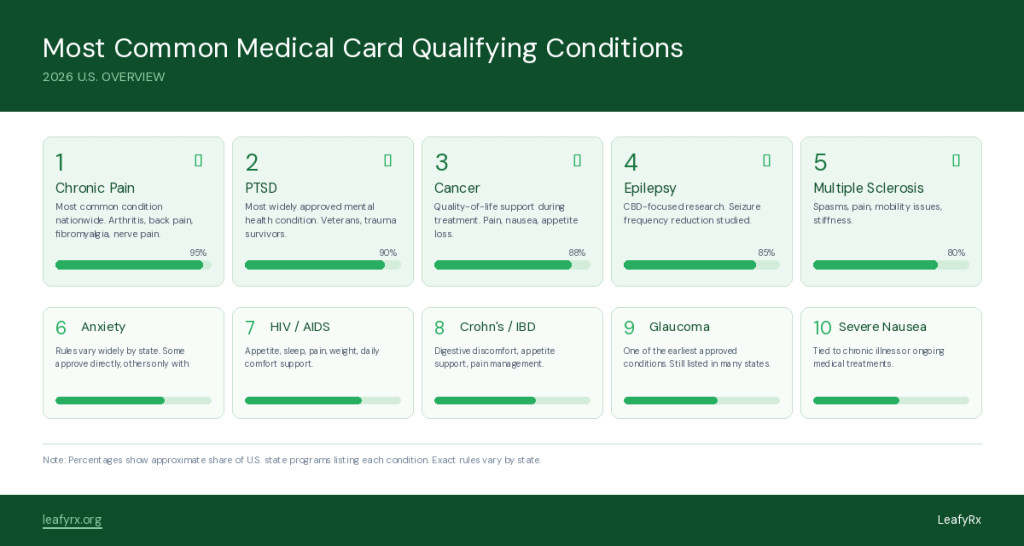
Even though every state writes its own list, certain conditions show up again and again across U.S. medical programs.
Chronic Pain
Chronic pain is the single most common qualifying condition nationwide. It shows up in nearly every state program that exists.
Patients dealing with conditions like arthritis, back injuries, fibromyalgia, nerve damage, joint problems, and long-term injury pain often look into MMJ as part of a bigger symptom management plan.
Research suggests cannabinoids may help support pain management for some patients, though results vary a lot from person to person.
A big reason states keep adding chronic pain is simple: traditional treatments don’t always manage symptoms well enough over the long haul. Patients dealing with years of daily pain want more options, and state legislators have responded.
Anxiety Disorders
Anxiety is one of those conditions where the rules swing wildly depending on where you live.
Some states approve anxiety disorders outright. Others only approve anxiety when it shows up alongside PTSD or another recognized diagnosis. A few states still don’t list anxiety at all.
Patients commonly look into MMJ for stress management, relaxation, sleep support, and mood balance. But THC hits everyone differently. Lower doses might feel calming for one person while the same amount ramps up anxiety in someone else.
Researchers are still working to understand how cannabinoids interact with stress and anxiety pathways.
PTSD
PTSD is one of the most widely accepted mental health conditions across MMJ programs in the country. Veterans and trauma survivors pushed hard for years to get PTSD added to state lists, and the advocacy worked.
Patients commonly explore plant medicine for nightmares, sleep problems, stress support, mood regulation, and general relaxation. Several states expanded their programs specifically after hearing testimony from veterans and first responders about how traditional treatments alone weren’t cutting it.
Cancer
Cancer patients commonly qualify because treatment side effects can be brutal: chronic pain, nausea, appetite loss, sleep disruption, and weight changes that make daily life harder than it already is.
The National Cancer Institute notes that cannabinoids continue to be studied for symptom support tied to cancer care.
For many cancer patients, MMJ is less about replacing treatments and more about making the treatment process bearable. Quality-of-life support matters when you’re going through months of difficult care.
Epilepsy and Seizure Disorders
Epilepsy and seizure disorders show up in a lot of state programs. CBD-based products get the most attention here because research suggests they may help reduce seizure frequency in certain patients.
Several of the earliest medical MMJ laws in the country expanded after intense public attention on severe pediatric seizure cases. Parents shared their children’s stories in state legislatures, and lawmakers listened.
Multiple Sclerosis
Patients with multiple sclerosis may qualify in many states because the condition can cause muscle spasms, chronic pain, mobility problems, stiffness, and sleep disruption. Some patients explore cannabinoids as one piece of a broader symptom management approach.
HIV/AIDS
Many states include HIV/AIDS because the symptoms and treatment side effects can impact appetite, sleep, pain levels, weight maintenance, and daily comfort. Medical programs give these patients structured access to products and guidance they might not find in a recreational setting.
Crohn’s Disease and Gastrointestinal Disorders
Several states approve Crohn’s disease, ulcerative colitis, and inflammatory bowel conditions. Patients sometimes explore MMJ for digestive discomfort, appetite support, pain management, and stress reduction tied to chronic gut issues.
Glaucoma
Glaucoma was one of the first conditions listed in early U.S. medical programs. It gets less attention these days, but several states still include it as a qualifying condition.
Severe Nausea
Persistent nausea tied to chronic illness or ongoing medical treatment may qualify in some states. This matters especially for patients going through chemotherapy or dealing with conditions that cause long-term stomach trouble.
MMJ Qualifying Conditions by State
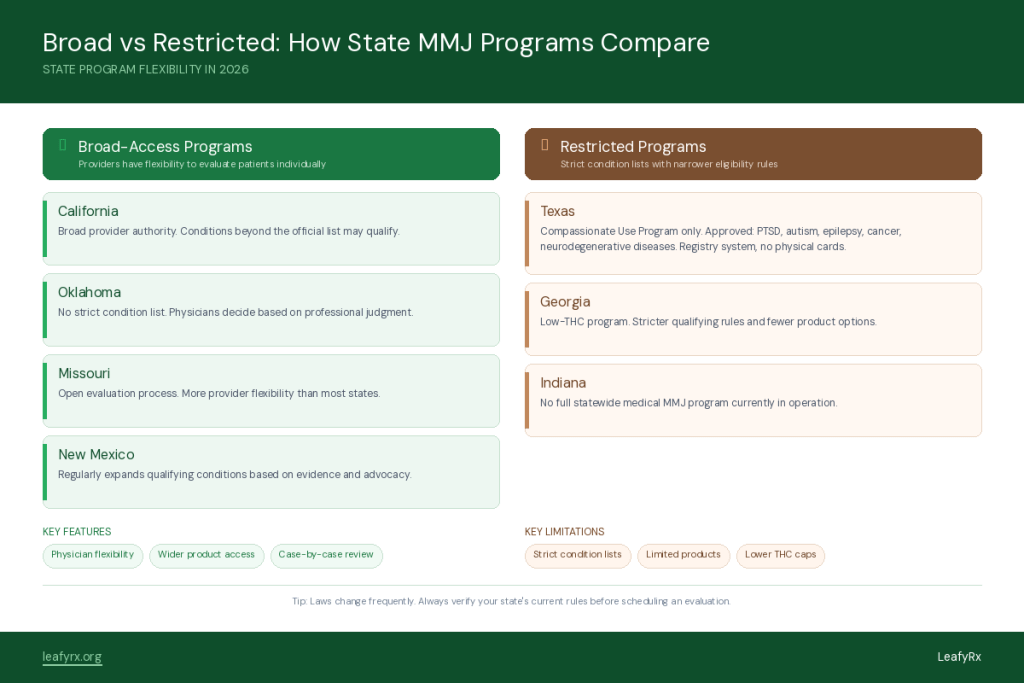
Not every state handles eligibility the same way. Some run open programs where providers have real flexibility. Others stick to strict lists and won’t budge.
States With Broad Medical MMJ Programs
These states give providers more room to evaluate patients on a case-by-case basis.
California
California gives providers broad authority when recommending MMJ. Patients may qualify for conditions not specifically named in state law if a provider believes treatment may support their wellness. California remains one of the most flexible medical programs in the country.
Oklahoma
Oklahoma runs one of the broadest programs nationwide. The state doesn’t maintain a strict qualifying condition list. Instead, physicians decide whether MMJ may benefit the patient based on their professional judgment. That flexibility lets providers evaluate patients individually instead of checking boxes on a narrow state list.
Missouri
Missouri also gives providers more room than many stricter states. Patients often appreciate the more open evaluation process compared to programs that lock everything down to a short list of approved diagnoses.
New Mexico
New Mexico keeps expanding and updating its qualifying conditions. The state regularly reviews medical evidence and patient advocacy recommendations when adjusting who can access the program.
States With More Limited Programs
Other states run tighter programs with narrower eligibility windows.
Texas
Texas doesn’t use a traditional medical card system. Instead, it runs the Compassionate Use Program, which adds approved patients to a state registry. Approved conditions currently include PTSD, autism, epilepsy, cancer, and neurodegenerative diseases. Product access stays more limited than in full-program states, and physicians update recommendations directly through the registry.
Georgia
Georgia operates a low-THC medical program with stricter qualifying rules and fewer product options than states with broader access. Not all products available in bigger MMJ states are accessible here.
Indiana
Indiana does not currently operate a full statewide medical MMJ program. Patients in Indiana don’t have access to the same medical card pathway available in most other states.
State Medical Card Requirements Beyond Qualifying Conditions
Even if your condition qualifies, most states pile on additional paperwork and registration steps before you’re approved.
You may need to provide:
-
State-issued photo ID
-
Proof of residency
-
Medical records or physician notes
-
A licensed provider evaluation
-
Online registration through your state portal
-
Renewal applications on a set schedule
Some states also want proof that you tried traditional treatments first, and they didn’t work well enough. Others leave that call to the provider.
Because every state handles the application differently, always check your state’s official requirements before you start spending money.
How Providers Determine Eligibility
Providers look at more than just a diagnosis name during evaluations. They want to understand the full picture.
Expect questions about:
-
How bad your symptoms are day to day
-
What treatments you’ve already tried
-
Your current medication list
-
How symptoms affect your sleep, work, and daily routine
-
Pain levels and how they’ve changed over time
-
Side effects from therapies you’re already on
The goal is to figure out whether medical MMJ might reasonably fit into your overall wellness plan.
Good providers will also talk through THC sensitivity, product types, possible side effects, dosing, and safe usage. They want you to understand both the potential benefits and the real risks before you start anything.
Can You Qualify Without Medical Records?
Sometimes. It depends on where you live and who evaluates you.
Some providers can assess symptoms directly during your appointment without requiring a stack of records. Others need formal diagnoses and supporting documentation before they’ll move forward.
Rules vary based on state laws, telehealth regulations, provider policies, and the type of condition you’re seeking treatment for. Always check what your provider needs before you book an appointment so you’re not caught off guard.
Telehealth and Online Medical Card Evaluations
Telehealth has made it a lot easier for patients to get evaluated without fighting traffic, waiting rooms, or scheduling headaches.
Many states now let patients handle initial certifications, renewals, and follow-up evaluations online. Patients prefer telehealth because it cuts travel time, makes scheduling more flexible, reduces stress, opens up access for people in rural areas, and lets you handle everything from home.
Research published in Telemedicine and e-Health found that telehealth may improve healthcare access and continuity for many types of patients.
But telehealth rules still vary a lot between states. Some fully support online evaluations. Others require at least one in-person visit before they’ll certify a patient through video.
Why Patients Explore Medical MMJ Programs
Patients look into medical programs for a lot of different reasons.
Some are focused on wellness: symptom management, sleep support, stress reduction, appetite help, or chronic pain relief. Others prefer medical programs because they offer perks that recreational stores don’t:
-
Lower tax rates
-
Medical-focused guidance from trained staff
-
Access to products only available through medical dispensaries
-
Higher possession limits
-
Stronger legal protections in some states
For a lot of patients, the structured support of a medical program feels more reliable than walking into a recreational shop and guessing what might work.
THC vs CBD: Why Cannabinoids Matter
Patients hear about THC and CBD constantly during medical evaluations. Both are cannabinoids, but they work very differently.
THC
THC is the cannabinoid most people associate with psychoactive effects. Some patients report relaxation, appetite support, mood shifts, and sleepiness. But higher doses can increase anxiety or dizziness in certain people. Finding the right amount takes patience.
CBD
CBD doesn’t usually produce the same intoxicating effects as THC. Research suggests it may support stress management, sleep, seizure disorders, and general relaxation. A lot of patients prefer CBD-heavy products because they tend to feel milder and easier to manage throughout the day.
Figuring out the right balance between THC and CBD usually takes time, experimentation, and ideally some medical guidance along the way.
Conditions That Often Do NOT Qualify
Not everything qualifies. States with stricter programs tend to reject:
-
Minor temporary aches and pains
-
Self-diagnosed conditions without medical documentation
-
General everyday stress
-
Mild short-term symptoms that are expected to resolve
-
Health concerns that don’t have any medical records behind them
Some states also block providers from recommending MMJ for anything not already on the official state list. Before you book an evaluation, always check your state’s medical card requirements to make sure your condition is actually eligible.
How the Application Process Works Step by Step
The exact steps differ by state, but the general process looks similar across most programs.
Step 1: Check Your State’s Qualifying Conditions
Look up your state’s official list of approved conditions. Some states publish these on their health department websites. Others bury them in legislative documents. If your state allows physician discretion, you may still qualify even if your specific condition isn’t named.
Step 2: Gather Your Documents
Pull together your photo ID, proof of residency, and any medical records or physician notes that support your condition. Having these ready before your appointment saves time and avoids delays.
Step 3: Schedule a Provider Evaluation
Find a licensed provider who handles medical card evaluations in your state. Many now offer telehealth appointments, so you can often do this from home. The evaluation usually takes 15 to 30 minutes.
Step 4: Complete Your State Registration
After your provider approves your evaluation, you’ll typically need to register through your state’s patient portal. This may involve uploading documents, paying a state fee, and confirming your information.
Step 5: Receive Your Card or Approval
Depending on where you live, you might get a digital temporary card, an email confirmation, a downloadable approval letter, or a physical card shipped to your address. Turnaround times range from same-day to several weeks.
Risks and Side Effects to Understand
MMJ products aren’t for everyone. Possible side effects include:
-
Dry mouth
-
Dizziness
-
Sleepiness
-
Temporary memory problems
-
Increased heart rate
-
Anxiety spikes from high THC doses
The CDC notes that THC may affect attention, reaction time, coordination, and memory processing.
The New England Journal of Medicine also reports that heavy THC exposure may affect cognitive function and mental health in certain people.
Who Should Use Extra Caution?
Talk with a healthcare provider before exploring MMJ products if you:
-
Are you pregnant or breastfeeding
-
Have heart conditions
-
Take prescription medications that might interact
-
Have a personal or family history of psychosis
-
Are highly sensitive to THC
Medical supervision matters when exploring any cannabinoid-based wellness plan.
Why State Laws Continue Changing
Medical MMJ laws are never finished. States keep updating qualifying conditions, telehealth rules, product regulations, possession limits, physician requirements, and renewal procedures.
Public opinion drives a lot of it. So does patient advocacy—groups of patients and families showing up at state legislatures and sharing their stories. And as new research comes out, states adjust what they’ll approve.
Because laws shift often, patients should always double-check the latest rules through official state websites before making plans or spending money.
Tips Before Applying for a Medical Card
Before you schedule an evaluation, get yourself organized:
-
Look up your state’s current qualifying conditions
-
Check whether telehealth evaluations are allowed where you live
-
Pull together any medical records or physician notes
-
Have your photo ID and proof of residency ready
-
Understand how often you’ll need to renew
-
Learn your local possession limits so you know the rules
Also, write down your symptoms, treatment history, current medications, and questions you want to ask the provider. Walking in prepared makes the whole process smoother and faster.
What’s The Verdict?
Medical card qualifying conditions look different depending on which state you call home. Some states give providers real flexibility to evaluate patients on a case-by-case basis. Others stick to tight lists and won’t budge beyond what’s already approved.
Knowing your state’s medical card requirements is the smartest first step before spending time and money on an evaluation. Do your homework, gather your documents, and understand the rules before you schedule anything.
If you’re looking into medical MMJ as part of your wellness plan, LeafyRx can connect you with licensed providers who understand state-specific qualifying conditions and patient-focused care.
Explore Your Options with LeafyRx







 Ask ChatGPT
  Ask Claude
  Ask Perplexity