
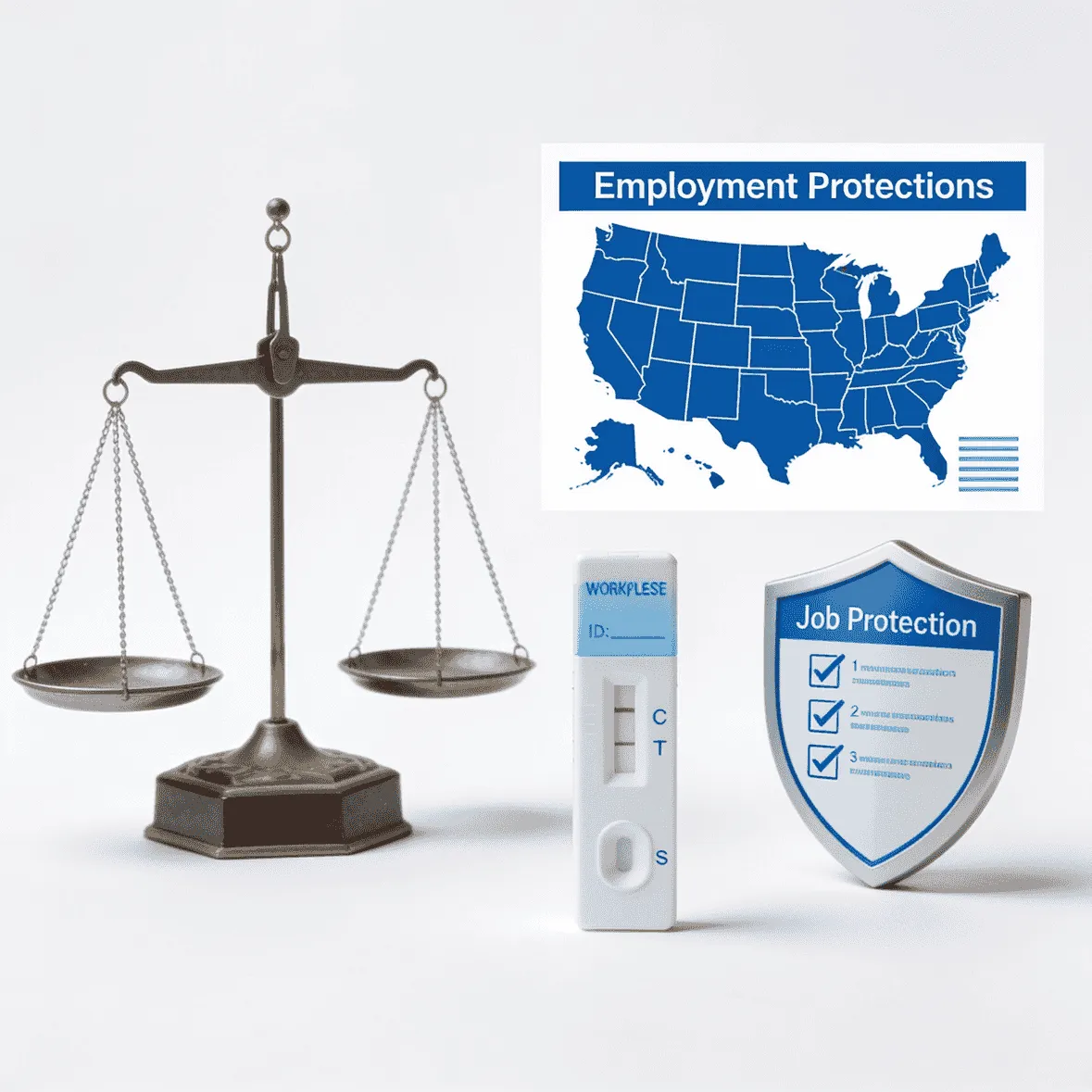

Are you aware of medical cards and employment? Can you get fired for having a medical card? Will a failed drug test end your employment? Will your MMJ card save your employment? Whatever it is, let’s have a detailed look at the medical card and employment rights and wrongs. Medical card rules and job rights confuse workers across the United States. Federal law still classifies cannabis as illegal. State laws protect medical use. Medical card holders risk job loss due to strict workplace drug testing rules.
Medical card holders worry about their job rights and protections. Can employers terminate workers for holding a valid medical card? What happens when employees fail a drug test? Can state laws protect medical cannabis patients against job bias? These job and legal concerns trouble many medical cannabis card holders.
This guide cuts through the confusion around medical cards and employment protections. You’ll learn how federal and state laws clash. We’ll show you which states offer real job protections. You’ll discover how workplace drug testing affects medical cardholders. Protect your career and health with smart strategies for medical card holders. Let’s start with the legal conflict that creates this mess.
Federal vs. State Law: Understanding the Legal Conflict in Medical Card and Employment
Medical card holders face legal uncertainty due to conflicting federal and state laws. The federal government lists cannabis as a Schedule I controlled drug. This means the federal government views it as illegal. At the same time, most states have legalized medical marijuana.
These conflicting laws directly impact your rights at work. Employers can enforce drug-free workplace policies even if you hold a valid medical card. Federal contractors have tougher rules and get no help from state laws.
Why Federal Law Still Classifies Cannabis as Illegal
The Controlled Substances Act of 1970 placed cannabis in Schedule I. The federal government ranks cannabis as a serious and addictive substance. It also means there’s no accepted medical use at the federal level.
State marijuana reforms have not swayed Congress to change federal law. Federal agencies still treat cannabis as illegal. State and federal laws create serious challenges for MMJ card holders.
How State Medical Marijuana Laws Protect Patients
State laws vary widely in their workplace protections. Medical card holders get job protection in select state regulations. Others offer no protection at all.
State laws shield MMJ card holders, but with important exceptions. Employers can create drug-free workplace rules in most states. They can still enforce policies against impairment at work. Learn your state’s workplace rules for medical card holders to stay safe.
The Employment-at-Will Doctrine and Medical Cards
In most states, workplace laws allow companies to end jobs without a strong cause. This means employers can fire you for any legal reason. Positive drug tests often qualify as legal grounds for termination.
The Americans with Disabilities Act doesn’t protect medical marijuana use. The ADA does not shield medical marijuana patients from job risks. This leaves medical card holders vulnerable to workplace drug testing policies.
State-by-State Employment Protections for Medical Card Holders
Medical card employment laws differ across the United States. A few states block employers from firing medical marijuana patients. Others offer no protection at all.
Understanding your state’s laws is critical before you get a medical card. Your employment status could depend on it. Questions like “Can you get fired for a medical card?” have different answers depending on your location.
States with Strong Employee Protections
Medical card holders get job protection in several states, with new laws growing stronger.
These states have strong job safeguards for medical card holders.
-
In Arizona, employers cannot fire workers just for having a medical card.
-
In Arkansas, workers with medical cards can’t face job discrimination.
-
In Connecticut, workers with medical cards get legal protection from job bias.
-
Medical card holders in Illinois get job safeguards, except in certain cases.
-
Medical card holders in New Jersey have strong job protection rights.
-
In New York, medical cannabis gets treated like standard prescription medications.
-
In Pennsylvania, medical card holders have job protection, except when they are high at work.
However, even these states allow exceptions. Federal workers, safety jobs, and DOT roles often do not protect medical marijuana card holders. Medical card holders get key job protections in some states for qualified workers.
States with Limited or No Protections
In California, medical marijuana patients get cards but weak job rights. Companies can fire workers who fail drug tests, even with a medical card.
Many states fall into this category. They permit medical cannabis, but don’t protect your job. In some states, having a medical card does not guarantee job safety.
How to Research Your State’s Specific Laws
Check your state’s medical marijuana employment provisions before obtaining a card. Learn more about state-specific regulations and whether you can be fired for having a medical marijuana card in your area.
Review your state’s medical cannabis statute directly. Check your state law for job protections and medical card exceptions.
Workplace Drug Testing: What Medical Card Holders Need to Know
Medical card holders should know drug testing rules to protect their work rights. Employers can still test for marijuana in most states. Your medical card doesn’t guarantee job protection. Medical card holders face tricky job issues when employers test for marijuana use.
Pre-Employment Drug Screening Policies
Employers can legally screen job applicants for drugs in most states. Employers can reject job candidates who test positive for marijuana. This applies even if you hold a valid medical card.
Some companies now drop marijuana from their pre-hiring drug tests. They do this in states with strong medical marijuana employment rights. Hiring hurdles force employers to change their workplace drug testing rules.
Random and Reasonable Suspicion Testing
Random drug testing frequency varies by industry. Truck, medical, and factory jobs screen employees more regularly for drugs. Federal regulations drive these requirements.
When managers spot drug-related performance issues, they can request a drug test. This differs legally from off-duty medical use. Know your legal rights as a medical marijuana patient in the workplace. But you can face consequences for workplace impairment. MMJ workplace drug testing rights vary significantly by state and employer type.
Testing Positive: Disclosure Strategies and Consequences
When and how you tell your boss about your medical card can change your job status. Revealing your medical card status before testing works better in some states. After-test disclosure may work better for others.
Know your workplace drug testing policy and medical card rights before talking to your boss.
Protecting Your Job: Practical Steps for Medical Card Holders
Understanding medical marijuana employment rights starts before you apply for your card. You need to know where you stand legally.
The good news is you can take concrete steps to protect yourself. These actions won’t guarantee job security in every situation. These steps help lower your chances of workplace problems.
When and How to Disclose Your Medical Card Status
Check your work contract and handbook for medical marijuana rules. Check your work handbook for medical marijuana and drug policy rules.
Most importantly, you’re not legally required to disclose your card status upfront. Medical information stays private under HIPAA in most cases.
When drug testing happens at work, you need to share your medical marijuana card details. At this point, inform HR in writing about your medical card status. Keep copies of all communications.
Documenting Your Medical Condition and Treatment
Keep detailed records from the doctor who certified your medical card. Track your medical condition and treatment with clear, precise notes.
These records show your real medical need for treatment. Your medical records can back up future workplace requests or legal claims.
Negotiating Accommodations with Employers
If your state offers medical card workplace protections, request reasonable accommodations in writing. Be specific about what you need.
Never use or be impaired at work. Medical card holders can still face job risks if they use marijuana at the workplace.
Learn about employment rules for medical card holders in your specific state first. An employment lawyer can help explain your medical card workplace rights.
Conclusion
Understanding medical cards and employment rights protects both your health and career. Federal laws classify marijuana as an illegal drug nationwide. But state laws vary widely on employee protections. Some states protect workers who have medical marijuana cards from job bias. Others offer no workplace protections at all.
You learned how federal and state laws conflict. You explored state protections for medical marijuana employment rights. Explore how medical card holders face drug screening policies in their jobs. You got practical steps to safeguard your job before and after getting your card.
Document your medical needs with thorough records. Know your state’s specific protections. Communicate proactively with HR when appropriate. These steps help you understand medical card employment laws.
If you’re considering a medical card, Leafy Rx connects you with licensed providers for confidential evaluations. Our HIPAA-compliant platform has helped over 100,000 patients access legal treatment. Start your evaluation today to see if you qualify and get state-specific employment guidance.
Leafy RX: Our health matters. Your career matters. With the right knowledge and preparation, you can protect both.






 Ask ChatGPT
  Ask Claude
  Ask Perplexity