
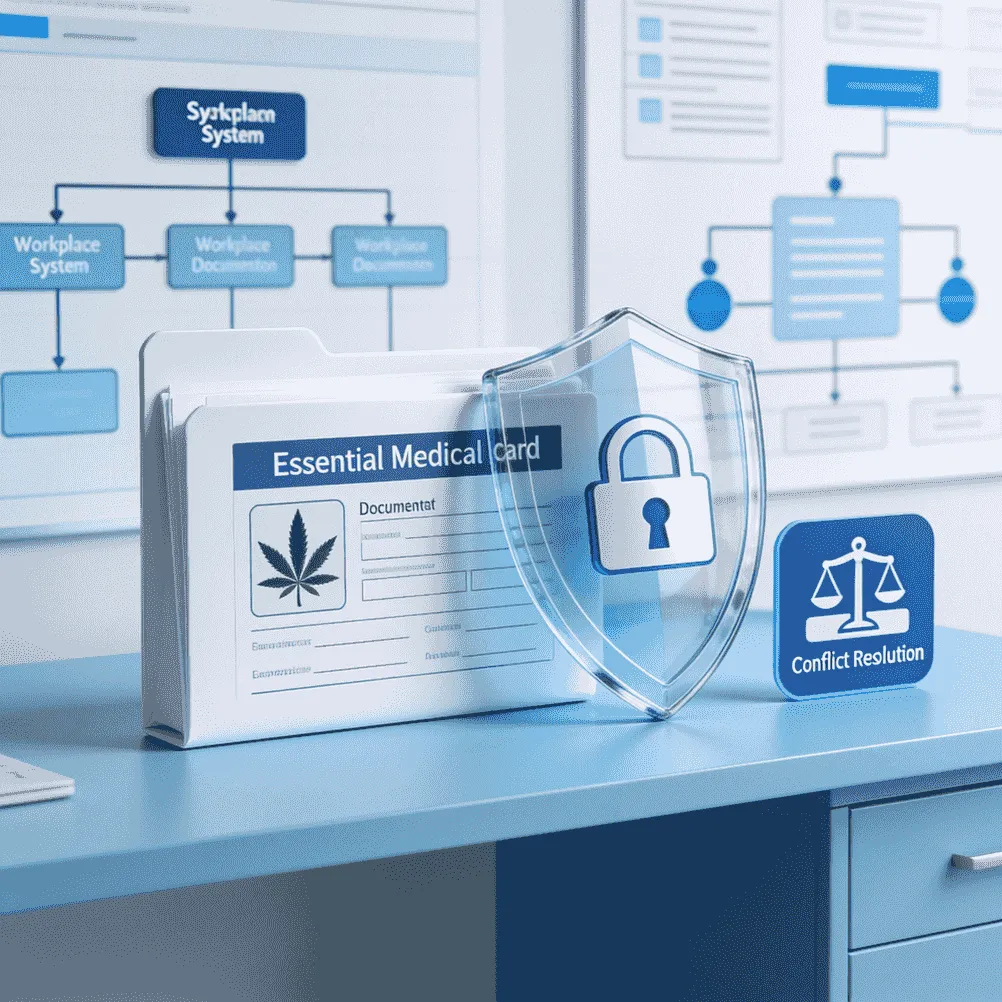

Your medical marijuana card workplace documentation can make or break your job security. Many cardholders don’t know what records to keep. They risk losing legal protections when conflicts arise. State medical cannabis laws often confuse workplace managers and HR. This mix-up leaves workers unsure about their legal rights at work.
You face a tricky balance between privacy and disclosure. Should you tell your boss about your card? What happens if you fail a drug test? How do you prove you’re following the law? Poor records can expose workers to potential job loss or discrimination claims.
This guide shows you exactly what medical marijuana card at work documents you need. You’ll learn which records protect your rights under federal and state laws. We explain how to discuss your medical marijuana status while protecting your privacy at work. You’ll discover how to build a documentation system that proves compliance. We also explain how to respond when workplace conflicts arise.
The right paperwork protects both your medical needs and your career. You’ll know what to keep, what to share, and what will stay private. Here are the essential papers every medical marijuana patient needs to keep safe at work.
Essential Medical Marijuana Card Workplace Documentation to Maintain for Protection
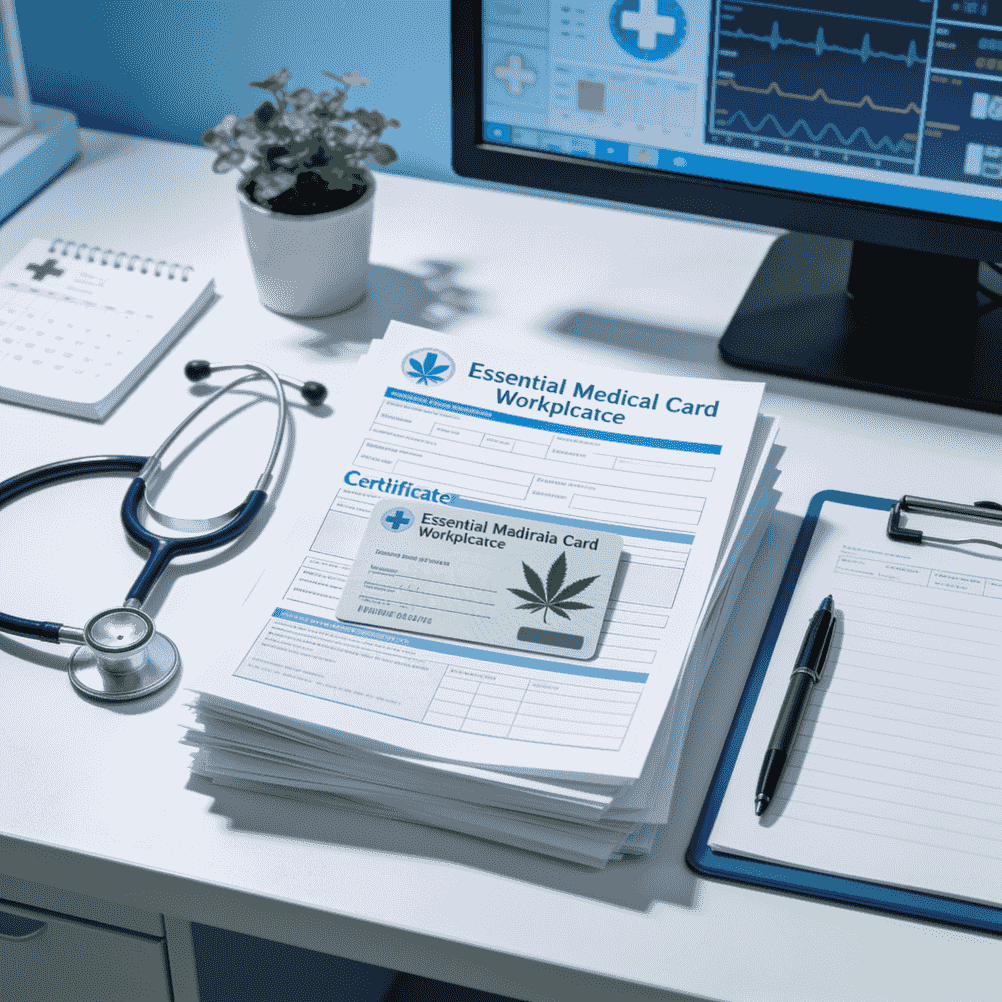
Your medical marijuana card papers help shield your job. You need specific records to prove your legal status. Keep these documents organized and accessible at all times. Knowing which medical marijuana card documents to keep helps you prove your legal work status.
State-Issued Medical Marijuana Card and Certification
Your state card proves you are legally allowed to use medical marijuana. Store both digital and physical copies in secure locations. The expiration date must be clearly visible on all copies.
Most states require annual renewal of medical cards. Track your renewal date to maintain continuous coverage. A lapsed card can’t protect your workplace medical marijuana rights.
-
Keep certified copies separate from your original card.
-
Store your patient ID number in a password-protected file.
-
Save proof of registration with your state’s program.
-
Keep dated proof of every medical marijuana card renewal submission.
Healthcare Provider Recommendation Letter
Your doctor’s letter details the medical condition that qualifies you for marijuana. The document shows why medical marijuana is key to your healthcare. The doctor’s note can boost your case for workplace accommodations.
The letter should include your doctor’s license number and contact information. Keep the original in a fireproof safe. Create copies of your medical marijuana documents for work, home, and backup.
Workplace Accommodation Request Documentation
Keep detailed records of every talk and note about your medical marijuana paperwork. Save all emails, letters, and meeting notes with dates. This creates a paper trail if disputes arise.
Reference the ADA when you submit your medical marijuana accommodation request. Show how your medical condition affects your work tasks and productivity. Gather medical proof to support your request for workplace cannabis use.
-
Keep copies of all submitted accommodation requests.
-
Save all workplace responses with clear time and date markers.
-
Write down verbal talks with your employer right after they happen.
-
Store HR correspondence in a dedicated folder
Understanding Your Privacy Rights and Disclosure Obligations
Your medical marijuana card workplace documentation falls under strict privacy laws. HIPAA protects this information as confidential health data. Employers can’t access your medical records without consent.
Federal rules create legal hurdles for cannabis card holders. Cannabis remains illegal at the federal level. This means some protections don’t apply in certain situations.
HIPAA Protections for Medical Marijuana Patients
Your medical cannabis details stay private under HIPAA rules. Your doctor can’t share your medical marijuana status with employers. Doctors risk fines if they break medical privacy rules.
That said, you might need to provide proof yourself. When you share your medical marijuana card, you lose HIPAA’s privacy shield at work. Document every request you receive in writing.
Certified providers offer HIPPA compliant certification processes that maintain the security of medical information throughout evaluation.
State-Specific Employment Protections
State laws about medical marijuana in the workplace are not the same. Some states shield workers with medical marijuana cards from job loss. Others offer zero protection.
Some states protect workers with medical marijuana cards from job loss.
-
New York prohibits firing employees for legal off-duty cannabis use.
-
In Illinois, employers cannot fire medical marijuana card holders for legal use.
-
In Connecticut, employers must assist medical marijuana card holders with their work tasks.
-
Nevada bans pre-employment testing for cannabis in most jobs
Check your state’s specific laws before disclosing your status. Worker rights for medical cannabis patients change with new rules.
When Disclosure Is Required vs. Optional
Jobs with high safety risks need workers to share medical marijuana status. Federal law requires contractors to keep workplaces free of drugs. Truck, bus, and train workers must take drug tests no matter what state law says.
For most jobs, disclosure remains optional. You don’t need to volunteer your medical marijuana status. But refusing drug tests can cost you the position.
Save workplace accommodation papers and HR emails in a secure file. Save copies of workplace drug testing policies. Talk to a lawyer first to learn your rights about medical marijuana card documents at work.
Creating a Workplace Documentation System
You need a comprehensive system to track your medical marijuana card workplace documentation. This protects your rights and proves compliance when needed. A good system keeps everything organized and accessible.
Secure Storage Solutions for Sensitive Documents
Store your medical cannabis employment documentation separately from regular work files. Keep your medical marijuana card hidden from others using this approach. Use a locked file cabinet at home or a password-protected folder on your computer.
Never leave sensitive documents on your desk or in shared spaces. Treat medical documents with the same care you give financial paperwork. Keep your original medical card in a safe place and carry a copy to work if needed.
Digital vs. Physical Record Management
Keep your medical marijuana papers in secure digital formats. Keep your medical marijuana documents safe in encrypted digital drives or password files. Safe digital tools let you view medical records with strong data protection.
Always keep paper copies of key medical marijuana documents. Print and save key medical marijuana documents: card, state cert, and work policy. Store these in a fireproof safe or locked drawer at home.
Documentation Timeline and Renewal Tracking
Set calendar reminders 60-90 days before your card expires. This gives you time to renew without gaps in coverage. Track every workplace interaction about your medical status in a dated log.
Write down all workplace talks about your medical marijuana accommodation and key events. Note changes to your treatment plan or dosage. Keep copies of your company’s drug policy with notes about medical marijuana provisions. Maintaining workplace records for medical marijuana patients ensures comprehensive protection.
Handling Workplace Conflicts and Legal Protection
Proper medical marijuana card workplace documentation protects your rights if conflicts arise; you need a clear paper trail. This shows you followed all rules while using medical cannabis.
Documentation for Discrimination Claims
Record each negative work event that occurs after you reveal your medical marijuana card. Write down dates, times, and what happened. Note who was present during each conversation.
Save copies of reviews that show your good job skills. These prove that your medical treatment doesn’t affect your work. Preserve email records that show how your medical marijuana impacts your job.
Working with Employment Attorneys
Save contact details for lawyers who help with medical marijuana workplace rights. Lawyers know state laws that protect medical marijuana patients at work. You’ll need expert help if discrimination occurs.
Proactive Compliance Strategies
Document your commitment to workplace safety in writing. State you never use during work hours. Show you’re never impaired on duty. This shows you manage your medical needs while meeting work duties. Proper ADA accommodation medical marijuana paperwork strengthens your position when requesting workplace modifications. Understanding medical card disclosure requirements will help you stay compliant while protecting your employment rights.
Conclusion
Proper medical marijuana card workplace documentation protects your rights and privacy. Protect your rights by saving your medical marijuana card and physician papers. You now understand your privacy rights under HIPAA and state employment laws. Create a secure method to save all workplace messages about your medical needs. You know how to handle conflicts with documented evidence of your legal protections.
Create a secure file system for your medical cannabis papers today. Save official copies of your medical cannabis documents in secure places. Track and record each work discussion about your medical cannabis. Write down every policy change and talk about work accommodations. Stay updated on your state’s rules for medical cannabis at work. These steps ensure you’re prepared if workplace issues arise.
Strong medical marijuana card workplace documentation gives you workplace confidence. Manage your medical treatment while staying professional at work. Well-kept records show you follow medical and workplace rules. This preparation protects your job and your health.
If you need to obtain or renew your medical card with proper workplace records. Leafy RX connects you with licensed providers for secure evaluations. Our HIPAA-compliant platform protects your medical marijuana workplace privacy while providing official documentation. Get started today with our money-back guarantee and join over 100,000 patients who trust us.
Take control of your medical cannabis workplace records today. Your rights deserve protection. Leafy RX is here every step of the way.







 Ask ChatGPT
  Ask Claude
  Ask Perplexity