

Do medical marijuana cards show up on background checks? This question weighs heavily on the minds of job seekers, security clearance holders, and anyone considering obtaining a medical marijuana card for therapeutic purposes. With medical marijuana legalized in 38 states across America, understanding the privacy implications of cardholder status has become increasingly important for patients who rely on cannabis for legitimate medical conditions.
The intersection of medical marijuana cards and background checks creates a complex landscape where federal law, state regulations, HIPAA protections, and employer policies all converge. For many patients managing chronic pain, epilepsy, cancer symptoms, or other qualifying conditions, obtaining a medical marijuana card provides legal access to therapeutic cannabis. However, concerns about employment prospects, housing applications, and professional licensing often cause hesitation.
Ready to explore your medical marijuana options? Connect with a licensed physician today to discuss whether a medical marijuana card is right for your health needs and learn how to navigate the application process with confidence.
What Exactly Is a Medical Marijuana Card?
A medical marijuana card is a state-issued identification document that permits patients to legally purchase, possess, and use cannabis for medical purposes. To obtain this card, individuals must receive a recommendation from a licensed healthcare provider after being diagnosed with a qualifying medical condition. The specific qualifying conditions vary by state but commonly include chronic pain, PTSD, cancer, epilepsy, multiple sclerosis, and Crohn’s disease.
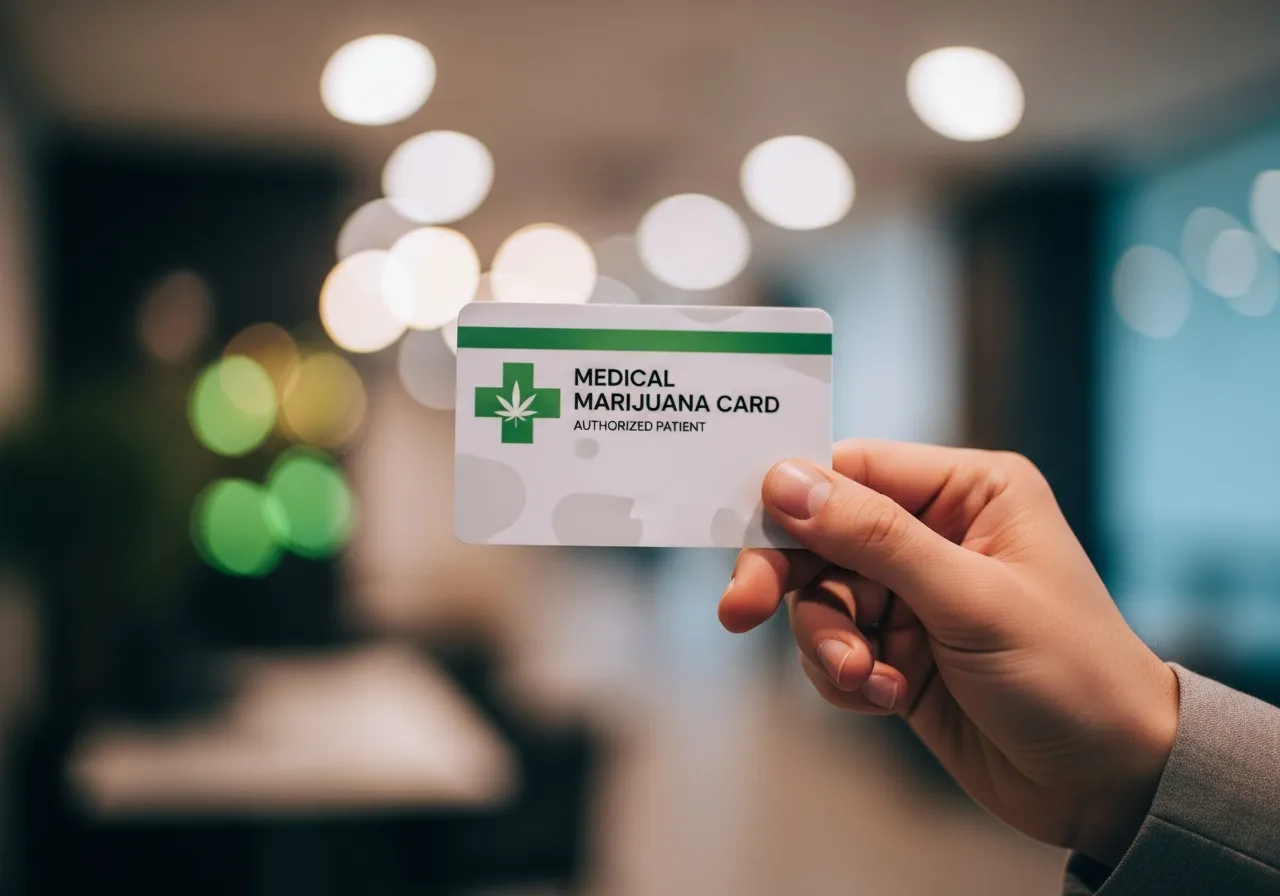
What does a medical marijuanas card look like? Most medical marijuana cards resemble driver’s licenses or state identification cards, featuring the patient’s photo, name, date of birth, card expiration date, and a unique identification number. The card typically includes the state’s medical marijuana program logo or seal and may contain security features to prevent counterfeiting.
The medical marijuana card price varies significantly across states, generally ranging from $50 to $200 for the state application fee, plus the cost of the physician consultation, which can range from $100 to $300. Some states offer reduced fees for veterans, seniors, or low-income patients. Renewal fees are typically required annually or biennially, depending on state regulations.
HIPAA Privacy Protections for Medical Marijuana Patients
The Health Insurance Portability and Accountability Act (HIPAA) serves as the primary federal privacy protection for medical marijuana cardholders. HIPAA classifies medical marijuana recommendations and cardholder status as protected health information (PHI), meaning healthcare providers cannot disclose this information to unauthorized parties without patient consent.
Under HIPAA regulations, your medical marijuana card information is protected in the same manner as any other medical record. This means that background check companies, employers, landlords, and the general public cannot access your cardholder status through standard screening processes. Healthcare providers who recommend medical marijuana must maintain strict confidentiality protocols and can only share your information in specific circumstances, such as coordinating care with other medical professionals or complying with court orders.
However, HIPAA protections have limitations. The law governs healthcare providers, health plans, and healthcare clearinghouses but does not extend to all entities. For instance, if you voluntarily disclose your medical marijuana use to an employer or include it on an application, HIPAA would not prevent that information from being considered in hiring decisions.
State Medical Marijuana Databases and Access Restrictions
Every state with a medical marijuana program maintains a confidential registry or database of cardholders. These state databases serve multiple purposes, including verifying patient eligibility at dispensaries, preventing fraud, and tracking medical marijuana recommendations. Despite being government-maintained systems, these registries operate under strict confidentiality requirements.
State medical marijuana registries are not public records and cannot be accessed through standard background check processes. Access to these databases is typically limited to specific authorized parties, including registered healthcare providers who can prescribe medical marijuana, licensed dispensaries that need to verify patient status before dispensing cannabis products, law enforcement officers conducting specific marijuana-related investigations with proper legal authority, medical marijuana program administrators overseeing regulatory compliance, and in rare cases, other government agencies with explicit legal authorization.
The specific privacy protections vary by state. Some states, like California and Colorado, have enacted particularly robust privacy laws that explicitly prohibit sharing registry information with employers or background check companies. Other states may have less comprehensive protections, making it crucial for patients to understand their specific state’s regulations.
Do Medical Marijuana Cards Show Up on Background Checks?

The short answer is that medical marijuana cards do not appear on standard employment background checks. Typical pre-employment screening includes criminal history searches, employment verification, education confirmation, credit reports for certain positions, and reference checks. None of these standard components would reveal medical marijuana cardholder status.
Medical marijuanas card benefits include privacy protections that keep this information separate from criminal records and public databases that background check companies typically access. Even if you have obtained a medical marijuana card, this information remains confidential medical data protected under HIPAA and state privacy laws.
However, several important exceptions and considerations exist. While the card itself won’t appear on a background check, drug testing is a separate matter entirely. Many employers include drug screening as part of the hiring process or maintain workplace drug testing policies. If you test positive for THC, the active component in marijuana, having a medical marijuana card may not automatically protect your employment prospects.
Federal employment presents unique challenges. Since marijuana remains illegal under federal law, positions requiring federal security clearance or working directly for federal agencies may require disclosure of marijuana use, even for medical purposes. The federal government maintains a zero-tolerance policy for marijuana use, regardless of state legalization or medical necessity.
Security Clearance and Federal Employment Considerations
Individuals seeking security clearance or federal employment face particularly stringent requirements regarding marijuana use. The federal government requires applicants to disclose all marijuana use on security clearance applications, including use authorized by state medical marijuana programs. Failing to disclose medical marijuana use when required can result in clearance denial or revocation based on dishonesty rather than the marijuana use itself.
Federal agencies and contractors must comply with the Drug-Free Workplace Act, which maintains that marijuana use, even with a medical card, can disqualify candidates from positions requiring security clearance. The level of concern varies depending on clearance level, how recent the marijuana use was, the frequency and context of use, and whether the applicant demonstrates intent to continue use.
Some individuals have successfully obtained security clearance while holding medical marijuana cards by demonstrating they have ceased use, providing medical documentation supporting the legitimate medical need, showing the temporary nature of marijuana use for acute conditions, and establishing alternative treatment plans that don’t involve cannabis.
Employer Rights and Workplace Drug Testing
Employers maintain significant latitude in establishing workplace drug policies, even in states with legal medical marijuana. While a medical marijuana card won’t show up on a background check, employers can still implement drug testing programs and take adverse action based on positive marijuana tests.
Employer rights regarding marijuana testing vary considerably by state. Some states provide no employment protections for medical marijuana users, allowing employers to refuse hiring or terminate employment based on marijuana use, regardless of medical authorization. Other states offer limited protections, such as prohibiting discrimination against medical marijuana cardholders but allowing exceptions for safety-sensitive positions. A few states provide broader protections, requiring employers to make reasonable accommodations for medical marijuana users similar to other prescription medications.
Industries with federal oversight, such as transportation, aviation, healthcare facilities receiving federal funding, and defense contractors, face additional restrictions. These federally regulated industries must comply with federal law, which prohibits marijuana use regardless of state medical marijuana laws.
Considering a medical marijuana card but concerned about employment? Consult with a licensed physician who can provide guidance on medical cannabis use, discuss workplace considerations, and help you understand your rights under state law.
Criminal Background Checks and Marijuana-Related Records
Criminal background checks focus on arrests, convictions, and outstanding warrants. Simply possessing a medical marijuana card creates no criminal record and will not appear on criminal background checks. However, previous marijuana-related arrests or convictions may appear, depending on state laws regarding expungement and record sealing.
Many states have enacted laws to expunge or seal previous marijuana convictions, particularly for offenses that would be legal under current medical marijuana programs. If you have previous marijuana charges on your record, research your state’s expungement options or consult with an attorney about clearing eligible offenses.
Housing Applications and Landlord Access
Landlords conducting tenant screening typically cannot access medical marijuana cardholder information through standard background checks. However, similar to employment situations, landlords may have drug-free property policies that could impact medical marijuana users.
Some states provide housing protections for medical marijuana patients, prohibiting landlords from discriminating based solely on cardholder status. However, federal housing regulations create complications, particularly for properties receiving federal funding or subsidies. Section 8 housing and other federally funded programs must comply with federal drug-free policies, which may prohibit marijuana use regardless of medical authorization.
Professional Licensing and Medical Marijuana Cards
Certain professional licenses require disclosure of substance use or may conduct background investigations. Healthcare professionals, attorneys, teachers, commercial drivers, and pilots may face additional scrutiny regarding medical marijuana use. Most professional licensing boards focus on impairment and professional conduct rather than legal medical marijuana use, but requirements vary by profession and state.
Protecting Your Medical Marijuana Privacy
While strong privacy protections exist for medical marijuana cardholders, patients can take additional steps to safeguard their information. Only disclose medical marijuana use when legally required or medically necessary. Store physical cards and documentation securely at home. Use secure digital platforms with strong passwords for accessing medical marijuana accounts. Understand your specific state’s privacy laws and protections. Review medical records periodically for accuracy. Be cautious about social media posts that could reveal medical marijuana use.
State-by-State Variations in Privacy Laws
Privacy protections for medical marijuana patients vary significantly across states. California maintains strict confidentiality with explicit employment protections in certain contexts. Florida’s Department of Health registry is confidential with limited access for authorized entities. Colorado provides robust privacy protections with workplace accommodation requirements in some situations. New York offers employment protections prohibiting discrimination against certified patients.
Texas keeps CURT registry data confidential from employers and background check companies as well. If you’re ready to move forward, you can apply for a Texas medical card with LeafyRX.
Research your specific state’s laws to understand the full extent of privacy protections and potential limitations. State medical marijuana programs typically provide detailed information about privacy protections on their official websites.
Conclusion
Do medical marijuana cards show up on background checks? In the vast majority of cases, the answer is no. HIPAA protections, state privacy laws, and confidential registry systems ensure that medical marijuana cardholder status remains private medical information that cannot be accessed through standard background check processes. Employers, landlords, and background check companies cannot view state medical marijuana databases or obtain this information without your consent or specific legal authorization.
However, important exceptions exist, particularly for federal employment, security clearance positions, and federally regulated industries. While the card itself remains private, workplace drug testing policies, professional licensing requirements, and federal regulations may still impact medical marijuana patients in certain circumstances.
Understanding your rights under state law, maintaining awareness of workplace policies, and consulting with licensed healthcare providers about medical marijuana use will help you navigate these complex privacy considerations. For most medical marijuana patients, strong privacy protections ensure that choosing therapeutic cannabis treatment will not negatively impact employment prospects, housing applications, or background check results.
As medical marijuana acceptance continues to grow and laws evolve, staying informed about changing regulations and privacy protections remains essential for protecting your rights as a patient while accessing the medical marijuanas card benefits that can significantly improve quality of life for those managing chronic conditions.







 Ask ChatGPT
  Ask Claude
  Ask Perplexity