
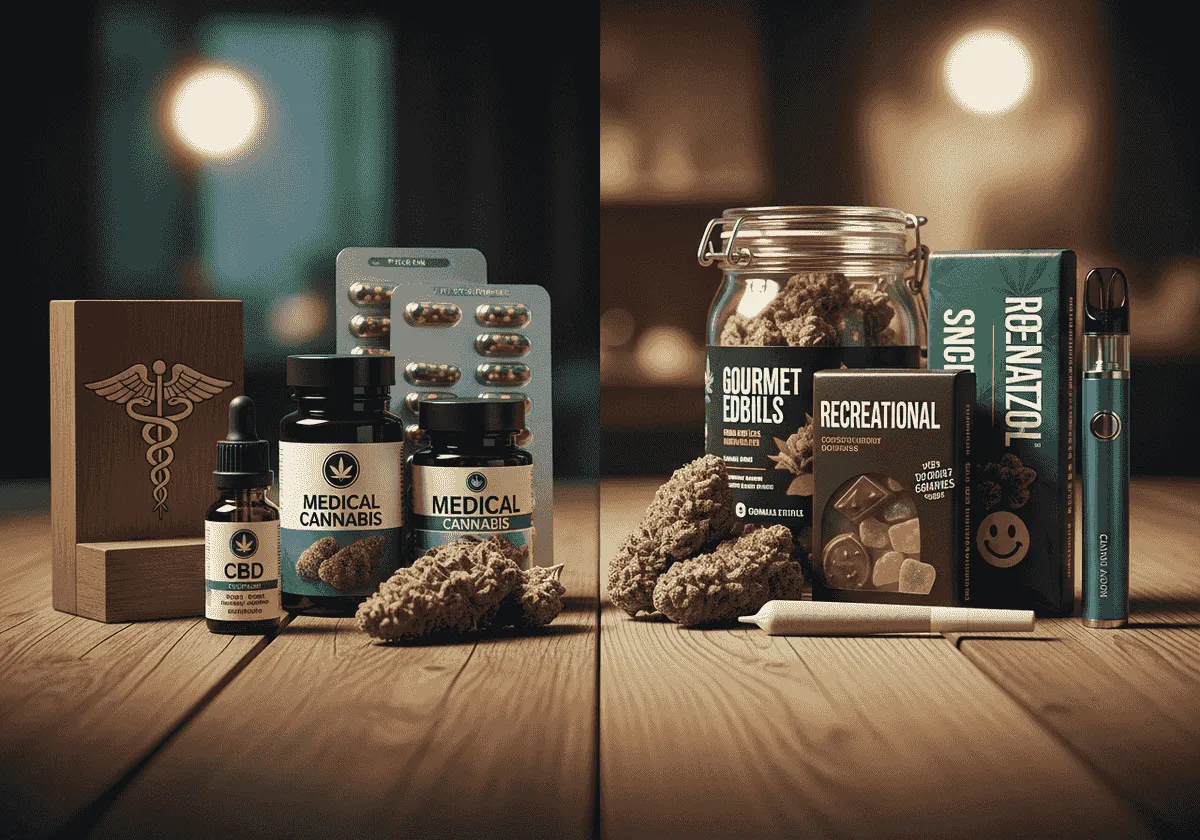

Understanding the distinction between medical vs recreational marijuana is crucial for anyone considering legal cannabis access. While both types come from the same plant, the legal framework, costs, possession limits, and qualifying requirements differ significantly. Medical marijuana programs require a doctor’s recommendation and are designed for patients with specific health conditions, while recreational marijuana is available to adults without medical justification in states where it’s legal. This comprehensive guide examines the critical differences between these two pathways, helping you determine which option best suits your needs and circumstances. Whether you’re seeking relief from a medical condition or exploring legal cannabis use, making an informed choice can save you money and ensure you’re properly protected under the law.
Understanding the Legal Framework
The legal landscape surrounding cannabis in the United States has evolved dramatically over the past two decades. As of 2024, 38 states plus Washington D.C. have legalized medical marijuana, while 24 states have legalized recreational use. However, cannabis remains classified as a Schedule I controlled substance at the federal level, creating a complex patchwork of regulations. Research indicates that state-level legalization has significantly impacted access patterns and public health outcomes.
Medical marijuana laws typically establish a regulated system requiring patients to obtain certification from a licensed physician who confirms they have a qualifying medical condition. This physician-patient relationship forms the cornerstone of legal medical cannabis access. Studies show that medical marijuana programs have provided therapeutic benefits for millions of patients nationwide.
Recreational marijuana laws, conversely, allow adults aged 21 and older to purchase and possess cannabis without medical justification. These programs often generate substantial tax revenue for states while eliminating criminal penalties for adult possession and use within legal limits.
Qualifying Conditions for Medical Marijuana
Medical marijuana programs require patients to have specific qualifying conditions. While these vary by state, common qualifying conditions include:
Common Qualifying Conditions
-
Chronic Pain: The most common qualifying condition, affecting millions of Americans. Research demonstrates that medical cannabis can effectively manage various chronic pain conditions.
-
Post-Traumatic Stress Disorder (PTSD): Particularly relevant for veterans and trauma survivors, many states specifically include PTSD as a qualifying condition.
-
Cancer: Both for symptom management and chemotherapy-related side effects such as nausea and appetite loss.
-
Epilepsy and Seizure Disorders: Cannabidiol (CBD) has shown remarkable effectiveness in reducing seizure frequency in certain epilepsy conditions.
-
Multiple Sclerosis and Muscle Spasticity: Cannabis can help alleviate painful muscle spasms associated with MS and similar conditions.
-
HIV/AIDS: For managing wasting syndrome, pain, and other symptoms associated with HIV/AIDS.
-
Glaucoma: Cannabis can temporarily reduce intraocular pressure, though it’s not typically a first-line treatment.
-
Crohn’s Disease and Inflammatory Bowel Disease: Anti-inflammatory properties may help manage symptoms and reduce flare-ups.
Some states have expanded their qualifying condition lists to include anxiety disorders, insomnia, migraines, and other conditions. Additionally, many states include a “physician discretion” clause allowing doctors to recommend medical marijuana for any condition they believe might benefit from cannabis therapy. Evidence suggests that broader qualifying conditions have improved patient access to therapeutic cannabis.
Cost Comparison: Medical vs Recreational Marijuana
One of the most significant practical differences between medical vs recreational marijuana lies in cost. Understanding these financial implications is crucial for making an informed decision.
Initial Costs
Medical Marijuana:
-
Doctor’s consultation fee: $50-$200 (varies by state and provider)
-
State registration fee: $0-$200 annually (some states waive fees for veterans or low-income patients)
-
Medical card replacement: $10-$25 if lost
Recreational Marijuana:
- No upfront costs beyond age verification (must be 21+)
For those seeking streamlined access to medical marijuana certification, services like LeafyRX offer convenient online evaluations with licensed physicians, often at competitive rates that include both the consultation and assistance with state registration.
Product Costs and Taxes
The ongoing cost difference becomes apparent at the dispensary. Recreational marijuana typically carries significantly higher taxes than medical marijuana:
Medical Marijuana Taxes:
-
0-7% sales tax (many states exempt medical cannabis from sales tax)
-
Some states have no excise tax on medical marijuana
Recreational Marijuana Taxes:
-
15-37% total tax rate (combining state excise tax, sales tax, and local taxes)
-
Washington state: 37% excise tax
-
California: 15% excise tax plus local taxes (can exceed 30% total)
-
Colorado: 15% excise tax plus 15% special sales tax
Long-Term Savings Analysis
For regular cannabis users, the tax savings from medical marijuana typically offset the initial certification costs within the first few months. Consider this example:
A patient spending $200 monthly on cannabis products would pay approximately $400-$600 in annual taxes recreationally versus $0-$168 medically. The savings of $232-$600 per year easily justify the $100-$300 annual cost of maintaining a medical marijuana card. Economic analyses confirm that medical marijuana programs can provide substantial cost savings for patients.
Possession Limits: Medical vs Recreational

Possession limits vary significantly between medical and recreational programs and differ from state to state. Understanding these limits is crucial to remaining compliant with state law.
Typical Medical Marijuana Possession Limits
-
Flower: 2-3 ounces per month (some states allow up to 8 ounces)
-
Concentrates: Higher limits for concentrates and edibles (often calculated using THC equivalency)
-
Home Cultivation: Many states allow medical patients to grow 6-12 plants at home
Typical Recreational Marijuana Possession Limits
-
Flower: 1 ounce for personal possession (some states allow up to 2.5 ounces)
-
Concentrates: Typically 5-8 grams
-
Edibles: Limited by THC content (often 500-800mg total THC)
-
Home Cultivation: 6 plants per person (12 per household) in most states that allow it
State-by-State Variations
Possession limits vary dramatically by jurisdiction. For example, Oklahoma’s medical marijuana program allows patients to possess up to 8 ounces at home and 3 ounces in public, while Michigan recreational users are limited to 2.5 ounces. Oregon medical patients can possess 24 ounces compared to 2 ounces for recreational users.
These higher possession limits for medical users reflect recognition that patients may need larger quantities for consistent therapeutic dosing and may want to maintain a supply to avoid interruptions in their treatment.
Legal Protections and Rights
The legal protections afforded to medical marijuana patients extend beyond simple decriminalization. These protections can significantly impact various aspects of life, from employment to housing to child custody. Legal research indicates that medical marijuana cardholders often receive stronger legal protections than recreational users.
Employment Protections
Medical marijuana patients in many states enjoy employment protections that recreational users do not:
-
Anti-Discrimination Provisions: Several states prohibit employers from discriminating against medical marijuana cardholders, though exceptions exist for safety-sensitive positions and federal contractors.
-
Drug Testing Accommodations: Some jurisdictions require employers to make reasonable accommodations for medical marijuana patients, similar to protections for prescription medications.
-
Wrongful Termination Claims: Medical marijuana patients who are terminated solely for lawful off-duty use may have grounds for wrongful termination lawsuits in certain states.
Recreational users, conversely, generally have no such protections. Employers in recreational states can typically refuse to hire or can terminate employees who test positive for cannabis, regardless of when or where consumption occurred.
Housing Rights
Medical marijuana patients often have stronger protections in housing situations:
-
Landlords in some states cannot refuse to rent to medical marijuana cardholders or evict them for lawful medical use
-
Public housing authorities may be required to accommodate medical marijuana patients, though federal housing presents complications
-
Homeowners associations face restrictions on prohibiting medical marijuana use in some jurisdictions
Child Custody Considerations
Family court judges increasingly recognize that legal medical marijuana use, when done responsibly and according to a physician’s recommendation, should not automatically disqualify someone from custody or visitation rights. However, recreational use may still be viewed less favorably in custody disputes, particularly in states without recreational legalization.
Criminal Justice Protections
Medical marijuana cardholders have explicit legal authorization to possess and use cannabis within state-defined limits. This provides:
-
Affirmative Defense: A medical marijuana card serves as proof of legal authorization if questioned by law enforcement
-
Interstate Travel: While cannabis cannot legally cross state lines, medical cardholders traveling to other medical marijuana states may have reciprocity agreements allowing legal possession
-
Reduced Penalties: In states with medical marijuana but not recreational legalization, medical patients face no criminal liability while non-patients may still face prosecution
Product Access and Quality Differences
Beyond legal and financial considerations, medical vs recreational marijuana programs differ in the types and quality of products available. Medical research emphasizes the importance of quality control and appropriate dosing for medical cannabis products.
Potency Limits - Medical vs Recreational Marijuana
Several states impose potency caps on recreational marijuana products that do not apply to medical products:
-
Recreational edibles may be limited to 10mg THC per serving and 100mg per package
-
Medical edibles can contain higher dosages (up to 500mg or more per package)
-
Concentrate potency caps (e.g., 60-70% THC) may apply to recreational but not medical products
These differences matter significantly for patients who require higher doses for symptom management, particularly those with severe chronic pain, advanced cancer, or other serious conditions.
Specialized Medical Products
Medical dispensaries often carry specialized products designed for specific therapeutic applications:
-
High-CBD Strains: Specifically bred for patients seeking therapeutic benefits without psychoactive effects. Clinical evidence supports CBD’s therapeutic efficacy for various conditions.
-
Targeted Formulations: Products designed for specific conditions such as insomnia, nausea, or inflammation
-
Pharmaceutical-Grade Options: More rigorous testing and quality control standards
-
Alternative Delivery Methods: Suppositories, transdermal patches, and sublingual tablets that may not be available recreationally
Expert Guidance
Medical dispensaries are required to employ trained pharmacists or patient consultants who can provide professional guidance on:
-
Strain selection for specific medical conditions
-
Proper dosing and titration strategies
-
Potential drug interactions with prescription medications
-
Optimal consumption methods for individual patient needs
This professional consultation is generally not available or required in recreational dispensaries, where staff may have product knowledge but lack medical training.
Age Requirements and Access for Minors
Age requirements represent another crucial distinction between medical and recreational marijuana programs:
Recreational Marijuana
-
Strictly limited to adults 21 years and older
-
No exceptions for younger adults or medical necessity
-
Criminal penalties for providing cannabis to minors
Medical Marijuana
-
Most states allow patients 18 and older to obtain medical marijuana cards independently
-
Minors (under 18) can qualify with parental or guardian consent and registration as a caregiver
-
Some states require two physician recommendations for minors or restrict qualifying conditions
-
Minors typically cannot purchase cannabis directly; a registered caregiver must obtain products on their behalf
This provision is particularly important for pediatric patients with severe epilepsy, cancer, autism spectrum disorder, or other serious medical conditions that may benefit from medical cannabis therapy. Pediatric research has documented therapeutic benefits for certain pediatric conditions, though careful medical supervision is essential.
How to Obtain a Medical Marijuana Card

If you’ve determined that medical marijuana is the right choice for you, the application process is straightforward:
Step 1: Verify Eligibility
-
Confirm your state has a medical marijuana program
-
Review qualifying conditions to ensure you have a covered diagnosis
-
Gather medical records documenting your condition
Step 2: Obtain Physician Certification
-
Schedule an appointment with a licensed physician registered with your state’s medical marijuana program
-
Many states now offer telemedicine evaluations through services like LeafyRX, making the process convenient and accessible from home
-
The physician will review your medical history, confirm your qualifying condition, and provide a written certification if appropriate
Step 3: Register with Your State
-
Complete your state’s online application portal
-
Upload required documentation (physician certification, proof of residency, photo ID)
-
Pay the state registration fee
-
Wait for approval (typically 7-30 days depending on state)
Step 4: Receive Your Card and Shop
-
Once approved, you’ll receive a physical card or digital authorization
-
Locate licensed medical dispensaries in your area
-
Bring your medical marijuana card and valid ID to purchase products
Making the Right Choice for Your Situation
Deciding between medical and recreational marijuana depends on several personal factors:
Choose Medical Marijuana If:
-
You have a qualifying medical condition and want therapeutic benefits
-
You use cannabis regularly and want to save money on taxes
-
You need higher possession limits or stronger products
-
You want legal protections in employment, housing, or custody situations
-
You’re under 21 and have a legitimate medical need with parental consent
-
You live in a medical-only state without recreational legalization
-
You value professional medical guidance on product selection and dosing
Choose Recreational Marijuana If:
-
You’re a casual or infrequent user where tax savings wouldn’t offset certification costs
-
You don’t have a qualifying medical condition
-
You prefer not to involve physicians or create medical records of cannabis use
-
You want immediate access without the application process
-
Standard possession limits meet your needs
For most regular users with qualifying conditions, obtaining a medical marijuana card through a streamlined service like LeafyRX provides the best value proposition. The combination of tax savings, higher possession limits, stronger legal protections, and access to higher-quality medical products typically justifies the modest upfront investment.
Conclusion
The debate over medical vs recreational marijuana isn’t simply about different ways to access the same product. These programs serve fundamentally different purposes and offer distinct advantages depending on your individual circumstances. Medical marijuana programs provide therapeutic access for patients with legitimate health conditions, offering cost savings, stronger legal protections, higher possession limits, and specialized products designed for medical applications.
Recreational marijuana, while more accessible to casual users, comes with higher taxes, lower possession limits, and fewer legal protections. However, it serves an important role in providing legal access to adults who want to use cannabis without medical justification.
If you have a qualifying medical condition and use cannabis with any regularity, obtaining a medical marijuana card is almost certainly worth the investment. The financial savings alone typically justify the cost within months, and the additional legal protections provide peace of mind that recreational users simply cannot access.
As state laws continue to evolve and more jurisdictions adopt comprehensive cannabis policies, understanding these distinctions becomes increasingly important for making informed decisions about legal cannabis access. Whether you choose medical or recreational marijuana, staying informed about your state’s specific regulations, requirements, and protections ensures you can access cannabis legally and safely.





 Ask ChatGPT
  Ask Claude
  Ask Perplexity