


Medical marijuana for back pain has become one of the most frequently searched medical cannabis topics in the United States, and for good reason. Back pain is the single leading cause of disability worldwide, affecting an estimated 568 million people globally. In the U.S. alone, it drives more opioid prescriptions than any other condition. If you have been asking can I get medical marijuana for back pain, the short answer in 2026 is yes, in most states. Whether you are dealing with a herniated disc, degenerative disc disease, spinal stenosis, muscle spasms, or failed back surgery syndrome, medical marijuana for back pain may offer measurable relief where other treatments have fallen short. This comprehensive guide covers the science, the qualifying criteria, state-specific guidelines including medical marijuana for back pain Florida patients, and a practical step-by-step walkthrough for obtaining your card.
Back pain is not a single condition. It ranges from acute muscle strains that resolve within weeks to chronic neuropathic conditions that can dominate a person’s life for decades. Conventional treatments including NSAIDs, muscle relaxants, opioids, physical therapy, and surgery provide incomplete relief for a large subset of patients. This gap has driven physicians, researchers, and patients toward cannabinoid-based medicine as a complementary and, for some, primary therapeutic option.
Understanding Back Pain: Types, Causes, and Why Conventional Treatment Is Not Enough

Back pain is one of the most complex conditions in medicine because it encompasses dozens of distinct pathological mechanisms. Understanding the type of back pain you have is critical to understanding why medical marijuana may help and whether you qualify under your state’s program.
Acute vs. Chronic Back Pain
Acute back pain comes on suddenly and typically resolves within four to six weeks. Common causes include muscle or ligament strains from heavy lifting, falls, or sudden awkward movements. Most acute back pain responds to rest, ice, and over-the-counter pain relievers. Medical marijuana is rarely indicated for acute back pain alone, though it may qualify under broader chronic pain provisions in some states.
Chronic back pain, by contrast, persists for more than three months and often defies standard treatment. It may result from degenerative disc disease, spinal stenosis, arthritis of the spine, nerve compression, or persistent muscle dysfunction. Chronic back pain is recognized as a qualifying condition for medical marijuana in most participating states, either directly or under the category of chronic or intractable pain.
Neuropathic Back Pain
Neuropathic back pain occurs when nerve fibers themselves are damaged or dysfunctional, producing sensations of burning, stabbing, shooting, or electric-shock pain. Herniated discs, spinal stenosis, and diabetic neuropathy can all produce neuropathic pain in the back and legs. Cannabinoids have shown particularly strong efficacy for neuropathic pain, as documented in a landmark 2015 JAMA review by Hill that found high-quality evidence from six clinical trials specifically supporting cannabis for neuropathic pain relief.
Failed Back Surgery Syndrome
Failed back surgery syndrome (FBSS) is a term used when spinal surgery does not produce the expected reduction in pain, or when pain returns after initial post-surgical relief. Patients with FBSS often cycle through multiple pain management strategies with limited success. A widely cited PM&R point-counterpoint publication reviewed a cohort of FBSS patients using authorized medical cannabis and found that all patients reported meaningful pain control benefits that compared favorably to their previous pharmacological regimens, including opioids.
Why Conventional Treatments Fall Short
NSAIDs carry significant gastrointestinal and cardiovascular risks with long-term use. Opioids are highly effective for acute severe pain but produce tolerance, dependence, constipation, hormonal disruption, and fatal overdose risk with chronic use. Muscle relaxants cause sedation and have limited evidence for long-term benefit. Spinal injections provide temporary relief for some patients but are not a sustainable standalone therapy. Surgery carries risks of its own and is often not appropriate for diffuse or functional back pain. This gap explains why millions of chronic back pain patients are actively asking how to access medical marijuana treatment.
What Is Medical Marijuana for Back Pain?

Medical marijuana refers to the physician-supervised use of the Cannabis sativa plant or its isolated compounds to treat a medical condition. Unlike recreational cannabis, which is used for its intoxicating effects, medical marijuana for back pain is prescribed and monitored as part of an individualized treatment plan. The key distinction between medical and recreational use goes beyond legality; it also affects product access, dosing guidance, tax rates, and legal protections. Patients can learn more about this distinction at LeafyRx’s medical vs. recreational marijuana guide.
How the Endocannabinoid System Targets Back Pain
The human body contains an endocannabinoid system (ECS) made up of CB1 and CB2 receptors distributed throughout the brain, spinal cord, peripheral nervous system, and immune tissue. The ECS regulates pain, inflammation, mood, sleep, and immune response. CB1 receptors are concentrated in the central nervous system and play a primary role in pain modulation by inhibiting the transmission of pain signals along the spinal cord. CB2 receptors are found predominantly in immune tissue and regulate inflammatory responses. A comprehensive review by Jensen et al. published in Current Pain and Headache Reports describes how phytocannabinoids from the cannabis plant mimic the body’s own endocannabinoids, activating these receptors to reduce pain signaling, decrease neuroinflammation, and suppress the release of pro-inflammatory cytokines.
When back pain has a strong inflammatory component, as in arthritis of the spine or active disc herniation, CB2 receptor activation is particularly relevant. When the dominant feature is neuropathic or centralized pain, CB1 receptor modulation in the dorsal horn of the spinal cord becomes the primary mechanism. Many cannabis formulations activate both receptor types simultaneously, which may explain why patients with complex back pain conditions often report broader symptom relief than they achieved with single-mechanism pharmaceuticals.
THC vs. CBD for Back Pain
The two primary active compounds in cannabis are delta-9-tetrahydrocannabinol (THC) and cannabidiol (CBD). THC produces the psychoactive high associated with cannabis and is the primary driver of analgesic effects through direct CB1 receptor activation. CBD is non-intoxicating and works through indirect mechanisms including modulation of serotonin receptors, TRPV1 pain receptors, and adenosine signaling. CBD also moderates some of the intoxicating and anxiety-inducing effects of THC when the two compounds are combined.
For back pain, most physicians recommend a THC-dominant product for acute pain management and neuropathic pain, a CBD-dominant product for daytime use or inflammation-related pain where patients need to remain fully functional, and a balanced 1:1 THC-to-CBD formulation as a starting point for patients new to cannabis who want analgesic benefit with reduced psychoactivity. The right ratio depends on the individual’s pain type, tolerance, and lifestyle requirements.
The Science and Research Behind Medical Marijuana for Back Pain

Medical marijuana for back pain now has a growing body of peer-reviewed evidence to support its clinical use. While most researchers agree that more large-scale randomized controlled trials are needed, the existing data consistently points toward meaningful benefit for patients with chronic and neuropathic back pain.
JAMA 2015: High-Quality Evidence for Chronic Pain
The most cited review of medical cannabis evidence for pain was published in the Journal of the American Medical Association in 2015 by Hill KP. After reviewing 28 randomized clinical trials covering the period from 1948 to 2015, Hill concluded that there is high-quality evidence supporting the use of cannabis for chronic pain across six trials involving 325 patients. For neuropathic pain specifically, six trials involving 396 patients showed consistent analgesic effects. The review also identified high-quality evidence for cannabis in managing spasticity related to multiple sclerosis, a finding relevant to back pain patients whose spinal conditions produce muscle spasms.
Systematic Review on Low Back Pain (2023)
A systematic review specifically focused on low back pain was published in Current Pain and Headache Reports in 2023 by Lee et al. at Northwestern University. The researchers analyzed 12 studies covering patients treated between 2011 and 2021. Of the 11 observational studies included, every single one reported either a decrease in low back pain intensity or a reduction in opioid use after medical cannabis treatment began. The one randomized controlled trial included showed no statistically significant improvement over placebo for acute low back pain, but the robust observational data for chronic LBP strongly suggests real-world benefit for persistent conditions.
Opioid Reduction: The Cannabis-Opioid Connection
One of the most compelling aspects of the research is the consistent finding that medical cannabis helps patients reduce their opioid consumption. A 2020 study published in Cannabis and Cannabinoid Research examined patients with back pain who were authorized to use medical cannabis alongside their existing opioid prescriptions. The researchers found a significant reduction in opioid use across the cohort, with the most pronounced reductions among patients who had been using opioids daily. This opioid-sparing potential is clinically significant given the scale of prescription opioid dependence in the United States.
A related study published separately in Cannabis and Cannabinoid Research and referenced in the LBP systematic review found similar results specifically in a cohort of back pain patients, with intermittent and chronic opioid users reporting that medical cannabis diminished their prescription opioid usage significantly after initiating treatment.
Failed Back Surgery Syndrome Evidence
The PM&R point-counterpoint analysis reviewed 38 published cannabis RCTs, finding that 71% of them reported positive analgesic outcomes. Among the most relevant for back pain was a retrospective chart review of 139 patients at a physiatric pain clinic, which included several patients with diagnosed FBSS. All of these patients, primarily males in their 40s and 50s, reported continued use of medical cannabis for up to 30 months and rated it among their most effective pain management tools. The pro-cannabis authors also noted that cannabinoids offer multiple simultaneous analgesic mechanisms including muscle relaxation, anti-inflammatory activity, neuroprotection, and anxiolysis, advantages that single-mechanism drugs cannot replicate.
The Headache and Spinal Pain Connection
Research published in the Headache journal and referenced in broader cannabis pain reviews has also noted that patients with cervicogenic headache, which originates from cervical spine dysfunction, may benefit from cannabinoid therapy. This underscores that the back-pain-relevant benefits of cannabis extend beyond the lumbar spine to encompass the entire vertebral column and associated neural structures.
Can I Get Medical Marijuana for Back Pain? Qualifying Criteria by State
Can I get medical marijuana for back pain? This is the question that brings most patients to their first conversation with a cannabis physician. The answer depends on your state, but back pain qualifies under most medical marijuana programs, typically under one of three categories: chronic pain, intractable pain, or neuropathic pain. Some states list back pain explicitly, while others cover it implicitly under broader qualifying condition categories.
The following table provides an overview of how major medical marijuana states classify back pain as a qualifying condition.
| State | Qualifying Category for Back Pain | Program Notes |
|---|---|---|
| California | Chronic pain, any condition for which cannabis provides relief | Broad discretion; physician certification sufficient; no state card required but recommended |
| Florida | Chronic nonmalignant pain, neuropathic pain | OMMU registration required; physician must be state-licensed; $75 state fee |
| Texas | Intractable pain (chronic, incurable) | Low-THC only; limited product forms; Compassionate Use Program |
| Pennsylvania | Severe chronic or intractable pain | Telemedicine allowed; photo ID card issued by state |
| Oklahoma | Any condition physician deems appropriate | No qualifying condition list; most permissive program in the U.S. |
| New York | Chronic pain | No state fee since 2021; broad access; certification from any licensed provider |
| Illinois | Debilitating conditions causing chronic pain | Telemedicine allowed; patients may home-cultivate |
| Ohio | Chronic or intractable pain | Annual renewal; dispensary access upon card activation |
| Colorado | Chronic pain, muscle spasms, severe pain | Medical card provides tax savings over recreational purchase |
| Arizona | Chronic pain, muscle spasms, severe or chronic pain | Annual renewal; reciprocity with some states |
| Michigan | Chronic pain, muscle spasms, severe or chronic pain | Annual renewal; low state fee ($40); recreational also legal |
| Virginia | Any condition at physician’s discretion | No qualifying list; no state registration fee required |
| Louisiana | Chronic pain, intractable pain | Online evaluations accepted; back pain explicitly covered |
| Missouri | Chronic, debilitating medical conditions causing pain | Online certifications; $25 state fee; annual renewal |
For a full state-by-state comparison of medical marijuana card costs and program details, visit the LeafyRx state card cost guide.
Medical Marijuana for Chronic Back Pain vs. Acute Back Pain
Medical marijuana for chronic back pain and acute back pain are treated very differently, both clinically and under state law. Understanding this distinction can help you determine whether you qualify and what type of cannabis treatment makes the most sense for your situation.
Chronic Back Pain: The Primary Indication
Chronic back pain, defined as pain persisting beyond three months, is the primary indication for medical marijuana for chronic back pain treatment. The defining feature of chronic back pain is its persistence despite conventional treatment. Patients with degenerative disc disease, spinal stenosis, failed back surgery syndrome, vertebral fractures, or chronic muscle disorders may all qualify. The 2023 Lee et al. systematic review found that 100% of the observational studies reviewed showed a reduction in pain or opioid use in patients with chronic low back pain who used medical cannabis, representing consistent real-world evidence of benefit.
The mechanisms that make cannabis particularly effective for chronic back pain include its ability to downregulate central sensitization, the process by which the central nervous system amplifies pain signals over time in chronic pain states. THC acting on CB1 receptors in the dorsal horn of the spinal cord has been shown to reduce the excitability of pain-transmitting neurons, effectively turning down the volume on persistent pain signals.
Acute Back Pain: Limited but Possible
Acute back pain is less likely to qualify for a medical marijuana card on its own, as most states require documentation of chronicity and failed conventional treatment. However, patients who already hold a valid medical marijuana card for a related condition, such as generalized chronic pain or neuropathy, may use cannabis to manage acute back pain flares as part of their existing treatment plan. Patients with recurring acute flares that together constitute a chronic pattern may also qualify under chronic pain provisions.
Neuropathic vs. Nociceptive Back Pain
The distinction between neuropathic back pain (caused by nerve damage or dysfunction) and nociceptive back pain (caused by tissue damage or inflammation) matters for product selection. Neuropathic pain tends to respond better to THC-dominant or balanced formulations and benefits most from the central CB1 receptor modulation that THC provides. Nociceptive, inflammatory back pain, such as that associated with arthritis of the facet joints, responds well to CBD-rich formulations that target peripheral inflammation through CB2 receptor activation and TRPV1 modulation.
How to Use Medical Marijuana for Back Pain: Methods, Dosing, and Product Selection
Once you have your medical marijuana card in hand, selecting the right product and administration method can make the difference between effective pain management and a frustrating experience. Back pain has specific characteristics that guide product selection in ways that differ from other conditions.
Inhalation: Fastest Onset for Acute Flares
Inhaling cannabis, whether by smoking or vaporizing, delivers cannabinoids to the bloodstream through the lungs within two to five minutes. This rapid onset makes inhalation ideal for acute pain flares, breakthrough pain episodes, and situations where patients need fast relief. Vaporization is strongly preferred over smoking because it eliminates combustion and its associated respiratory irritants. The PM&R point-counterpoint review emphasized that patients do not need to smoke cannabis to benefit; vaporizers and other smoke-free delivery methods provide equivalent cannabinoid delivery without the carcinogenic byproducts of combustion. Effects from inhaled cannabis typically last one to three hours.
Tinctures and Sublingual Administration
Sublingual tinctures are placed under the tongue, where cannabinoids absorb directly into the bloodstream through the oral mucosa. Onset occurs within 15 to 30 minutes, and effects typically last three to five hours. This method allows for precise dosing and is particularly useful for patients who need predictable, sustained daytime relief without the variability of inhaled administration. Many back pain patients start with a sublingual oil as their primary delivery method, reserving inhalation for breakthrough pain.
Oral Capsules and Edibles
Oral cannabis products, including capsules, soft gels, and edibles, are metabolized in the liver before entering the bloodstream. This produces a delayed onset of 45 to 90 minutes but significantly prolonged effects lasting five to eight hours or more. For patients with constant, severe chronic back pain who need extended coverage throughout the day and night, oral products are often the most practical option. The delayed onset requires careful dose management to avoid inadvertent over-consumption while waiting for effects.
Topicals for Localized Relief
CBD-dominant topicals, including creams, balms, and patches, can be applied directly to the area of pain for localized anti-inflammatory and analgesic effects. Topical cannabis products generally do not produce psychoactive effects because cannabinoids do not penetrate deeply enough to reach the bloodstream in significant concentrations. They are particularly valuable for patients with lumbar muscle spasms, sacroiliac joint pain, or arthritic changes in the vertebral joints. Transdermal patches, however, do deliver cannabinoids into the bloodstream over extended periods and can produce systemic effects.
Dosing Principles for Back Pain
There is no universally established standard dose for medical marijuana for back pain, and dosing varies significantly between individuals based on body weight, metabolism, tolerance, pain severity, and the specific product used. The general clinical principle is to start low and go slow: begin with the smallest available dose, assess effects over 24 to 48 hours before increasing, and titrate upward gradually until therapeutic benefit is achieved with acceptable side effects. Patients who are new to cannabis, elderly patients, and those on other medications should be particularly conservative with initial dosing.
For patients with significant neuropathic or inflammatory back pain, a 1:1 THC-to-CBD ratio is often recommended as a starting point because the CBD component moderates the psychoactive effects of THC while preserving its analgesic properties. Patients with severe pain who have not responded to CBD-dominant products may require higher THC concentrations under physician guidance.
Medical Marijuana for Back Pain vs. Opioids and NSAIDs: A Clinical Comparison
The comparison between medical cannabis and conventional analgesics is central to clinical decision-making for back pain management. While cannabis is not appropriate for every patient, its pharmacological profile offers specific advantages over the most commonly prescribed alternatives.
Compared to Opioids
Opioids are highly effective for severe acute pain but present serious risks in chronic use, including physical dependence, tolerance that progressively reduces effectiveness, respiratory depression and overdose risk, hormonal disruption, constipation, sedation, and significant withdrawal effects upon cessation. There is no known lethal dose for cannabis, and it carries no risk of respiratory depression. The PM&R authors who supported medical cannabis use for back pain noted that having cannabis available as a clinically legitimized option could, based on population-level data, prevent thousands of opioid-related deaths annually.
The evidence for cannabis as an opioid substitute or adjunct is now substantial. Multiple peer-reviewed studies, including the 2020 Cannabis and Cannabinoid Research paper by Takakuwa et al., have found that medical cannabis authorization consistently correlates with reduced opioid consumption in back pain patients. For patients who are already dependent on opioids and want to reduce their dose, a physician-supervised cannabis integration program may be a practical pathway to harm reduction.
Compared to NSAIDs
NSAIDs such as ibuprofen, naproxen, and celecoxib are first-line treatments for mild to moderate back pain with an inflammatory component. However, long-term NSAID use carries significant risks, including gastrointestinal ulceration, renal impairment, and cardiovascular events. For patients who cannot tolerate NSAIDs or who have been using them for years without adequate relief, cannabis offers an alternative anti-inflammatory mechanism through CB2 receptor activation. CBD in particular has demonstrated anti-inflammatory properties through multiple pathways that do not involve the gastrointestinal or cardiovascular risks associated with NSAID use.
Multimodal Pain Management
Most pain specialists who recommend cannabis for back pain do not suggest it as a standalone replacement for all other therapies. Rather, cannabis works best as part of a multimodal pain management strategy that may include physical therapy, cognitive behavioral therapy for pain, targeted injections, and appropriately dosed conventional medications. The goal is to reduce the overall pharmacological burden on the patient while improving function and quality of life.
Ready to explore medical marijuana as part of your back pain treatment plan? LeafyRx makes it easy to get your card online with same-day appointments and HIPAA-compliant evaluations. Get Started with LeafyRx NowHow to Get a Medical Marijuana Card for Back Pain: Step-by-Step
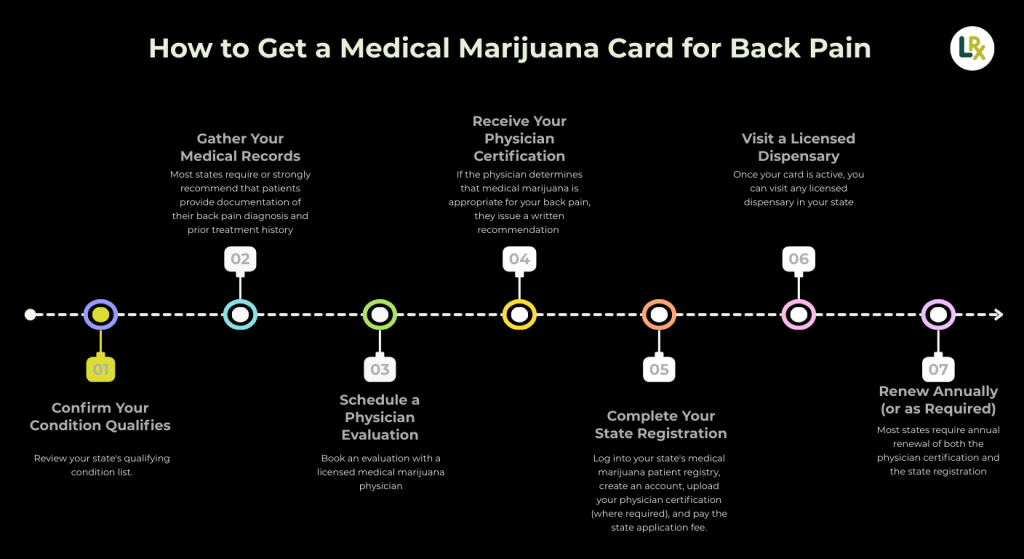
Medical marijuana for back pain is only legally accessible with a valid medical marijuana card. Here is the complete step-by-step process for obtaining your card in 2026.
Step 1: Confirm Your Condition Qualifies
Review your state’s qualifying condition list. Back pain qualifies in most programs under chronic pain, intractable pain, neuropathic pain, or related categories. If your state’s list does not explicitly mention back pain, look for chronic pain, severe or intractable pain, or conditions that cause chronic pain. If you are unsure, a licensed cannabis physician can advise you during a consultation before you commit.
Step 2: Gather Your Medical Records
Most states require or strongly recommend that patients provide documentation of their back pain diagnosis and prior treatment history. This might include imaging reports (MRI, X-ray, CT scan), previous physician visit notes documenting back pain, records of prior treatments such as physical therapy, injections, or surgical procedures, and records of medications prescribed for back pain. Having these records available before your evaluation makes the process smoother and strengthens your case for qualification.
Step 3: Schedule a Physician Evaluation
Book an evaluation with a licensed medical marijuana physician. Telemedicine has made this possible from home in most states. A platform like LeafyRx connects patients with state-licensed physicians who are experienced in cannabis medicine. Same-day appointments are typically available. The evaluation covers your medical history, current symptoms, prior treatment attempts, and any contraindications such as a personal history of psychosis or severe anxiety that might influence the physician’s recommendation.
Step 4: Receive Your Physician Certification
If the physician determines that medical marijuana is appropriate for your back pain, they issue a written recommendation or enter a certification directly into your state’s registry. This certification is the core document that authorizes your application for a state-issued card.
Step 5: Complete Your State Registration
Log into your state’s medical marijuana patient registry, create an account, upload your physician certification (where required), and pay the state application fee. State fees range from $0 in states like Virginia and New York to $150 or more in states like New Jersey and Florida. Processing times vary from same-day digital approval to several weeks for physical card delivery.
Step 6: Visit a Licensed Dispensary
Once your card is active, you can visit any licensed dispensary in your state. Present your card and a valid photo ID. Dispensary staff, known as budtenders, can guide you through product selection for back pain. Be specific about your pain type, severity, and lifestyle so they can recommend appropriate products and potencies.
Step 7: Renew Annually (or as Required)
Most states require annual renewal of both the physician certification and the state registration. Florida requires renewal every 210 days. Set a calendar reminder 60 days before expiration to avoid a lapse in your card’s validity. Subscription plans through LeafyRx automatically prompt renewal reminders and reduce the annual physician fee compared to one-time rates.
Safety, Side Effects, and Precautions for Medical Marijuana Back Pain Patients
While medical marijuana is considerably safer than opioids for long-term use, it is not without risks and precautions. Patients should understand the potential side effects and know when cannabis may not be appropriate.
Common Side Effects
Short-term side effects of THC-dominant cannabis include dry mouth, increased heart rate, temporary memory impairment, drowsiness or sedation, mild anxiety or paranoia (particularly at high doses), and impaired coordination and reaction time. Most of these effects are dose-dependent and transient. CBD-dominant products produce fewer psychoactive side effects but may cause fatigue, diarrhea, and changes in appetite at higher doses.
Driving and Impairment
Patients using THC-containing cannabis for back pain should not drive or operate heavy machinery while impaired, even with a valid medical card. Impaired driving laws apply equally to medical cannabis patients. The acute impairment risk is greatest with high-THC inhaled products and diminishes substantially with CBD-dominant formulations.
Drug Interactions
Cannabis can interact with several classes of medications. It potentiates the sedating effects of benzodiazepines, opioids, and other CNS depressants. It may affect the metabolism of blood thinners such as warfarin, potentially requiring dose adjustments. CBD specifically inhibits the cytochrome P450 enzyme system, which metabolizes many common medications. Patients on multiple prescriptions should always disclose their cannabis use to their prescribing physicians.
Contraindications
Medical cannabis is generally contraindicated in patients with a personal or family history of psychosis or schizophrenia, pregnant or breastfeeding women, and patients under the age of 21 except in specific pediatric programs. High-THC products may exacerbate anxiety disorders in susceptible individuals, though CBD-dominant products are generally well-tolerated. Patients with cardiovascular disease should discuss cannabis use with their cardiologist, as THC can temporarily increase heart rate.
Lung Health Considerations
The PM&R point-counterpoint debate highlighted concerns about smoking cannabis, including increased sputum production, bronchial irritation, and potential carcinogenic effects. However, the authors also noted that vaporization, tinctures, capsules, and topicals completely eliminate these respiratory risks. Patients who are concerned about lung health should choose non-smoking delivery methods exclusively.
Dependence and Withdrawal
While cannabis is far less addictive than opioids, dependence can develop with heavy daily use. Cannabis use disorder is recognized clinically and characterized by difficulty controlling use, continued use despite adverse consequences, and withdrawal symptoms including irritability, sleep disturbance, and appetite changes upon cessation. For patients using medical cannabis therapeutically at moderate doses for pain management, the risk of developing cannabis use disorder is substantially lower than for recreational heavy users.
Practical Tips for Medical Marijuana Back Pain Patients
If you are new to medical cannabis for back pain, these practical recommendations can help you get the most from your treatment while minimizing risks.
-
Keep a detailed pain and cannabis journal. Record your pain levels before and after each use, the product and dose used, the delivery method, and any side effects. This data is invaluable for optimizing your regimen over time.
-
Start with the lowest effective dose. Many new patients make the mistake of using too much too quickly, resulting in an unpleasant experience that discourages continued use. Patience and gradual titration produce the best outcomes.
-
Be transparent with all of your physicians. Cannabis interacts with other medications, and your prescribing doctors need to know you are using it. This is not a matter of legality; it is a matter of safety.
-
Use cannabis as part of a comprehensive pain plan. Physical therapy, mindfulness-based stress reduction, yoga, and other non-pharmacological approaches complement cannabis well and may reduce the dose required for effective pain management.
-
Choose products appropriate for your lifestyle. If you need to drive, work, or care for children, CBD-dominant or low-THC products are essential to maintain safe function.
-
Verify your state renewal deadline and plan ahead. A lapsed card means a gap in legal access to dispensary products. Renew early, particularly in Florida where the 210-day renewal cycle comes around quickly.
Conclusion
Medical marijuana for back pain represents one of the most significant advances in pain management available to patients in 2026. The research, while still growing, already demonstrates consistent benefit for patients with chronic and neuropathic back pain, with particularly strong evidence for opioid reduction, neuropathic pain relief, and improvement in functional quality of life. Whether you are asking can I get medical marijuana for back pain for the first time or are a Florida resident seeking guidance on medical marijuana for back pain in Florida, the pathway to access has never been more straightforward.
Medical marijuana for chronic back pain works through the endocannabinoid system to target multiple dimensions of pain simultaneously, offering muscle relaxation, anti-inflammatory activity, nerve pain modulation, and sleep improvement in ways that conventional single-target drugs cannot. When used responsibly under physician supervision, medical marijuana for back pain can reduce opioid dependence, improve daily function, and restore quality of life for patients who have been failed by conventional pain management.
The first step is determining whether you qualify in your state and getting your medical marijuana card. Platforms like LeafyRx make that process accessible, affordable, and fast, typically completing evaluations on the same day with no in-person clinic visit required.







 Ask ChatGPT
  Ask Claude
  Ask Perplexity