


Millions of Americans live with fibromyalgia, a complex and often debilitating chronic pain condition that resists many conventional treatments. For those who have tried prescription medications, physical therapy, and lifestyle changes without adequate relief, fibromyalgia medical marijuana has emerged as a promising and increasingly mainstream alternative. If you are living with persistent widespread pain, sleep disturbances, and the mental fog that defines this condition, you may have already asked yourself: does fibromyalgia qualify you for medical marijuana?
The answer, in many U.S. states, is yes. The legal landscape around cannabis for fibromyalgia has shifted considerably over the past decade, and the science backing its use has grown substantially. In this comprehensive guide, we explore the research, the qualifying criteria across states, the mechanisms by which cannabis relieves fibromyalgia symptoms, how to choose the right product and dose, and how to take the first step toward getting your medical marijuana card through a trusted, licensed provider.
Understanding Fibromyalgia: A Disease That Challenges the System

Before diving into the intersection of fibromyalgia and medical marijuana, it is worth understanding the disease itself. According to a systematic review published in Cureus, fibromyalgia syndrome (FMS) is a pain disorder with an estimated global prevalence of 5 to 7 percent, with a mean prevalence of 4 percent among American and European populations. It is more common in women, with a female-to-male ratio of approximately 2:1, and it can develop at any age.
The hallmark of fibromyalgia is chronic widespread pain, but the condition also includes fatigue, non-restorative sleep, cognitive difficulties commonly known as fibro fog, and co-occurring psychiatric symptoms such as anxiety and depression. The exact pathophysiology remains incompletely understood, but the most accepted mechanism is central sensitization, a process in which the central nervous system amplifies pain signals in the absence of any clear tissue damage or inflammation. This altered pain processing means that the brain perceives pain more intensely and more frequently than it should.
The hypothalamic-pituitary-adrenal (HPA) axis, which governs the stress response, is also implicated in fibromyalgia. Dysregulation of this system contributes to the cascade of symptoms that patients experience. Mast cells, pro-inflammatory cytokines, and neurotransmitter imbalances all play a role, though the precise web of interactions is still being mapped by researchers worldwide.
Because the exact cause of fibromyalgia is not fully understood, treatment has traditionally been symptom-focused. Pharmacological therapy primarily aims to reduce pro-nociceptive neurotransmitters, and only three drugs have received FDA approval for fibromyalgia: pregabalin, duloxetine, and milnacipran. These medications help some patients but are far from universally effective and carry their own side effect profiles. As a result, the medical community has been actively searching for safer, more comprehensive treatment options, and fibromyalgia medical marijuana has increasingly moved to the forefront of that conversation.
Approximately 75% of fibromyalgia patients remain undiagnosed, and even among those who are diagnosed, no existing treatment achieves 100% symptom relief. This treatment gap is a major reason why patients are turning to cannabis for fibromyalgia.
What Is the Endocannabinoid System and Why Does It Matter for Fibromyalgia?
To understand why cannabis for fibromyalgia works, you first need to understand the endocannabinoid system (ECS). This biological system is present in all humans and plays a central role in regulating pain, mood, sleep, immune function, appetite, and memory. The ECS operates through two primary receptors: CB1 receptors, which are predominantly located in the central nervous system, and CB2 receptors, which are found largely outside the CNS in immune tissues.
When these receptors are activated by endogenous cannabinoids (substances the body naturally produces) or by phytocannabinoids found in the cannabis plant such as THC and CBD, pain signals are suppressed and neurological balance is restored. Preclinical data consistently support the idea that activation of CB1 and CB2 receptors suppresses pain stimuli and influences nociception, the body’s ability to sense potentially harmful stimuli.
One compelling hypothesis directly linking fibromyalgia to the ECS is the theory of Clinical Endocannabinoid Deficiency (CECD). This hypothesis, which has gained significant attention in the research community, proposes that a deficiency in endocannabinoid signaling may underlie the pathophysiology of fibromyalgia and other functional pain conditions such as migraine and irritable bowel syndrome. If the body is not producing enough endocannabinoids to regulate pain and stress responses, supplementing that system with plant-derived cannabinoids may restore balance and reduce symptoms. While the CECD hypothesis has not been definitively proven, it offers a biologically plausible explanation for why so many patients find relief with fibromyalgia medical marijuana.
The analgesic effects of cannabinoids are primarily mediated by the CB1 receptor through inhibition of presynaptic gamma-aminobutyric acid (GABA) and glutamatergic transmission. This suppresses neuronal excitability and reduces the amplified pain signaling that is characteristic of fibromyalgia. Additionally, the endocannabinoid system is involved in modulating inflammation, endocrine function, cognition, memory, nausea, and emotional regulation, all of which are areas where fibromyalgia patients commonly struggle.
The Science Behind Cannabis for Fibromyalgia: What the Research Shows
The body of research on cannabis for fibromyalgia has grown substantially in recent years, and while the field still calls for larger, long-term randomized controlled trials, the existing evidence is genuinely encouraging. Multiple clinical studies across different populations and methodologies have consistently found that medical cannabis reduces pain, improves sleep, lowers anxiety, and enhances overall quality of life in fibromyalgia patients.
The Sagy et al. Prospective Study: A Landmark in Fibromyalgia Cannabis Research
One of the most significant studies in this field was a prospective observational study published in the Journal of Clinical Medicine. The study followed 367 fibromyalgia patients at a specialized medical cannabis clinic in Israel over a period of six months. The findings were striking. Pain intensity on a 0 to 10 scale dropped from a median of 9.0 at baseline to a median of 5.0 at six months, representing a clinically significant 44 percent reduction. Among the 239 patients evaluated for treatment outcome, 81.1 percent achieved treatment response, defined as at least moderate improvement without serious adverse events or treatment cessation.
The study also found meaningful improvements in quality of life. Before treatment, only 2.7 percent of patients reported a good or very good quality of life. After six months of cannabis therapy, 61.9 percent reported good or very good quality of life. Sleep problems, reported by 92.9 percent of patients at intake, improved in 73.4 percent and disappeared entirely in 13.2 percent. Depression-related symptoms improved in over 80 percent of those who had them at baseline.
In terms of safety, the most commonly reported adverse effects were mild: dizziness in 7.9 percent, dry mouth in 6.7 percent, and nausea or vomiting in 5.4 percent. Only 7.6 percent of patients stopped using medical cannabis before the six-month follow-up. Notably, after six months of cannabis therapy, 22.2 percent of opioid users reduced or stopped their opioid dosage, and 20.3 percent reduced their benzodiazepine use. This opioid-sparing effect has enormous public health implications given the ongoing opioid crisis.
The Fiz et al. Cross-Sectional Study: Immediate Symptom Relief
A cross-sectional study examined 28 fibromyalgia patients who were cannabis users and compared them to 28 non-users. Using 100-mm visual analogue scales, patients assessed their symptoms before and two hours after cannabis self-administration. The results showed statistically significant reductions in pain (mean reduction of 37.1 mm) and stiffness (mean reduction of 40.7 mm), along with significant improvements in relaxation, somnolence, and sense of well-being. The mental health component summary score of the SF-36 quality-of-life questionnaire was significantly higher in cannabis users than in non-users. Additionally, 68 percent of cannabis users reported having reduced their other medications after beginning cannabis use.
The Cureus Systematic Review: Synthesizing the Evidence
A systematic review of 22 studies drew together the breadth of available evidence on cannabis for fibromyalgia. The review covered randomized controlled trials, observational studies, and case series involving the use of nabilone, dronabinol, and pharmaceutical-grade cannabis preparations including Bedrocan (22.4 mg THC, less than 1 mg CBD), Bediol (13.4 mg THC, 17.8 mg CBD), and Bedrolite (18.4 mg CBD, less than 1 mg THC).
The review found that across multiple studies, nabilone and dronabinol showed improvement in pain and anxiety in several randomized controlled trials and meta-analyses. Multiple observational studies found medical cannabis to be safe and effective as an alternative treatment for fibromyalgia symptoms. The THC:CBD ratio was identified as an important factor in determining therapeutic outcomes, consistent with what researchers call the “entourage effect,” the idea that THC and CBD create a synergistic therapeutic effect when used together.
Key Research Finding: In a randomized, double-blind, placebo-controlled trial, patients receiving THC-rich cannabis oil showed a significant decrease in their Fibromyalgia Impact Questionnaire (FIQ) score compared to the placebo group, with no intolerable adverse effects reported.
Additional Clinical Evidence
Further supporting the case for fibromyalgia medical marijuana, a study published in the Journal of Clinical Rheumatology found that medical cannabis produced statistically significant improvements in fibromyalgia patients, with the majority reporting at least moderate improvement. A review further confirmed beneficial effects on pain reduction and sleep quality, reinforcing the growing consensus that cannabis deserves a place in the fibromyalgia treatment toolkit.
Research published in Biomedicines highlighted the role of cannabinoids in modulating neuroinflammation and central sensitization, both of which are core features of fibromyalgia pathophysiology. Meanwhile, a randomized, double-blind trial published in Pain Medicine demonstrated that ingestion of THC-rich cannabis oil significantly reduced fibromyalgia impact scores compared to placebo in a study of 17 women over eight weeks.
THC vs. CBD for Fibromyalgia: Understanding the Key Cannabinoids
When exploring fibromyalgia medical marijuana, it is important to understand the roles of the two primary active cannabinoids: tetrahydrocannabinol (THC) and cannabidiol (CBD).
THC
THC is the psychoactive component of cannabis. It binds as a partial agonist to CB1 and CB2 receptors and influences pain, appetite, orientation, and mood. In the context of fibromyalgia, THC has demonstrated the ability to reduce pain intensity, improve sleep, and lower anxiety. However, THC-dominant products can produce psychoactive effects including euphoria, impaired concentration, and in some cases increased anxiety, particularly at higher doses. Clinical studies consistently show that THC-containing cannabis preparations produce the most significant analgesic effects in fibromyalgia patients.
CBD
CBD does not produce psychoactive effects. It acts as a negative allosteric modulator of the CB1 receptor and has anti-inflammatory, anti-anxiety, and analgesic properties. CBD-only preparations such as Bedrolite have been found to have limited analgesic activity in fibromyalgia-specific pain models, suggesting that CBD alone may not be sufficient for most patients. However, CBD is valuable as a complement to THC, moderating its psychoactive effects and contributing to the entourage effect. CBD is also useful for patients who are sensitive to THC’s psychoactive properties but still want some of the therapeutic benefits of cannabis.
The THC:CBD Ratio
Research on cannabinoids for rheumatic conditions has established that the THC:CBD ratio is a critical variable in therapeutic outcomes. Higher THC ratios tend to produce stronger analgesic and sleep-promoting effects but also greater psychoactive side effects. Balanced ratios (such as the 13.4 mg THC to 17.8 mg CBD in Bediol) have shown particular promise for fibromyalgia, with one experimental study finding that Bediol produced meaningful pain relief and pressure pain threshold increases compared to both placebo and the high-CBD Bedrolite formulation. The principle that guides most clinical practice is to start at a low dose of THC-containing cannabis, titrate slowly upward until a therapeutic effect is achieved, and stay at the lowest effective dose to minimize adverse effects and reduce the risk of dependence.
Does Fibromyalgia Qualify You for Medical Marijuana?
This is one of the most common questions patients ask, and the answer varies by state. In the United States, medical marijuana is regulated at the state level, meaning each state maintains its own list of qualifying conditions, its own application process, and its own rules for how much cannabis a patient can possess. Does fibromyalgia qualify you for medical marijuana? In many states, yes, either explicitly or through broader categories like “chronic pain.”
States Where Fibromyalgia Is a Listed Qualifying Condition
Several states specifically list fibromyalgia as a qualifying condition for a medical marijuana card. According to Green Health Docs, states including Arkansas, Minnesota, Missouri, and others have explicitly included fibromyalgia on their list of qualifying conditions. In these states, a diagnosis of fibromyalgia from a licensed physician, combined with a physician’s recommendation, is sufficient to apply for a medical marijuana card.
Qualifying Through Chronic Pain Categories
Even in states that do not specifically name fibromyalgia, most patients can still qualify through broader chronic pain categories. States like Florida, California, Ohio, and Pennsylvania allow physicians to recommend medical marijuana for any condition that causes severe or chronic pain that conventional treatments have not adequately addressed. Since fibromyalgia is fundamentally a chronic pain condition, most fibromyalgia patients can qualify under these broader provisions provided they have appropriate medical documentation and a physician’s recommendation.
The key requirements across most states generally include proof of state residency, a diagnosis of a qualifying condition from a licensed physician, a written recommendation or certification from that physician, and payment of a state application fee. The specifics, including costs and timelines, vary considerably by state. Medical marijuana card costs vary widely, from as low as $25 in some states to over $200 in others, so it is worth researching your specific state before applying.
Ready to See If Fibromyalgia Qualifies You in Your State?
LeafyRX connects you with licensed physicians who specialize in medical marijuana evaluations. Book your appointment online in minutes, from the comfort of your home, and get your certification the same day if you qualify. Over 100,000 patients have already been approved through LeafyRX.Get Your Medical Marijuana Card Today
How Cannabis Addresses Specific Fibromyalgia Symptoms
One of the most compelling aspects of cannabis for fibromyalgia is that it does not simply target a single symptom. Unlike many conventional medications that address only pain or only sleep, cannabis interacts with the endocannabinoid system in a way that can simultaneously address multiple dimensions of fibromyalgia. Let us examine the evidence for each major symptom domain.
| Fibromyalgia Symptom | How Cannabis Helps | Key Evidence & Findings |
|---|---|---|
| Chronic Widespread Pain | THC and THC:CBD combinations reduce pain intensity by modulating central pain pathways and suppressing neuronal excitability. | A large prospective study by Sagy et al. reported a 4-point reduction on a 10-point pain scale after six months of cannabis therapy. |
| Sleep Disturbances | Improves sleep onset, reduces nighttime awakenings, and increases total sleep time—especially with THC-dominant formulations. | A randomized controlled trial showed nabilone outperformed amitriptyline for insomnia. In the Sagy study, 73.4% of patients reported improved sleep after six months. |
| Anxiety & Depression | CBD’s anxiolytic properties and THC’s mood-modulating effects help reduce psychiatric symptoms common in fibromyalgia. | Giorgi et al. found 50% of patients experienced moderate improvement in anxiety and depression scores after six months of medical cannabis use. |
| Cognitive Dysfunction (Fibro Fog) | May reduce neuroinflammation, improve sleep quality, and balance neurotransmitter activity, indirectly supporting cognitive function. | Some studies suggest cognitive benefits at low, carefully titrated doses, though high THC doses may temporarily impair cognition. |
| Fatigue | Improves fatigue indirectly by reducing pain and improving sleep; certain CBD-rich strains and terpene profiles may have energizing effects. | Research from the University of Arizona highlights the role of terpenes in managing pain and fatigue, supporting personalized cannabis therapy approaches. |
| Stiffness | Cannabinoids provide anti-inflammatory and muscle-relaxant effects, reducing both morning and persistent stiffness. | Visual analogue scale scores for stiffness dropped by an average of 40.7 mm within two hours of cannabis use—a clinically significant improvement. |
Chronic Widespread Pain
Pain is the defining feature of fibromyalgia, and it is the symptom for which cannabis has the most robust evidence. Multiple studies have shown that both THC and balanced THC:CBD preparations reduce pain intensity scores significantly. The large prospective study by Sagy and colleagues found that pain intensity dropped by a full four points on a ten-point scale after six months of cannabis therapy. The cannabinoid-mediated suppression of neuronal excitability and modulation of pain pathways at the central level aligns directly with what is known about fibromyalgia’s pathophysiology, making cannabis a mechanistically appropriate treatment.
Sleep Disturbances
Non-restorative sleep is nearly universal in fibromyalgia and is considered one of the perpetuating factors of the condition. Research on cannabinoids and sleep has shown that cannabis, particularly THC-dominant preparations, can improve sleep onset latency, reduce nighttime awakenings, and increase total sleep time. A randomized controlled trial of nabilone in fibromyalgia patients found that it had a greater effect on insomnia than amitriptyline, a commonly prescribed sleep aid for fibromyalgia, on the Insomnia Severity Index. The Sagy prospective study found that 73.4 percent of patients with sleep problems at baseline experienced sleep improvement after six months of medical cannabis therapy.
Anxiety and Depression
Psychiatric comorbidities are extremely common in fibromyalgia. Anxiety disorders affect up to 50 percent of fibromyalgia patients, and depression rates are similarly elevated. Studies examining the effect of cannabis on mood in fibromyalgia patients have found meaningful improvements in anxiety and depression scores. In the prospective study by Giorgi and colleagues, 50 percent of patients showed moderate improvement in anxiety and depression scales after six months of medical cannabis treatment. CBD, in particular, has well-documented anxiolytic properties that may contribute significantly to these improvements.
Cognitive Dysfunction (Fibro Fog)
Fibro fog, which refers to cognitive difficulties including memory problems, difficulty concentrating, and mental fatigue, is one of the most frustrating symptoms for fibromyalgia patients. Some research suggests that medical marijuana may help address cognitive symptoms by reducing the neuroinflammatory burden on the brain, improving sleep quality (which in turn improves cognitive function), and modulating neurotransmitter activity. It is worth noting, however, that high doses of THC can temporarily impair cognition, which is why careful dosing is essential for patients concerned about fibro fog.
Fatigue
Chronic fatigue is another hallmark of fibromyalgia that conventional medications often fail to address. Cannabis may help with fatigue indirectly by improving sleep quality and reducing pain, both of which contribute to daytime fatigue. Some patients also report that certain cannabis strains, particularly those with higher CBD content or specific terpene profiles, provide energizing effects that counteract fatigue. Research from the University of Arizona has explored how specific cannabis terpenes may offer new pathways to treat fibromyalgia pain and associated symptoms, including fatigue, opening up exciting avenues for personalized cannabis therapy.
Stiffness
Morning stiffness and generalized stiffness throughout the day are common complaints in fibromyalgia. The study found that after two hours of cannabis use, stiffness scores on visual analogue scales dropped by an average of 40.7 mm, a clinically meaningful and statistically significant reduction. The anti-inflammatory properties of cannabinoids, combined with their muscle-relaxant effects, appear to contribute to this improvement.
Forms of Medical Cannabis for Fibromyalgia
Once a patient obtains their medical marijuana card, they will have access to a variety of cannabis products through licensed dispensaries. Choosing the right form depends on factors including symptom type, severity, onset time needed, and personal preference. Each delivery method has a distinct pharmacokinetic profile, meaning the rate at which cannabis enters the bloodstream and produces effects varies significantly.
| Form of Medical Cannabis | Onset Time | Duration of Effects | Best Used For | Key Notes & Evidence |
|---|---|---|---|---|
| Inhalation (Flower & Vaporizers) | Minutes | 2–4 hours | Acute pain flares, rapid symptom relief, sleep-onset difficulties | Fastest onset allows real-time dose titration. Vaporization is preferred over smoking for respiratory health. Clinical studies in fibromyalgia patients show positive pain and sleep outcomes. |
| Oral Oils & Tinctures | 30 minutes–2 hours | 4–6 hours | Ongoing daytime pain, anxiety, sustained symptom control | Longer-lasting than inhalation. The prospective Sagy study reported that both oil and flower users achieved significant symptom improvement, with 67.3% initially using flower and others using oil. |
| Capsules & Edibles | 1–3 hours | 6–8+ hours | Overnight pain relief, sleep maintenance | Slow onset but longest duration. An 8-week randomized controlled trial using THC-rich capsules showed significant reductions in Fibromyalgia Impact Questionnaire scores versus placebo. |
| Topicals (Creams & Balms) | 15–45 minutes (localized) | 2–4 hours (localized) | Localized pain, stiffness, tender points | Non-psychoactive and localized. Does not produce systemic effects. Many patients report relief in specific pain areas. Often available without a medical marijuana card where CBD is legal. |
Inhalation: Flower and Vaporizers
Smoked or vaporized cannabis produces effects within minutes, making it particularly useful for acute pain flares and sleep-onset difficulties. The rapid onset also makes it easier for patients to titrate their dose in real time, adding a little more if needed or stopping when relief is achieved. Studies in fibromyalgia patients have used inhaled cannabis preparations with positive results, though vaporization is generally preferred over smoking from a respiratory health perspective.
Oral Oils and Tinctures
Cannabis oils administered under the tongue (sublingual) or swallowed produce effects within 30 minutes to two hours. They provide longer-lasting relief than inhaled cannabis and are a good option for patients managing continuous daytime pain and anxiety. Many of the studies reviewed in this article used oil-based cannabis preparations, and the prospective study by Sagy and colleagues found that 67.3 percent of patients initially used inflorescence while others used oil, with both groups achieving significant improvements.
Capsules and Edibles
Ingested cannabis in capsule or edible form has the longest onset time (one to three hours) but also the longest duration of effect (six to eight hours or more). This makes it particularly suitable for overnight pain relief and sleep maintenance. The randomized controlled trial by Chaves and colleagues used THC-rich cannabis oil capsules over eight weeks and found significant reductions in Fibromyalgia Impact Questionnaire scores compared to placebo.
Topicals
CBD-infused topical creams and balms are applied directly to areas of pain and stiffness. While they do not produce systemic effects, some fibromyalgia patients report localized relief from topicals, particularly for areas of concentrated pain. Topicals are non-psychoactive and require no medical marijuana card in many states where CBD products are legal.
Practical Guidance on Dosing: Start Low, Go Slow
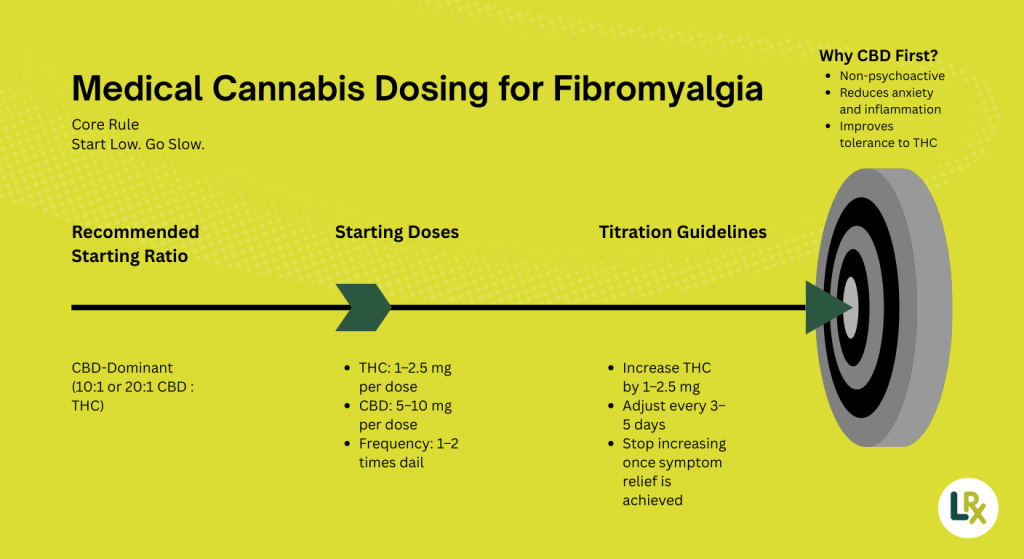
The most commonly recommended approach to dosing fibromyalgia medical marijuana is encapsulated in the phrase “start low, go slow.” This means beginning with the lowest possible effective dose, particularly for THC-containing products, and increasing gradually over days or weeks until the desired therapeutic effect is achieved. This approach minimizes adverse effects and reduces the risk of developing tolerance or dependence.
Clinical guidance from pain medicine specialists suggests that a typical starting dose for THC-naive patients might be as low as 1 to 2.5 mg of THC per dose, taken one to two times per day. This can be gradually increased by 1 to 2.5 mg per dose every few days until symptom relief is achieved or side effects become limiting. CBD doses can generally be higher, starting at 5 to 10 mg and increasing as needed, since CBD does not produce psychoactive effects at typical therapeutic doses.
A 2024 Journal of Clinical Medicine review on medical cannabis for chronic pain emphasized the importance of physician supervision during titration. A licensed cannabis physician can help identify the right product type, formulation, and starting dose based on your specific symptoms, other medications, and medical history. This is exactly the kind of personalized guidance that LeafyRX’s licensed physicians provide during their consultation process.
Research published in Arthritis Care and Research further underscores that patients with prior cannabis experience tend to have better treatment outcomes, likely because they are more comfortable titrating their dose and recognizing therapeutic effects. First-time users are strongly encouraged to work with a knowledgeable physician rather than self-medicating.
Safety Profile of Medical Cannabis in Fibromyalgia
A significant concern for many fibromyalgia patients considering cannabis for fibromyalgia is safety. The good news is that across multiple clinical studies, medical cannabis has demonstrated a favorable safety profile for fibromyalgia patients when used as directed under physician supervision.
The most commonly reported adverse effects in clinical trials include dizziness, dry mouth, mild nausea, somnolence, and transient cognitive impairment. These effects tend to be mild to moderate in severity, dose-dependent, and often resolve with tolerance over the first few weeks of use. Serious adverse events are rare. In the large prospective study by Sagy and colleagues, only 7.6 percent of patients discontinued cannabis due to adverse effects, a lower discontinuation rate than many conventional fibromyalgia medications.
A review focused on cannabis safety in chronic pain populations found that the risk of serious adverse events, including cardiovascular events, severe psychiatric episodes, and dependence, is low in medically supervised contexts and at therapeutic doses. Long-term safety data are still being gathered, which is one reason physician oversight remains important.
It is also worth noting that a review on cannabis for chronic pain emphasized that medical cannabis appears to be safe and effective when titrated slowly and gradually, and that it compares favorably to opioids in terms of addiction potential and serious adverse events. For fibromyalgia patients who have been prescribed opioids with limited success or who are concerned about opioid dependence, medical cannabis represents a compelling alternative.
Comparing Cannabis to Conventional Fibromyalgia Treatments
To place fibromyalgia medical marijuana in proper context, it is useful to compare it to the standard medications currently used to treat fibromyalgia. FDA-approved options including pregabalin (Lyrica), duloxetine (Cymbalta), and milnacipran (Savella) achieve approximately 30 percent reductions in pain for a minority of patients in clinical trials, and their withdrawal rates due to side effects are notably high.
Tricyclic antidepressants such as amitriptyline, while widely prescribed off-label, are associated with substantial side effects including weight gain, dry mouth, constipation, and cardiac effects. Opioids, which many fibromyalgia patients are prescribed despite limited evidence of efficacy, are associated with tolerance, dependence, and worsening pain sensitivity over time, a phenomenon known as opioid-induced hyperalgesia that is particularly counterproductive in a condition already defined by central pain amplification.
By contrast, the evidence reviewed in this article suggests that medical cannabis produces clinically meaningful improvements across multiple symptom domains simultaneously, with a side effect profile that most patients find more tolerable than that of conventional medications. The opioid-sparing effect observed in multiple studies is an additional benefit with significant public health implications. While cannabis is not positioned as a replacement for all conventional therapies, the evidence supports its use as a complementary or alternative treatment for fibromyalgia patients who have not achieved adequate relief from existing options.
The Process: How to Get a Medical Marijuana Card for Fibromyalgia
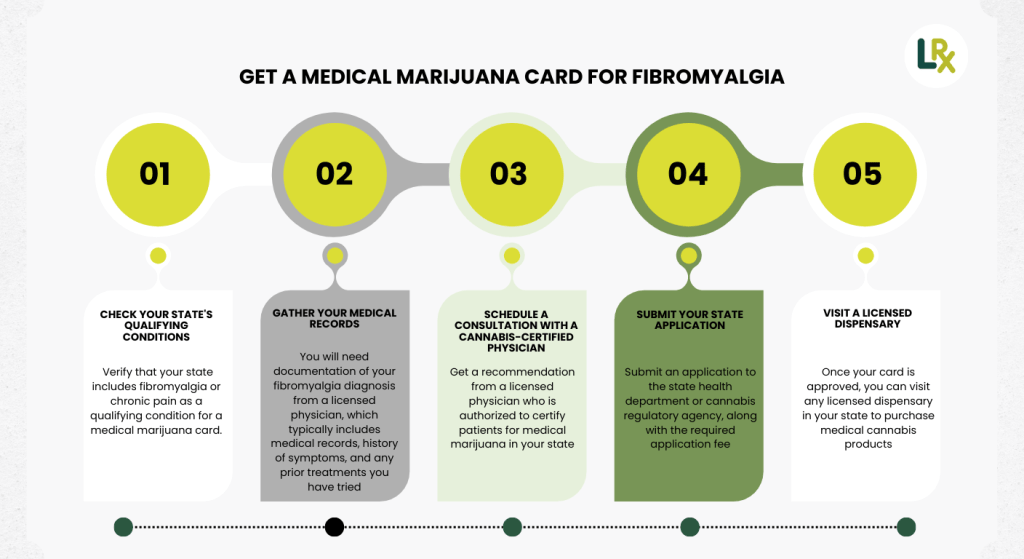
If you have fibromyalgia and live in a state where it qualifies for medical marijuana, the process of obtaining a medical marijuana card is more straightforward than many people expect. Here is a step-by-step overview.
Step 1: Confirm Your State’s Qualifying Conditions
The first step is to verify that your state includes fibromyalgia or chronic pain as a qualifying condition for a medical marijuana card. State laws change regularly, so it is important to check the current, up-to-date list for your specific state. LeafyRX allows you to quickly check eligibility based on your location.
Step 2: Gather Your Medical Records
You will need documentation of your fibromyalgia diagnosis from a licensed physician. This typically includes medical records showing your diagnosis, your history of symptoms, and any prior treatments you have tried. Having records that demonstrate you have tried conventional treatments without adequate relief strengthens your application in most states.
Step 3: Schedule a Consultation with a Cannabis-Certified Physician
You will need a recommendation from a licensed physician who is authorized to certify patients for medical marijuana in your state. Through telehealth platforms like LeafyRX, this process is now available entirely online. You can book an appointment, connect with a licensed doctor via video call or phone from your home, and receive your recommendation the same day if you qualify. The time it takes to receive your physical medical marijuana card after approval varies by state, typically ranging from a few days to a few weeks, but many states provide a temporary digital card that you can use immediately.
Step 4: Submit Your State Application
In most states, after receiving your physician’s recommendation, you will submit an application to the state health department or cannabis regulatory agency along with the required application fee. Many states now have online application portals that make this process quick and straightforward.
Step 5: Visit a Licensed Dispensary
Once your card is approved, you can visit any licensed dispensary in your state to purchase medical cannabis products. Dispensary staff are trained to help patients choose appropriate products for their conditions, and a knowledgeable budtender can be an invaluable resource as you begin your cannabis journey.
Start Your Fibromyalgia Medical Marijuana Journey Today with LeafyRX
LeafyRX makes getting your medical marijuana card simple, affordable, and 100% online. With the lowest costs in the U.S., board-certified licensed physicians available on demand, and a money-back guarantee if you are not approved, there is no easier way to begin. Join over 100,000 patients who have trusted LeafyRX for their medical marijuana certification.Book Your Consultation Now
Fibromyalgia, Medical Marijuana, and the Future of Treatment
The scientific and medical communities are increasingly recognizing that fibromyalgia medical marijuana deserves a formal place in clinical practice guidelines. While large-scale, long-term randomized controlled trials are still needed to establish definitive dosing protocols and to compare cannabis to other treatments in a rigorous controlled setting, the existing evidence base is already sufficiently robust to support its use in patients who have not achieved adequate relief from conventional therapies.
Several exciting directions are emerging in this field. Research on terpenes, the aromatic compounds in cannabis that contribute to its diverse effects, is opening up new possibilities for personalized fibromyalgia treatment. Different terpene profiles may offer varying combinations of analgesic, anti-inflammatory, anxiolytic, and sleep-promoting effects, allowing physicians and patients to tailor cannabis therapy far more precisely than is currently possible with most medications.
Ongoing research into the endocannabinoid system’s role in fibromyalgia, combined with advances in understanding the genetics and neurobiological basis of the condition, may eventually lead to targeted cannabinoid therapies designed specifically for fibromyalgia subtypes. The development of synthetic cannabinoids and novel delivery systems will also expand the therapeutic toolkit available to fibromyalgia patients.
At the same time, the growing acceptance of medical cannabis in mainstream medicine, the increasing availability of telehealth platforms for physician consultations, and the simplification of state application processes are making it easier than ever for fibromyalgia patients to explore this option safely and legally.
Important Considerations and Precautions
While the evidence for cannabis for fibromyalgia is encouraging, there are important considerations every patient should be aware of before starting cannabis therapy.
First, cannabis interacts with a number of commonly prescribed medications, including anticoagulants, antidepressants, and anti-seizure drugs. Patients taking multiple medications should discuss potential drug interactions with their physician before starting cannabis. Second, cannabis is not appropriate for everyone. Patients with a personal or family history of psychosis or schizophrenia should generally avoid THC-containing products, as high-potency THC can exacerbate psychotic symptoms in vulnerable individuals. Third, cannabis should not be used while driving or operating heavy machinery. Fourth, pregnant or breastfeeding women should avoid cannabis, as evidence on its safety during pregnancy and lactation is insufficient.
Finally, while cannabis has a low risk of physical dependence compared to opioids or benzodiazepines, cannabis use disorder is a recognized condition that can develop with heavy, prolonged use. Working with a licensed physician who can monitor your use and adjust your treatment plan over time is the most effective way to maximize therapeutic benefits while minimizing risks.
Conclusion: Cannabis for Fibromyalgia Is a Well-Supported Option Worth Exploring
Fibromyalgia medical marijuana is no longer a fringe topic. Backed by a growing body of clinical evidence, recognized in many U.S. states as a qualifying condition, and increasingly recommended by pain specialists and rheumatologists, cannabis for fibromyalgia represents a legitimate and meaningful treatment option for the millions of people living with this challenging condition. For patients who have tried conventional medications without adequate relief, or who are concerned about the long-term risks of opioids and other drugs, medical cannabis offers a multi-symptom approach backed by science.
The evidence consistently shows that medical cannabis can reduce pain intensity, improve sleep quality, lower anxiety and depression scores, reduce reliance on opioids, and improve overall quality of life in fibromyalgia patients, often with mild and manageable side effects. The key is working with a knowledgeable, licensed physician who can guide your treatment, help you choose the right products and doses, and monitor your progress over time.
If you are asking does fibromyalgia qualify you for medical marijuana, the answer in many states is yes. And with platforms like LeafyRX, the path to getting your medical marijuana card is simpler, faster, and more affordable than ever before. Take the first step today and discover whether fibromyalgia medical marijuana could be the relief you have been looking for.







 Ask ChatGPT
  Ask Claude
  Ask Perplexity