


Your first dispensary visit with a medical card can feel nerve-wracking when you don’t know what to expect. You might bring the wrong documents. You might not understand product options. You might struggle to talk with staff. Most new medical card holders feel the same way. Dispensaries help new patients move through each step.
This guide covers everything you need for a successful first visit. You’ll learn what documents to bring. You’ll learn how check-in works. You’ll learn what purchase limits apply. You’ll learn how to talk with budtenders. You’ll learn smart ways to buy. You’ll learn how to store products at home. You’ll walk in prepared and leave with the right products for your condition.
What to Do for Your First Dispensary Visit With a Medical Card
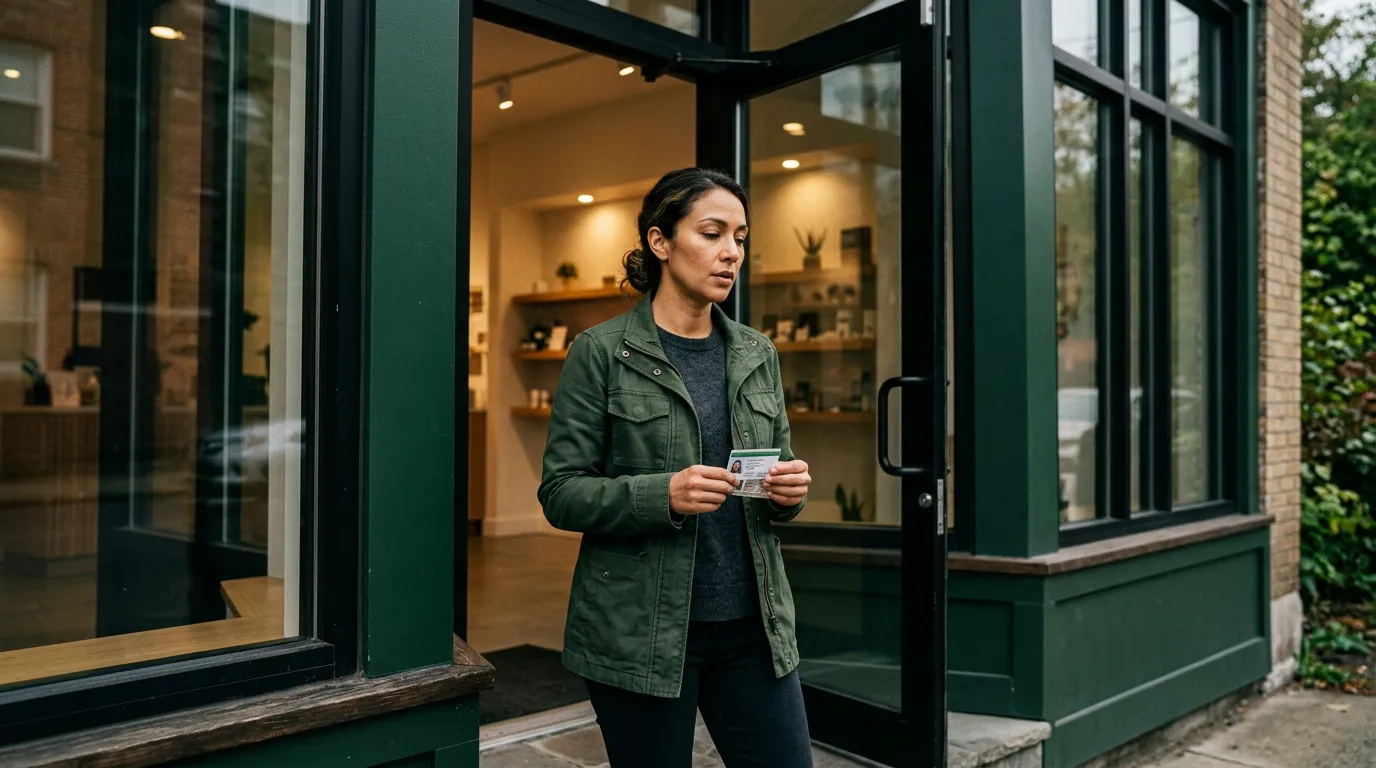
Preparing for your first visit helps you feel confident and get the most from your medical cannabis experience. Taking time to research, confirm policies, and understand regulations makes the process smoother.
Understanding state-specific requirements during the first week after you get your medical card helps you prepare the right documentation.
Research Dispensaries in Your Area Before Visiting
Read online reviews about dispensaries in your area. Check their websites for staff who know how to help medical patients. Look for comments about staff patience, product selection, and whether budtenders take time to explain options.
Check if the dispensary offers online menus so you can browse products and prices before arriving. This lets you familiarize yourself with available strains, consumption methods, and price ranges.
Consulting state-specific guides for medical cannabis regulations helps you understand which dispensaries operate legally and meet quality standards in your area. Plan to visit during off-peak hours like weekday mornings to receive more personalized attention from staff.
Check Operating Hours and First-Time Patient Policies
Call ahead to confirm they accept new patients and ask about first-time discounts, which typically range from 10-25% off. Verify the dispensary’s hours and whether they accept walk-ins or require appointments for first visits.
Asking about wait times and busy periods helps you choose the best time for a relaxed experience. Some dispensaries offer scheduled consultations for new medical patients.
Review Your State’s Medical Cannabis Regulations
Review your state’s rules on how much you can own. Check what health issues your state approves for cards. Find out where you can use these products. Each state sets different monthly purchase limits, often around 2.5 ounces of flower or equivalent amounts in concentrates and edibles.
Understanding consumption restrictions prevents legal issues. Most states prohibit public use and require you to consume products only in private residences.
Knowing transport rules matters too. Products must stay in original packaging during travel, and you cannot cross state lines even if both states have medical programs.
What to Bring to Your First Dispensary Visit With a Medical Card
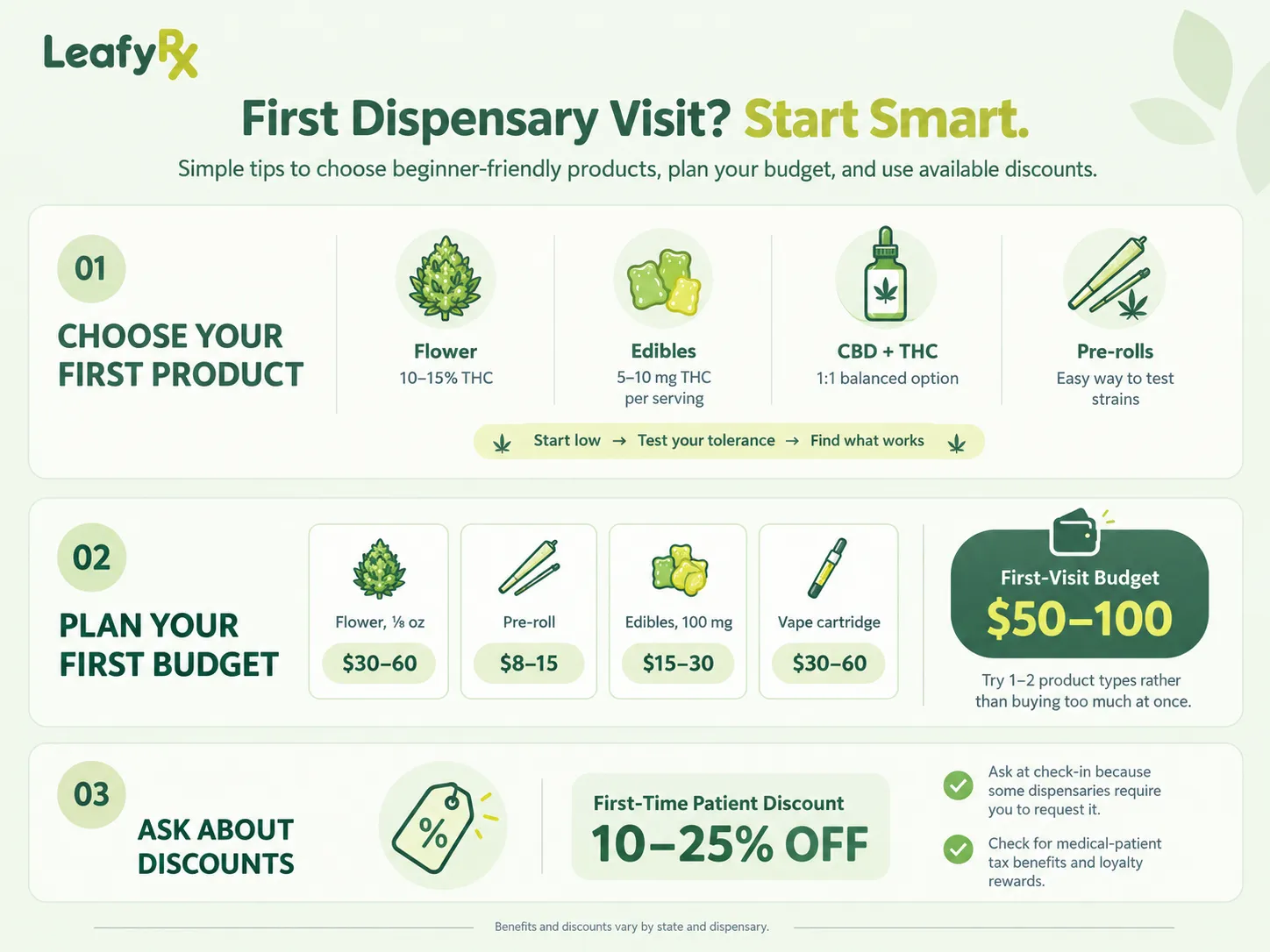
Arriving prepared makes your first visit smoother and helps you get the products you need without delays or confusion.
Required Documentation and Identification
You need a valid government-issued photo ID like a driver’s license, passport, or state ID. The name on your ID must match your medical card exactly.
Bring your active medical card or certification document with a clearly visible expiration date that hasn’t passed. According to New York State Office of Cannabis Management, dispensaries verify both documents before allowing entry to the sales floor.
Many LeafyRX patients keep digital copies on their phone as backup. It connects you with licensed healthcare providers for secure online evaluations
Payment Methods Accepted at Medical Dispensaries
Bring cash or a debit card to pay. Most dispensaries cannot take credit cards. Federal rules stop them from doing so. Some locations charge ATM-style fees for debit transactions.
Call ahead to confirm which payment methods your chosen dispensary accepts, as policies vary by location.
Optional Items That Improve Your Experience
Write down your medical conditions, current symptoms, and medications. Budtenders use this list to suggest the right products. Understanding how medical card documentation works ensures you communicate your needs effectively.
Write down your questions about products. Write down questions about how to use them. Write down any dosing concerns for staff. This prevents you from forgetting important topics once you’re inside.
Bring a small notebook or use your phone to record product names, doses, and effects for future reference. This tracking helps you identify what works best for your condition over time.
Check-In and Purchase Limits at Your First Dispensary Visit With a Medical Card
Your first visit involves several verification steps and legal safeguards that protect both you and the dispensary. Understanding these processes helps you move through check-in smoothly and know exactly how much you can purchase.
If you don’t have active registration yet, learning how to get your card is the first step before visiting a dispensary.
The Security Verification and Registration Process
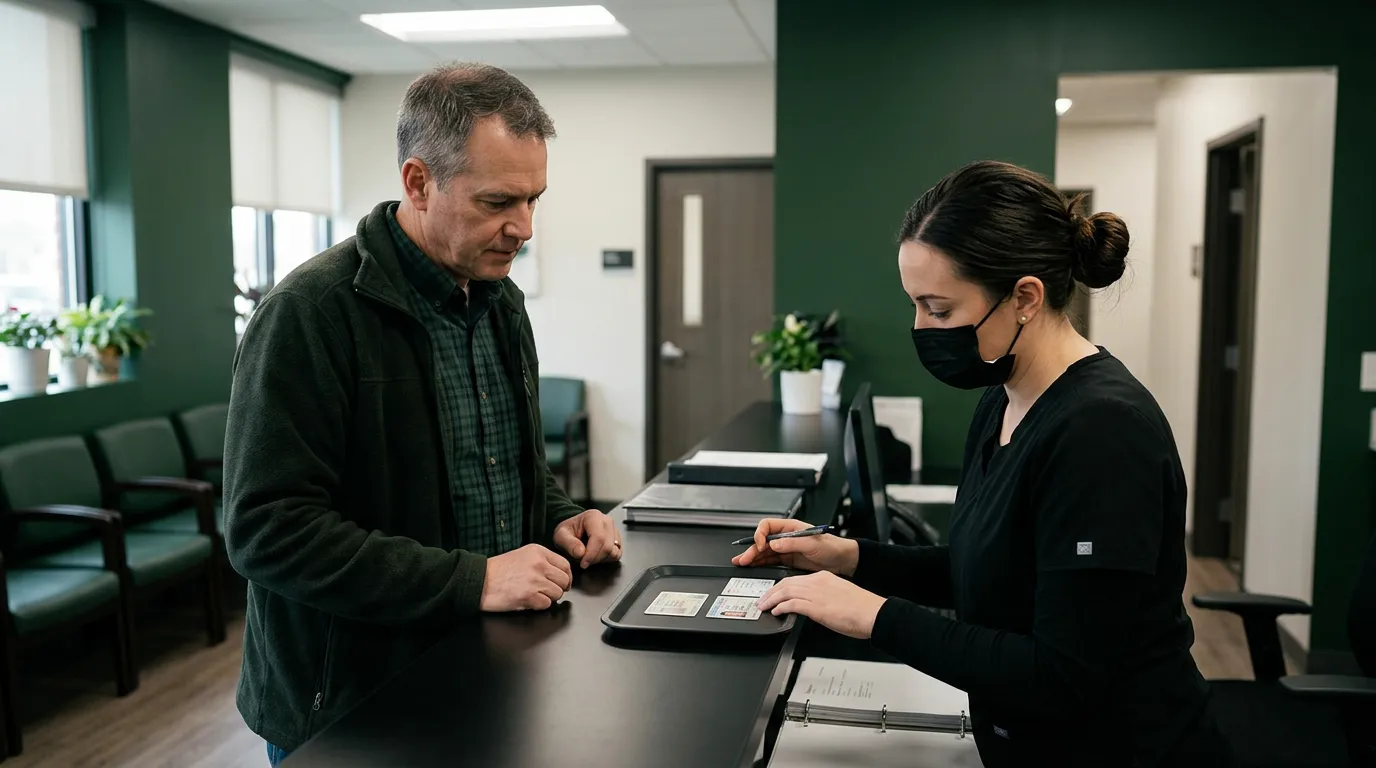
You’ll enter a waiting area that resembles a doctor’s office, where security staff will verify your government-issued ID matches your medical card exactly. This step confirms you’re a registered patient authorized to purchase cannabis products.
Staff will scan your card and create a patient profile in their electronic tracking system. This profile stores your purchase history and preferences for future visits, making subsequent trips faster.
Understanding State-Mandated Purchase Limits
Most states limit monthly purchase amounts, commonly 2.5 ounces of flower or equivalent amounts in other product forms like edibles or concentrates. According to Missouri medical cannabis FAQs, these limits prevent diversion to the illegal market while ensuring patients have adequate access.
Daily purchase limits may also apply, preventing you from buying your entire monthly allowance in one visit. This restriction exists even when your monthly limit hasn’t been reached.
Medical patients typically receive lower prices than recreational customers and pay reduced or no sales tax in many states. These medical card benefits help offset treatment costs over time.
How Dispensaries Track Your Purchases
The dispensary’s system automatically tracks your purchases against state limits to prevent accidental violations. When you check out, staff can see your remaining allowance in real time.
This tracking connects to a statewide database that prevents you from exceeding limits by visiting multiple dispensaries. All licensed locations access the same purchase records.
If you’re close to your limit, budtenders will inform you before completing the transaction. You can adjust your purchase or wait until your limit resets based on your state’s regulations.
How to Talk to a Budtender During Your First Dispensary Visit With a Medical Card
Budtenders help medical patients find products that match their needs, but they can’t diagnose conditions or prescribe treatments. Your job is to share enough information so they can guide you toward appropriate options.
Describing Your Medical Condition and Treatment Goals
Be honest about your qualifying condition and the symptoms you want to manage. If you’re treating chronic pain, explain whether it’s constant or flares up at certain times.
Share your tolerance level and any previous cannabis experience. If you’ve never used cannabis products, say so, this helps budtenders recommend lower doses and gentler options.
Mention concerns about side effects or intoxication, especially if you need to function during the day. This information helps staff steer you toward CBD-dominant products or lower-THC options that provide relief without strong psychoactive effects.
Understanding Product Recommendations and Terminology
Ask budtenders to explain product types in simple terms. Flower is the dried plant you smoke or vaporize. Edibles are foods and drinks, tinctures are liquid drops you place under your tongue, and topicals are creams you apply to skin.
According to research on patient-budtender communication, clear explanations of terminology improve patient outcomes and satisfaction. Don’t hesitate to ask what terms like terpenes, cannabinoids, or indica versus sativa mean if they confuse you.
Request information about CBD-to-THC ratios. Products with higher CBD and lower THC often provide therapeutic benefits with minimal psychoactive effects, making them suitable for daytime use.
Questions to Ask About Dosing and Effects
Ask about onset time and duration for different product types. Edibles take 1-2 hours to work and last 6-8 hours, while flower acts within minutes and lasts 2-3 hours.
Request appropriate starting doses for someone new to medical cannabis. Most budtenders recommend 2.5-5mg THC for edibles and small amounts of flower to start.
Ask what other patients use for symptoms similar to yours. While budtenders can’t give medical advice, they can share which products help people with comparable conditions based on customer feedback.
First Dispensary Visit With a Medical Card: First-Purchase Guardrails
Your first purchase sets the foundation for safe, effective medical cannabis use. Taking a cautious approach helps you avoid overwhelming side effects while finding products that actually relieve your symptoms.
Starting With Conservative Doses and Product Types
Begin with the lowest available dose, typically 2.5-5mg THC for edibles. Wait at least two hours before consuming more, as edibles take longer to produce effects than other methods.
Choose products with balanced THC:CBD ratios for your first purchase. These formulations often provide symptom relief with fewer side effects, making them ideal for new patients.
Avoid high-potency concentrates or edibles above 10mg THC per serving until you understand how your body responds. A medical marijuana dosing guide for beginners explains why starting low prevents uncomfortable experiences.
Avoiding Common First-Timer Dosing Mistakes
Purchase small quantities of 2-3 different product types to test what works best for your specific condition and lifestyle. This approach lets you compare effects without wasting money on large amounts of products that might not suit you.
Plan to use new products during evening or weekend hours when you have no responsibilities. This timing allows you to gauge effects safely without worrying about work or driving.
Building a Personalized Treatment Approach
Keep a detailed journal tracking product names, doses taken, time of consumption, and symptom relief experienced. This record helps you identify patterns and communicate effectively with budtenders during future visits.
Give each product at least 3-5 uses before deciding if it works. Effects can vary based on factors like food intake and stress levels, so multiple trials provide more accurate results.
Testing different products systematically helps you build a treatment plan tailored to your body chemistry and daily routine. What works for other patients may not work for you, making this experimentation phase necessary for long-term success.
After Your First Dispensary Visit With a Medical Card: Storage and Getting Home Safely
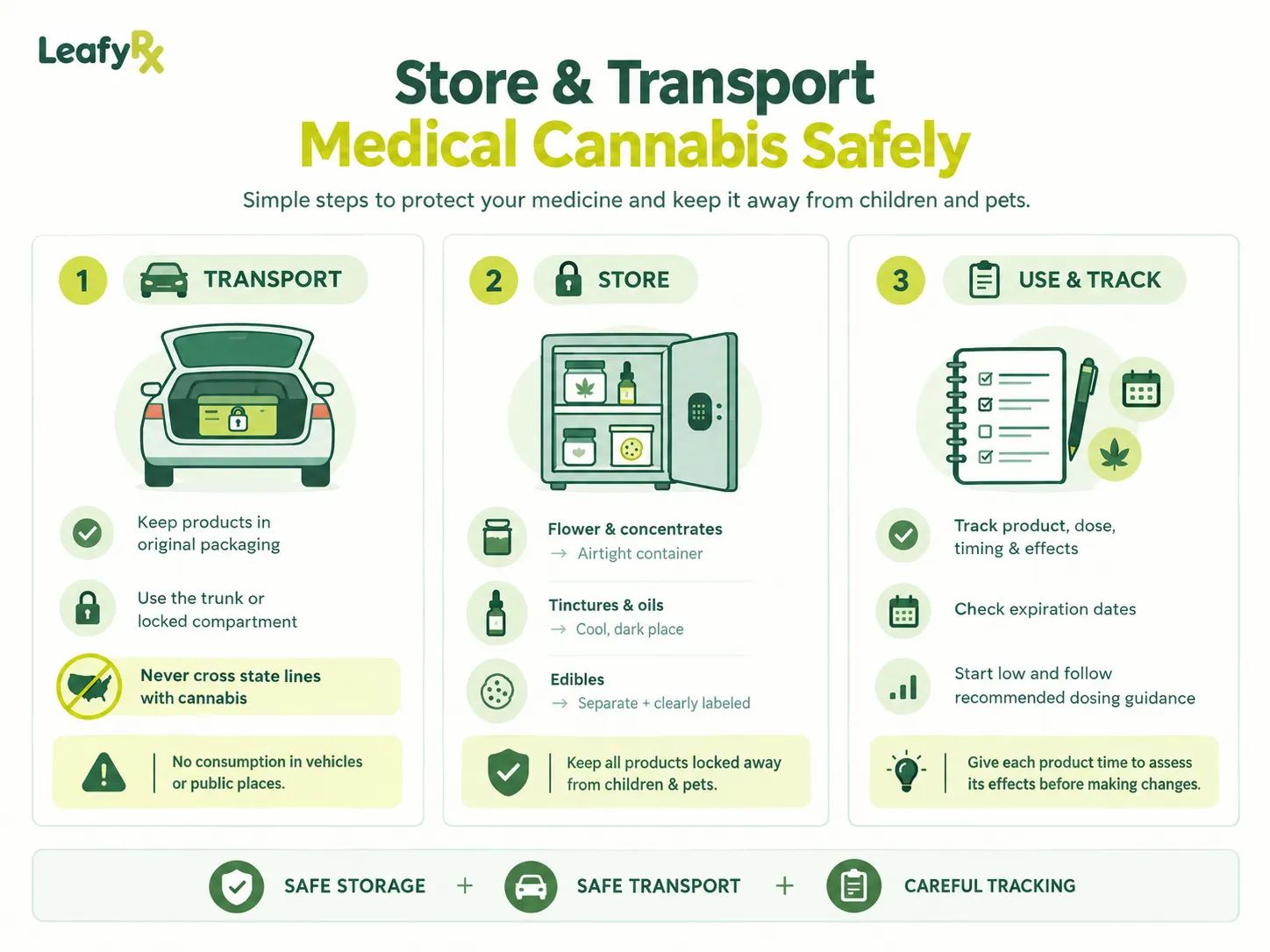
Once you complete your purchase, follow specific legal requirements to protect yourself during transport and at home. Proper handling prevents legal complications and keeps your products effective.
Legal Transportation Requirements for Medical Cannabis
Never open product packaging in your vehicle or consume anything in the dispensary parking lot. These actions violate state laws and can result in fines or arrest, even with a valid medical card.
Store products in your trunk or a locked compartment during transport. Keep items in their original sealed packaging with labels intact to prove legal purchase if questioned by law enforcement.
Maintaining original packaging during transport protects medical patients from potential legal issues. Never drive after consuming cannabis products, even if you feel fine, as impairment affects reaction time and judgment.
Proper Storage to Maintain Product Quality and Safety
Keep all products in a secure, locked location at home away from children, pets, and anyone without a medical card. This prevents accidental consumption and complies with state storage laws.
Store flower in airtight containers away from light and heat to preserve potency and prevent degradation. Glass jars with tight seals work well for maintaining freshness over several weeks.
Edibles should be kept in their original child-resistant packaging and stored separately from regular food. This prevents accidental consumption by household members who might mistake them for regular snacks.
When and How to Use Your Products at Home
Start your first use at home in a comfortable environment where you can relax and monitor effects without external pressures. Choose a time when you have no responsibilities for at least four to six hours.
Have water, snacks, and entertainment readily available. You may experience dry mouth, increased appetite, or drowsiness as you adjust to the effects.
Avoid mixing cannabis with alcohol or other substances during your first experience. This helps you understand how cannabis alone affects your body and symptoms.
Walking Into Your First Dispensary Visit With a Medical Card Prepared
Building Confidence Through Education and Preparation
Dispensary staff work with first-time patients every day. They expect questions about products, dosing, and procedures, so you don’t need to feel self-conscious about asking for help.
Your preparation before arriving already puts you ahead. You’ve researched dispensaries, gathered your documents, and thought about your symptoms and goals.
That groundwork makes the actual visit much smoother. You can focus on learning about products rather than worrying about logistics.
Establishing an Ongoing Relationship With Your Dispensary
Regular visits allow staff to learn your preferences and suggest new products as they become available. This personalized attention improves over time as budtenders remember what worked well for you.
Loyalty programs accumulate points toward discounts, free products, or exclusive access to limited releases and special events. These programs reward consistent customers while helping you save money on medical cannabis purchases.
Many dispensaries host educational workshops, patient appreciation days, and consultations with healthcare professionals. Starting with conservative doses helps patients avoid adverse effects while finding effective symptom relief.
Sign up for email or text updates about sales, new inventory, and changes to state regulations affecting medical patients. These notifications help you stay informed about opportunities to try new products or stock up during promotions.
Continuing Your Medical Cannabis Journey
Finding the right products takes time and experimentation. Don’t get discouraged if your first purchases don’t provide perfect relief.
Most patients try several products before discovering what works best for their specific condition and lifestyle. This trial period is normal and expected in medical cannabis treatment.
Contact your dispensary between visits if you have questions about dosing adjustments or experience unexpected reactions to products. Staff can offer guidance and help you troubleshoot issues without waiting for your next scheduled visit.
Conclusion
Your first dispensary visit with a medical card marks the start of finding treatments that work for your specific condition. Prepare your documentation, communicate openly about your symptoms, and start with low doses while you learn how different products affect you.
Take time to build a relationship with your dispensary staff. They can guide you toward products that help patients with similar conditions. Track your results in a journal, noting what provides relief and what doesn’t. Give each product several tries before making decisions, and don’t hesitate to ask questions between visits.
Ready to obtain your medical card and access treatment options? LeafyRX connects you with licensed healthcare providers for secure online evaluations. Get your state-approved certification from home and take control of managing your condition with legal access to medical cannabis products.






 Ask ChatGPT
 Ask Claude
 Ask Perplexity