
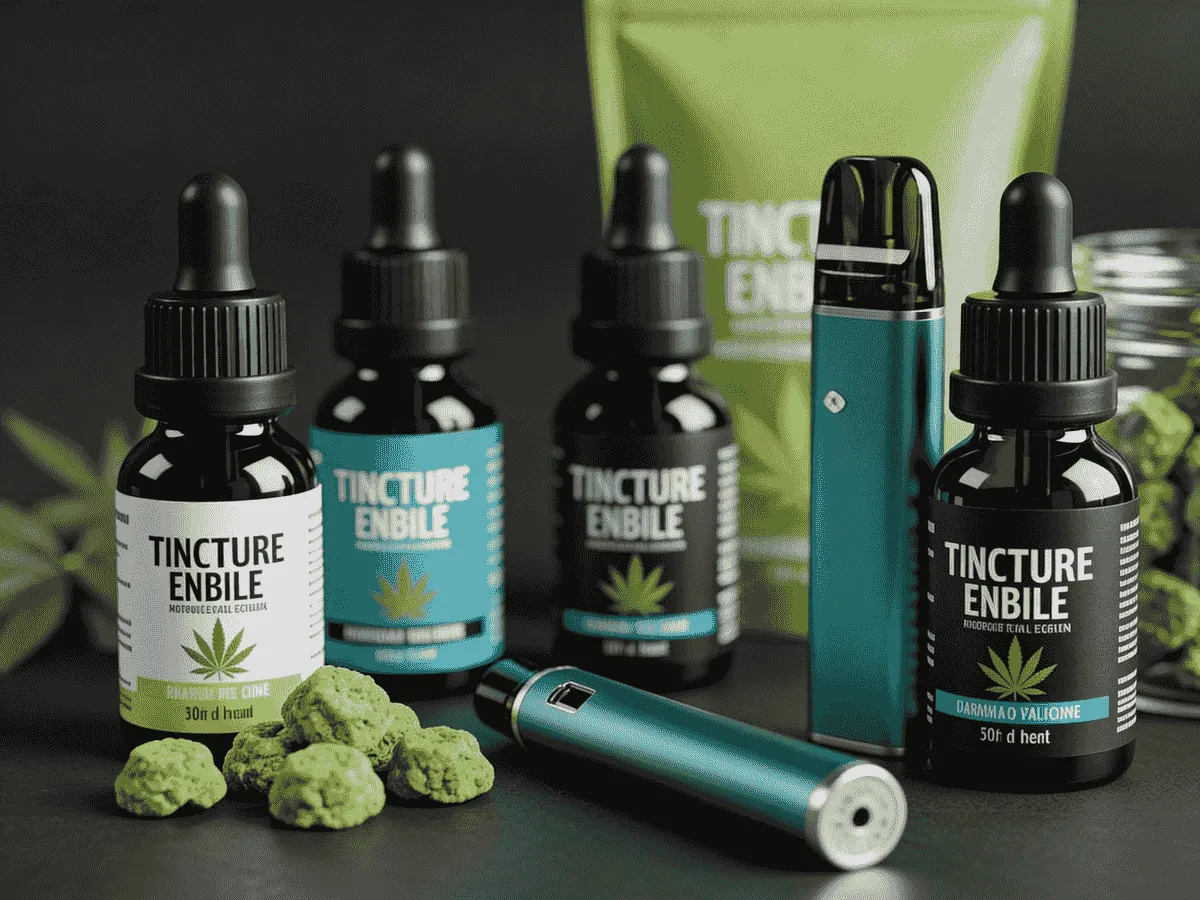

You walked out of the dispensary with your medical card and stared at shelves full of tinctures, gummies, vape cartridges, and chocolates. Everyone had an opinion. Nobody explained the actual medical differences.
Here is the truth: in the tincture vs edible debate, neither is universally better. And in the edibles vs vape comparison, the winner depends entirely on what condition you are treating and how fast you need relief. The format you choose matters as much as the product itself.
Tinctures, edibles, and vapes reach your bloodstream through completely different pathways. That means different onset times, different durations, and very different experiences even when using the same cannabinoids. According to the CDC’s cannabis health information, how you consume cannabis has a significant impact on how it affects your body.
This guide covers how each plant medicine format works in your body, which conditions each one fits best, why edibles hit differently than tinctures or vapes, and how to use these formats together for better results. If you still need your medical card to access these products at a licensed dispensary, LeafyRX connects you with a licensed doctor in minutes.
The Three Formats at a Glance: Tincture vs. Edible vs. Vape
Before we go deep into each format, here is the foundation you need. The tincture vs edible vs vape comparison comes down to one key variable: how the cannabinoids enter your bloodstream. Each format takes a different route, and that route determines everything.
-
Tinctures: A liquid cannabis concentrate applied under the tongue (sublingual). Cannabinoids absorb through the mucous membranes directly into the bloodstream, bypassing the liver.
-
Edibles: Food or drink infused with cannabis. Cannabinoids are digested through the stomach and processed by the liver before entering the bloodstream.
-
Vapes: Cannabis concentrate heated to vapor temperature and inhaled. Cannabinoids absorb through the lungs directly into the bloodstream within seconds.
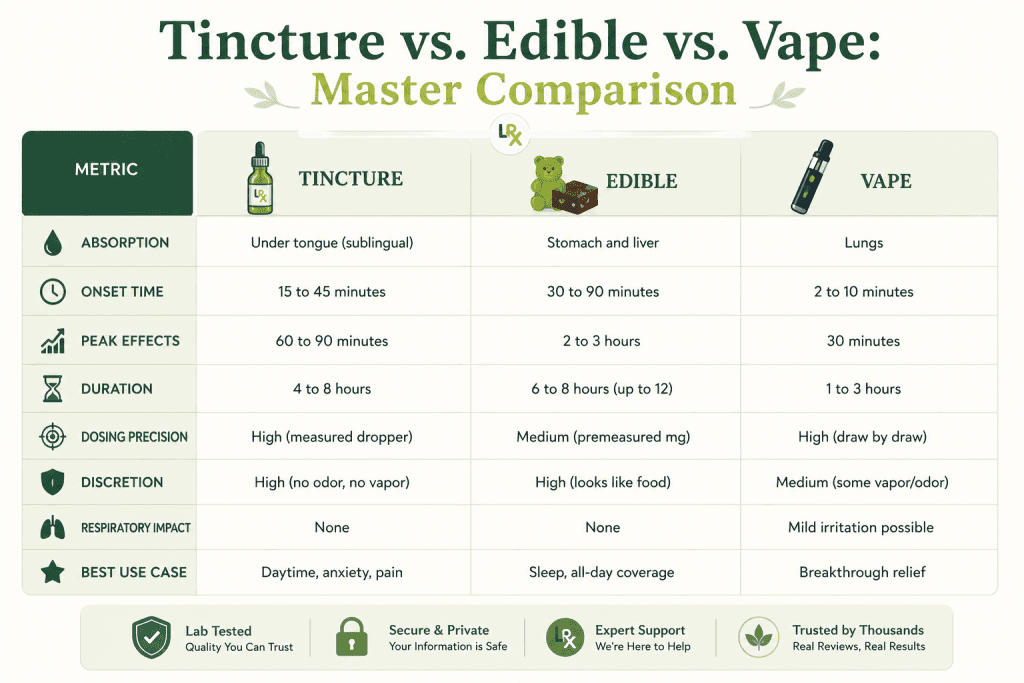
Understanding this table sets up every decision you will make at the dispensary. The tincture vs edible choice is mainly about speed vs. duration. The edibles vs vape choice is mainly about duration vs. immediacy. Neither is wrong. They serve different moments in a treatment plan.
Tinctures Explained: Fast, Precise, and Underestimated
Tinctures have been around since the 1800s as a delivery method for plant medicine, yet they remain one of the least understood options at most dispensaries. That is a mistake worth correcting.
How Tinctures Work: Tincture vs Edible Absorption Explained
When you hold a tincture under your tongue for 60 to 90 seconds before swallowing, cannabinoids pass through the mucous membranes directly into your bloodstream. According to NIH research on cannabinoid pharmacokinetics, this sublingual absorption bypasses the liver’s first-pass metabolism entirely, which means faster onset and a more predictable effect than edibles.
If you swallow the tincture immediately without holding it under your tongue, it acts more like an edible. The liver processes it, onset slows to 60 to 90 minutes, and the effects are more intense. Most experienced patients hold it under the tongue first, then swallow. That combination gives you the faster onset of sublingual absorption with some of the extended duration of oral digestion.
Onset: 15 to 45 minutes sublingual. 60 to 90 minutes if swallowed without holding.
Duration: 4 to 8 hours with a peak around 60 to 90 minutes.
Tincture Pros and Cons
Advantages: Precise dosing with a measured dropper. No odor and no vapor. Discreet enough to use almost anywhere. Faster onset than edibles. Long duration makes it suitable for extended relief. Can be added to food or drink if the taste is too strong.
Disadvantages: The alcohol or oil base has a strong taste that some patients dislike. Requires holding under the tongue for best results, which takes some practice. Tends to cost more per dose than gummies at the same potency.
Best Conditions for Tinctures
Anxiety: The tincture vs edible comparison strongly favors tinctures for anxiety. Onset is fast enough to help during an anxious episode without the intensity risk of edibles, which can worsen anxiety in sensitive patients through the liver conversion process.
Chronic pain: Long duration and precise dropper dosing make tinctures ideal for dialing in the minimum effective dose for sustained pain relief without over-medicating.
Daytime use: The predictable onset window and long coverage period allow patients to plan their day around the tincture schedule without unexpected peaks.
Digestive sensitivity: Because sublingual absorption bypasses the digestive system, tinctures work well for patients who experience nausea or stomach discomfort with edibles.
Edibles Explained: Long-Lasting but Requires Patience
Edibles are the most widely used plant medicine format, and they are also the most commonly misused. Understanding how they work in your body is the difference between a useful treatment session and an overwhelming experience.
How Edibles Work: Why the Edibles vs Vape Comparison Matters
When you eat an edible, the cannabis travels through your digestive system and is absorbed through the walls of the small intestine. From there it goes to the liver, where THC is converted into a compound called 11-hydroxy-THC. This is the key thing most patients do not know about edibles.
According to NIH PubMed research on 11-hydroxy-THC, 11-hydroxy-THC is approximately 5 to 10 times more psychoactive than the delta-9-THC in the edible itself. It also crosses the blood-brain barrier more easily. This is why the same 10mg edible feels much stronger than 10mg from a tincture or vape.
Onset: 30 to 90 minutes. Can be up to 2 hours if taken with a heavy meal or if your metabolism is slower.
Duration: 6 to 8 hours, with residual effects lasting up to 12 hours in some patients.
Peak: 2 to 3 hours after consumption. This delayed peak is the most common reason patients take too much.
Edible Pros and Cons
Advantages: The longest duration of any plant medicine format. No smoke or vapor means no respiratory impact. Widely available in dispensaries in many forms including gummies, chocolates, capsules, and beverages. Good option for patients who cannot inhale.
Disadvantages: The delayed onset means patients often take more before the first dose has kicked in. The intensity of 11-hydroxy-THC conversion is hard to predict. Duration may be too long for daytime use if a patient needs to be fully alert later. Precise dosing is harder than with tinctures.
Best Conditions for Edibles
Sleep: The edibles vs vape comparison is decisively in favor of edibles for sleep. A single edible taken 90 minutes before bed can carry through the full night, while a vape fades after 1 to 3 hours.
All-day pain coverage: A morning edible dose can provide 6 to 8 hours of continuous relief for patients with chronic pain conditions who need sustained coverage.
Conditions where swallowing is possible: For patients who cannot inhale due to respiratory conditions, edibles are often the most effective long-acting format available.
Cancer-related symptom management: Edibles are well-documented in research as effective for pain, nausea prevention, and appetite stimulation in patients undergoing chemotherapy, when taken preventively before a triggering event.
Vapes Explained: Fastest Onset, Shortest Duration
In the edibles vs vape discussion, vapes offer something no other format can match: effects that begin within minutes. For certain conditions and certain moments, that speed is exactly what a patient needs.
How Vapes Work: Edibles vs Vape Bioavailability
When you inhale cannabis vapor, cannabinoids absorb through the lung tissue directly into the bloodstream. According to NIH research on inhalation vs oral cannabis bioavailability, inhalation produces measurable effects within one to two minutes of the first draw because the lungs have direct access to the circulatory system with no liver processing involved.
Vaping is different from smoking. There is no combustion, which means no tar and no carcinogens from burned plant material. The vapor is produced by heating the concentrate to a temperature that releases cannabinoids without burning them.
Onset: 2 to 10 minutes from the first draw.
Duration: 1 to 3 hours, with a peak around 30 minutes.
Dosing approach: Two draws, wait 15 minutes, assess. This is the standard recommendation because the effects are fast enough to evaluate before deciding on another dose.
Vape Pros and Cons
Advantages: The fastest onset of any plant medicine format. Easy to control dose draw by draw. Effects are potent but short-lived, so they can be planned around. Discreet compared to smoking. No combustion means a cleaner inhalation experience than smoking flower.
Disadvantages: The short duration means patients with chronic conditions will need to re-dose more often than with edibles or tinctures. Not appropriate for patients with respiratory conditions. Cartridge quality varies, so sourcing from licensed dispensaries is important for safety.
Best Conditions for Vapes
Breakthrough pain: When chronic pain spikes unexpectedly, a vape provides relief in minutes while a longer-acting tincture or edible handles baseline coverage.
Acute anxiety episodes: Fast onset interrupts the physiological anxiety response faster than any other format. This is one of the clearest advantages in the tincture vs edible vs vape comparison for anxiety.
Acute nausea: Sudden nausea from chemotherapy or other causes responds well to the rapid onset of an inhaled format when swallowing an edible is not practical.
New patients testing effects: A vape is the safest way to test how a new product affects you before committing to a longer-acting format, because the effects wear off within a few hours.
Need a Medical Card to Access These Formats at a Licensed Dispensary?
LeafyRX connects you with a licensed doctor online in minutes. 100,000+ patients approved. Same-day certification available. Approved or your money back.
Get Your Medical Card at LeafyRX.org
Lowest cost in the US | HIPAA-compliant | Licensed doctors available on demand
Tincture vs. Edible vs. Vape: Which Format Fits Your Condition?
This is the section most comparison guides skip. Knowing the science is one thing. Knowing which format works for your specific condition is what actually changes your daily quality of life. Here is a breakdown of the tincture vs edible vs vape decision for the most common medical cannabis conditions.
Which Format Fits Your Condition?
| Condition | Tincture | Edible | Vape |
|---|---|---|---|
| Chronic pain | Good for daytime, precise dosing | Best for all-day or overnight coverage | Best for breakthrough episodes |
| Anxiety | Best overall balance of speed and control | Use with caution, start very low (2.5mg) | Fast for acute episodes but can increase anxiety in some |
| Sleep | Take 45-60 min before bed, 4-8 hr coverage | Best: take 90-120 min before bed, 6-8 hr | Too short duration, not recommended |
| Nausea (acute) | Good for preventive dosing | Difficult to swallow when nauseous | Best for sudden nausea, fastest relief |
| Inflammation | Good daily option, precise dosing | Best for sustained all-day coverage | Too short for chronic inflammation |
| Appetite issues | Good secondary option | Best, long-lasting appetite stimulation | Works but requires re-dosing |
Chronic Pain: Tincture vs Edible vs Vape
For chronic pain, the best approach uses more than one format. A tincture vs edible comparison for daytime pain usually favors tinctures because you can dial in the dose precisely and the 15 to 45 minute onset fits around a work or activity schedule. For night pain or all-day coverage, an edible taken in the morning or at bedtime provides 6 to 8 hours of uninterrupted relief.
In the edibles vs vape debate for pain management, vapes serve a specific role: breakthrough relief. When chronic pain spikes unexpectedly, two draws from a vape can provide relief within 10 minutes while the longer-acting base format continues in the background.
Anxiety: Why Tinctures Win the Tincture vs Edible Comparison
For anxiety, the tincture vs edible comparison strongly favors tinctures. The sublingual onset of 15 to 45 minutes is fast enough to help during an anxious episode, and the 4 to 8 hour duration provides sustained coverage without the risk of the overwhelming 11-hydroxy-THC conversion that can worsen anxiety in sensitive patients.
In the edibles vs vape comparison for anxiety, both carry risks. Edibles can cause anxiety in patients who accidentally take too much due to the delayed onset. Vapes can create an abrupt, intense onset that some patients find counterproductive. If you choose to use either for anxiety, start with the lowest dose available and wait the full recommended time before assessing.
Sleep: Why Edibles Win the Edibles vs Vape Comparison
For sleep, the edibles vs vape comparison is decisive. Vapes last only 1 to 3 hours, which means you may wake in the middle of the night as the effects fade. Edibles taken 90 to 120 minutes before bed provide 6 to 8 hours of coverage that carries through a full sleep cycle.
In the tincture vs edible debate for sleep, both can work. A tincture taken 45 minutes before bed covers most of the night. An edible taken 2 hours before bed may provide slightly longer coverage. For patients who struggle to fall asleep and stay asleep, an edible is often the stronger choice for full-night support.
Acute Nausea: When Vapes Win the Edibles vs Vape Comparison
For sudden nausea, the edibles vs vape comparison favors vapes clearly. When you feel sick, swallowing an edible and waiting 90 minutes for it to work is not practical. Two draws from a vape can reduce nausea within 10 minutes.
In the tincture vs edible comparison for nausea prevention, tinctures are the better preventive option. If you know a triggering event is coming, a sublingual tincture dose 30 to 45 minutes beforehand provides faster action than an edible and is easier to take than a vape in a clinical or public setting.
The Science Behind Why Edibles Hit Differently
The most common mistake medical cannabis patients make is treating edibles as a stronger version of tinctures or vapes. They are not. Edibles are a fundamentally different experience because of what happens in the liver. NIH NIDA cannabis research confirms that route of administration is one of the most important variables in how cannabis affects the body.
Why Edibles Feel Stronger: The Liver Conversion Explained
-
Step 1: You eat an edible containing 10mg of delta-9-THC.
-
Step 2: The edible is digested through the stomach and absorbed by the small intestine.
-
Step 3: The liver converts delta-9-THC into 11-hydroxy-THC during first-pass metabolism.
-
Step 4: 11-hydroxy-THC is 5 to 10 times more psychoactive than the original delta-9-THC and crosses the blood-brain barrier more easily.
Result: Your 10mg edible produces effects closer in intensity to 50 to 100mg from a tincture or vape, which is why starting with half the dose you would use in any other format is essentia
This conversion does not happen with tinctures or vapes because those formats bypass the liver. Sublingual tinctures absorb through the mucous membranes. Vapes absorb through the lungs. Neither route involves the liver’s first-pass metabolism, which is why they feel milder at the same milligram dose.
Two practical rules that follow from this science: first, when trying edibles for the first time or switching from another format, start with no more than half the dose you would use in a tincture or vape. Second, always wait the full 90 minutes to 2 hours before considering a second edible dose. The most common edible mistake is taking more because the first dose has not kicked in yet.
Food also matters. Taking an edible on an empty stomach speeds up the onset and increases the intensity because there is less food to slow absorption. Taking an edible with a high-fat meal may slow onset but extend duration. This variability is one reason the tincture vs edible comparison often favors tinctures for patients who need predictable, consistent dosing.
Combining Formats: The Smarter Approach for Medical Patients
Most experienced medical cannabis patients do not rely on a single format. The tincture vs edible vs vape decision does not have to be either or. Using different formats for different needs during the day gives you more precise, more effective coverage than any single format can provide.
The layering strategy works like this: choose a long-acting format as your base and a fast-acting format for breakthrough needs. A morning tincture dose provides daytime pain or anxiety coverage from a predictable 15 to 45 minute onset. A vape is available for breakthrough moments that need faster relief. An evening edible provides full-night sleep support.
Morning routine example: A tincture dose at 7am for anxiety or chronic pain. Effects begin by 7:45am and last until early afternoon. A vape is available for acute breakthrough needs that arise during the day.
Evening routine example: An edible taken at 8pm for sleep, with effects peaking around 10pm and lasting through the night.
The most important re-dosing rule applies to edibles specifically: always wait the full 90 to 120 minutes before considering a second dose. Because the onset is slow, the most common mistake in any edibles vs vape or edibles vs tincture comparison is assuming the edible is not working and taking more before the first dose peaks.
Keeping a simple journal of your experiences helps remove the guesswork. Note the format, dose, time taken, and how you felt at 30 minutes, 1 hour, and 2 hours. After a few weeks, you will have a clear picture of what works for your body and your condition. The licensed doctors at LeafyRX can also advise on format and dose combinations during your consultation.
Conclusion
The tincture vs edible debate does not have a single right answer, and neither does the edibles vs vape comparison. The right format depends on what condition you are treating, how quickly you need relief, and how long you need it to last.
Tinctures offer the best balance of speed, duration, and precise dosing for most daytime medical needs. Edibles offer the longest coverage for sleep and all-day pain relief. Vapes offer the fastest onset for breakthrough moments that cannot wait.
Most patients find the most effective approach by combining formats. A long-acting base (edible or tincture) paired with a fast-acting option (vape or additional tincture) covers both sustained and acute needs. Whatever your condition, start with a lower dose than you think you need, track your results, and adjust from there. Whether you are deciding between a tincture vs edible or weighing edibles vs vape, the right choice is the one that fits your specific body, condition, and daily routine.




 Ask ChatGPT
  Ask Claude
  Ask Perplexity