
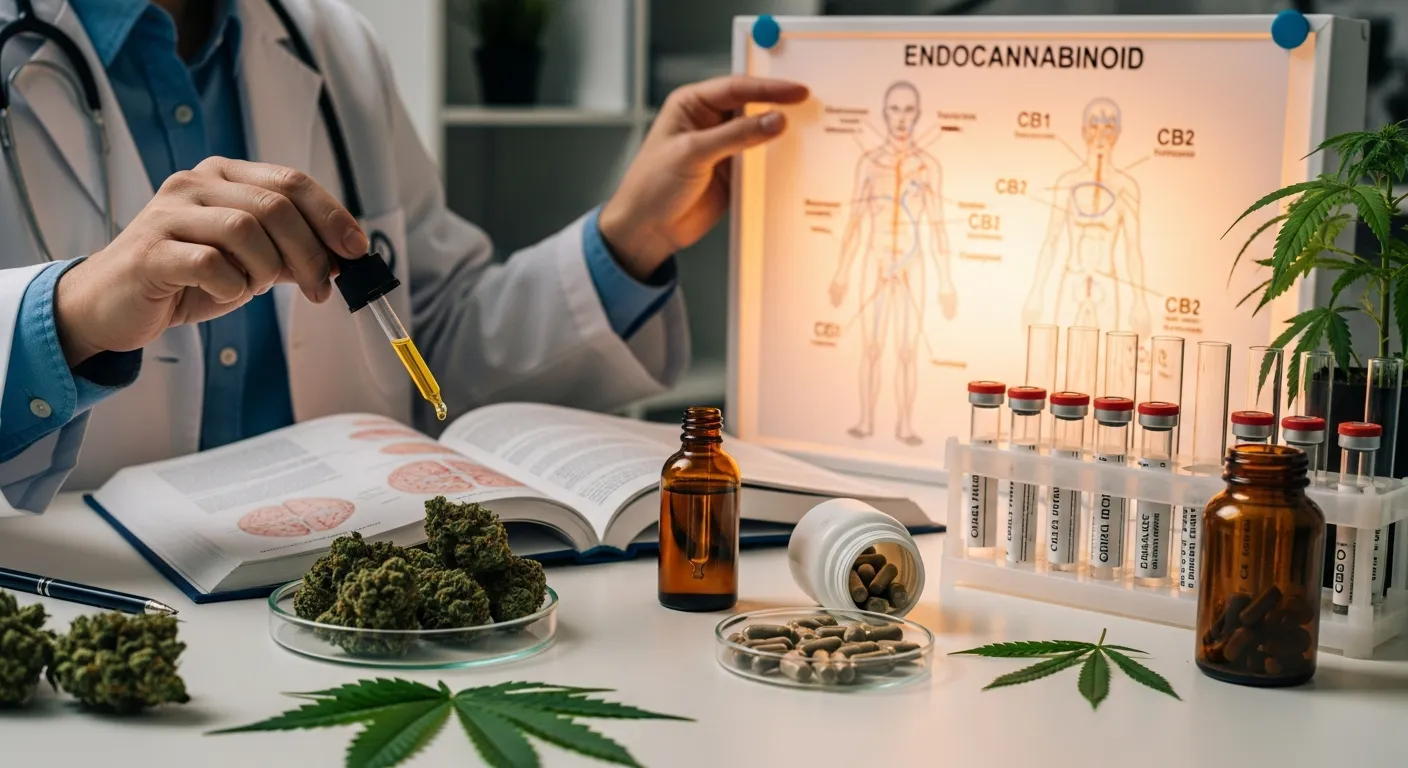

Most people know cannabis can help with pain, anxiety, and other conditions. What most people don’t know is why. And the answer is actually pretty fascinating once you strip away the jargon.
Your body already has a biological system designed to interact with cannabis-like compounds. Researchers only discovered it in the early 1990s, which is why most of us never learned about it growing up. Once you understand how that system works, everything else about medical cannabis starts to make sense.
This guide covers everything, what medical cannabis actually is, how your body responds to it, what THC and CBD each do, why the whole plant works better than any single compound, and what the science genuinely shows about conditions it can treat.
What Is Medical Cannabis? (And How It Differs From Recreational Use)
Medical cannabis and recreational cannabis come from the same plant. But the way they’re used is very different.
Recreational cannabis is used for enjoyment or relaxation. Medical cannabis is used to treat or manage specific health conditions, with guidance from a licensed physician. The products, the ratios of active compounds, and the dosing are all matched to what a patient actually needs.
A useful comparison: alcohol and prescription blood thinners both affect the circulatory system, but no one would treat them as the same thing. Intent, formulation, and professional oversight change everything.
A wide range of medical cannabis products are legal in 38 states, three territories, and DC, while remaining illegal under federal law. Each state maintains its own list of qualifying conditions, and products sold at licensed dispensaries go through lab testing for safety, potency, and purity. That’s something recreational or black-market cannabis can’t reliably guarantee.
Medical cannabis isn’t just cannabis with a label on it. It’s a physician-guided treatment that uses specific compounds found in the cannabis plant to interact with a specific biological system in your body.
The Endocannabinoid System (ECS): The Biological Reason Cannabis Works
Here’s the part that surprises most people. Your body already produces compounds that work almost exactly like those found in cannabis. And it has a vast network of receptors built to respond to them.
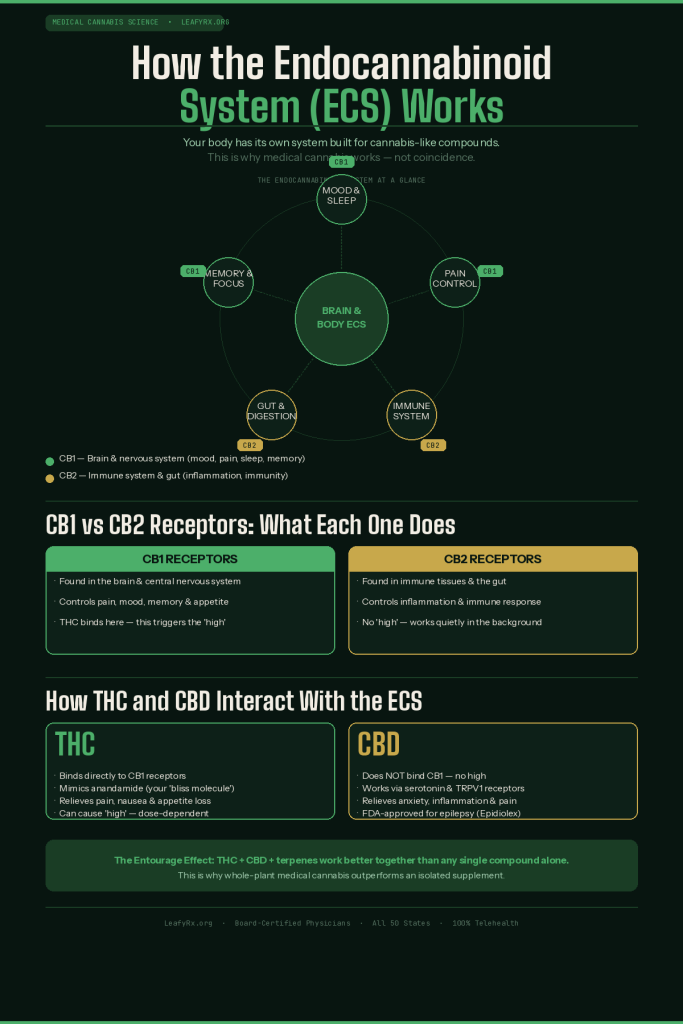
According to Harvard Health, the endocannabinoid system regulates and controls many of our most critical bodily functions, including learning and memory, emotional processing, sleep, temperature control, pain control, and inflammatory and immune responses. It’s not a minor background system. It’s central to how your body maintains balance.
Scientists call that balance homeostasis. When your ECS is working properly, your body keeps pain, mood, inflammation, appetite, and sleep in check. When it’s not working properly, those systems can go haywire. That’s one reason medical cannabis can help such a wide variety of conditions without being a cure-all for any single one.
The ECS has three main components:
-
Endocannabinoids — compounds your body makes naturally that look and behave similarly to compounds in cannabis
-
Receptors — docking stations spread throughout your brain, organs, and immune system that endocannabinoids attach to
-
Enzymes — molecules that break down endocannabinoids after they’ve done their job
To stimulate these receptors, your body produces molecules called endocannabinoids, which have a structural similarity to molecules in the cannabis plant. The most well-known is called anandamide, named after the Sanskrit word for bliss. Your body releases it after exercise, during moments of calm, and in response to pain. That post-run feeling of ease? A lot of that is anandamide doing its job.
The Three Parts of the ECS
| Component | What It Is | What It Does |
|---|---|---|
| Endocannabinoids | Compounds made by your body | Activate receptors to regulate body functions |
| CB1 and CB2 Receptors | Docking stations in cells | Receive signals and trigger responses |
| Enzymes | Biological breakdown tools | Break down endocannabinoids after they’ve worked |
CB1 Receptors: How Cannabis Affects the Brain and Nervous System
CB1 receptors live mostly in the brain and central nervous system. The cannabinoid receptors in the brain outnumber many other receptor types. They’re concentrated in areas that handle mood, memory, pain perception, movement, and appetite.
When something activates CB1 receptors, it can quiet an overactive pain signal, ease anxiety, reduce nausea, or improve sleep. That’s not because cannabis is doing something unnatural. It’s because CB1 receptors are already wired into systems your body depends on every day.
CB2 Receptors: How Cannabis Regulates Immunity and Inflammation
CB2 receptors are found mostly in immune tissues rather than the brain. The CB2 receptor exists mostly in immune tissues and is critical to helping control immune functioning. It plays a role in modulating intestinal inflammation, contraction, and pain in inflammatory bowel conditions.
Crucially, CB2 receptors don’t trigger the high that CB1 activation does. They work on inflammation and immune responses quietly in the background. This is why cannabis shows genuine promise for autoimmune conditions, chronic inflammatory disease, and gut disorders.
How THC Works in the Body: The Psychoactive Cannabinoid Explained
THC (delta-9-tetrahydrocannabinol) is the compound most people already know about. It’s the one responsible for the high. But understanding exactly how it produces that effect also explains why it has real medical value.
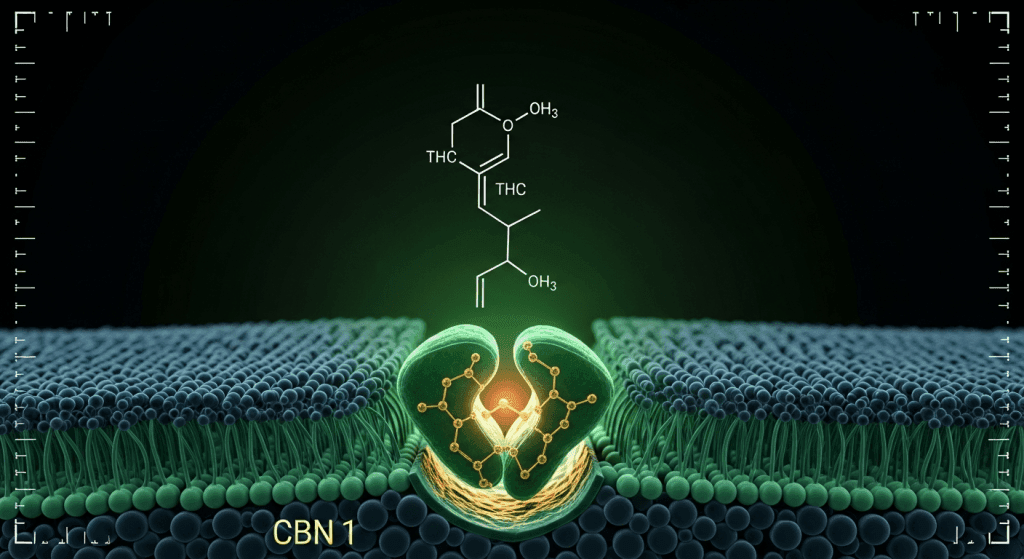
Once in your body, THC interacts with your ECS by binding to receptors, just like endocannabinoids. It’s powerful partly because it can bind to both CB1 and CB2 receptors. When it locks onto CB1 receptors in the brain, it mimics anandamide. The result is that familiar wave of relaxation, altered time perception, and in many patients, genuine pain relief.
By activating CB1 receptors, THC can dampen pain signals, reduce nausea, restore appetite in patients who can’t eat, and calm certain types of nerve pain that don’t respond well to conventional painkillers. These aren’t just anecdotal claims. The FDA has approved two synthetic THC-based drugs specifically for chemotherapy nausea and AIDS-related appetite loss, which required meeting the same clinical evidence standards as any other prescription medication.
The enzyme that breaks down anandamide and THC is called fatty acid amide hydrolase (FAAH). Regular cannabis users who use THC-rich varieties have lower levels of FAAH, meaning more anandamide stays available in the body. This is also why regular users build tolerance over time. Their system adapts.
And more THC doesn’t automatically mean better results. High-THC products can cause anxiety and paranoia, especially in new users or anyone with sensitivity. The right THC level depends entirely on your condition, your body, and your history with cannabis. This is exactly why a physician evaluation matters.
How CBD Works in the Body: The Non-Intoxicating Cannabinoid Explained
CBD (cannabidiol) is the second major compound in cannabis, and it works completely differently from THC.
First: CBD doesn’t get you high. It doesn’t bind directly to CB1 receptors the way THC does, so it doesn’t trigger psychoactive effects. That’s not a weakness. For many patients, it’s exactly what they need.
According to Premier Neurology & Wellness Center, CBD interacts with other receptors, including serotonin and TRPV1 receptors, which are involved in regulating mood, pain perception, and inflammation. It also blocks the enzyme (FAAH) that normally breaks down anandamide, so when CBD is in your system, more of your body’s natural bliss molecule stays active for longer. The effect is subtler than THC but it’s real and it’s biological.
Patients report many benefits of CBD, from relieving insomnia, anxiety, spasticity, and pain to treating potentially life-threatening conditions such as epilepsy.The only cannabis-derived drug fully approved by the FDA is Epidiolex, a purified CBD formulation used for two severe and rare seizure disorders.
CBD is also why balanced THC-CBD products often work better than pure THC for many patients. CBD can reduce the anxiety and paranoia that high THC sometimes causes, making the overall experience more manageable and the therapeutic window wider.
THC vs. CBD
| THC | CBD | |
|---|---|---|
| Gets you high? | Yes | No |
| How it works | Binds directly to CB1 and CB2 | Works via serotonin, TRPV1, and enzyme inhibition |
| Main medical uses | Pain, nausea, appetite, sleep | Anxiety, inflammation, epilepsy, pain |
| FDA-approved drug | Dronabinol (synthetic) | Epidiolex |
| Typical concern | Anxiety at high doses | Generally well-tolerated |
Beyond THC and CBD: Minor Cannabinoids and What They Do
THC and CBD get most of the attention, but the cannabis plant contains more than 100 different chemicals called cannabinoids, each with a different effect on the body. Researchers are now studying several of the lesser-known ones, and early results are worth paying attention to.
CBN, CBG, CBC, and THCV: What Early Research Shows
CBN (cannabinol) forms naturally as THC breaks down over time. Early research suggests it may have sedative properties and could help with sleep, though studies are still limited.
CBG (cannabigerol) is sometimes called the “mother cannabinoid” because other cannabinoids develop from it during the plant’s growth. Preliminary research points to anti-inflammatory and antibacterial properties, with possible applications for glaucoma and inflammatory bowel disease.
CBC (cannabichromene) doesn’t bind strongly to CB1 receptors but may interact with other receptors linked to pain and inflammation. Animal studies suggest anti-inflammatory and antidepressant potential.
THCV (tetrahydrocannabivarin) is structurally similar to THC but behaves differently. At low doses it may suppress appetite rather than stimulate it, which makes it interesting for metabolic conditions like type 2 diabetes.
Most of this research is still in early stages, conducted in labs or animal models rather than large human trials. But the science is moving quickly, and many of these compounds are already appearing in licensed dispensary products.
Terpenes and Flavonoids: The Overlooked Science Behind Cannabis
Most conversations about cannabis stop at THC and CBD. But the cannabis plant contains up to 150 cannabinoids, 220 terpenes and terpenoids, and 20 flavonoids, all of which have different effects when used independently or combined.
Terpenes are aromatic compounds found in all plants, not just cannabis. They’re what gives lavender its calming scent and citrus its uplifting smell. In cannabis, they do more than just add fragrance. Some of the most studied ones include:
-
Myrcene — found in mango and hops as well as cannabis; associated with relaxation and sedation; may help THC cross the blood-brain barrier more readily
-
Limonene — citrus-scented; studied for mood elevation and anti-anxiety effects
-
Beta-caryophyllene — spicy and peppery; the only terpene known to directly activate CB2 receptors, giving it genuine anti-inflammatory properties
-
Linalool — also found in lavender; associated with calming effects and reduced anxiety
-
Pinene — pine-scented; may partially counteract short-term memory effects associated with THC
Flavonoids in cannabis (called cannaflavins) have shown anti-inflammatory effects in early research. More human studies are needed before drawing strong conclusions, but the direction is promising.
The practical takeaway: two products with the exact same THC percentage can feel and work differently depending on their terpene profiles. Knowing what’s in your product, and getting guidance on what fits your condition, matters more than just chasing the highest number on a label.
The Entourage Effect: Why Whole-Plant Cannabis Outperforms Isolates
Now that you understand cannabinoids and terpenes separately, here’s the concept that connects all of it.
The entourage effect is the idea that all these compounds work better together than any one of them does alone. THC, CBD, minor cannabinoids, terpenes, and flavonoids amplify each other’s benefits and, in some cases, soften each other’s side effects. The whole is genuinely greater than the sum of its parts.
Some studies have suggested that isolating individual compounds from the plant may not be as effective as using whole-plant extracts, which contain a range of compounds that work together in a synergistic way.
This is the scientific explanation for why a cheap CBD product from a gas station isn’t equivalent to a properly formulated medical cannabis product from a licensed dispensary. One contains a single isolated compound. The other contains hundreds working together.
It’s also the strongest argument for working with a licensed physician who can recommend the right formulation for your specific condition, rather than picking the highest-THC product available. Full-spectrum products (those that preserve the natural range of compounds from the plant) are generally considered more therapeutically effective for most patients. That said, what works for most patients isn’t necessarily what works for you. That’s what a physician evaluation is for.
Clinical Endocannabinoid Deficiency: When Your Body Needs Support
Here’s a concept that doesn’t get nearly enough attention.
Clinical endocannabinoid deficiency (CECD) is a theory suggesting that some chronic conditions may be caused, at least in part, by an ECS that isn’t producing enough of its own endocannabinoids. If your body is running short on these natural regulators, pain, mood, and inflammation systems can all fall out of balance.
Research has shown that CECD is likely connected to chronic migraines, fibromyalgia, and irritable bowel syndrome. These three conditions share something interesting: they often have no clear underlying physical cause, they tend to appear together in the same patients, and they frequently don’t respond well to conventional treatments.
The theory is that introducing plant-based cannabinoids could help fill the gap that the body’s own ECS isn’t filling. It’s still developing research, not yet proven definitively. But it offers a compelling scientific framework for why some patients find genuine relief from medical cannabis when nothing else has worked.
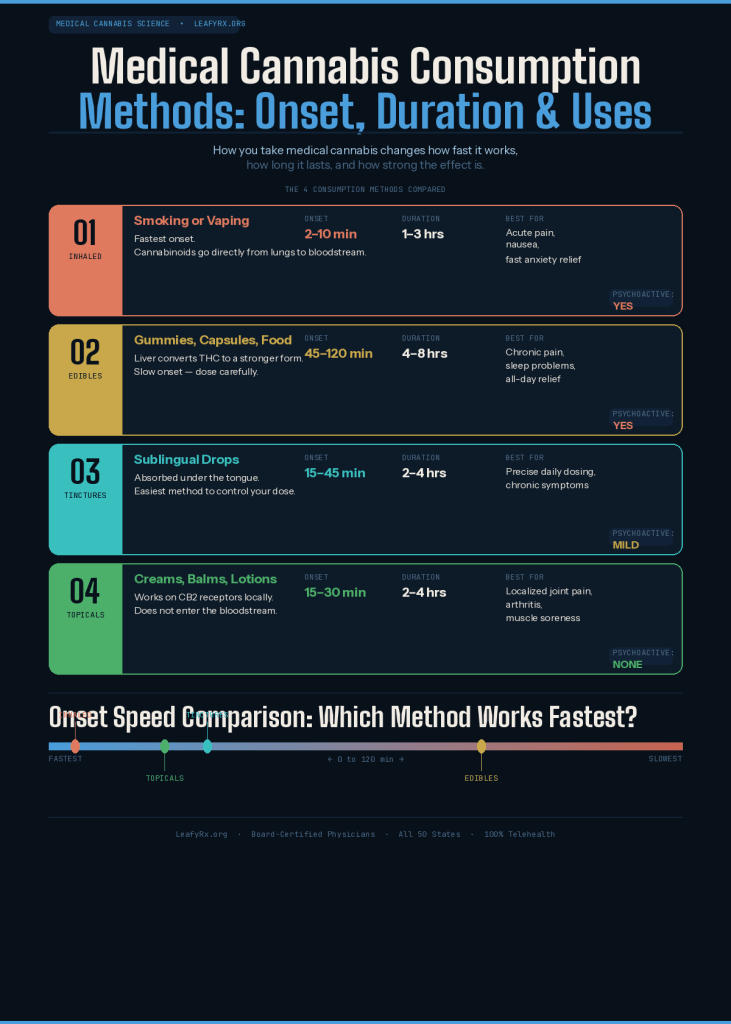
How Different Consumption Methods Change How Medical Cannabis Works
How you take medical cannabis changes everything. Same product, two different methods, two completely different experiences in terms of onset, duration, and intensity. New patients often overlook this, and it leads to a lot of frustration or accidental overconsumption.
Inhaled (Smoking and Vaping): Fast-Acting Relief
When you inhale cannabis, cannabinoids go directly from your lungs into your bloodstream. Onset is fast, usually within 2 to 10 minutes. This makes inhaled cannabis useful for acute symptoms: a sudden pain flare, a wave of nausea, a spike in anxiety that needs to be addressed quickly.
The tradeoff is duration. Effects typically wear off within 1 to 3 hours. And while vaping is generally considered less harmful than smoking, the FDA has raised concerns about certain vaping additives. Worth discussing with your doctor before choosing this method.
Edibles and Capsules: Long-Lasting but Delayed
When you eat cannabis (in a gummy, brownie, or capsule), your liver processes it before it reaches your bloodstream. This converts THC into a more potent form called 11-hydroxy-THC, which produces a stronger and longer-lasting effect than inhaled cannabis.
The problem: onset is slow. It can take 45 minutes to 2 hours to feel anything, depending on your metabolism and whether you’ve eaten recently. This is why people accidentally take too much. They don’t feel anything after an hour and take another dose, then both doses hit at once. Edibles require patience, precise dosing, and ideally, professional guidance on where to start.
Tinctures and Sublingual: Precise and Predictable
Tinctures are liquid cannabis extracts, usually taken by placing drops under the tongue. Absorption through the tissue there is faster than edibles, typically 15 to 45 minutes, but slower than inhaling. Effects are moderate and consistent.
For patients who need reliable dosing and don’t want to inhale anything, tinctures are often the most practical option. They’re also easy to adjust in small increments, which is useful when you’re first finding your therapeutic dose.
Topicals: Localized Relief Without the High
Cannabis-infused creams, lotions, and balms applied to the skin interact with CB2 receptors in local tissue. They reduce inflammation and pain in a specific area (a sore joint, arthritic hands, an inflamed muscle) without entering the bloodstream in any meaningful amount.
Topicals don’t produce a high. They typically won’t show up on a drug test. And they’re a genuinely good option for patients who need localized relief and want to avoid any psychoactive effects entirely.
What Conditions Does Medical Cannabis Treat? What the Science Actually Shows
Medical cannabis isn’t a cure-all. But the scientific evidence for certain qualifying conditions is genuinely strong, and it keeps growing. Here’s an honest look at where the research stands, condition by condition.
According to the National Cancer Institute, cannabinoids have been shown to have pain-relieving, anti-nausea, and appetite-stimulating properties through their interaction with the endocannabinoid system. Here’s how the evidence breaks down for specific conditions:
-
Chronic pain is the most well-supported use case. A 2017 review found that cannabis can be effective for treating chronic pain, including neuropathic pain, musculoskeletal pain, cancer-related pain, and muscle spasms. It’s also the most common qualifying condition across state medical cannabis programs for good reason.
-
Nausea from chemotherapy has solid evidence behind it. Drugs based on two lab-made forms of THC are FDA-approved to control vomiting in people undergoing cancer chemotherapy.
-
Epilepsy has seen the clearest regulatory validation. The FDA approved Epidiolex, a CBD-based drug, for two severe and rare seizure disorders, held to the same clinical trial standards as any other prescription medication.
-
Multiple sclerosis spasticity also has meaningful support. There is evidence that cannabis can reduce muscle spasms in people with multiple sclerosis. A cannabis-based oral spray called Sativex is approved for this use in multiple countries outside the US.
-
Anxiety and PTSD are where many patients find real relief, though the research is still catching up to the clinical experience. CBD’s interaction with serotonin receptors provides a plausible biological mechanism, and a growing number of states list PTSD and anxiety as qualifying conditions.
-
Sleep problems show promising results. Some evidence suggests medical cannabis may improve sleep in the short term for people with obstructive sleep apnea, fibromyalgia, chronic pain, or multiple sclerosis.
-
Appetite and weight loss related to HIV or AIDS is one of the most established applications. THC’s effect on appetite through CB1 receptors is one of the clearest and most consistently replicated findings in cannabis research.
Potential Side Effects and Drug Interactions to Know Before You Start
Medical cannabis is well-tolerated by most people. But it’s not without risks, and knowing them upfront makes the whole process smoother.
Common side effects include dry mouth, red eyes, dizziness, short-term memory effects, and, especially with high-THC products, anxiety or paranoia. Most of these are dose-dependent. Start low, go slow, and most people avoid them entirely.
Side effects may also include increased heart rate, slower reaction times, and interactions with other medications. Cannabis impairs driving. Always wait until effects have fully passed before getting behind the wheel.
Drug interactions are where people most often get caught off-guard. Many medications, such as blood thinners and tricyclic antidepressants, are not recommended for use with cannabis. Cannabis could affect the potency of your prescription medication, even rendering it ineffective.
Cannabis interacts with the liver enzyme system that processes many common drugs. If you’re on blood thinners, certain antidepressants, anti-seizure medications, or sedatives, the combination can either amplify or reduce those medications’ effects in ways that matter clinically.
This isn’t a reason to avoid medical cannabis. It’s a reason to always disclose your full medication list to your physician before you start.
People who should have a careful conversation with their doctor before starting:
-
Anyone with a personal or family history of psychosis or schizophrenia
-
Pregnant or breastfeeding women
-
People with certain heart conditions
-
Young adults and teenagers (the developing brain responds differently to cannabis)
None of these are automatic disqualifiers. But they’re all conversations worth having before you begin.
Why Medical Cannabis Works Better With a Doctor’s Guidance
You could walk into a dispensary without ever seeing a doctor and pick something off the shelf. But the science we’ve just covered explains exactly why that’s not the best approach.
The ECS is not a one-size-fits-all system. Everyone’s endocannabinoid system is unique. The density of receptors, the efficiency of natural compound production, and individual genetic variations all play a role in determining how cannabis might affect each person. What works well for one patient may do nothing, or cause side effects, for another.
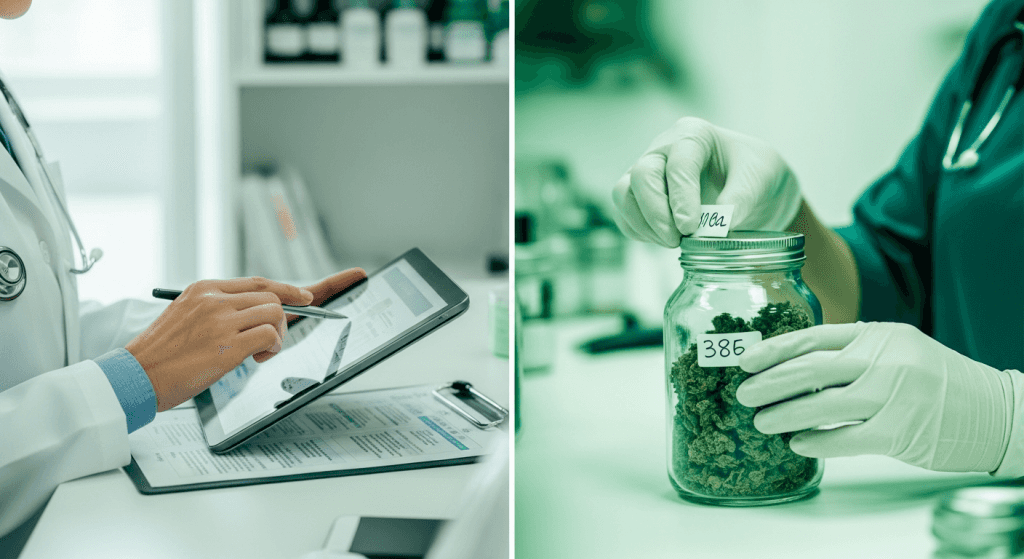
A licensed physician evaluating you for medical cannabis will look at your specific condition and symptom pattern, your current medications and potential interactions, the right cannabinoid ratio for your situation, the right delivery method for your lifestyle, and how to start dosing safely and adjust over time. That’s a lot of variables to navigate on your own.
And then there are the practical advantages that most patients don’t fully appreciate until they have a card. The medical marijuana card benefits include access to higher-potency products, significantly lower taxes in most states, legal protections that recreational users don’t have, and in many states the ability to possess considerably more than someone buying recreationally.
If you’re ready to take the next step, the process of getting your medical marijuana card is simpler than most people expect. At LeafyRx, you connect with a board-certified, state-licensed physician from home, in minutes, entirely via telehealth. Discreet, straightforward, and built around your schedule. If you don’t qualify, you don’t pay.
Understanding the science is step one. Getting the right medical guidance is what turns that understanding into actual relief.
Conclusion
Your body was built with a system that cannabis interacts with directly. The endocannabinoid system isn’t a workaround or a coincidence. It’s a real, well-documented part of human biology, and medical cannabis works precisely because it fits into that system.
Understanding the science takes away the mystery. THC, CBD, terpenes, and the entourage effect aren’t marketing language. They’re compounds with specific mechanisms, specific targets in the body, and a growing body of evidence behind them. Getting the right combination of those compounds for your specific condition is what separates therapeutic use from guesswork.
If medical cannabis sounds like it could be right for you, the next step is straightforward. Talk to a licensed physician who can review your situation, confirm your eligibility, and point you toward the products and dosing that fit. LeafyRx makes that easy, from home, in minutes.
Check your eligibility with a board-certified LeafyRx physician today.




 Ask ChatGPT
  Ask Claude
  Ask Perplexity