
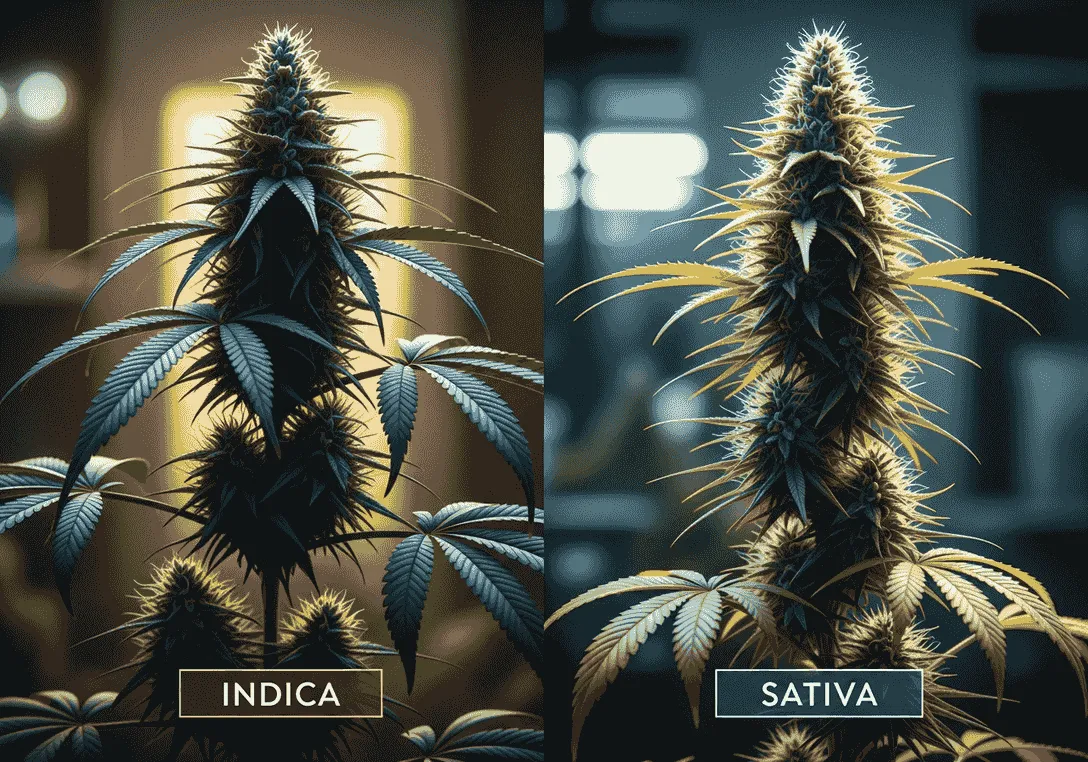

If you have ever stepped into a dispensary or started researching cannabis for the first time, two words have almost certainly come up: indica vs sativa. These terms appear on every product label, dispensary menu, and cannabis guide, yet many patients are unsure what they actually mean for their specific health condition. This best medical marijuana guide is designed to give you a clear, clinically informed answer. Whether you are managing chronic pain, anxiety, depression, insomnia, or PTSD, understanding how indica and sativa differ at a scientific level, and which is right for your needs, can make a real difference in your treatment experience. In this article, we break down plant origins, terpene science, cannabinoid profiles, medical applications by condition, the entourage effect, hybrid strains, and how to access the best medical marijuana legally and safely.
What Is Indica? Indica vs Sativa Explained for Medical Patients
Origins and Physical Profile of Indica
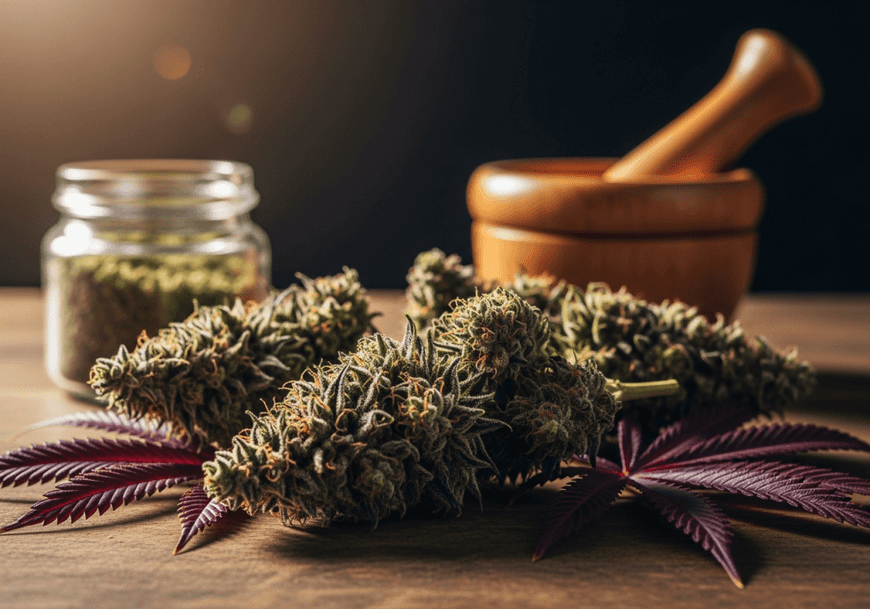
Cannabis indica traces its origins to the rugged, high-altitude mountain ranges of Afghanistan, Pakistan, India, and Turkey. These harsh, dry climates shaped a plant that evolved to grow short, dense, and bushy, with wide, broad leaves that could withstand intense cold. Indica plants typically reach between one and two metres in height and produce thick, chunky buds with a noticeably shorter flowering cycle of six to nine weeks, making them faster to harvest than their sativa counterparts.
These physical traits also translated into a distinct chemical profile. Indica strains are characteristically high in the terpene myrcene. When myrcene content in a cannabis strain exceeds 0.5%, it produces a strongly sedative effect that research associates with the classic “couch-lock” sensation indica users describe. Indica strains also tend to carry higher CBD concentrations relative to their THC levels, with CBD-to-THC ratios close to 1:1 in many traditional varieties, though modern hybrids vary significantly.
This chemical makeup gives indica its distinctive “body high” character: a heavy, calming sensation that spreads through the muscles, slows the mind, and makes deep rest feel accessible. It is precisely why indica has become the default recommendation for evening and nighttime use among medical cannabis patients.
Medical Benefits of Indica Backed by Research
Indica strains have been widely studied and clinically applied for the following conditions:
Chronic and neuropathic pain: The combination of THC, CBD, and high myrcene concentrations found in many indica varieties produces a powerful analgesic and anti-inflammatory effect. Myrcene works synergistically with THC to enhance pain relief, making indica the preferred choice for musculoskeletal pain, neuropathic discomfort, and conditions like arthritis and fibromyalgia.
Insomnia and sleep disorders: Indica’s sedative terpene profile, particularly its myrcene and linalool content, makes it one of the most effective botanical interventions for patients with sleep disorders. Myrcene is documented to have narcotic-like sedative qualities that promote sleep onset, while linalool, a floral terpene, reduces nervous system arousal and prepares the body for rest.
Anxiety and PTSD management: Indica strains can quiet an overactive nervous system by reducing the physiological stress response. For patients with PTSD who experience hypervigilance, intrusive thoughts, and night-time distress, the calming properties of indica, especially in the evening hours, provide measurable relief. CBD in indica strains also modulates the psychoactive intensity of THC, reducing the risk of anxiety spikes during use.
Muscle spasms and multiple sclerosis: There is growing clinical support for the use of cannabis in reducing the frequency and intensity of muscle spasms associated with multiple sclerosis and related neurological conditions. Indica strains, with their higher CBD content and sedative terpene profile, are most commonly recommended in this context.
Appetite stimulation and nausea relief: Patients undergoing chemotherapy frequently experience debilitating nausea and appetite loss. Indica strains, through their action on the body’s endocannabinoid receptors, help stimulate appetite and reduce nausea, supporting patients in maintaining adequate nutrition during treatment.
Inflammation management: The caryophyllene terpene, present in many indica varieties, acts directly on CB2 receptors in the immune system, producing anti-inflammatory effects without psychoactivity. This makes caryophyllene-rich indica strains particularly valuable for conditions driven by systemic inflammation, including autoimmune disorders.
Best Indica Strains for Medical Use
The following indica strains are among the most clinically relevant for medical patients:
-
Northern Lights - One of the most established medical strains globally; deeply relaxing with high myrcene content; recommended for insomnia and chronic pain
-
Granddaddy Purple - Rich in myrcene and linalool; widely used for pain, muscle tension, and sleep disorders
-
Bubba Kush - Potent sedating effects; favored for anxiety, stress, and PTSD symptom management
-
Afghan Kush - One of the oldest and purest indica varieties; particularly effective for inflammation and persistent pain
-
Purple Punch - Combines sleep support with appetite stimulation; useful for chemotherapy patients and those with eating disorders
What Is Sativa? Understanding the Best Medical Marijuana for Daytime Use
Origins and Physical Profile of Sativa
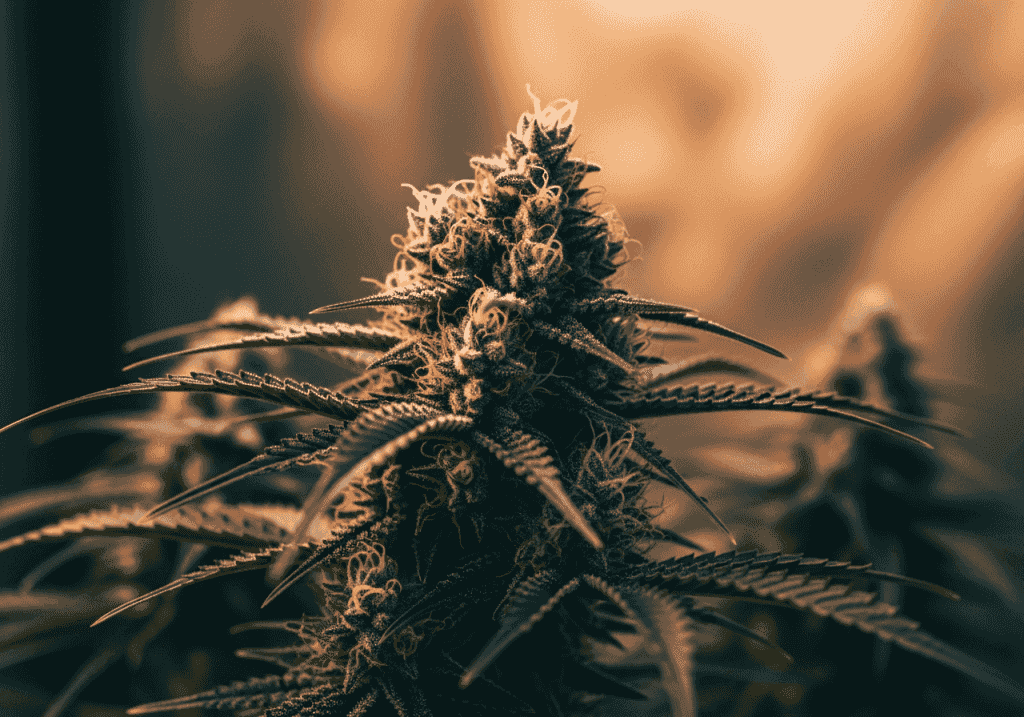
Sativa plants evolved in entirely different conditions from indica varieties. Their origins lie in the warm, humid equatorial regions of Southeast Asia, Central America, Colombia, Mexico, and parts of Africa. These environments, characterized by long sunny seasons and high rainfall, shaped a plant that grows tall, lean, and slow, sometimes reaching heights of up to six metres, with thin, narrow leaves and an airy bud structure.
The word “sativa” derives from the Latin term for “cultivated,” reflecting thousands of years of human use of this plant for fibre, food, and medicine. Sativa strains typically contain higher concentrations of THC relative to CBD, along with energizing terpenes such as limonene, pinene, and terpinolene. Their flowering cycle is considerably longer, ranging from ten to sixteen weeks, which historically made them better suited to equatorial farming calendars.
The effects most associated with sativa are cerebral and stimulating. Rather than sending the body into relaxation, sativa tends to sharpen mental focus, elevate mood, and increase energy and creativity. This makes sativa the preferred choice for daytime use, particularly for patients who need symptom relief without compromising their ability to work, socialize, or engage in daily activities.
Medical Benefits of Sativa Backed by Research
Sativa strains are most commonly applied in medical practice for the following conditions:
Depression and mood disorders: Research on animals has shown that sativa strains can have an effect on depression comparable in some respects to selective serotonin reuptake inhibitors (SSRIs). The limonene terpene, prevalent in many sativa varieties, has well-documented mood-elevating and anti-anxiety properties. For patients experiencing the flat affect, low motivation, and persistent sadness of clinical depression, daytime sativa use can provide temporary but meaningful relief.
Fatigue and chronic exhaustion: Patients managing fatigue related to autoimmune conditions, cancer treatment, chronic illness, or medication side effects often find sativa strains genuinely helpful. The energizing terpene profile stimulates alertness and motivation without the jittery side effects of stimulant medications.
ADHD and attentional difficulties: The cerebral stimulation produced by high-limonene and high-pinene sativa strains can improve mental clarity and focus. Alpha-pinene, one of the terpenes common in sativa varieties, has also been shown to counteract the short-term memory impairment that high-THC cannabis can cause, making it particularly useful for patients who need to remain cognitively sharp.
Nausea management: Sativa strains have demonstrated effectiveness in managing nausea, particularly for patients receiving chemotherapy. The THC in sativa interacts with CB1 receptors in the brain to suppress the nausea signal, and many oncology patients report meaningful improvement in treatment tolerance when using sativa-dominant products.
Anxiety in controlled low doses: While high-dose sativa can sometimes worsen anxiety in sensitive individuals, carefully dosed low-THC sativa strains rich in CBD and limonene can produce a calming, anxiety-reducing effect. The key is matching dosage and terpene profile carefully to the patient’s sensitivity level, which is one reason professional guidance through a licensed medical marijuana platform is so valuable.
Creative and cognitive support: Some patients with neurological conditions or those recovering from brain injury use sativa as a cognitive support tool. The pinene and limonene content in sativa strains supports mental engagement, verbal fluency, and creative processing in ways that indica varieties do not.
Best Sativa Strains for Medical Use
The following sativa strains are most frequently recommended for medical patients:
-
Sour Diesel - Fast-acting, intensely energizing; widely used for depression and fatigue
-
Jack Herer - Promotes clear-headed focus and creative engagement; useful for ADHD and mood disorders
-
Green Crack - Potent daytime energy boost; effective for chronic fatigue and motivational deficits
-
Durban Poison - A pure African sativa; known for clean, focused effects with minimal anxiety risk
-
Strawberry Cough - Mild, approachable sativa; mood-lifting with lower anxiety risk than stronger varieties
Indica vs Sativa: What Science Actually Says About the Best Medical Marijuana
The Entourage Effect and Why Labels Alone Are Not Enough
For decades, the indica vs sativa label was the primary tool patients and dispensary staff used to predict cannabis effects. Modern science has significantly challenged and refined this approach. In a landmark peer-reviewed interview published in Cannabis and Cannabinoid Research, neurologist Dr. Ethan Russo made a compelling argument that the chemical composition of a strain, specifically its profile of cannabinoids and terpenes, matters far more than whether a plant is labeled indica or sativa. Published through the National Institutes of Health, this research introduced and popularized the concept of the entourage effect: the synergistic interaction between multiple cannabis compounds that produces the full therapeutic experience of a given strain.
Dr. Russo argued that a strain’s sedative quality is not actually a product of being “indica” but rather a product of high myrcene content, a monoterpene with documented narcotic-like sedative properties. Conversely, the energizing and uplifting feelings associated with “sativa” are more accurately explained by high limonene content, which acts directly on mood-regulating pathways. Alpha-pinene, another sativa-associated terpene, can even counteract the short-term memory impairment that high-THC cannabis sometimes causes, making it especially valuable for patients using cannabis during working hours. The conclusion was clear: the biochemical assay of a strain tells patients far more than its botanical category.
Importantly, this research also highlighted that one cannot determine the biochemical content of a cannabis plant from its physical appearance alone. The degree of hybridization across modern cannabis strains is so extensive that only a chemical profile, a lab report listing cannabinoid and terpene percentages, can reliably tell a consumer or physician what is actually in the product they are considering.
What the NIH Clinical Review Tells Medical Providers
A critical perspective for practitioners is offered in a clinical editorial published in Integrative Medicine: A Clinician’s Journal and accessible through NIH PubMed Central. Written for healthcare providers navigating the reality that approximately 43% of US adults have tried marijuana and 13% use it regularly, the editorial underscored that patients are seeking clinical guidance based on research, not on political or philosophical positions about cannabis. The review identified that the major documented health concerns with long-term cannabis use include bronchial irritation from smoking, reduced motivation with heavy use, and certain learning difficulties in adolescents. It also emphasized that contamination of cannabis products is a significant underappreciated toxicity risk, which is one of the key reasons medical card holders benefit from access to lab-tested, regulated dispensary products.
The editorial’s core guidance for practitioners was to approach cannabis as a complex botanical medicine whose risks and benefits must be evaluated individually, taking into account the patient’s existing conditions, medications, age, and the specific cannabinoid-terpene profile of the product being recommended. This is precisely the framework that a licensed medical marijuana evaluation with a qualified provider is designed to deliver.
How THC and CBD Work Together
Understanding the interplay between THC and CBD is central to choosing the best medical marijuana for any given condition. As covered in a detailed pharmacological chapter from Springer’s cannabis pharmacology reference, THC (delta-9-tetrahydrocannabinol) is the primary psychoactive constituent of cannabis, responsible for pain relief, euphoria, appetite stimulation, and nausea suppression. CBD (cannabidiol) is non-intoxicating but carries significant clinical value: it is well established as an anti-anxiety, anti-inflammatory, antipsychotic, and antidepressant agent.
Critically, CBD modulates the psychoactive effects of THC. When both compounds are present in meaningful concentrations, CBD reduces the paranoia and anxiety that high-THC products can trigger, smooths out the intensity of the psychoactive experience, and adds its own anti-inflammatory and anxiolytic benefits. This is why patients with anxiety or sensitivity to THC are typically guided toward CBD-rich strains, which are often found in the indica family, or balanced 1:1 THC-to-CBD hybrids.
THCV (tetrahydrocannabivarin) and CBN (cannabinol) are two additional cannabinoids worth noting for medical patients. THCV acts as a CB1 antagonist at low doses, potentially suppressing appetite and modulating the psychoactive intensity of THC. CBN, a breakdown product of aged THC, is approximately 25% as psychoactive as THC and is associated with additional sedative properties, making CBN-rich indica products particularly useful for patients with severe insomnia.
What WebMD’s Medical Review Confirms
WebMD’s medically reviewed guide to indica vs sativa reinforces much of this scientific picture from a mainstream clinical standpoint. The review confirms that a large patient survey found indica strains to be the preferred choice for managing symptoms and reducing pain, while sativa is more commonly selected for recreational use or daytime functional support. WebMD also emphasizes that because today’s cannabis market is dominated by hybrid strains, the pure indica and pure sativa distinction is increasingly theoretical. The practical recommendation is for patients to focus on the terpene and cannabinoid profile provided in a product’s lab report, rather than relying solely on a label, and to work with a healthcare provider to make informed strain choices.
Not sure which strain type is right for your condition? The best starting point is a one-on-one evaluation with a licensed medical professional. At LeafyRX, board-certified doctors are available online right now to evaluate your condition, recommend the right product type for your needs, and issue your medical marijuana certification the same day. Over 100,000 patients approved. Guaranteed or your money back.
How to Choose Between Indica vs Sativa: A Condition-by-Condition Best Medical Marijuana Guide
Matching the right strain type to your specific medical needs is more precise than many patients initially realize. The following framework integrates the terpene science, cannabinoid profiles, and clinical guidance discussed above into practical guidance by condition:
| Condition | Best Type | Key Reason |
|---|---|---|
| Chronic pain | Indica or balanced hybrid | Myrcene + caryophyllene for anti-inflammatory relief |
| Insomnia | Indica | High myrcene and linalool for sleep onset and duration |
| Depression | Sativa | Limonene elevates mood; pinene supports cognitive engagement |
| Anxiety (mild, low dose) | Sativa (low THC) or CBD-rich | Limonene reduces anxiety without sedation |
| PTSD | Indica or indica-dominant hybrid | Linalool and myrcene reduce nervous system hyperarousal |
| Fatigue | Sativa | Limonene and terpinolene restore energy and motivation |
| Nausea (chemotherapy) | Hybrid or sativa | THC suppresses nausea signal via CB1 receptors |
| Muscle spasms or MS | Indica | CBD + caryophyllene reduce spasm frequency and pain |
| ADHD | Sativa (low to moderate dose) | Pinene counteracts THC memory effects; limonene aids focus |
| Appetite loss | Indica | Myrcene and caryophyllene stimulate appetite via endocannabinoid system |
Hybrid Strains: Bridging the Indica vs Sativa Divide
Because virtually all commercially available cannabis today is a hybrid, understanding how hybrids work is as important as understanding the parent types. Hybrid strains are bred by crossing indica and sativa parent plants to combine their most desirable characteristics, producing effects that neither pure type can achieve alone.
A well-chosen hybrid can offer targeted relief that fits a patient’s entire day rather than just one part of it. For example, a patient with chronic pain that also causes depression might find a sativa-dominant hybrid most useful: enough indica genetics to manage pain and inflammation, enough sativa genetics to lift mood and prevent daytime sedation. A patient with anxiety who also has insomnia might benefit most from a balanced or indica-dominant hybrid that provides calm without overwhelming sedation during the day, then deeper sedation in the evening.
The most clinically useful hybrids in current medical practice include Blue Dream, a sativa-dominant hybrid favored for pain relief combined with mood elevation; OG Kush, a balanced hybrid effective for stress and pain; Girl Scout Cookies, an indica-dominant hybrid widely used for PTSD and appetite issues; and Harlequin, a high-CBD sativa-dominant hybrid particularly valued for anxiety and inflammation without meaningful psychoactivity.
What makes a hybrid work well medically is not just the indica-to-sativa ratio but the terpene and cannabinoid composition that the breeder selected for. This is why reading the lab certificate of analysis (COA) on any dispensary product, a practice only accessible to medical card holders in most regulated states, is the gold standard for patient decision-making.
Ready to access lab-tested indica, sativa, and hybrid products for your condition? Getting your medical marijuana card is the first step. Visit LeafyRX to see the complete state-by-state guide, then book your consultation with a licensed doctor today. The entire process takes less than 30 minutes, is fully HIPAA-compliant, and comes with a money-back guarantee if you are not approved.
How to Use Cannabis Safely: Dosing, Timing, and Consumption Methods
Why Dosing Matters More Than Strain Type Alone
Many patients make the mistake of focusing entirely on the indica vs sativa question without giving equal attention to dosing and consumption method, which have a profound effect on outcomes. The same strain at a low dose can produce calm focus or mild pain relief, while a high dose of the same product can cause disorientation, anxiety, or overwhelming sedation.
The universally recommended starting principle for new medical cannabis patients is to start low and go slow. For edible products, beginning with 2.5 to 5 mg of THC is appropriate for most adults with no prior cannabis experience. For inhaled products, a single small inhalation followed by a 10 to 15-minute waiting period before any additional consumption prevents accidental overconsumption. This is especially critical with indica strains, whose sedative effects build gradually and can catch inexperienced patients off guard.
Consumption Methods and Their Clinical Significance
The method of consumption has a direct and significant impact on how cannabis behaves medically. Inhaled cannabis, whether smoked or vaped, reaches the bloodstream quickly, typically producing effects within 5 to 15 minutes that last 2 to 4 hours. This rapid onset makes inhalation useful for acute pain management and nausea relief, where quick action is clinically important.
Edible cannabis products are absorbed through the digestive system and processed through the liver, which converts THC into a more potent compound called 11-hydroxy-THC. This results in a delayed onset of 30 to 90 minutes, with effects that can last 6 to 8 hours or longer. The prolonged duration makes edibles valuable for patients with overnight pain, chronic sleep disorders, or conditions requiring sustained symptom control throughout the day.
Tinctures, sublingual drops, and capsules offer a middle ground: faster onset than edibles but longer duration than inhalation, with more precise dosing than either. Topical cannabis products, which include creams and patches, deliver localized relief without psychoactive effects and are particularly useful for patients with joint pain, skin inflammation, or localized muscle tension who do not want any cognitive impact from their treatment.
Drug Interactions and Safety Considerations
The clinical editorial reviewed on NIH PubMed Central highlighted that while most of the serious risks associated with cannabis relate to long-term heavy use, healthcare providers should counsel patients about relevant drug interactions. Cannabis, particularly CBD-rich products, can inhibit certain liver enzymes responsible for metabolizing common medications, including blood thinners, antiepileptics, and some psychiatric medications. Patients taking prescription drugs should always disclose cannabis use to their prescribing physician.
Additionally, combining indica strains with alcohol or central nervous system depressants like benzodiazepines or opioids amplifies sedative effects in ways that can become unsafe. Medical supervision through a licensed provider, the kind that a medical marijuana card program provides, is the appropriate context for managing these interactions responsibly.





 Ask ChatGPT
  Ask Claude
  Ask Perplexity