
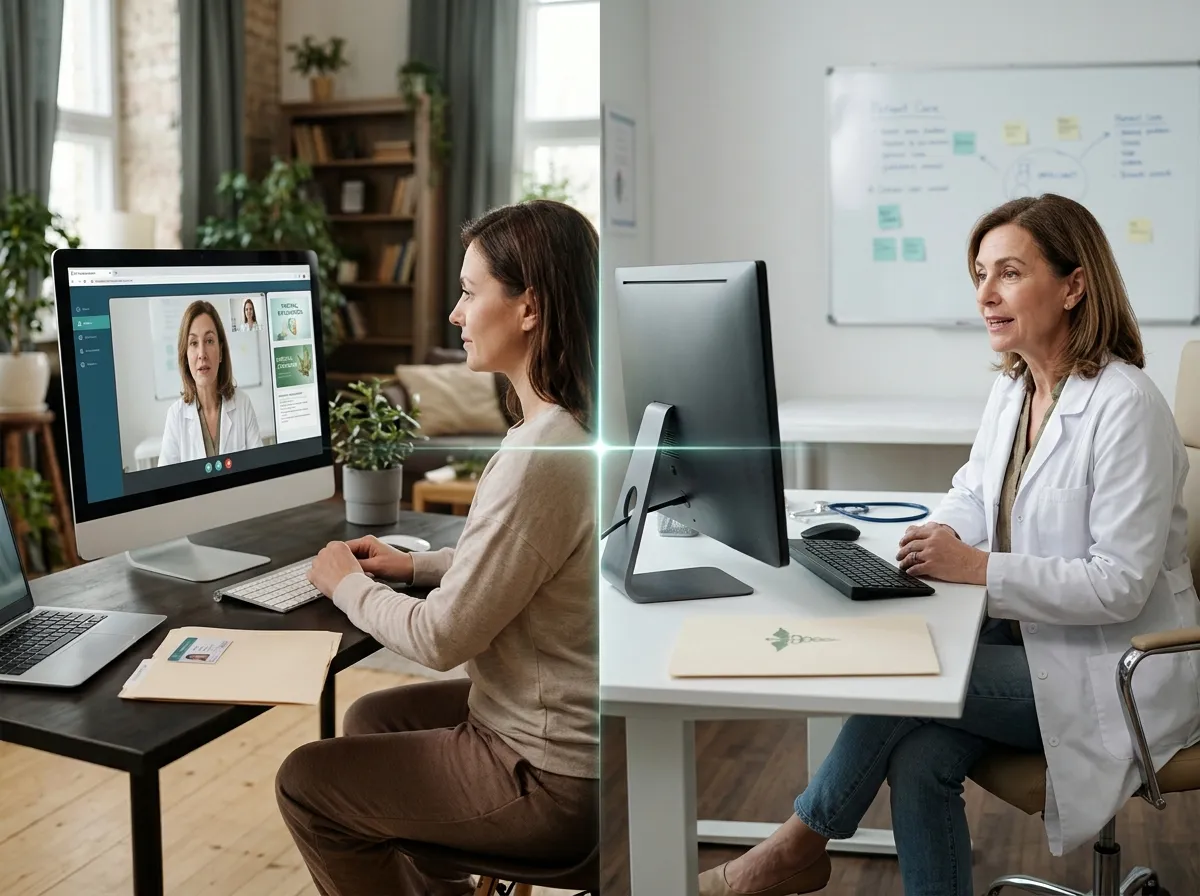

How Telehealth Medical Card Evaluations Work is simple: you meet a licensed provider by video from home. You skip the waiting room and the drive to a clinic. For many patients, a telehealth medical marijuana card is the easiest way to start.
Most online guides skip the practical details. They rarely explain what happens on the video call. They often leave out the full cost once state fees are added. They also blur which rules come from your state and which come from the federal government. Many readers finish still unsure whether a telehealth certification is legitimate where they live. This guide answers those questions in plain words. It follows the process in order, so you know what to do before, during, and after your visit. You’ll also learn what a clinician can assess by video and when you need in-person care instead.
What is a Telehealth Medical Marijuana Card Evaluation?

How Telehealth Medical Card Evaluations Work is simple at its core. A licensed clinician reviews your health history during a video call or secure online visit. They decide whether you meet your state’s rules for medical marijuana. You don’t need to travel to a clinic.
Evaluation vs. Card: Two Different Steps
An evaluation is a medical appointment. A card is a separate document, usually issued by your state after you register. The clinician can only recommend treatment, and the state approves the card. If you’d like the whole process laid out, get information about How to Get a Medical Marijuana Card.
Who Uses Online Evaluations
Patients with chronic pain, anxiety, PTSD, or other qualifying conditions often choose online visits. A person in a rural area, for example, may live hours from the nearest cannabis-friendly doctor. Others have limited mobility or busy work schedules. Online visits save them the trip.
How Telehealth Medical Card Evaluations Work matters most to these patients, because it shows what to expect before they book.
What to Expect Before Your Telehealth Medical Card Evaluation?
A little preparation saves time on appointment day. Knowing How Telehealth Medical Card Evaluations Work before you book helps you gather the right papers and avoid surprise fees. It also keeps your visit short and focused.
Eligibility and Documents to Gather
Each state sets its own rules for who can get a card. Most require a diagnosis of a qualifying condition, such as chronic pain or PTSD, and you usually must live in that state. Many states also set an age limit, and minors often need a caregiver involved.
Get information about which conditions qualify in each state before you schedule. Anxiety counts in some places but not in others, so a quick look can save you a wasted visit.
Next, collect your paperwork. Most providers ask for:
-
A government-issued photo ID with your state address
-
Medical records or a diagnosis letter from your doctor
-
A list of current medications and past treatments
-
Proof of residency, such as a utility bill, if your ID is out of date
You also need a phone, tablet, or computer with a working camera. Find a quiet, private spot with steady internet so the clinician can see and hear you clearly.
Costs, Refunds, and Choosing a Legitimate Provider
Evaluation fees vary by provider and state. State registry or card fees are often separate, so ask for the full price up front. Picture a patient who pays the visit fee and then finds a second state charge. Honest pricing is part of how Telehealth Medical Card Evaluations Work at a trustworthy service.
Ask about refunds before you pay. Many reputable services return the visit fee if the clinician decides you don’t qualify, but policies differ. Read the terms and get the answer in writing.
A legitimate provider usually meets these standards:
-
The clinician holds a license in your state
-
The site names its fees and refund terms clearly
-
The video platform protects your health information
-
No one promises approval before you’ve been evaluated
At LeafyRX, we encourage patients to compare any provider against this list. Use these checks every time, because How Telehealth Medical Card Evaluations Work should never include a guarantee of approval. A real evaluation is a medical decision, and only the clinician can make it.
What to Expect During Telehealth Medical Card Evaluations?
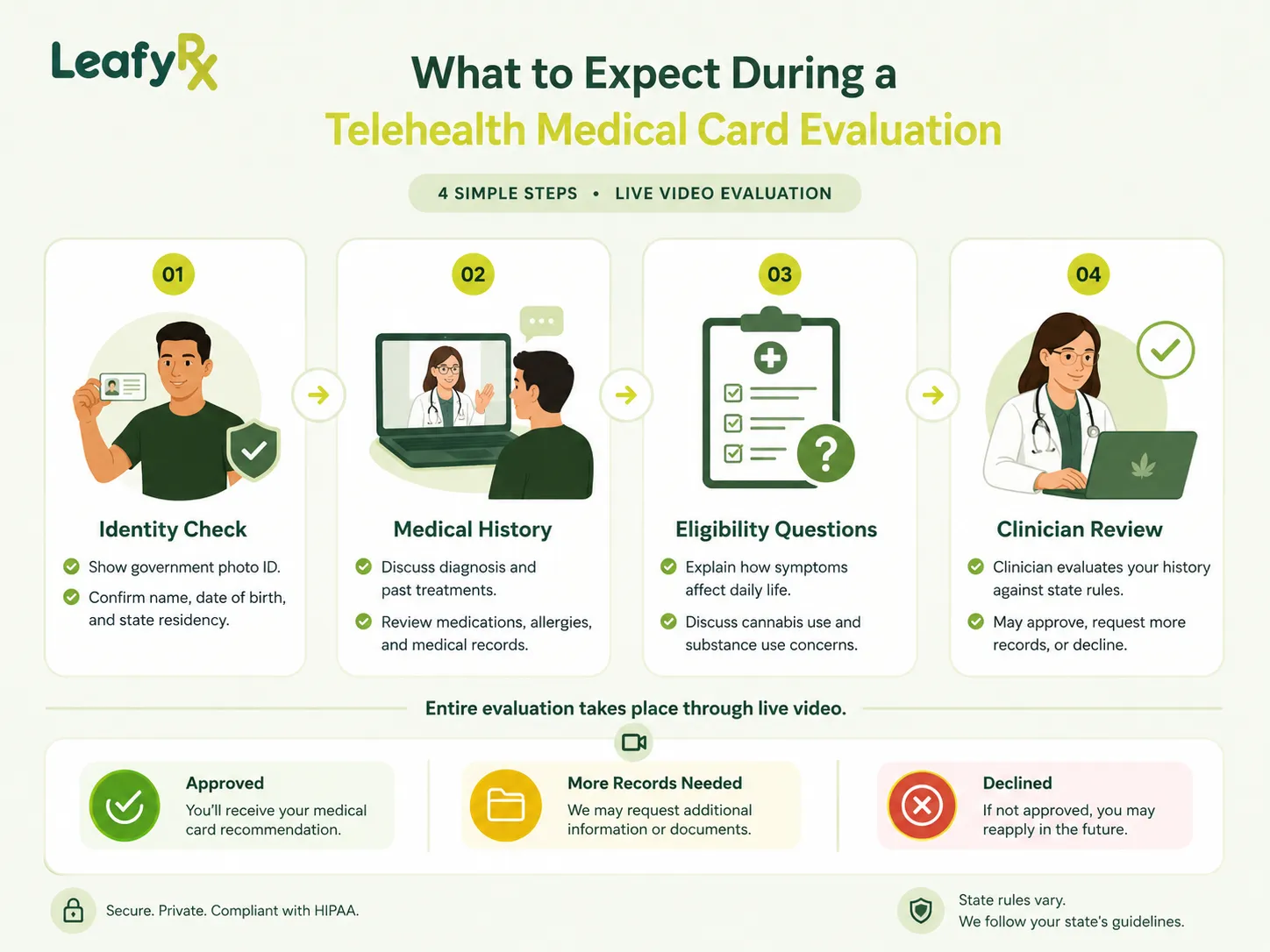
How Telehealth Medical Card Evaluations Work is easier to see once you know the order of the visit. You confirm who you are, share your health history, answer eligibility questions, and meet with a licensed clinician. Everything happens on live video.
Identity Check and Medical History
The clinician starts by checking your identity. You hold a government photo ID up to the camera. The provider confirms your name, date of birth, and state residency. This step matters because a medical card is tied to one person in one state.
Next comes your medical history. Expect questions about your diagnosis, past treatments, current medications, and allergies. For example, a patient with chronic back pain might describe physical therapy, over-the-counter pain relievers, and how long symptoms have lasted. Records from your own doctor can back up your answers.
Eligibility Questions and Clinician Review
Eligibility questions come after the history. The clinician asks how your symptoms affect sleep, work, and daily life. They also ask about cannabis use and any substance use concerns. These answers help decide whether your condition qualifies under your state’s rules.
How Telehealth Medical Card Evaluations Work ends with the clinician’s decision, not the platform’s. The clinician weighs your history against state law and decides if medical cannabis is a reasonable option. They may approve you, ask for more records, or decline. A decline is not a judgment of you. It often means a state requirement wasn’t met.
At LeafyRX, we encourage patients to ask questions during this review. Understanding How Telehealth Medical Card Evaluations Work lets you answer clearly and spot any provider that rushes these steps.
What Happens After Telehealth Medical Card Evaluations?

The visit ends, but the process doesn’t. How Telehealth Medical Card Evaluations Work includes what happens afterward, and that part depends on the clinician’s decision and your state’s system.
Certification and State Registry Application
If the clinician finds you qualify, they issue a certification. This signed document confirms you have a qualifying condition, such as chronic pain or PTSD. Most states then ask you to apply to a state registry, the official list of approved patients.
-
Get your certification from the clinician.
-
Create an account on your state’s registry portal.
-
Upload your ID, proof of residency, and certification.
-
Pay the state’s application fee.
-
Wait for approval, then receive your card.
The medical visit and the registry application are separate steps. How Telehealth Medical Card Evaluations Work covers the first one. The state, not the clinician, issues your card.
How State Rules Change the Next Steps
Rules differ from state to state. Some states let the clinician submit your paperwork, while others expect you to apply yourself. Some mail a physical card, and others send a digital copy by email. Fees, wait times, and renewal dates differ too, so check the rules for your state through different medical card guides by state. Certifications often expire after a year, so note your renewal date.
A patient in one state might get a digital card within days. A patient in another might wait weeks for a mailed card. Check your state’s steps before you book, since How Telehealth Medical Card Evaluations Work stays similar while the registry steps change. At LeafyRX, we encourage patients to confirm these details first.
What Clinicians Can and Cannot Assess During Telehealth Medical Card Evaluations?
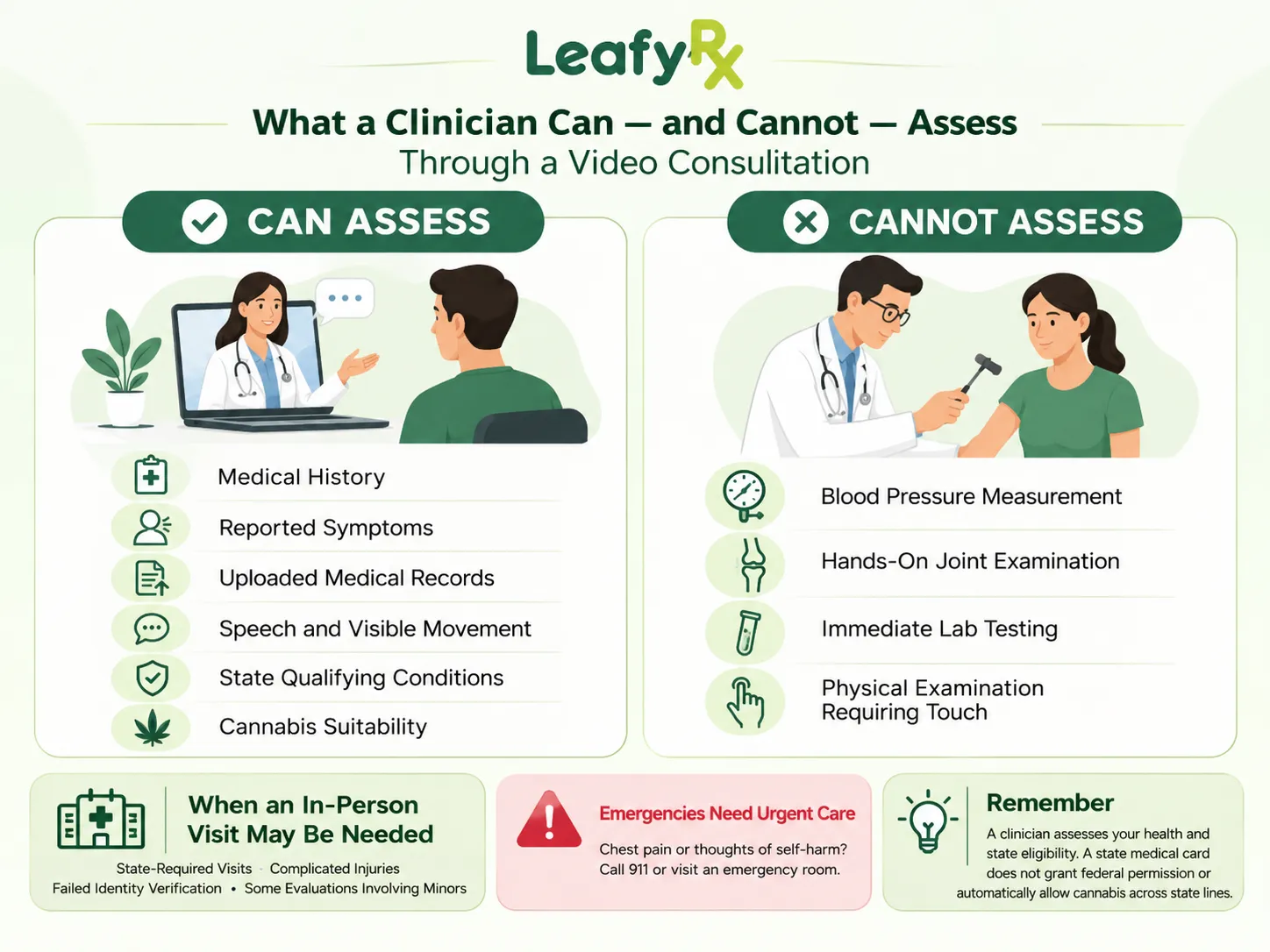
How Telehealth Medical Card Evaluations Work has limits that patients should know. A video visit lets a clinician talk with you and watch how you speak and move. It can’t replace a hands-on exam.
What a Clinician Can Decide Remotely
A clinician can review your history, ask about symptoms, and read records you upload. From that, they can decide whether you have a qualifying condition under your state’s rules. They can also judge whether cannabis is a reasonable option for you.
Some things need touch or testing. A clinician can’t check your blood pressure, order labs on the spot, or examine a joint by hand. A patient with chronic back pain, for example, may be asked to send recent imaging reports.
Each state sets its own steps, so it helps to understand how to get your state’s medical card before you book. Knowing the rules also tells you which records to gather.
Federal Law vs. State Certification: Clearing Up Mix-Ups
A medical card works under state law, not federal law. The clinician certifies that you meet your state’s conditions. They don’t grant federal permission. How Telehealth Medical Card Evaluations Work depends on that difference.
A card also has limits in daily life. It usually doesn’t let you carry cannabis across state lines. It doesn’t protect you on federal property, and some employers still test for cannabis. Many states accept out-of-state cards only in limited cases.
These limits explain why a clinician’s role is narrow. They assess your health and your eligibility, and the state handles the rest. At LeafyRX, we encourage patients to ask about these limits during the visit, so How Telehealth Medical Card Evaluations Work never feels like a surprise.
When In-Person Care Is Required Instead of Telehealth Medical Card Evaluations
How Telehealth Medical Card Evaluations Work depends on your state’s rules. Some states require at least one in-person visit, often for a first card. Check your state’s program before you book.
A clinician may also ask you to come in when video can’t answer a medical question. Telehealth suits most patients, but a hands-on exam sometimes gives a clearer answer. A complicated injury, for example, may need one.
Emergency symptoms never belong in a telehealth visit. Chest pain or thoughts of self-harm need urgent care. Call 911 or go to an emergency room.
Patients under 18 often face extra steps, and a parent may need to attend in person. A failed identity check can also move a visit to a clinic.
How Telehealth Medical Card Evaluations Work becomes clearer once you know these limits. At LeafyRX, we encourage you to confirm your state’s visit rules before you pay.
Conclusion
A telehealth medical marijuana card starts with one video visit. You talk with a licensed clinician from home, share your health history, and learn whether you meet your state’s rules. There is no waiting room, no drive, and no guessing about what comes next.
Keep the roles straight. The clinician certifies your condition and does not prescribe. Your state’s program, not federal law, governs your card, so its rules on qualifying conditions, fees, and registry steps are the ones that count. Some health concerns still call for in-person care, and a good clinician will tell you so plainly.
A little preparation pays off. Bring your ID and medical records, set a realistic budget that covers state fees, and allow time for registry processing before you count on having your card in hand.
Ready to start? Check your state’s qualifying conditions today, gather your documents, and book a secure online evaluation with LeafyRx. In one short visit, you can find out whether you qualify for a telehealth medical marijuana card and what to do next.







 Ask ChatGPT
 Ask Claude
 Ask Perplexity