


How long does a Georgia medical card last? A Georgia medical card from the state’s Low THC Oil Registry is valid for five years. The front of the card shows the expiration date. Once that date passes, you lose legal protection and dispensary access until you renew. Knowing the date ahead of time helps you avoid a gap, which is why planning ahead matters so much. This guide covers the five-year term, the renewal process, fees, and deadlines, so your access stays steady for the entire renewal cycle.
Georgia Medical Card Validity Period: The Five-Year Standard
Good news for patients: a Georgia medical card now lasts five years. The Georgia Department of Public Health (DPH) runs the Low THC Oil Registry. In 2024, it changed cards from two years to five. The change applies to new cards and to renewals as they come due, as the DPH’s October 2024 announcement explains.
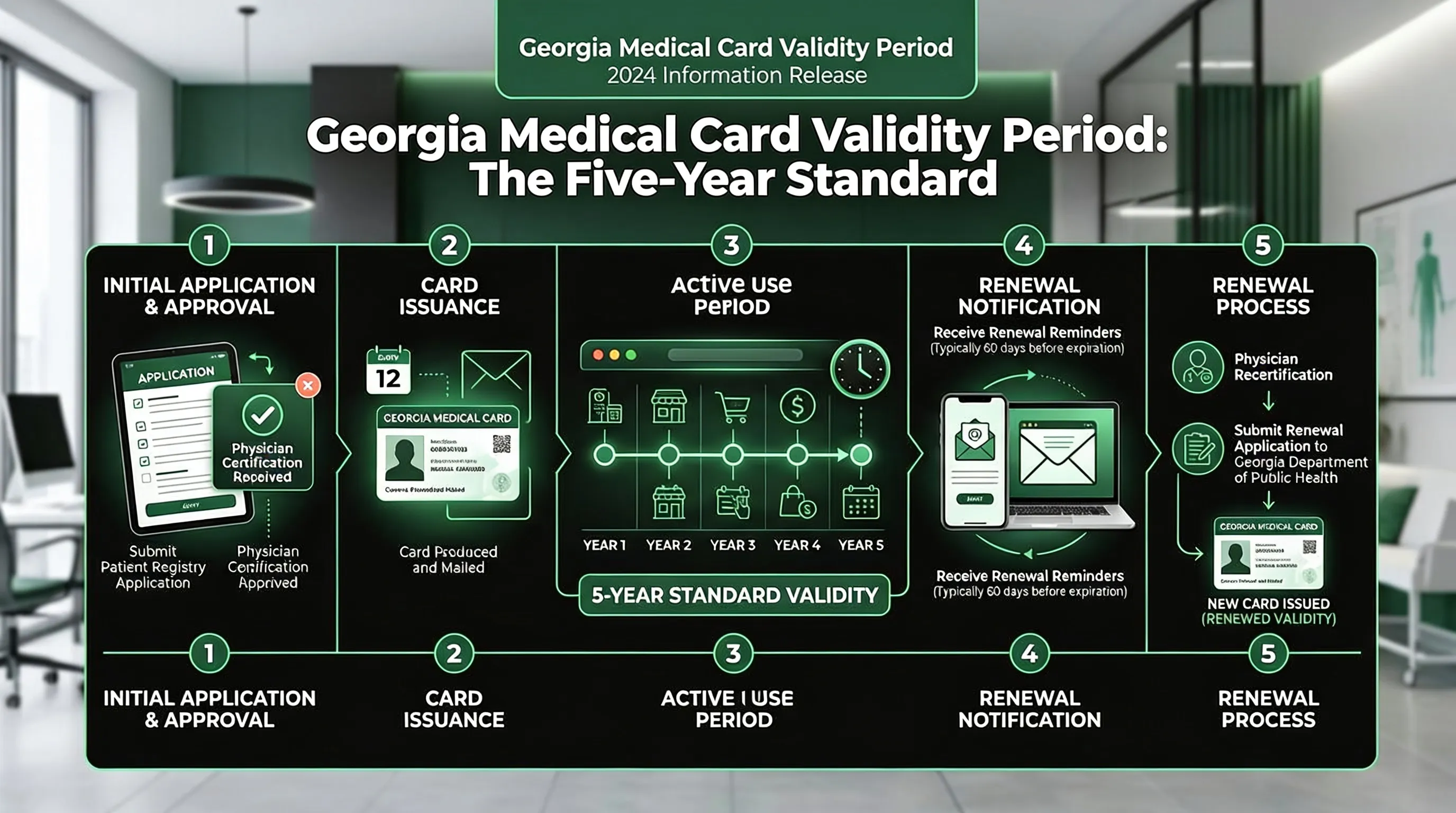
Reading Your Expiration Date
The expiration date is printed on the front of your Georgia medical card, and that printed date is the one to follow. Read it directly from the card rather than calculating it yourself, then record it on your calendar as soon as the card arrives.
If you want the big picture first, our full walkthrough covers the whole process, including what qualifies you for a medical card in Georgia online.
Renewal Reminders
Georgia will not send a renewal reminder, so you should create your own. The renewal option appears in the registry 60 days before your card expires, according to the DPH physician user guide. A phone reminder should be set for that date so the window does not pass unnoticed.
Grace Periods and Legal Status
Georgia does not offer a grace period after your card expires. Dispensaries verify both an active card and valid identification at the point of sale, so an expired card means a purchase cannot be completed. Possessing low-THC oil with an expired card can expose you to legal risk. A pending renewal request does not protect you, so submit your renewal before the expiration date arrives.
Renewal Costs for Georgia Medical Card
Renewal costs come from two separate sources: the state registry fee and your physician’s fee. The state fee covers the card itself. Physician fees vary by provider and depend on how often your physician must certify you.
State Registry Fees
The state fee for a five-year card is $30. If you pay online, you should expect an additional $3.75 service fee. Because fee schedules can change without notice, review the DPH patients and caregivers page carefully before you submit payment.
Physician Fees
Georgia requires an annual medical cannabis certification from your physician, so you may visit your doctor every year even though the card itself lasts five years. Fees differ considerably from one provider to another. Before you schedule an appointment, ask what the visit will cost and confirm that the physician holds a valid Georgia license to certify patients.
Many patients renew online through telehealth services, which makes scheduling easier. Total costs are often split between several charges, so compare the full amount, including service fees, before you choose a provider.
When to Start Your Renewal Process
Beginning the renewal process early gives you the greatest amount of time to resolve any unexpected delays. An expired card cannot be used while you wait for a replacement to be issued. Plan your steps around the renewal window described below.
Renewal Window
The renewal option appears in the registry 60 days before your expiration date. Your physician starts the renewal by clicking “Renew,” so reach out as soon as that window opens. If your doctor’s calendar fills up fast, book the appointment early. Your appointment should be booked before the window closes.

Payment Deadline
Once a renewal request is submitted, you have 60 days to complete payment. If you miss that window, the card is canceled, according to the DPH physician guide. Pay as soon as the request appears, and check your registry account frequently. Keep a copy of your payment confirmation in case the registry requests proof of payment.
If Your Card Expires First
If your card expires before the renewal process is complete, you lose both legal protection and dispensary access. Access returns only after the new card becomes active in the state system. Plan ahead so that you do not run out of medication during that gap.
Step-by-Step Renewal Process for Georgia Medical Card
The renewal process runs through the state registry and involves three parties: you, your physician, and the Georgia Department of Public Health (DPH). Each step depends on the one before it, so a delay at any stage can postpone the next. Wondering what qualifies you for a medical card in Georgia online? The steps below explain what to prepare.
What You Need to Provide
Upload your identification to the registry, including the front and back of your driver’s license or state ID card. Keep your contact information current so DPH can reach you if it requires additional documentation. The DPH patients and caregivers page lists every required document.
Submitting and Paying
After your physician submits the renewal, pay the registry fee within the 60-day payment window. Keep your payment confirmation on file in case the registry requests proof of payment.
Tracking Your Renewal
Check your registry account on a regular schedule for status updates and notifications. The state does not send automatic reminders at each stage of the renewal process, so the responsibility for tracking progress rests with you. Your current Georgia medical card remains valid until its printed expiration date, so continue using it until that date arrives. If DPH requires additional information, it will contact you directly through the account on file.
Common Reasons Renewals Stall
Most renewal delays stem from a few straightforward causes. Your physician may not have started the request, the payment window may have closed, or the ID upload may be missing. Review each step in your registry account when the renewal window opens, and respond promptly to any DPH request for documents. Documents should be scanned in advance so that uploads are completed without delay.
What Happens When Your Card Expires
Once a Georgia medical card expires, it no longer grants the legal protection that the state program extends to registered patients. Your protection under the program depends entirely on holding a current, unexpired card.
Possessing low-THC oil with an expired card can create serious legal problems, even if you qualified for the card before its expiration date. Your earlier eligibility does not shield you once the card lapses.
Dispensaries require a valid, active card at the point of sale. After your card expires, a purchase cannot go through until the renewed card becomes active in the state system. If you are unsure whether your card is still active, check its status in the registry before you travel to a dispensary, so you do not make a trip you cannot complete.
Conclusion
A Georgia medical card remains valid for five years. The expiration date printed on the front serves as your deadline. Because Georgia does not offer a grace period, an expired card removes both your legal protection and your dispensary access until you complete the renewal process.
Write that expiration date on your calendar as soon as you receive the card, then set a second reminder for 60 days before it arrives. Keep your medical marijuana card Georgia renewal on the same calendar as your other health appointments, so the reminder does not get lost. When the renewal window opens, contact your physician promptly and complete payment within the 60-day payment window. If you would like help with the paperwork and scheduling, LeafyRX can connect you with physicians who handle recertification. Beginning the process early preserves uninterrupted access to your medication.







 Ask ChatGPT
 Ask Claude
 Ask Perplexity