


Oregon has sold adult-use cannabis since 2027, so do you still need an Oregon Medical Marijuana Card? For some people, yes. Patients under 21 can’t buy adult-use products, and a card may also change what you pay in taxes. Most guides stop at the application steps. They rarely separate the state fee from the clinic evaluation fee. Many also list old fees and outdated telehealth rules.
This beginner guide helps you decide if a card fits your situation. You’ll see which conditions qualify, how the evaluation and state registration work, and what the first year costs. You’ll also learn what the card lets you do in daily life. Fees and rules come from the Oregon Health Authority (OHA), so check its site before you pay.
Who Needs an Oregon Medical Marijuana Card in 2027?

An Oregon Medical Marijuana Card is a state registry credential. The Oregon Health Authority (OHA) issues it through the Oregon Medical Marijuana Program (OMMP). It isn’t a general prescription, and you can’t fill it at a pharmacy.
How the Oregon Medical Marijuana Program (OMMP) Works
The process has two main parts. A licensed attending provider first confirms that you have a qualifying condition or symptom. You then register with the OHA to join the program.
Many patients start their Oregon Medical Marijuana Card process with an online evaluation, since it avoids travel and long waits. A step-by-step guide to getting a medical card online covers how those visits usually work. Rules, provider types and telehealth options change, so confirm current details on the OHA site before you book.
Medical Card vs. Adult-Use Purchasing
Adults 21 and older can buy cannabis at licensed shops without a card. A card makes the most sense for a few groups. Frequent buyers may get the most value. Patients who want a registered home grow need one. So do patients who want a documented medical record of their use.
Occasional users may not need a card at all. Compare what you’d spend on adult-use purchases in a year with a year of program fees. If the purchases cost less, skipping the card may save you money. A person who buys one product a few times a year, for example, may do fine without one.
The fees section later in this article covers the actual costs. For now, the question is simple: will you buy often, grow at home, or want a medical record? If so, an Oregon Medical Marijuana Card is worth a closer look.
Qualifying Conditions for an Oregon Medical Marijuana Card
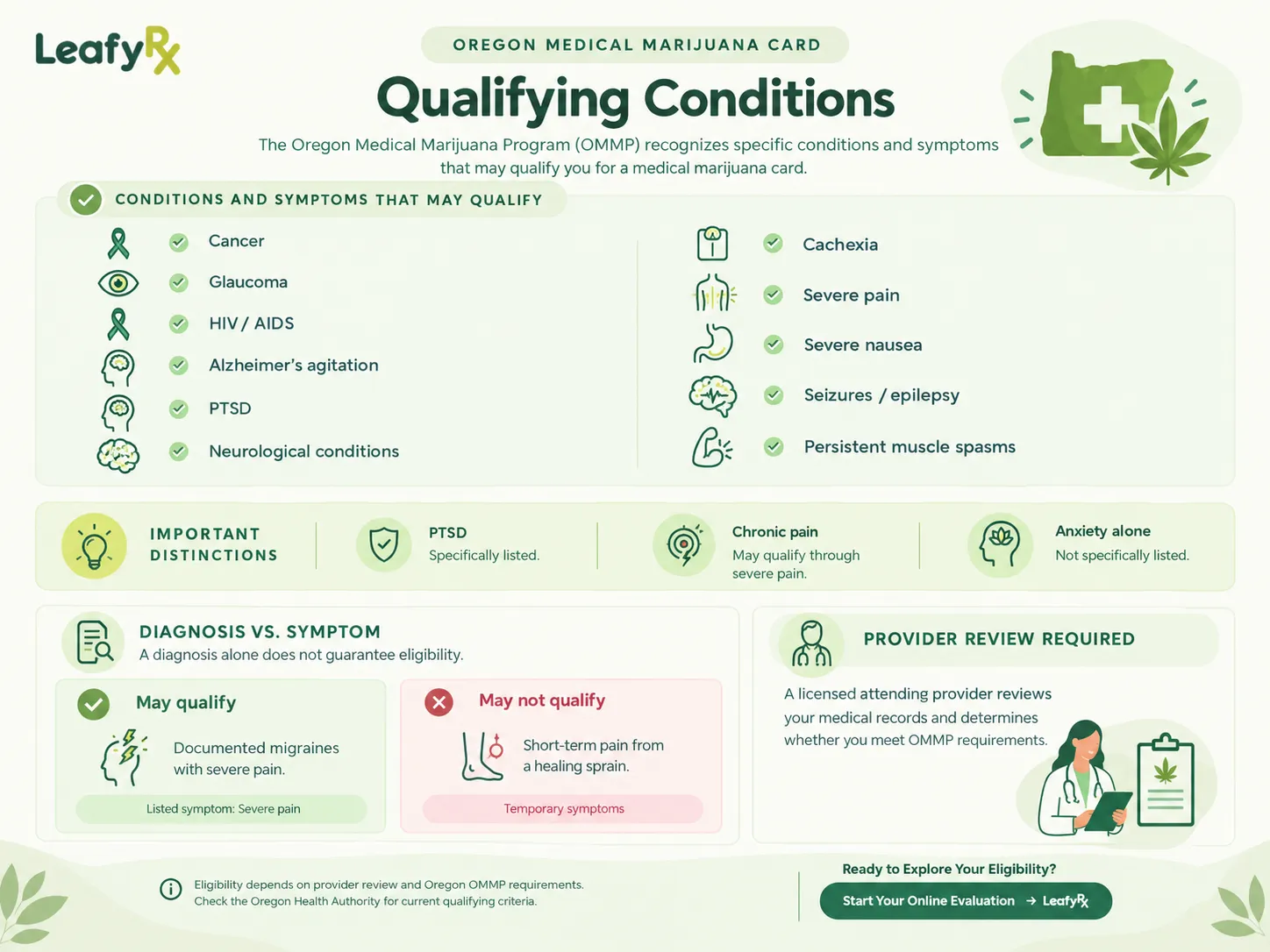
The Oregon Health Authority (OHA) sets the list of conditions for an Oregon Medical Marijuana Card. Check the current OHA page before you apply, since wording can change.
Listed Conditions and Qualifying Symptoms
The OMMP list includes these conditions and symptoms:
-
Cancer
-
Glaucoma
-
Positive status for HIV or AIDS
-
Agitation due to Alzheimer’s disease
-
Post-traumatic stress disorder (PTSD)
-
A degenerative or pervasive neurological condition
-
Cachexia (severe weight loss and muscle wasting)
-
Severe pain
-
Severe nausea
-
Seizures, including those from epilepsy
-
Persistent muscle spasms, including those from multiple sclerosis
PTSD qualifies directly. Chronic pain usually qualifies through the listed symptom of severe pain. Anxiety by itself isn’t listed, so it may count only when it comes with a listed condition or symptom, such as PTSD.
Why a Diagnosis Label Alone Is Not Enough
A diagnosis name doesn’t settle the question. Qualification often rests on a listed symptom, and your records need to show it. Here is a hypothetical example. One patient has migraines with documented severe pain. Another has a sprain that heals in a few weeks. The first has a lasting symptom with records behind it. The second likely has short-term pain that doesn’t fit.
A licensed attending provider reviews your records and decides whether your condition or symptom meets the program’s rules. Many patients start with an online evaluation through LeafyRX, and that provider review still applies. Other states use different lists, so it is important to have information about how qualifying conditions differ by state if you move.
Documents to Have Ready Before You Apply for an Oregon Medical Marijuana Card
Gather these items before you start your Oregon Medical Marijuana Card application:
-
Government-issued photo ID
-
Proof of Oregon residency
-
Medical records that support your condition or symptom
-
The signed attending provider statement
Records matter because your provider and the state rely on them to confirm a qualifying condition or symptom. A thin file can slow your review.
Reduced fees require proof, such as SNAP, OHP, SSI or veteran status. Accepted proof types can change, so confirm them on the OHA site before you pay.
Practical Considerations
Request your records early, since some offices reply slowly. Make sure names and dates match across every document. A nickname on your ID and a full name on your records, for example, can cause delays.
Save digital copies of everything so online submission goes quickly. If you’re unsure where you stand, you can check if your condition qualifies before you collect records. An organized file also helps when you renew your Oregon Medical Marijuana Card next year.
How to Apply for an Oregon Medical Marijuana Card: Evaluation and State Registration Steps
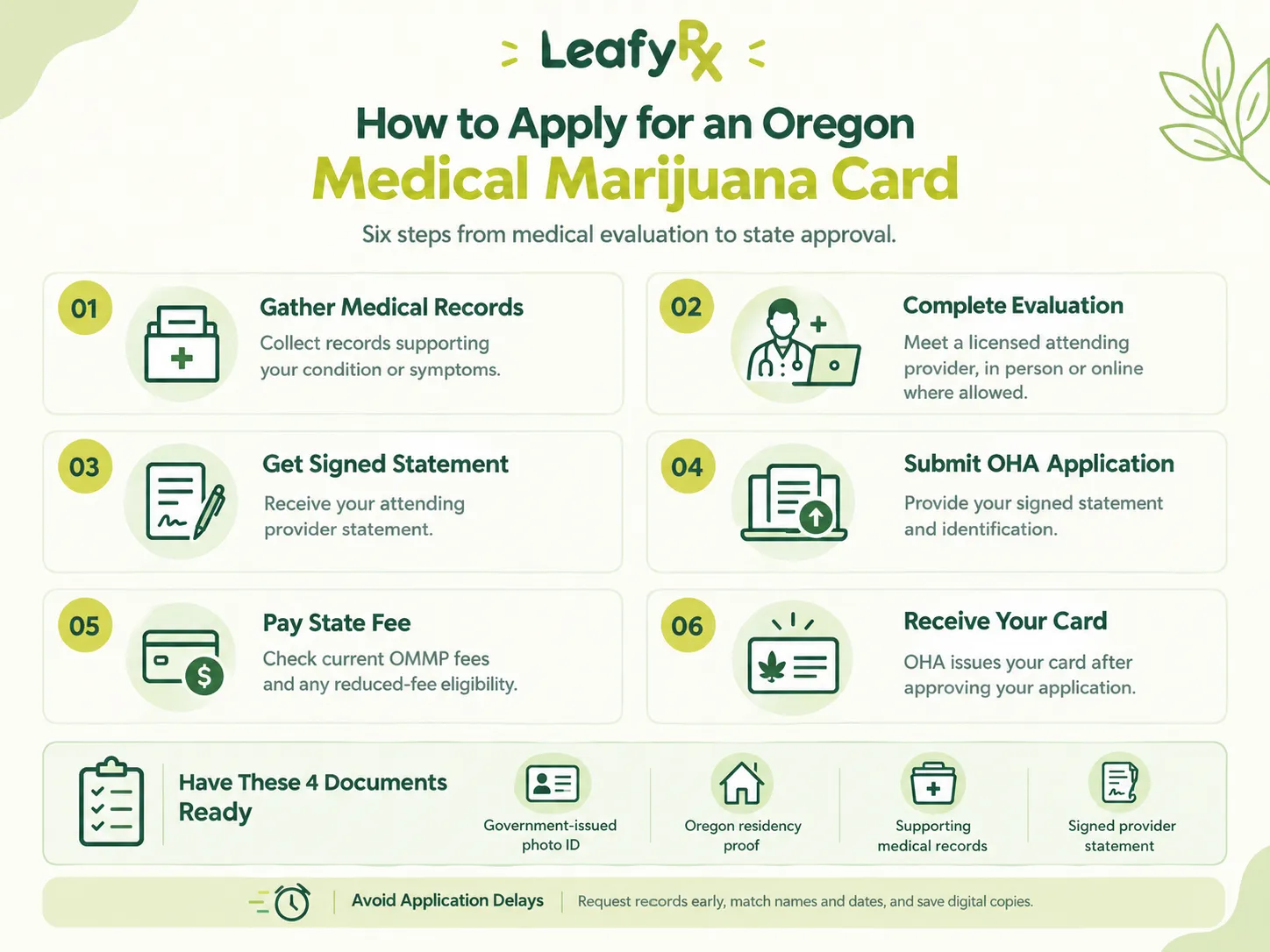
Getting an Oregon Medical Marijuana Card takes six steps, done in order. The first three happen before you contact the state.
-
Gather records. Collect files that support your condition or symptom, such as notes from a doctor who treats your chronic pain.
-
Complete an evaluation with a licensed attending provider, in person or online where allowed.
-
Receive the signed attending provider statement. You need it for your state application.
-
Submit the OHA application with your signed statement and ID.
-
Pay the state fee. Check current OHA OMMP fees first, since amounts can change.
-
Receive your card once OHA approves your file.
If you dislike office visits and long waits, an online medical card evaluation may fit better. Check Oregon availability and the Oregon medical card waitlist before you begin.
You can apply online or by mail. The online route lets you upload documents digitally. Mail uses a paper form and printed copies. Use the OHA portal and forms for current instructions instead of relying on an address from a blog.
Oregon Medical Marijuana Card Timeline and Program Fees
Two separate charges make up the cost of an Oregon Medical Marijuana Card. Many pages blur them together. Knowing who gets each payment helps you budget.
State Fee vs. Clinic Evaluation Fee
According to the Oregon Health Authority, you need a qualifying condition and an attending provider’s recommendation to apply. The state charges an application fee. Clinics charge their own evaluation fee, which pays for the provider’s time and records review. The state doesn’t collect it.
| Charge | Amount | Paid to | Covers |
|---|---|---|---|
| Standard applicant | About $200 | OHA | State application |
| Reduced-fee applicant | About $60 with SNAP proof | OHA | State application |
| Clinic evaluation fee | Set by the clinic | Clinic | Provider time, records review |
These are commonly cited amounts. Confirm current fees on the OHA site.
First-Year Card Cost vs. Adult-Use Taxes
Here’s a hypothetical, not a price quote. First-year Oregon Medical Marijuana Card cost equals the OHA fee plus the clinic fee. A light buyer who shops a few times a year may pay less adult-use tax than that total. A frequent buyer who shops weekly may pay more. Check current Oregon tax rates, and see LeafyRX’s card costs by state page.
Card Validity and Renewal Timing
Your Oregon Medical Marijuana Card lasts one year. The OHA posts its current processing time, so check that page instead of guessing. Start renewal well before your expiration date, because you may need a new provider statement. Starting early keeps your card from lapsing.
Oregon Medical Marijuana Card for Minors and Caregivers
Rules for Patients Under 18
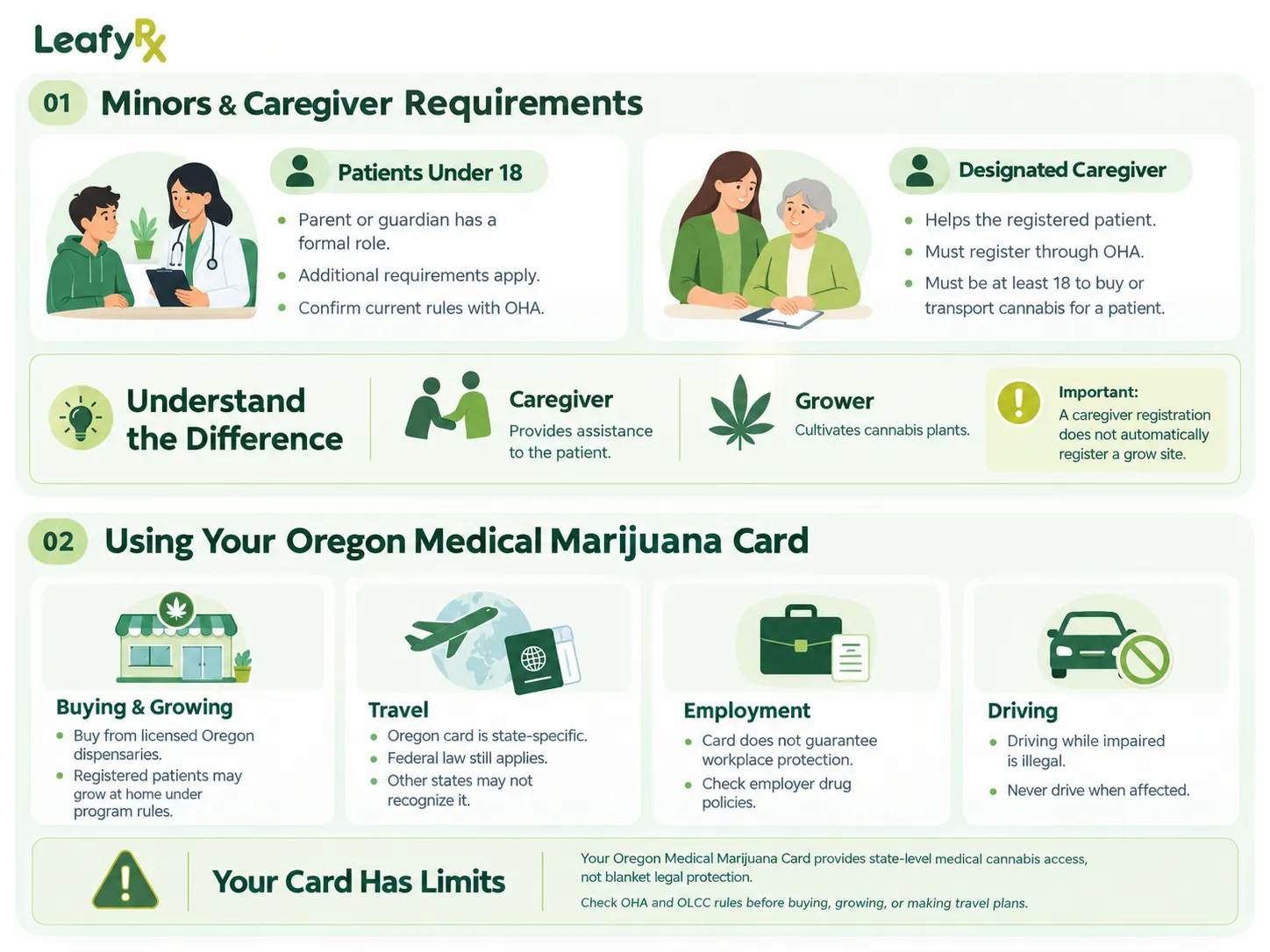
Patients under 18 follow extra requirements. A parent or guardian takes a formal role in the process. Rules can change, so confirm the current minor requirements on the OHA site before you start.
Designated Caregivers and Grow Sites
A designated primary caregiver is a person who helps a patient with medical cannabis. Many patients pick a trusted adult, such as a parent or other family member. The caregiver registers with the program through the OHA, so use the OHA forms for current steps.
The role comes with real responsibilities, so read the program rules before you accept it. According to the Oregon Administrative Rules, a person authorized to buy or transport medical marijuana for a patient must be at least 18. That person must also submit valid identification.
A caregiver is not the same as a grower. A caregiver helps the patient, while a grower raises the plants. A parent might serve as caregiver for a child without ever registering a grow site. Holding an Oregon Medical Marijuana Card, or acting as someone’s caregiver, doesn’t register a grow site. That’s a separate OHA process with its own paperwork.
Using Your Oregon Medical Marijuana Card: Buying, Travel, Employment, and Driving
Buying Products and Growing at Home
Your Oregon Medical Marijuana Card lets you buy from licensed Oregon dispensaries. Licensed retail products fall under Oregon Liquor and Cannabis Commission (OLCC) rules and limits. Tax treatment and purchase limits can change, so check the current OLCC and OHA pages before you shop.
Registered patients may also grow for themselves at their residence. The exemption comes with details, so read Oregon’s cultivation reporting rules before you plant anything.
Travel, Workplace Rules and Driving
Your Oregon Medical Marijuana Card is a state credential. Federal law still treats cannabis as illegal, so airports and federal property are off limits. Other states may not honor an Oregon card, so don’t assume it protects you on a trip.
A card doesn’t guarantee workplace protection. Some employers still test for cannabis and may act on a positive result. Read your employer’s drug policy before you rely on your card at work.
Driving while impaired is illegal even with a card. Medical use doesn’t change DUII rules. If you feel affected, don’t drive.
Your Oregon Medical Marijuana Card gives you state-level options, not blanket protection. The conclusion lists the next steps to take, including what to confirm with the OHA before you buy, travel or grow.
Conclusion
An Oregon Medical Marijuana Card is a state registry credential, not a prescription. A licensed attending provider confirms that you have a listed condition or symptom, and then you register with the OHA. Expect two separate charges: the OHA state fee and the clinic’s evaluation fee. Budget for them separately and checkout won’t bring any surprises.
The card pays off for some people and not for others. It tends to make sense if you’re under 21, buy often, need higher purchase limits, or want to grow at home. If you only shop now and then, adult-use stores may cost you less. Know its limits too: the card won’t protect you at airports, at work, or behind the wheel.
Your next step is simple. Gather your medical records and photo ID, then check the current fees and forms on the OHA site before you pay anyone. Rules change, and the agency’s page has the final word.
Ready to move? Check Oregon availability and start an online evaluation with LeafyRX from home. Read the money-back guarantee terms first so you know what’s covered. With your documents in hand, getting your Oregon Medical Marijuana Card takes just a few clear steps.







 Ask ChatGPT
 Ask Claude
 Ask Perplexity