


Introduction
Is medical marijuana safe? This is one of the most searched questions by patients, caregivers, and clinicians across the United States today. As medical marijuana laws expand and more patients seek cannabis-based relief for chronic conditions, the question of medical marijuana safety has become more pressing than ever. Understanding whether medical marijuana is safe requires looking beyond anecdotal reports and examining peer-reviewed clinical data. This article draws on three authoritative sources, including research published in JAMA, the Journal of the American Heart Association, and the European Journal of Internal Medicine, to deliver a balanced, evidence-based answer.
Whether you are considering medical marijuana for chronic pain, anxiety, multiple sclerosis, or another qualifying condition, what the science says about its safety profile should guide your decisions alongside advice from a licensed healthcare provider.
What Is Medical Marijuana? Understanding the Basics
Medical marijuana refers to the use of the cannabis plant or its chemical compounds, primarily delta-9-tetrahydrocannabinol (THC) and cannabidiol (CBD), for the treatment or management of specific medical conditions. Unlike recreational marijuana use, medical use is recommended by a licensed physician and typically involves regulated dosing, specific strains, and controlled routes of administration.
The active compounds in cannabis interact with the body’s endocannabinoid system, which plays a role in regulating pain, mood, appetite, sleep, and immune function. THC is the psychoactive component responsible for the “high,” while CBD is non-intoxicating and is associated with anti-inflammatory and anti-anxiety properties. Most medical applications involve careful calibration of the THC-to-CBD ratio depending on the patient’s condition and risk factors.
Medical marijuana has been approved or recommended for a wide range of conditions in the United States, including chronic pain, PTSD, epilepsy, multiple sclerosis, cancer-related nausea, glaucoma, and anxiety disorders, among others. The list of qualifying conditions varies by state.
How Common Is Medical Marijuana Use in the United States?
Before evaluating whether medical marijuana is safe, it helps to understand how widespread its use actually is. A landmark study published in JAMA by Compton et al. (2017) used nationally representative data from the 2013 to 2014 National Survey on Drug Use and Health, drawing on 96,100 adult respondents, to map the landscape of medical and non-medical marijuana use across the United States.
The findings revealed that 12.9% of U.S. adults reported past-year marijuana use. Of those users, approximately 9.8% reported using it for medical purposes. Broken down further, 6.2% of users reported medical-only use, 90.2% used it non-medically, and 3.6% used it for both medical and non-medical purposes.
One of the most striking findings was geographic: 78.8% of medical marijuana users lived in states where it was legally authorized, but 21.2% resided in states where it was not legally permitted, suggesting that physician recommendations sometimes occur independent of state legalization. Medical-only users were more likely than non-medical users to report fair or poor health, disability, stroke history, anxiety disorders, and Medicaid coverage, which is consistent with patients who genuinely seek therapeutic relief rather than recreational use.
This data establishes that medical marijuana use is a significant public health phenomenon, one that demands rigorous safety evaluation.
Is Medical Marijuana Safe? What the Research Says
When asking whether medical marijuana is safe, the honest answer is: it depends. The safety of medical marijuana is shaped by the patient’s health status, the conditions being treated, the dose, the delivery method, and the degree of medical supervision involved. Research supports both genuine therapeutic value and documented health risks, particularly cardiovascular ones.
Therapeutic Benefits of Medical Marijuana
| Category | Details |
|---|---|
| Medical Use of Marijuana | Clinical evidence supports inhaled or oral marijuana for managing certain chronic conditions. |
| Well-Supported Benefits | Pain relief; reduction of chemotherapy-induced nausea; improvement in multiple sclerosis-related spasticity; reduction in seizure frequency in some epilepsy syndromes. |
| FDA-Approved Medication | Epidiolex (plant-derived cannabidiol). |
| Approved Conditions | Lennox-Gastaut syndrome; Dravet syndrome (rare epileptic conditions). |
| Potential Patient Groups | Patients with cancer, HIV/AIDS, or chronic pain who have not responded to conventional treatments. |
| Quality of Life Impact | May provide meaningful improvement in overall well-being and symptom management. |
| Limitations of Evidence | Evidence strength varies across conditions; many studies have small sample sizes, short durations, and challenges with blinding. |
Cardiovascular Risks of Medical Marijuana
The most well-documented concern in the peer-reviewed literature relates to cardiovascular health. A commentary published in the Journal of the American Heart Association summarized clinical evidence indicating that marijuana use is associated with myocardial infarction (heart attack), serious cardiac arrhythmias, stroke, and, in some cases, death.
Data captured by the French Addictovigilance Network found that among nearly 2,000 cannabis-related reports, 1.8% involved cardiovascular complications, with most patients being male and averaging 34 years of age, pointing to risks even in younger adults. A separate analysis of the National Inpatient Sample from 2010 to 2014 found that 2.7% of hospitalized marijuana users developed arrhythmias, with all-cause in-hospital mortality among those patients rising from 3.7% in 2010 to 4.4% in 2014.
A large-scale 2024 analysis of over 430,000 U.S. adults found that cannabis use was significantly associated with increased risk of heart attack and stroke, independent of tobacco use, with more frequent users facing higher odds of adverse outcomes. These findings have important implications for patients with pre-existing cardiac conditions, older adults, and individuals using other cardiovascular medications.
The American Heart Association has called for a national system of mandatory reporting for marijuana-related medical complications, and advises healthcare providers to routinely ask patients about marijuana use just as they ask about tobacco and alcohol.
Drug Interactions and Medication Safety
Another major medical marijuana safety concern involves its interaction with other medications. Both THC and CBD are metabolized through the cytochrome P450 enzyme pathway, meaning they can increase or decrease the blood levels of many common drugs. Medications that may be affected include statins, anti-arrhythmic agents, anti-hypertensives, warfarin (blood thinners), SGLT2 inhibitors used in diabetes management, and immunosuppressants taken by organ transplant patients.
The European Journal of Internal Medicine review by MacCallum et al. (2021) emphasized that formal drug interaction studies with cannabinoids have not yet been conducted at the scale needed for definitive clinical guidance. This makes it essential for any patient starting medical marijuana to do so under active physician supervision, with a full review of their current medication list.
This concern is especially significant in older adults, who are more likely to use multiple prescription drugs simultaneously. As the medical marijuana patient population ages, polypharmacy risks become a growing area of concern for clinicians.
Ready to explore medical marijuana under proper medical supervision? Connect with a licensed physician at LeafyRX to get your medical marijuana card online and receive a personalized, medically supervised treatment plan. Over 100,000 patients have been approved, and licensed doctors are available on demand.
Safe Use Guidelines for Medical Marijuana Patients
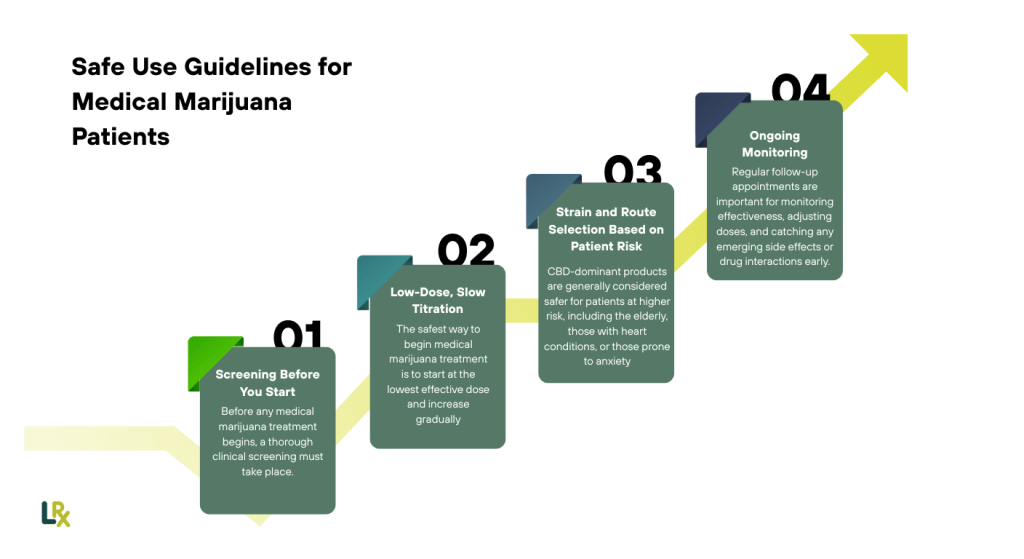
For patients who are cleared by their physician to use medical marijuana, following evidence-based safety protocols significantly reduces the risk of adverse effects. The practical review published in the European Journal of Internal Medicine (MacCallum et al., 2021) outlines a stepwise, safety-focused approach to medical cannabis initiation and monitoring.
Step 1: Screening Before You Start
Before any medical marijuana treatment begins, a thorough clinical screening must take place. This includes a review of the patient’s full medical history, current medications, history of psychiatric conditions (especially psychosis or schizophrenia), cardiovascular health, respiratory function, and personal or family history of substance use disorders. These factors help determine whether cannabis therapy is appropriate and, if so, what form and dose are safest.
Absolute contraindications include active psychosis, unstable cardiovascular disease, pregnancy, and breastfeeding. Relative precautions apply to patients with a history of anxiety disorders, depression, bipolar disorder, liver disease, or a family history of cannabis use disorder.
Step 2: Low-Dose, Slow Titration
The safest way to begin medical marijuana treatment is to start at the lowest effective dose and increase gradually, a principle often described as “start low, go slow.” This approach minimizes the risk of adverse psychoactive effects, cognitive impairment, dizziness, and cardiovascular stress. The appropriate starting dose will differ depending on the patient’s weight, prior cannabis experience, metabolism, and the condition being treated.
For new patients, oral or sublingual (under the tongue) formulations are generally preferred over smoking or vaping because they allow more precise dosing and avoid the respiratory risks associated with combustion. Vaporized forms, when used, are considered lower risk than smoked forms because they do not produce the same toxic byproducts, though they are not risk-free.
Step 3: Strain and Route Selection Based on Patient Risk
Not all cannabis products are equal in their safety profiles. Strains high in THC carry greater psychoactive risk and a stronger association with cardiovascular and psychiatric effects. CBD-dominant products are generally considered safer for patients at higher risk, including the elderly, those with heart conditions, or those prone to anxiety. A clinician experienced in cannabis therapeutics can help select the appropriate chemovar (strain type) and delivery method based on the patient’s unique risk factors.
Step 4: Ongoing Monitoring
Medical marijuana is not a set-it-and-forget-it therapy. Regular follow-up appointments are important for monitoring effectiveness, adjusting doses, and catching any emerging side effects or drug interactions early. Patients should be encouraged to keep a symptom journal and report any new or unusual physical or psychological symptoms to their physician promptly.
Who Should Be Cautious About Medical Marijuana?
While many patients can benefit from medical marijuana when used appropriately, certain populations face elevated risks and require extra caution or should avoid it altogether. Understanding these risk categories is a key part of any honest discussion about medical marijuana safety.
Patients with cardiovascular disease or a history of heart attack, arrhythmia, or stroke should approach medical marijuana with significant caution. The documented acute cardiovascular effects of cannabis, including increased heart rate, elevated blood pressure, and changes in cardiac rhythm, can be dangerous in this population. Consultation with both a cardiologist and a cannabis-experienced physician is strongly advisable.
Individuals with a personal or family history of psychosis, schizophrenia, or bipolar disorder face heightened psychiatric risk from THC exposure. High-potency THC products, in particular, have been linked to increased rates of cannabis-induced psychosis. For these patients, CBD-only or very low-THC formulations may be considered on a case-by-case basis with close psychiatric supervision.
Pregnant women and nursing mothers should avoid medical marijuana entirely. Studies link prenatal cannabis exposure to lower birth weight, premature birth, and developmental concerns in children. No safe level of cannabis use during pregnancy has been established.
Adolescents and young adults under 25 should also avoid cannabis whenever possible because the developing brain is particularly vulnerable to the effects of THC, with associations found between early cannabis use and impairments in memory, attention, and executive function, as well as increased risk of developing a cannabis use disorder.
Medical Marijuana Safety for Beginners: What to Know Before You Start
If you are new to medical marijuana and wondering whether it is the right option for your health condition, starting with solid, evidence-based information is critical. Beginners are particularly vulnerable to using incorrect doses, choosing inappropriate strains, or selecting delivery methods that increase risk. The landscape of products available at dispensaries can be overwhelming, and marketing claims are not always supported by clinical evidence.
Some of the most important principles for first-time medical marijuana patients include: always beginning under the guidance of a licensed physician, understanding the difference between THC and CBD and how each affects the body, choosing the least risky delivery method for your situation, and never combining cannabis with alcohol or other psychoactive substances without medical guidance.
New to medical marijuana and not sure where to begin? Read the complete guide on Best Medical Marijuana for Beginners in 2026 to discover which strains, products, and qualifying conditions may be right for you, with expert guidance tailored to first-time patients.
The Role of Medical Supervision in Safe Cannabis Use
Perhaps the single most important determinant of whether medical marijuana is safe for any individual patient is the quality of medical supervision they receive. Research consistently shows that self-medicating with cannabis, especially without a physician’s guidance, dramatically increases the risk of adverse outcomes. This includes choosing unsuitable products, using excessive doses, missing dangerous drug interactions, and delaying diagnosis of underlying conditions that require conventional treatment.
Licensed physicians who specialize in cannabis therapeutics bring a critical layer of personalized risk assessment to the process. They can evaluate whether a patient’s specific condition is likely to respond to cannabinoids, identify contraindications in the patient’s health history, select the safest possible product and delivery method, and maintain the ongoing monitoring that ensures the therapy remains both safe and effective over time.
Platforms like LeafyRX make it straightforward for patients across the United States to connect with board-certified, cannabis-experienced physicians from the convenience of home. This kind of supervised access not only improves safety outcomes but also ensures that patients are operating within the legal framework of their state, protecting them from potential legal consequences.
The bottom line on medical marijuana safety is this: used appropriately, under licensed medical supervision, with careful attention to individual risk factors, medical marijuana can be a valuable therapeutic tool for the right patients. Used carelessly, without proper screening, dosing guidance, and monitoring, it carries real and documented risks. The research does not support treating cannabis as uniformly safe or uniformly dangerous. Context, oversight, and individualized care are everything.






 Ask ChatGPT
  Ask Claude
  Ask Perplexity