

Getting a medical card in Virginia still matters in 2026, even though recreational cannabis is legal. Medical cardholders save 15-20% on product costs through tax exemptions and access higher-potency items not available to recreational users. You also gain stronger legal protections and workplace accommodations that recreational consumers don’t receive.
The confusion is real. Most Virginia residents assume the medical program became obsolete after recreational legalization. But the consequences of getting a medical card in Virginia extend far beyond simple access. You face decisions about privacy, employment rights, federal restrictions, and whether the financial benefits outweigh the costs. Medical patients can possess larger quantities, access dispensaries with shorter wait times, and qualify for legal protections under state disability laws.
This guide breaks down the key consequences and requirements you need to know before applying for a Virginia medical marijuana card online. You’ll learn which qualifying conditions may make you eligible, how much evaluations and renewals can cost, what employers can and can’t do regarding drug testing, and whether medical vs. recreational cannabis in Virginia makes financial sense for your situation. We also cover the certification process, employment rules, firearm ownership considerations, housing rights, and privacy protections so you can make an informed decision.
Consequences of Getting Medical Card in Virginia
Getting a medical card in virginia changes your legal status and access to cannabis products. You gain protections and benefits that recreational users don’t have. These advantages affect your wallet, your legal standing, and what you can buy.
Understanding these consequences helps you decide if the card is worth it. Let’s break down what changes when you become a registered medical patient.
Legal Protection Medical Patients Receive
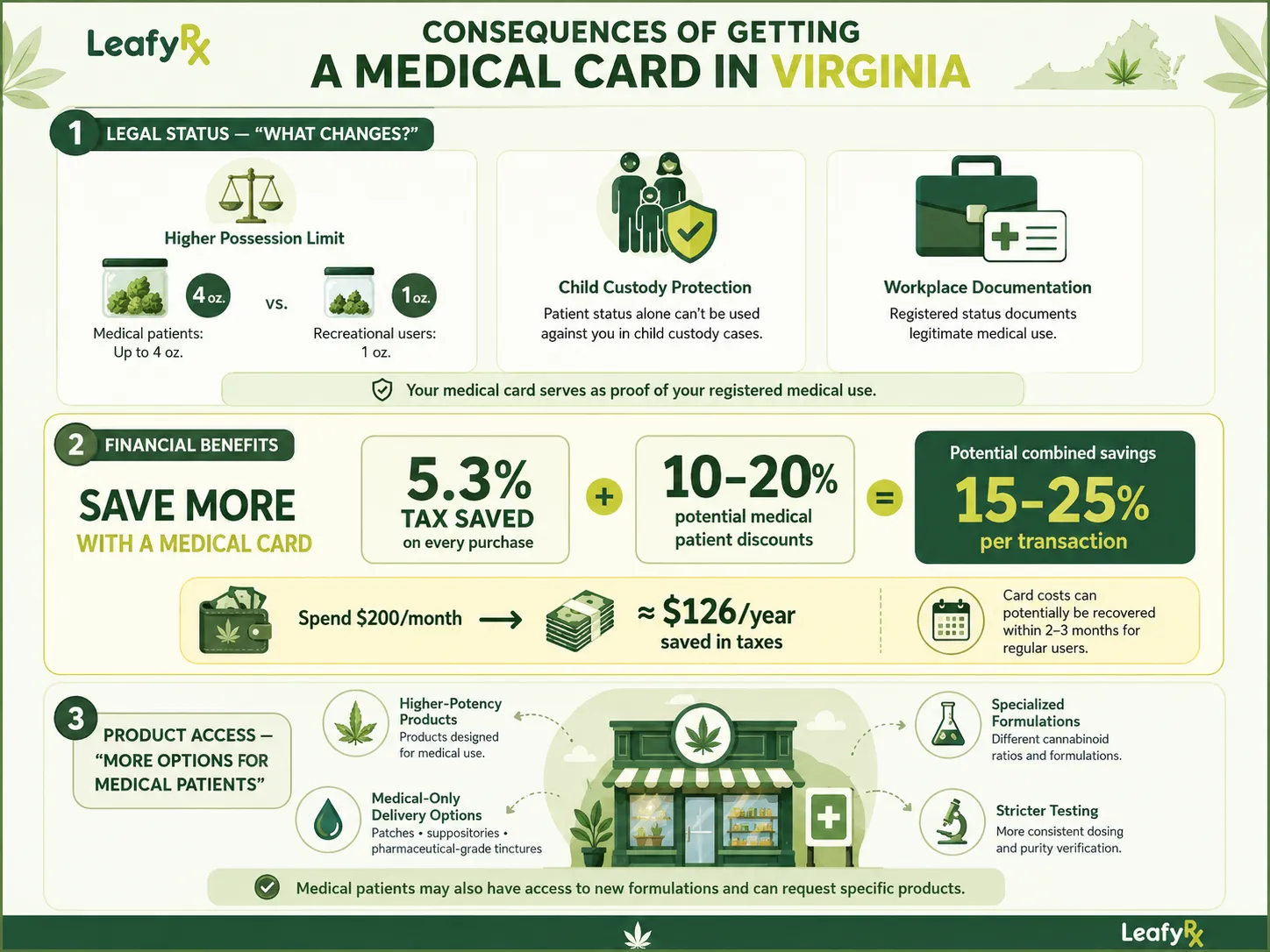
Medical patients in Virginia can legally possess up to four ounces of cannabis products. Recreational users can only carry one ounce. This difference matters if you use cannabis regularly for chronic conditions.
According to the Virginia Cannabis Control Authority, state law prohibits discrimination against medical cannabis patients in child custody cases. Your patient status alone can’t be used against you. This protection doesn’t extend to recreational users.
Medical patients also get workplace protections in certain situations. While employers can still enforce drug-free policies, your registered status provides documentation of legitimate medical use. This can matter during disputes or accommodation requests.
The card serves as proof of your legal right to use cannabis medicinally. Law enforcement recognizes this status. You won’t face the same scrutiny as someone without documentation.
Financial Benefits: Tax Savings and Discounts
Medical cannabis is exempt from the retail sales tax that applies to recreational purchases. You save approximately 5.3% on every transaction. That adds up fast for regular users.
A patient spending $200 per month saves about $126 annually in taxes alone. That’s just the beginning. Pharmaceutical processors often offer medical patient discounts of 10-20% that recreational customers can’t access.
Here’s how the savings break down:
-
Tax exemption saves 5.3% on every purchase
-
Medical discounts add another 10-20% savings
-
Combined savings reach 15-25% per transaction
-
Annual savings exceed the Medical Marijuana Card Cost within 2-3 months
The card pays for itself quickly. Anyone purchasing cannabis monthly comes out ahead financially. The more you buy, the more you save.
These savings make medical cards financially smart for regular users. The upfront cost becomes an investment that returns value every month.
Product Access Differences
Medical patients access higher-potency products not available to recreational users. Dispensaries stock medical-only formulations designed for specific conditions. These products often contain higher THC concentrations or specialized cannabinoid ratios.
Recreational products face potency limits in many states. Medical products don’t have the same restrictions. You can get stronger relief when you need it.
Medical dispensaries also carry specialized delivery methods. Transdermal patches, suppositories, and pharmaceutical-grade tinctures are often medical-only. These options provide targeted relief that recreational products can’t match.
Product selection matters for treatment effectiveness. Medical patients get first access to new formulations. They can also request specific products that dispensaries will order.
The quality standards differ too. Medical products undergo stricter testing protocols. You get more consistent dosing and purity verification. This reliability matters when managing chronic conditions.
Certification Process for Medical Card in Virginia
Getting a medical card in Virginia is simpler than most people think. The state streamlined the process in recent years. You can complete everything from home using telehealth services. The entire journey from evaluation to purchasing cannabis typically takes 3-7 days.
Finding a Registered Practitioner
You need a Virginia-registered practitioner who completed the required cannabis education course. Not all doctors can certify patients. Only those who registered with the state and finished the training can issue certifications.
Telehealth evaluations are legal and widely available. Services like Leafy Rx connect you with licensed practitioners who can evaluate your condition remotely. This makes the process convenient for patients statewide, especially those in rural areas.
You don’t need to visit a physical clinic. Most patients complete their evaluation by phone or video call. The appointment usually takes 15-30 minutes.
The Evaluation and Certification Process
Bring documentation of your qualifying condition to your appointment. This includes prior medical records, diagnoses, or prescription history. The more documentation you have, the smoother the process goes.
The practitioner will review your condition during the evaluation. They’ll discuss treatment options and how cannabis might help. If you qualify, they’ll issue a written certification immediately.
Most patients receive certification on same appointment. The practitioner enters your information into the state system electronically. You don’t need to wait for physical paperwork.
Common qualifying conditions include:
-
Chronic pain that hasn’t responded to other treatments
-
Anxiety disorders and PTSD
-
Cancer and chemotherapy side effects
-
Epilepsy and seizure disorders
-
Multiple sclerosis and other neurological conditions
State Registration and Receiving Your Patient Number
After certification, you register with the Virginia Board of Pharmacy. You’ll need your practitioner’s certification and a valid Virginia ID. The registration happens entirely online through the Board of Pharmacy portal.
The process typically takes 1-3 business days. Virginia processes applications quickly compared to many other states. You’ll receive an email when your registration is approved.
You get a registration number and can download a digital certificate. Present this certificate at pharmaceutical processors to purchase cannabis products. You don’t need to wait for a physical card in the mail.
The digital certificate works immediately. Most patients start shopping the same day they receive approval. Virginia’s system is designed for speed and convenience.
Understanding qualifying conditions by state helps you prepare for your evaluation. Virginia accepts a broad range of conditions. The practitioner has discretion to certify any condition they believe cannabis may help.
Evaluation Costs and State Fees For Medical Card in Virginia
Getting a medical card in Virginia involves two main expenses. You pay for a practitioner evaluation and, in some states, a registration fee. Virginia stands out because it charges no state fee. This makes the total cost lower than many other states.
Understanding these costs helps you budget accurately. It also shows why telehealth services offer better value than traditional clinics.
Practitioner Evaluation Fees
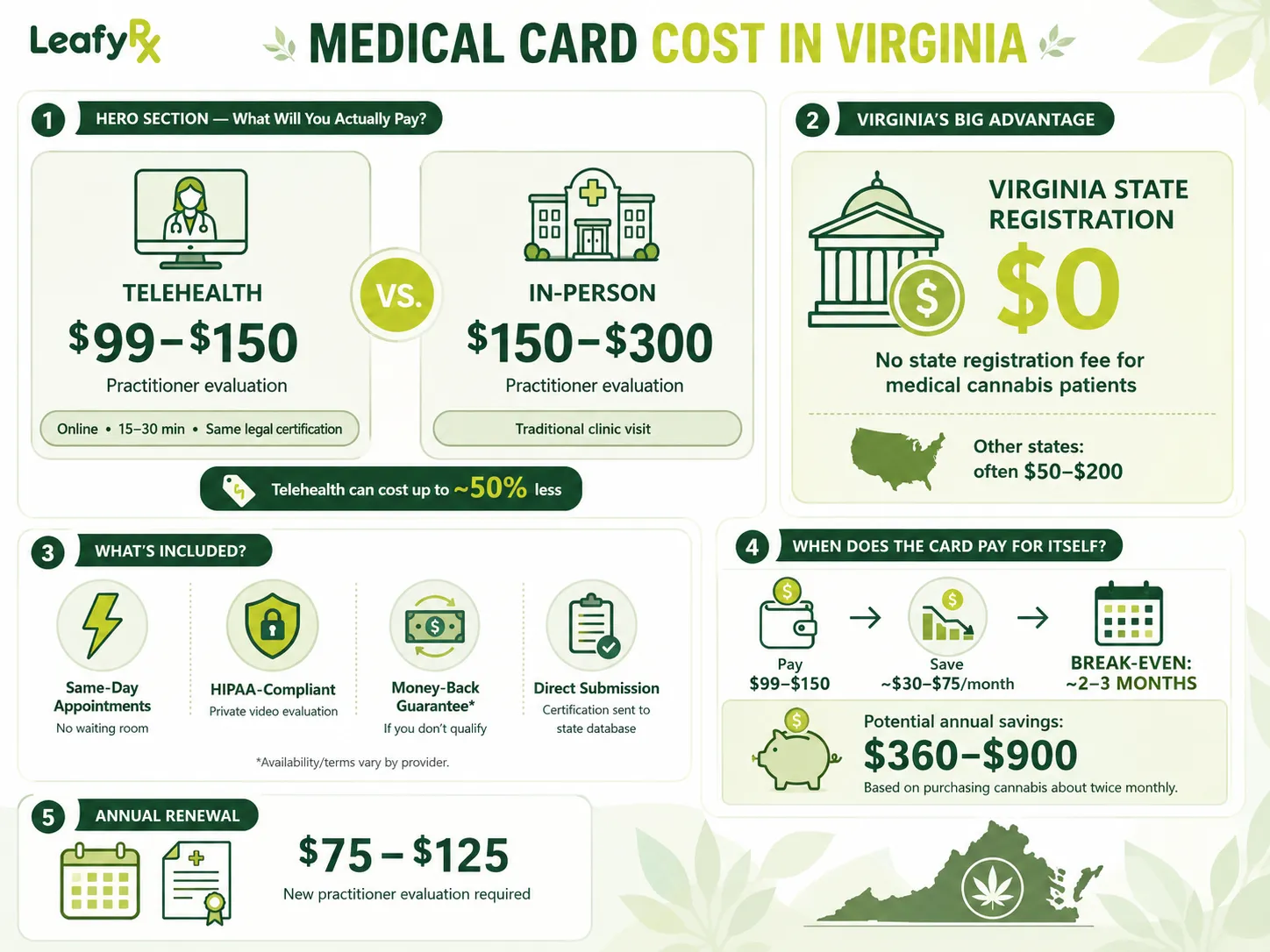
Practitioner evaluation fees vary widely across Virginia. Traditional in-person clinics typically charge $150 to $300 for evaluations. These higher prices reflect overhead costs like rent and staffing.
Telehealth services like Leafy Rx offer the same legal certification at lower prices. Online evaluations typically range from $99 to $150. This price difference comes from reduced operational expenses.
According to Cannabis RX Health, telehealth platforms can save patients up to 50% compared to in-person visits. The certification you receive holds the same legal weight. Licensed physicians conduct the evaluation through secure video calls.
Most telehealth services include these features:
-
Same-day appointments with no waiting room time
-
Money-back guarantees if you don’t qualify
-
secure platforms for privacy protection
-
Direct submission of certification to state databases
The evaluation itself takes 15 to 30 minutes. Your doctor reviews your medical history and qualifying condition. If approved, you receive your certification immediately.
State Registration Costs
Virginia does not charge a state registration fee for medical cannabis patients. This policy makes Virginia one of the most affordable states for medical card access. You only pay the practitioner evaluation fee.
Many other states charge $50 to $200 for registration. Virginia eliminated this barrier to make medical cannabis more accessible. Once you receive your practitioner certification, you can start purchasing from licensed dispensaries right away.
This zero-fee structure benefits patients significantly. It removes a financial obstacle that prevents many people from accessing treatment in other states.
Total Annual Investment and Break-Even Analysis
Your total first-year cost ranges from $99 to $200 when using telehealth services. In-person clinic patients may pay $150 to $300. These costs cover only the evaluation since Virginia charges no registration fee.
The card pays for itself within 2 to 3 months for regular users. Medical patients avoid the higher taxes applied to recreational purchases. They also access medical discounts at dispensaries. These savings typically range from 10% to 25% per transaction.
Get more knowledge about medical card costs across different states and providers, for detailed comparison. Annual renewal requires a new practitioner evaluation. Renewal evaluations typically cost less than initial certifications, often $75 to $125.
Here’s a cost breakdown for regular users:
-
Initial evaluation: $99 to $150 (telehealth) or $150 to $300 (in-person)
-
Monthly savings on purchases: $30 to $75 (based on tax differences and discounts)
-
Break-even point: 2 to 3 months of regular use
-
Annual renewal: $75 to $125
Patients who purchase cannabis twice monthly typically save $360 to $900 annually. This makes the medical card a smart financial choice for consistent users.
Eligibility and Qualifying Conditions For Medical Card in Virginia
Getting a medical card in Virginia is easier than you might think. The state expanded its program significantly in 2026. You can now qualify with a wide range of conditions.
Virginia’s approach is patient-friendly. Practitioners have broad discretion to certify patients. This makes the program one of the most accessible in the country.
Virginia’s Expanded Qualifying Conditions
Virginia doesn’t limit you to a rigid list. Any condition that a practitioner determines could benefit from cannabis qualifies. This gives doctors flexibility to help patients with diverse medical needs.
That said, certain conditions appear most often in certifications. Common qualifying conditions include:
-
Chronic pain (the most frequent reason patients seek certification)
-
PTSD and trauma-related disorders
-
Cancer and cancer-related symptoms
-
Epilepsy and seizure disorders
-
Glaucoma
-
HIV/AIDS
-
Crohn’s disease and inflammatory bowel conditions
-
Multiple sclerosis
According to qualifying conditions in Virginia, the state’s Board of Pharmacy oversees the program. It launched in 2020 and has grown rapidly since then.
You don’t need a terminal diagnosis. Many patients qualify with conditions that affect daily life but aren’t life-threatening. The key is whether cannabis could provide therapeutic benefit.
Anxiety Added as Qualifying Condition in 2023
Virginia added anxiety disorders to the approved list in 2023. This change opened access for thousands of new patients. Anxiety is now one of the most common certification reasons.
To qualify for anxiety certification, you need documented diagnosis. Practitioners also look for prior treatment attempts with conventional therapies. This shows you’ve tried standard approaches first.
The certification process for anxiety follows the same steps as other conditions. You’ll discuss your symptoms, treatment history, and how anxiety affects your daily function. Your practitioner will determine if cannabis could help.
Many patients find relief with cannabis when traditional medications cause unwanted side effects. Others use it alongside existing treatments. Your doctor will help you understand how it fits your care plan.
How Practitioners Determine Medical Necessity
Practitioners must establish a bona fide relationship before certifying you. This means at least one prior visit or medical record review. The relationship ensures your doctor understands your health history.
During your evaluation, your practitioner will review your condition and symptoms. They’ll discuss how cannabis might help. They’ll also explain potential risks and side effects.
The practitioner considers several factors when determining medical necessity:
-
Severity of your symptoms
-
Impact on your quality of life
-
Response to previous treatments
-
Potential benefits versus risks
-
Your overall health status
For patients under 18, Virginia requires two practitioner certifications. You also need parental consent. This extra step protects minors and ensures careful consideration.
Once certified, you’ll receive documentation to register with the state. The Board of Pharmacy manages patient registration. You can then purchase cannabis from licensed dispensaries across Virginia.
If you’re wondering whether your specific situation qualifies then study about different qualifying conditions for medical Marijuana card. Most patients find the process straightforward and supportive.
Employment and Drug Testing Rules For Medical Card in Virginia
Getting a medical card in Virginia helps you access legal cannabis treatment. But it doesn’t protect your job in every situation. Virginia law creates a complex landscape for medical patients in the workplace. You need to understand your rights and limitations before you apply.
State law offers some protections. Yet employers still hold significant power over drug policies. This section breaks down what medical patients can expect at work.
Workplace Drug Testing and Medical Cannabis
Virginia employers can maintain drug-free workplace policies. They can test employees for cannabis. They can discipline workers who test positive, even if those workers hold valid medical cards.The law doesn’t require employers to accommodate cannabis use at work. It doesn’t force them to allow impaired employees on the job. Employers can prohibit cannabis possession on company property.
Most companies test in these situations:
-
Pre-employment screening before you start a new job
-
Random testing during employment
-
Post-accident testing after workplace incidents
-
Reasonable suspicion testing when impairment is suspected
Your medical card doesn’t excuse a positive test result. Employers can take action based on their policies. This includes termination in some cases.
Legal Protections for Medical Patients at Work
Virginia does provide one key protection. According to employee protections under Virginia law, employers cannot discriminate against you in hiring solely because you’re a registered medical cannabis patient. They can’t refuse to hire you just for having a card.
This protection applies during the hiring process. It doesn’t extend to on-the-job conduct or positive drug tests. Employers can still enforce workplace rules about impairment and drug use.
Some Virginia employers take a more lenient approach. They choose not to test for THC. Others allow off-duty medical use as long as you don’t come to work impaired. These accommodations are voluntary, not legally required.
Before you get your medical card, review your employer’s drug policy. Ask human resources about their stance on medical cannabis. This helps you make an informed decision about your employment risk.
Federal Employees and Safety-Sensitive Positions
Federal workers face stricter rules. Cannabis remains illegal under federal law. Federal employees and contractors must follow federal drug-free workplace requirements. They can be terminated for any cannabis use, regardless of state medical status.
Safety-sensitive positions have explicit exemptions from medical cannabis protections. These jobs include:
-
Commercial drivers subject to DOT regulations
-
Pilots and aviation personnel
-
Heavy equipment operators
-
Healthcare workers in certain roles
-
Law enforcement and security positions
The Department of Transportation makes clear that medical marijuana does not excuse positive drug tests for DOT-regulated positions. A medical card provides no defense if you test positive in these roles.
If you work in a safety-sensitive position, using medical cannabis could end your career. The consequences of getting a medical card in Virginia depend heavily on your job type. Weigh the medical benefits against employment risks before you proceed.
Private sector employees in non-safety roles have more flexibility. Yet even they should approach medical cannabis use cautiously. Document all communications with your employer about medical cannabis policies. This creates a record if disputes arise later.
Firearm Ownership and Federal Restrictions For Medical Card in Virginia
Getting a medical card in Virginia comes with an important legal consideration. Federal law creates a conflict with state cannabis programs. This affects anyone who owns firearms or plans to buy them.
The issue stems from how the federal government classifies cannabis. Understanding this conflict helps you make informed decisions about your rights.
Federal Law and ATF Form 4473
Federal law still classifies cannabis as a Schedule I controlled substance. This classification affects firearm purchases directly. When you buy a gun from a licensed dealer, you must complete ATF Form 4473.
According to the Congressional Research Service, answering yes disqualifies you if you’re an unlawful user of cannabis from the purchase. Your state medical card doesn’t change this federal requirement.
Lying on Form 4473 is a serious federal crime. The penalty can reach up to 10 years in prison. This applies even if you hold a valid state medical card.
State vs Federal Cannabis Classification
Virginia law allows medical cannabis for qualified patients. The state doesn’t restrict firearm ownership for cardholders. However, federal law supersedes state law in this area.
This creates a legal gray zone for patients. Virginia recognizes your right to use medical cannabis. Federal agencies still classify you as a prohibited person for gun purchases.
The conflict between state and federal policy leaves patients uncertain. Many wonder how medical versus recreational cannabis affects their Second Amendment rights differently.
Practical Implications for Gun Owners
If you already own firearms, current enforcement practices don’t require surrender. The ATF focuses on new purchases, not existing ownership. That said, this could change with future policy shifts.
Patients face a difficult choice before applying for a medical card. You must weigh your health needs against firearm ownership priorities. Some patients delay getting their card for this reason.
Consult with an attorney if gun ownership matters to you. They can explain your specific risks and options. Legal advice helps you understand the consequences of getting a medical card in Virginia before you commit.
Housing Rights and Rental Restrictions For Medical Card in Virginia
Holding a medical card in Virginia doesn’t override your landlord’s property rules. You need to understand your rights before signing a lease. Housing laws protect patients from discrimination, but they don’t force landlords to allow cannabis use on their property.
Landlord Rights and Medical Cannabis Use
Virginia landlords can prohibit cannabis use in rental properties through lease agreements. This applies even if you hold a valid medical card. Your patient status doesn’t override lease terms that ban smoking or cannabis consumption on the premises.
Landlords cannot discriminate against you during the application process solely because you’re a medical cannabis patient. That said, they can enforce no-smoking policies and drug-free housing rules once you move in. The distinction matters.
Many landlords allow medical cannabis use if you consume it through non-smoking methods. These include:
-
Edibles and capsules
-
Tinctures and oils
-
Topical creams and patches
-
Vaporizers that don’t produce smoke
You should discuss cannabis use with your landlord before signing any lease. This conversation prevents conflicts later. Some landlords are flexible if you explain your medical needs and consumption method.
Federal Housing and HUD Properties
Federal housing properties must comply with federal law. This includes HUD-assisted housing and Section 8 voucher programs. Cannabis remains illegal under federal law, so these properties can evict tenants for any cannabis use.
Your medical card offers no protection in federally funded housing. Property managers in these buildings can terminate your lease if they discover cannabis use. This applies regardless of your state’s medical program.
Smoking Restrictions in Rental Properties
Most rental properties prohibit smoking of any kind. These restrictions apply to tobacco, cannabis, and other substances. Landlords enforce these rules to prevent property damage and secondhand smoke exposure.
If your lease includes a no-smoking clause, you cannot smoke medical cannabis on the property. You can still use non-smoking consumption methods. Understanding benefits of holding a medical card helps you navigate these restrictions while maintaining legal access to treatment.
Homeowners and property owners face no restrictions on medical cannabis use in their own residences. You can consume cannabis however you prefer in a home you own.
Medical Card in Virginia: Rules for Public Use, Driving, and Travel
Holding a medical card in Virginia gives you legal access to cannabis. But it doesn’t grant unlimited freedom. You need to know where you can use it, how it affects driving, and what happens when you cross state lines.
Public Consumption Laws
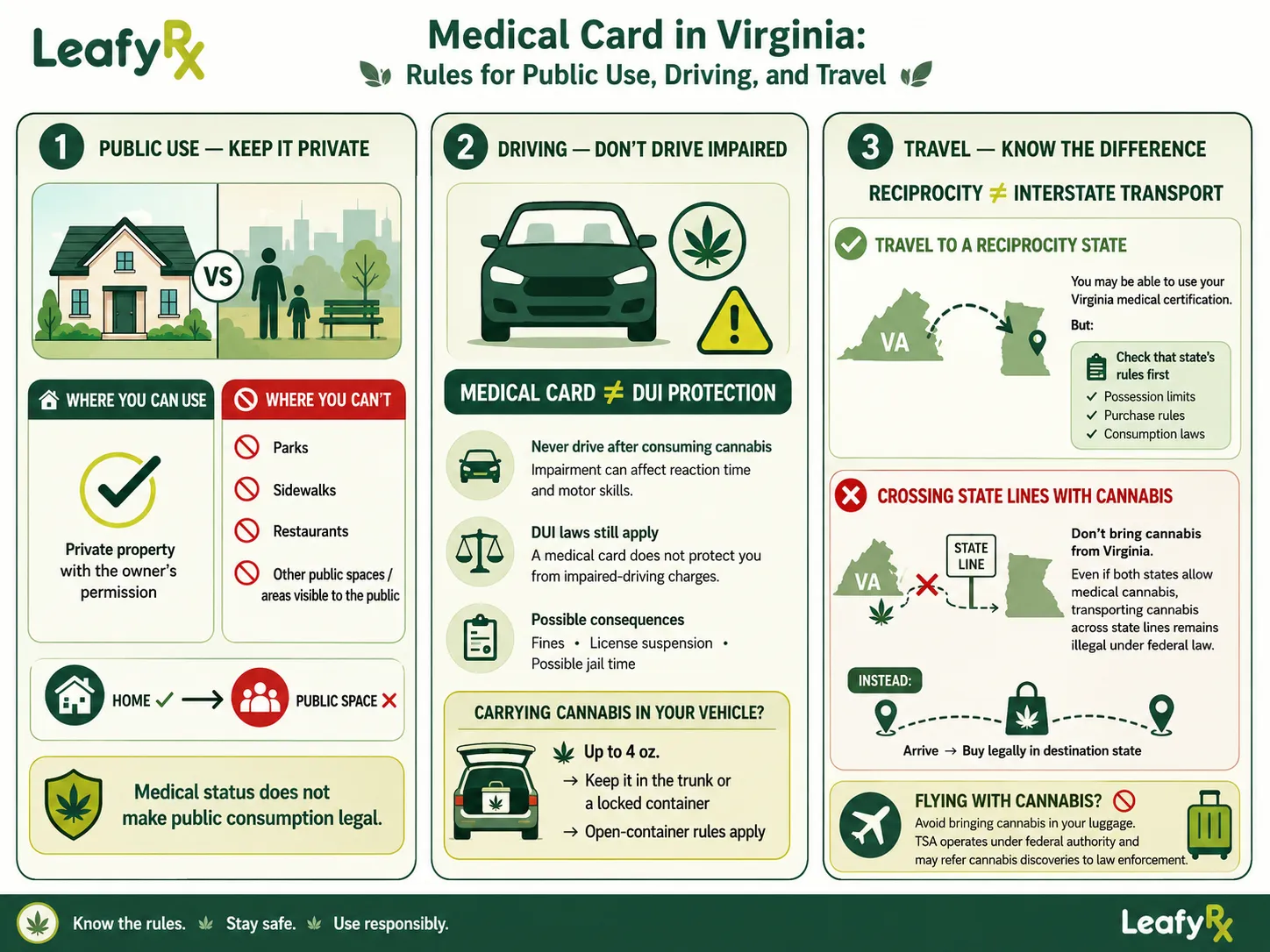
Virginia bans public consumption of cannabis. This applies to both medical and recreational users. You can’t smoke, vape, or consume edibles in public spaces.
Public spaces include parks, sidewalks, restaurants, and any area visible to the public. Even if you have a medical card, using cannabis in these areas is illegal. Violations can result in fines.
You can consume cannabis at home or on private property with the owner’s permission. That’s it. Keep your use private to stay within the law.
Driving Under the Influence
Driving after using cannabis is illegal in Virginia. Your medical card doesn’t protect you from DUI charges. Impaired driving laws apply equally to all users.
Cannabis affects your reaction time and motor skills. According to the Virginia NORML medical cannabis FAQs, patients should never drive after consuming cannabis. Even small amounts can impair your ability to operate a vehicle safely.
If police suspect impairment, they can conduct field sobriety tests. A conviction carries serious penalties. These include fines, license suspension, and possible jail time.
Medical patients can possess up to four ounces in their vehicle. But the cannabis must be stored properly. Keep it in the trunk or a locked container. Open container laws apply to cannabis just like alcohol.
Interstate Travel and Reciprocity
Some states recognize Virginia medical cards through reciprocity agreements. This means you can use your Virginia certification in those states. But you must follow their local laws and purchase limits.
However, transporting cannabis across state lines is always illegal. Federal law prohibits this, even between two legal states. Crossing state lines with cannabis violates federal drug trafficking laws.
If you travel to a reciprocity state, buy cannabis there. Don’t bring it from Virginia. Check the destination state’s rules before you go. Each state has different possession limits and consumption laws.
Air travel with cannabis is also illegal. TSA is a federal agency. They can report you to law enforcement if they find cannabis in your luggage.
Medical Card in Virginia: Patient Privacy and Record Protection
Privacy matters when you apply for a medical card in Virginia. You want to know who sees your information. You also want to understand how the state protects your data. This section explains what Virginia collects, how privacy safeguards your records, and what happens with background checks.
What Information Virginia Collects About Medical Patients
Virginia maintains a confidential registry through the Board of Pharmacy. The registry includes your name, address, date of birth, and certification details. It also tracks your dispensary purchases to prevent abuse.
The state does not share this registry with employers or landlords. The general public cannot access it either. Only authorized personnel at the Board of Pharmacy can view patient records.
Your medical cannabis certification appears in your medical records. Other healthcare providers may see it when they review your chart. This helps them avoid drug interactions and coordinate your care.
Privacy Protections and Medical Privacy
Federal and state privacy laws protect your patient information from unauthorized disclosure. Your doctor cannot share your certification without your written consent. The only exception is a valid court order from law enforcement.
According to Virginia’s qualifying conditions list, anxiety disorders were added in 2026. This expanded access for thousands of patients. Privacy laws still protect all certification records regardless of your condition.
Dispensaries must also follow privacy rules. They cannot disclose your purchases to anyone without your permission. Your data stays secure within the state’s encrypted registry system.
Background Checks and Professional Licensing
Professional licensing boards may ask about cannabis use during applications. This includes nursing, law, and medicine boards. Your medical patient status does not automatically disqualify you from these professions.
Security clearance applications require full disclosure of cannabis use. Federal employees face consequences even with a valid medical card. The federal government still classifies cannabis as a Schedule I substance.
Insurance companies cannot access the patient registry directly. That said, they may ask about cannabis use on health or life insurance applications. You must answer truthfully or risk policy cancellation for fraud.
Expiration and Renewal Timeline For Medical Card in Virginia
Your medical card in Virginia requires regular attention to stay active. The certification process doesn’t end once you get approved. You need to understand when your card expires and how to renew it on time.
When and How to Renew Your Certification
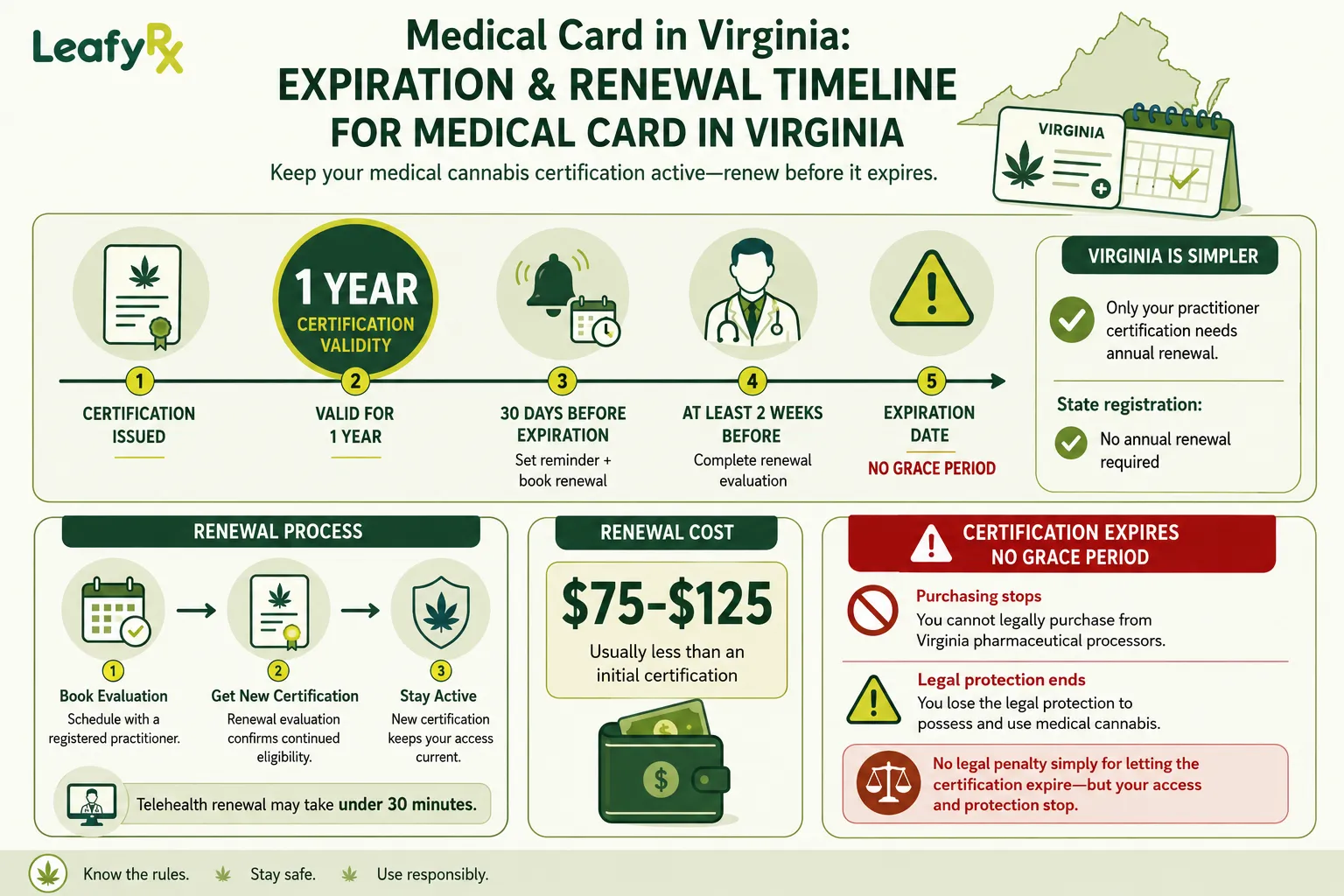
Medical cannabis certifications in Virginia are valid for one year from the date of issuance. You must obtain a new written certification from a registered practitioner before your current certification expires. Set a reminder 30 days before expiration to schedule your renewal evaluation and avoid any lapse in access.
The renewal process is simpler than your initial application. Most practitioners offer streamlined renewal appointments for existing patients. You can complete the evaluation online through telehealth services like Leafy Rx in under 30 minutes.
According to Virginia marijuana laws, the state registration does not require renewal. Only the practitioner certification needs updating annually. This saves you time and money compared to states that require both.
Renewal Costs and Process Changes
Renewal evaluations are typically shorter and less expensive than initial certifications. Most patients pay between $75 and $125 for a renewal evaluation. This lower cost reflects the fact that your doctor already has your medical history on file.
Some practitioners offer automatic renewal reminders and streamlined renewal appointments for existing patients. These services help you stay compliant without the stress of tracking dates yourself. Online platforms often provide the most affordable renewal options.
What Happens If Your Card Expires
If your certification expires, you cannot legally purchase from pharmaceutical processors until you obtain a new certification. There is no grace period. Your access stops immediately when the certification date passes.
You won’t face legal penalties for letting your card expire. However, you lose your legal protection to possess and use medical cannabis. Schedule your renewal appointment at least two weeks before expiration to account for any processing delays.
Benefits, Limitations, and Legal Considerations For Medical Card in Virginia
Virginia’s medical cannabis program offers distinct advantages over recreational access. Medical patients get benefits that recreational users don’t. These include higher-potency products, lower taxes, and stronger legal protections. Understanding these differences helps you decide if a medical card in Virginia makes sense for your situation.
Comparing Medical vs Recreational Access
Medical and recreational cannabis exist side by side in Virginia. But they’re not equal. Medical patients access products that recreational buyers can’t purchase. Virginia pharmaceutical processors reserve certain high-potency formulations exclusively for registered medical patients.
The tax difference is significant. Medical cannabis carries no sales tax in Virginia. Recreational purchases face standard retail taxes. According to tax savings and benefits analysis, this exemption saves 5.3% on every purchase for medical patients . For someone buying products monthly, that adds up fast.
Medical patients also get priority service during high-demand periods. When product shortages occur, dispensaries serve medical cardholders first. This ensures patients maintain consistent access to their medicine. Recreational buyers may face limited selection or longer wait times during peak periods.
-
Medical patients access higher-potency products not available recreationally
-
No sales tax on medical purchases saves 5.3% per transaction
-
Priority dispensary service during shortages and high-demand periods
-
Larger possession limits for medical cardholders
-
Legal protections specific to medical use
When a Medical Card Makes Sense
The card makes financial sense for anyone purchasing cannabis products at least once per month. The tax savings alone typically cover the annual card cost within a few months. Beyond money, medical patients gain explicit legal protection for cannabis use as recommended by their practitioner.
Virginia law protects medical cardholders in ways recreational users aren’t covered. Medical patients cannot be denied organ transplants solely for cannabis use under Virginia law. This protection matters for patients managing serious health conditions. Employers must also consider medical use differently than recreational consumption.
Virginia’s program is one of the most accessible in the country. The state uses broad qualifying condition language. Practitioners can recommend cannabis for any condition they believe may benefit from treatment. This flexibility means more patients qualify compared to restrictive state programs.
-
Monthly cannabis purchases make the card cost-effective within months
-
Organ transplant protection for medical cannabis patients
-
Broader qualifying conditions than most states
-
Workplace protections differ for medical versus recreational use
-
Higher possession limits reduce legal risk
Future of Virginia’s Medical Cannabis Program
Federal policy changes are coming that will impact Virginia’s program. Federal rescheduling to Schedule III would formally acknowledge cannabis’s accepted medical uses. This shift would ease banking restrictions that currently burden cannabis businesses. It would also expand research opportunities and reduce federal tax burdens.
Virginia continues to refine its program based on patient feedback. The state regularly reviews qualifying conditions and access policies. Recent expansions have made the program more patient-friendly. Telehealth evaluations now make getting a Virginia medical card for anxiety and other conditions faster and more convenient.
The medical program will likely remain valuable even as recreational access expands. Medical patients will continue receiving tax benefits and product access advantages. The legal protections for medical use provide security that recreational consumers don’t have. For patients managing chronic conditions, the medical card offers stability and cost savings that justify the small annual investment.
Conclusion
Getting a medical card in Virginia gives you real advantages over recreational access. You save money through tax exemptions. You access higher-potency products. You possess up to four times the legal limit. You gain explicit legal protections in medical and custody situations.
This guide covered the certification process, costs, qualifying conditions, and legal considerations. You learned about employment protections, firearm restrictions, and housing rights. You now understand public use rules, privacy protections, and renewal requirements. The consequences of getting a medical card in Virginia favor regular cannabis users who qualify.
The upfront cost pays for itself within months for frequent buyers. Federal workers and safety-sensitive positions face employment risks. But these apply to all cannabis users regardless of medical status. For Virginia residents managing chronic pain, anxiety, PTSD, or cancer, a medical card provides substantial benefits.
If you have a qualifying condition and use cannabis regularly, get your medical card now. Leafy Rx connects you with licensed practitioners for fast online evaluations. Most patients get approved within 24 hours. Start your evaluation today and access the full benefits of Virginia’s medical cannabis program.




 Ask ChatGPT
 Ask Claude
 Ask Perplexity