
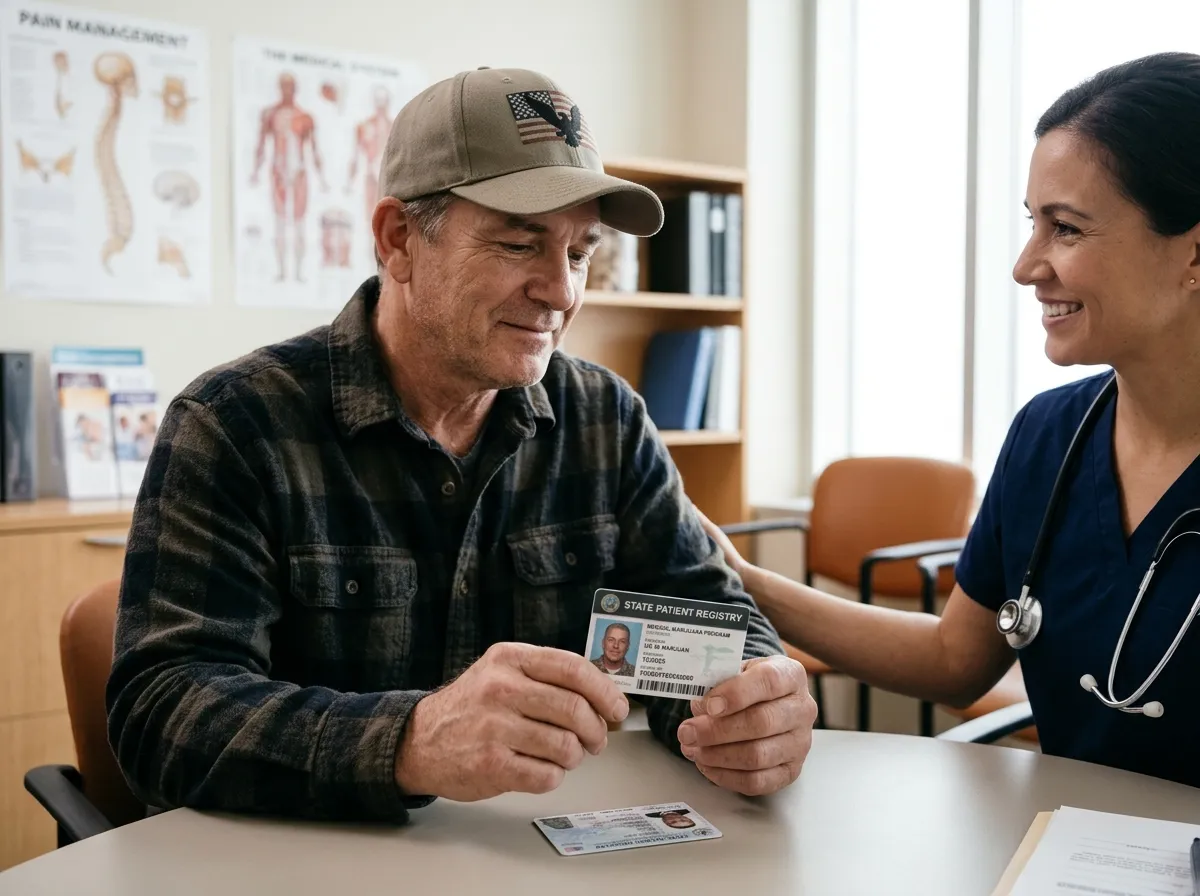

A Medical Marijuana Card for Veterans is a legal option in many states, and using one usually won’t cost you VA care. The catch is that VA doctors can’t recommend cannabis or fill out state paperwork. You have to go outside the VA.
Many search results skip that part. They give thin or conflicting answers on benefits, drug tests, and fees. This 2027 guide explains in plain language what the VA covers and what it doesn’t. You’ll learn how to get certified by a licensed clinician and which records to gather. You’ll also see how jobs, firearms, and federal rules can affect you, so you know the costs and risks before you start.
Medical Marijuana Card for Veterans: What the VA Does and Does Not Cover for Medical Marijuana?

The VA treats marijuana differently from most medicines. Because it stays illegal under federal law, VA clinicians follow federal rules and can’t recommend it. They can still talk with you about it openly.
Many veterans worry that admitting marijuana use will cost them benefits. The U.S. Department of Veterans Affairs says it won’t. Using marijuana in a state-legal program doesn’t affect your VA health care or your disability benefits. A Medical Marijuana Card for Veterans doesn’t change that.
Your VA provider may note your use in your health record. That helps them check for drug interactions and safe dosing. Say a veteran uses cannabis for nighttime pain and also takes a sleep medicine. Their doctor can spot a risky mix, but only if they know about both. Many veterans also want to understand what a medical marijuana card offers patients before they apply.
What the VA cannot do for you?
The VA can’t prescribe, recommend, or pay for marijuana. VA pharmacies don’t fill it, and VA coverage doesn’t reimburse dispensary purchases. You pay out of pocket for your products and your state card fees.
VA providers also can’t complete the forms that state programs require. A state-qualified clinician outside the VA has to do that. A Medical Marijuana Card for Veterans usually comes from a licensed clinician in your state, often after an online visit.
Federal rules also apply on VA property, even in states where marijuana is legal. That covers hospitals, clinics and parking lots. If you use cannabis, leave it at home on appointment days.
These limits are easy to plan around. You can keep your VA treatment as it is and treat the state card as a separate, state-level option. Tell your VA care team what you use, so every provider sees the full picture. A Medical Marijuana Card for Veterans works best when your doctors know about it.
Why Veterans Choose State Medical Marijuana Card Programs?
A Medical Marijuana Card for Veterans gives you a legal path to cannabis under state law. Since the VA can’t recommend marijuana, state programs fill that gap. A licensed state clinician can review your health history and decide if cannabis fits your care.
Many veterans live with chronic pain, anxiety, sleep trouble, or PTSD. In many states, these conditions qualify. A card lets you buy from licensed dispensaries, where products are tested and labeled. Dispensary staff can also explain strengths and dosing. That beats buying from unregulated sources, where you can’t know what’s inside.
Convenience also matters. Many states allow telehealth visits, so you can meet a clinician from home. Getting a Medical Marijuana Card for Veterans online helps if you live far from a clinic or struggle to travel. LeafyRX offers online evaluations for patients who prefer this route.
Rules change from state to state, and the National Conference of State Legislatures tracks each state’s medical cannabis laws. Some states list PTSD as a qualifying condition, while others limit it. Get information about state-by-state medical marijuana card rules before you book, since conditions, fees, and purchase limits differ.
Cost matters too. Most states charge an application fee, and the clinician visit has its own fee. Insurance usually doesn’t cover dispensary products. Budget for these costs before you apply, especially on a fixed income.
A state card protects you under state law only. Federal law still treats marijuana as illegal, so treat a Medical Marijuana Card for Veterans as one part of your care plan. Tell your doctor about any cannabis use so they can watch for interactions with your other medicines. The National Center for Complementary and Integrative Health also offers a plain overview of what to know about cannabis.
How to Get a Medical Marijuana Card for Veterans Through a Licensed Clinician
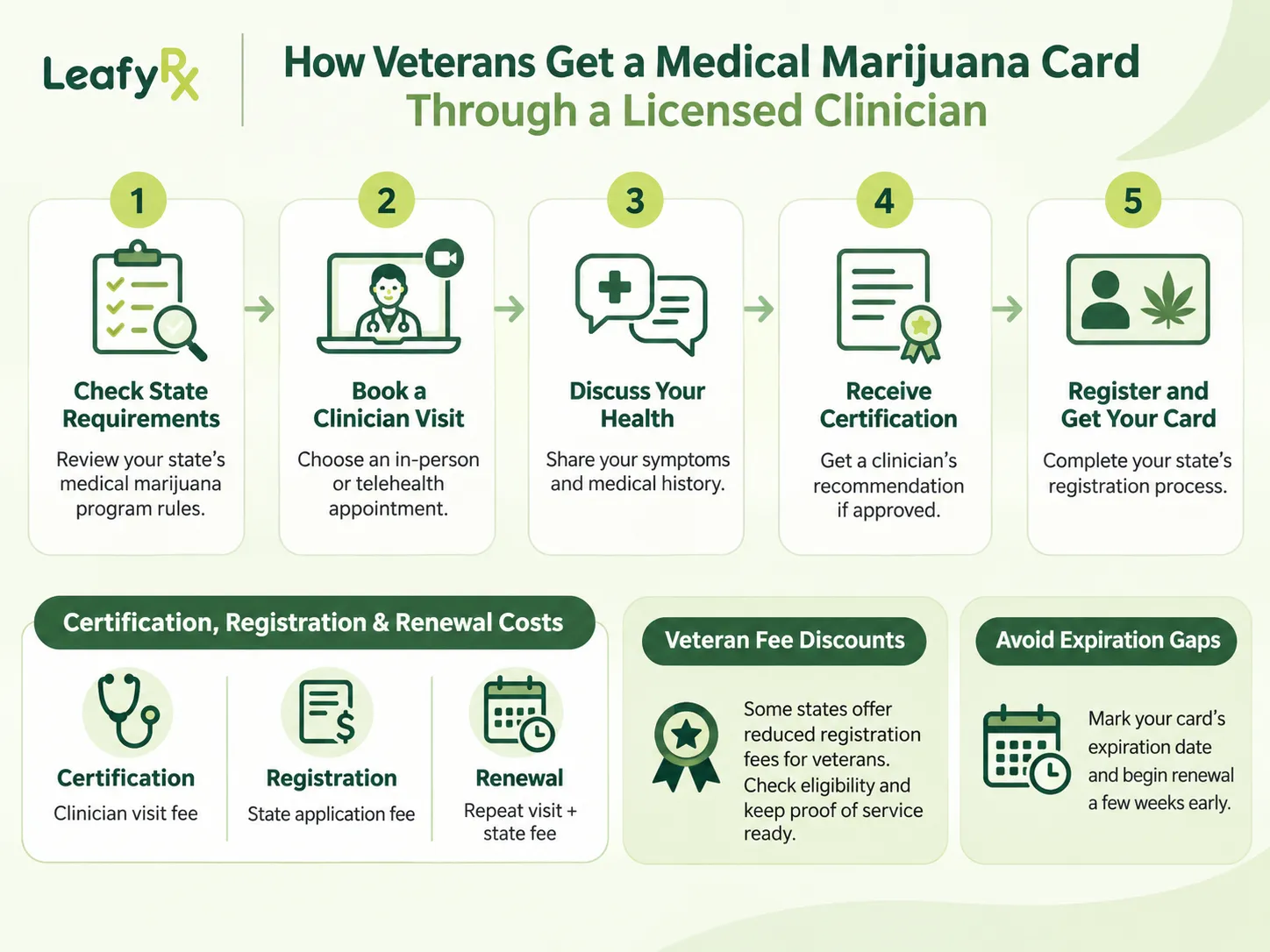
A licensed clinician is the person who certifies you for a Medical Marijuana Card for Veterans. You see this clinician outside the VA, either in an office or by telehealth. Online visits save travel time, which helps if you live far from a clinic.
The process usually follows these steps:
-
Check your state’s program rules.
-
Book a visit with a licensed clinician.
-
Talk through your symptoms and health history.
-
Receive a certification if the clinician agrees cannabis may help.
-
Register with your state program and get your card.
Know about Certification, registration, and renewal costs
Getting a Medical Marijuana Card for Veterans usually involves three separate costs. The first is the certification fee, which you pay the clinician for the visit and the signed recommendation. The second is the registration fee, which you pay the state when you apply for your card. Prices vary by state and by clinician, so check both before you start.
Renewal is the third cost. Many cards last about a year, though the length depends on your state. A renewal often means another clinician visit plus another state fee. A veteran in a state with yearly cards, for example, would plan for both payments each year.
Some states lower registration fees for veterans or people with disabilities. Ask your state program whether you qualify for a reduced rate, and bring proof of service if it asks for it.
Mark your expiration date on a calendar as soon as your card arrives. A lapsed card can leave you without legal protection under state law until you renew. Starting the renewal a few weeks early gives you time to book a visit and finish the paperwork. Planning ahead keeps your Medical Marijuana Card for Veterans active without gaps.
Medical Records and Documentation Needed for a Veteran Medical Marijuana Card
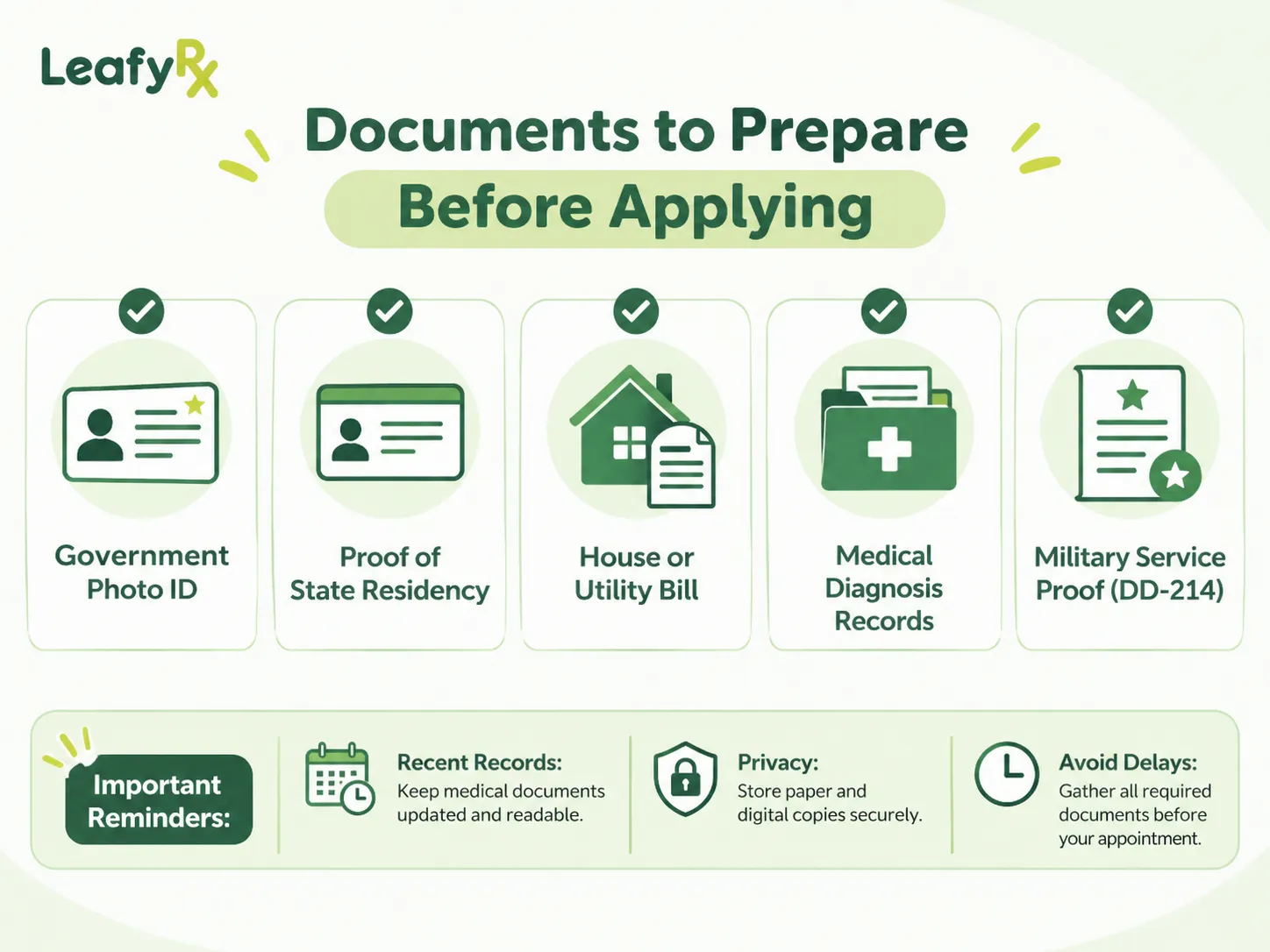
A Medical Marijuana Card for Veterans starts with paperwork. Your state program and clinician want proof of who you are, where you live, and what condition you have. Having these ready saves time at your appointment.
Most programs ask for items like these:
-
A government photo ID, such as a driver’s license
-
Proof of state residency, such as a utility bill or lease
-
Medical records that show your diagnosis
-
Notes on past treatments and how they worked
-
Proof of military service, such as a DD-214, if your state offers a veteran discount
Diagnosis records matter because the clinician must decide if your condition qualifies under state law. A pain specialist’s chart note or a PTSD evaluation gives them a clear history to review. If the VA holds your records, you can request copies and bring them along.
Main Considerations
Records for a Medical Marijuana Card for Veterans should be recent and easy to read. Many clinicians prefer documents from the past year or two, though rules differ by state. A veteran with chronic back pain, for example, might bring an MRI report and a pain clinic summary.
Privacy also deserves thought. Your records stay with the clinician and the state program, and sharing rules vary. Many veterans wonder about medical marijuana cards and background checks, so ask how your state handles card data. Store both paper and digital copies in a safe place.
Gather everything before you apply for a Medical Marijuana Card for Veterans. Missing papers are a common reason for delays, and a short checklist can prevent a second visit.
Employment, Firearms, and Federal Regulations for Veterans With a Medical Marijuana Card

A state card gives you legal access under state law, but federal rules still apply in some parts of life. A Medical Marijuana Card for Veterans doesn’t change that. Work and firearms are where most veterans run into trouble.
Jobs and drug testing
Many employers test for marijuana, and a card doesn’t always protect you from a failed test. Some states shield cardholders from discipline. Others let employers set their own drug-free rules. Read your employer’s policy before you start treatment.
Federal rules are stricter. Jobs under Department of Transportation testing, such as commercial truck driving, don’t accept a state card as a reason for a positive result. Federal employees and contractors often face similar limits. A veteran who drives a delivery truck could lose a license after one positive test.
Protections vary by state. Ask HR for the drug policy in writing. That way you know your risks before you use cannabis.
Firearms and federal property
Federal law bars anyone who unlawfully uses a controlled substance from buying or owning a gun. Under federal drug scheduling, marijuana is still a controlled substance. The form you fill out at a licensed gun dealer asks about marijuana use, and state legality doesn’t change the question. Answering falsely can be a federal crime.
A Medical Marijuana Card for Veterans can also create a record of use, which may matter if a gun purchase is ever questioned. Talk to a lawyer who knows firearms law before you buy, sell, or carry. Rules differ by state, and the stakes are high.
Federal property follows federal law too. Marijuana is banned inside federal buildings and on VA grounds, even in states where it’s legal. Leave your cannabis at home when you visit a VA clinic or a post office. Check the rules before you travel to national parks or military bases.
Conclusion
A Medical Marijuana Card for Veterans comes with one simple rule: the VA can’t issue it, but the VA won’t penalize you for using it. A state-registered clinician certifies you, you register with your state, and your VA health care and disability benefits stay as they are. Tell your VA care team about your use so your records stay accurate and your treatment stays safe.
State-legal use still carries federal limits. Marijuana can affect some jobs, firearm rights, and access to federal property, so learn those limits before you apply. You pay costs out of pocket, and fees vary by state. Confirm every fee and rule with your state program, and ask about discounts or free programs where they exist.
Your next step is simple. Check whether your state has a program and read its qualifying condition list. Gather your service and medical records. Then book an online evaluation with LeafyRx to start your medical marijuana card for veterans. Licensed providers review each case; the process is secure, and a money-back guarantee applies if you aren’t certified. You served, and you have a say in your own care, so take the first step today.





 Ask ChatGPT
 Ask Claude
 Ask Perplexity