


A Connecticut Medical Card still changes how you buy and use cannabis, even though adult-use cannabis is legal in the state.
According to the Connecticut Department of Consumer Protection (DCP), registered medical patients can hold and buy more than adult-use customers, and medical purchases are exempt from adult-use cannabis taxes. Many residents never check whether they qualify because the process looks complicated.
This guide explains how to get a Connecticut medical marijuana card in 2026. It covers how the program works, what the steps look like, how long each part takes, and what fees to expect at a high level.
LeafyRX starts the clinical evaluation online. The state issues the card, and a licensed clinician decides whether you qualify. Approval is never guaranteed.
Who This Guide Is For
This guide is for Connecticut residents who want to understand the process before they book anything. It fits you if you:
-
Live with a health condition and wonder whether a medical card applies to you
-
Buy adult-use cannabis now and want to know what changes with a medical card
-
Care for a minor or an adult who may need a caregiver
-
Hold a card from another state and want to know where you stand in Connecticut
How the Connecticut Medical Marijuana Program Works in 2026
Connecticut runs its medical program through the DCP. The path has three parts.
A Connecticut-licensed practitioner certifies that you have a qualifying condition. You then complete the state’s online registration. The state reviews it and issues your registration, which works as your medical card.
The state describes physicians as the gatekeepers of the system. No patient can log in to the registration system until a practitioner starts the application. That is why the clinical evaluation comes first.
Adult-use cannabis exists, so why register as a medical patient? The DCP lists a few differences:
-
Taxes: Adult-use purchases carry the 6.35% state sales tax, a 3% municipal tax, and, since October 1, 2026, a flat 10.75% state cannabis tax. Medical purchases are exempt from those taxes.
-
Amounts: Registered patients can buy up to 5 ounces per month and hold up to 5 ounces. Adult-use customers face lower limits.
-
Products: Medical dispensaries can offer products and potencies that adult-use stores do not.
-
Employment: State law bars employers from refusing to hire or penalizing someone solely for being a qualifying patient.
Limits and tax rules can change, so confirm current figures on the official program site before you rely on them. For a fuller look at the upsides, read about the benefits that medical cards provide.
Qualifying Conditions at a High Level
Connecticut qualifies patients through a list of debilitating medical conditions.
The state sets that list, and it has grown over the years. A licensed clinician compares your history with the current list during your evaluation. This page is not a diagnosis, and it does not replace that review.
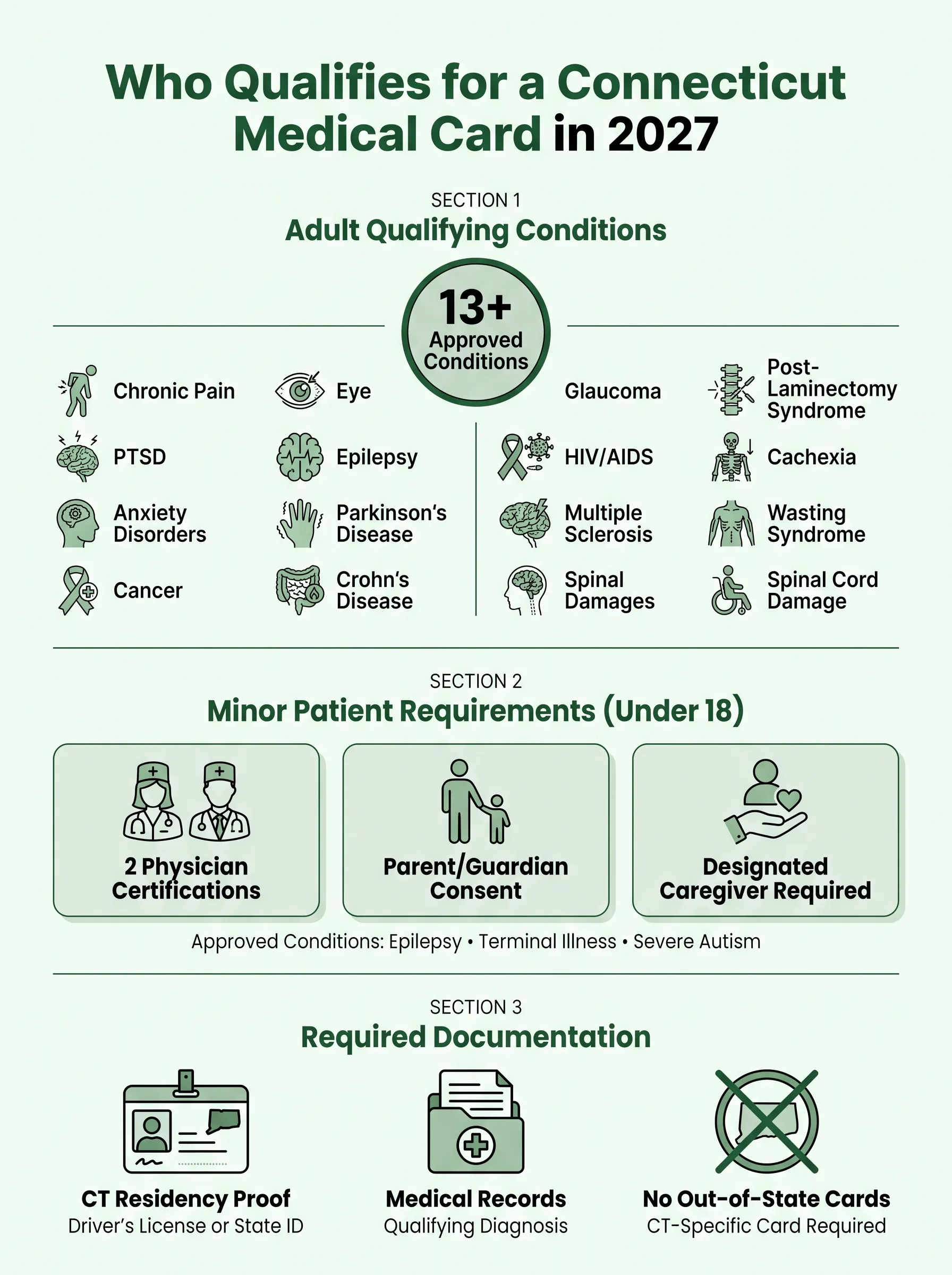
The state also keeps a separate, shorter list for patients under 18. You must be a Connecticut resident and be treated by a Connecticut-licensed practitioner. The practitioner can be a physician, physician assistant, or advanced practice registered nurse.
Instead of guessing from a list in an article, check the current conditions on the official DCP qualification page. You can also read how qualifying conditions work before you schedule a visit.
How to Register: Evaluation First, Then State Steps
The process runs in order. Each step depends on the one before it.
Step 1: Complete the Clinical Evaluation
You meet with a licensed clinician. With LeafyRX, this visit happens online by video. You discuss your condition and medical history, and the clinician decides whether you qualify. If you do, the clinician certifies you and starts your application with the state. If you do not, you will not receive a certification.
Step 2: Finish the State Registration
After the practitioner starts your application, you complete the online registration with the DCP. You confirm your details and upload what the state asks for. The evaluation is online, but you still complete this state step yourself.
Step 3: Receive Your Registration
The DCP reviews your application and issues your registration. LeafyRX does not mail the card. The state issues it. Once it is active, you can buy from licensed medical dispensaries and hybrid retailers.
Online or In-Person?
Connecticut allows certification from licensed practitioners, and your clinician can see you by telemedicine or in person. Choose what suits you. Online visits save travel time, while some patients prefer a face-to-face visit. Read more about getting a medical marijuana card online to compare.
Be careful with any service that promises approval before a real evaluation. A legitimate clinician must assess your condition first. Verify that your clinician holds a Connecticut license, and check the Connecticut Medical Marijuana Program site for current rules.
Documents to Have Ready
The state publishes its current requirements, so check them before you begin. Patients commonly prepare:
-
A valid photo ID, such as a driver’s license or state ID, showing a Connecticut address
-
An email address you can access, since the state portal uses it
-
Medical records or a clear history of your qualifying condition
-
The details of any caregiver you plan to name
Having these ready before your visit saves time at every step.
Timeline: Visit vs State Processing
The timeline has two separate parts, and you control only one of them.
-
The clinician visit: Appointments can often happen the same day, depending on availability. The visit itself is usually short.
-
State processing: The DCP reviews registrations on its own schedule. This part can take longer, and no card is instant.
Your speed depends on how quickly you complete the state registration after your visit. Complete it promptly and keep your documents handy, as our guide on how to get your card explains. Check the official program site for current processing times, because they change.
Program Fees at a High Level
Two kinds of costs can apply. The first is the clinical evaluation.
LeafyRX charges for the evaluation, and you can review the current medical card cost on the Connecticut page. The second is the state registration. According to the DCP, there is no fee for patients and caregivers to register with the program. Fees can change, so confirm on the state site before you apply.
Certifications are not permanent. You will need to recertify with a practitioner when your registration comes up for renewal, so plan for that evaluation cost in later years.
Minors and Caregivers
Connecticut allows patients under 18 to register for specific conditions on the state’s separate minor list.
The state’s process for minors is stricter than the adult process. It involves a certifying physician, a letter of support from a second physician, and a parent or legal guardian who acts as the primary caregiver.
Adults who cannot visit a dispensary can also name a caregiver. The state sets the caregiver rules, including age and background requirements, and the DCP page on who can serve as a primary caregiver lists them. A caregiver buys on the patient’s behalf and does not use the patient’s medicine.
Buying and Using After Approval
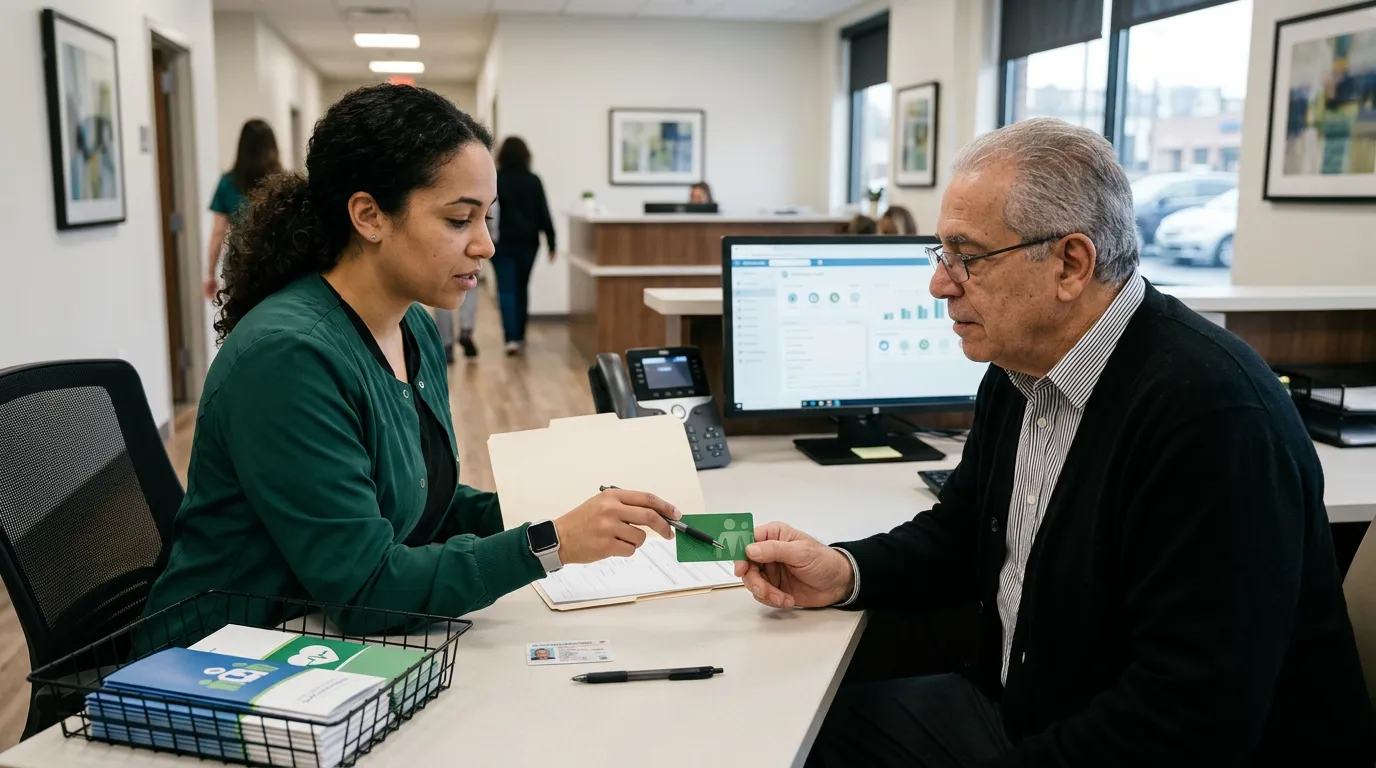
Once your registration is active, you can buy from licensed medical dispensaries and hybrid retailers. Bring your photo ID and follow your clinician’s recommendations. Your practitioner can set or adjust your monthly allotment, and the state sets the maximum.
Medical cannabis is a health product, so talk with your clinician or pharmacist about interactions with other medicines. Keep products in their original packaging and away from children.
Travel, Employment, and Driving
These points are factual summaries, not legal advice. Ask an attorney about your own situation.
-
Travel: Cannabis remains illegal under federal law. That affects air travel and crossing state lines. Other states have their own rules, and many do not honor a Connecticut card.
-
Employment: The DCP says an employer cannot refuse to hire or penalize you solely because you are a qualifying patient. Employers can still prohibit use or impairment at work, and federal rules differ for some jobs.
-
Driving: A medical card does not allow impaired driving. Connecticut treats driving under the influence of cannabis as an offense.
Conclusion
A Connecticut medical card involves an online clinical evaluation, followed by state registration. LeafyRX starts the evaluation. The DCP issues the card. A licensed clinician decides eligibility, and approval is never guaranteed.
If you are ready to see whether you qualify, start your evaluation on the LeafyRX Connecticut medical card page, or begin your online evaluation now. Check the official Connecticut program site for current rules, fees, and processing times before you apply.







 Ask ChatGPT
 Ask Claude
 Ask Perplexity