


A Utah Medical Marijuana Card involves three separate pieces: a qualifying condition, a recommendation from a licensed provider, and the state-issued card itself. Many first-time applicants don’t realize these are different until they’re partway through the process.
The official state page is accurate, but it assumes you already know the vocabulary. Clinic pages often push a price or a same-day promise without saying what you’re paying for. This beginner guide puts the answers in one place. It helps you work out whether you qualify, what to prepare, what you’ll pay, and how long it takes. It also explains the rules for minors, caregivers, buying, travel, work, and driving. Fees and age rules can change, so confirm current details with the official Utah source before you pay.
Who Needs a Utah Medical Marijuana Card and How It Works?
A Utah Medical Marijuana Card is a state-issued card that lets a patient buy medical cannabis from a licensed Utah medical cannabis pharmacy. It’s for adults with a listed condition who want legal access to these products.
Newcomers often confuse three pieces: the condition (your diagnosis), the recommendation from a qualified medical provider (QMP), and the card the Center for Medical Cannabis issues after that recommendation.
The state runs the card system and the Electronic Verification System (EVS). Providers recommend, and licensed pharmacies sell. Program details are current as of publication, so confirm them on the state site.
The official state page says adults 18 or older can apply, but some competitor pages say 21 or older. Verify this rule on the official site. The standard card also requires Utah residency.
Before applying for a Utah Medical Marijuana Card, confirm you live in Utah. Other states differ, and medical card guides for each state explain local rules.
How to Apply for a Utah Medical Marijuana Card: Evaluation and State Registration Steps
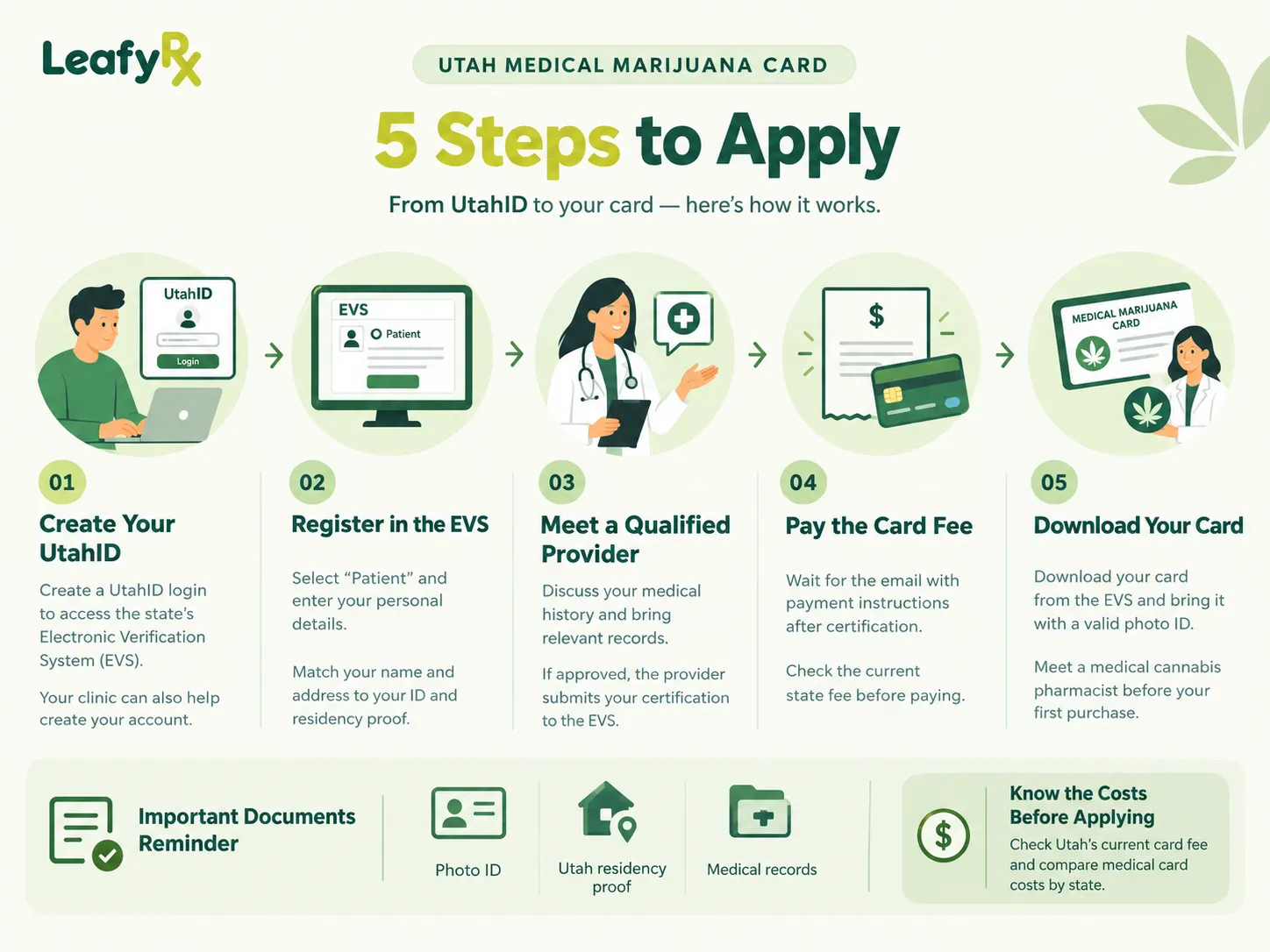
A Utah Medical Marijuana Card takes five steps, and each one has a different gatekeeper. Most applicants work through them in the order below.
-
Create your UtahID account: The state uses this login for the Electronic Verification System (EVS), the online database that holds your card, recommendations, and purchase records. Your clinic can also create the account on your behalf.
-
Register as a patient in the EVS: Log in with your UtahID, select “Patient,” and fill in your details. Use the same name and address that appear on your photo ID and residency proof.
-
Meet a qualified medical provider: The provider reviews your medical history and decides whether medical cannabis fits your condition. If you qualify, the provider submits a certification in the EVS. Bring the records you gathered earlier.
-
Pay the card fee: After the certification posts, you’ll get an email with payment instructions. Check the current fee on the state site before you pay, as covered in the fees section below.
-
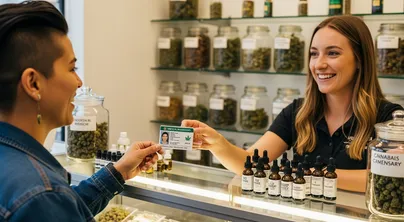
Download your card and meet a pharmacist: Once payment clears, download your card from the EVS. Present it with a valid photo ID when you buy. Before your first purchase, you’ll meet with a medical cannabis pharmacist to talk through your treatment options.
It is important to have information about medical card costs by state, before Applying for a Utah Medical Marijuana Card
Documents to Have Ready Before You Apply for a Utah Medical Marijuana Card
Gather these papers before you start your Utah Medical Marijuana Card application. Having them ready speeds up your provider visit and state registration.
| Document | Why it’s needed | If you don’t have it |
|---|---|---|
| Photo ID | Creates your state identity account and verifies you | Get a replacement from the DMV |
| Utah residency proof | Confirms you live in Utah | Check the state site for accepted types |
| Medical records | Let the QMP confirm a listed condition | Request visit notes or imaging from past doctors |
| Medication list | Shows current and past treatments | Ask your pharmacy for a printout |
Don’t guess which residency documents count. Check the state site first, because a rejected file can delay your Utah Medical Marijuana Card.
Records and medications matter most for the pain pathway, since the QMP will ask whether conventional care helped. Your history should point to a listed condition, and a state-by-state qualifying conditions guide can help you check. For example, if your old doctor holds your imaging results, request them now.
Utah Medical Marijuana Card Timeline and Program Fees
What the Fees Cover and How Clinic Pricing Can Mislead
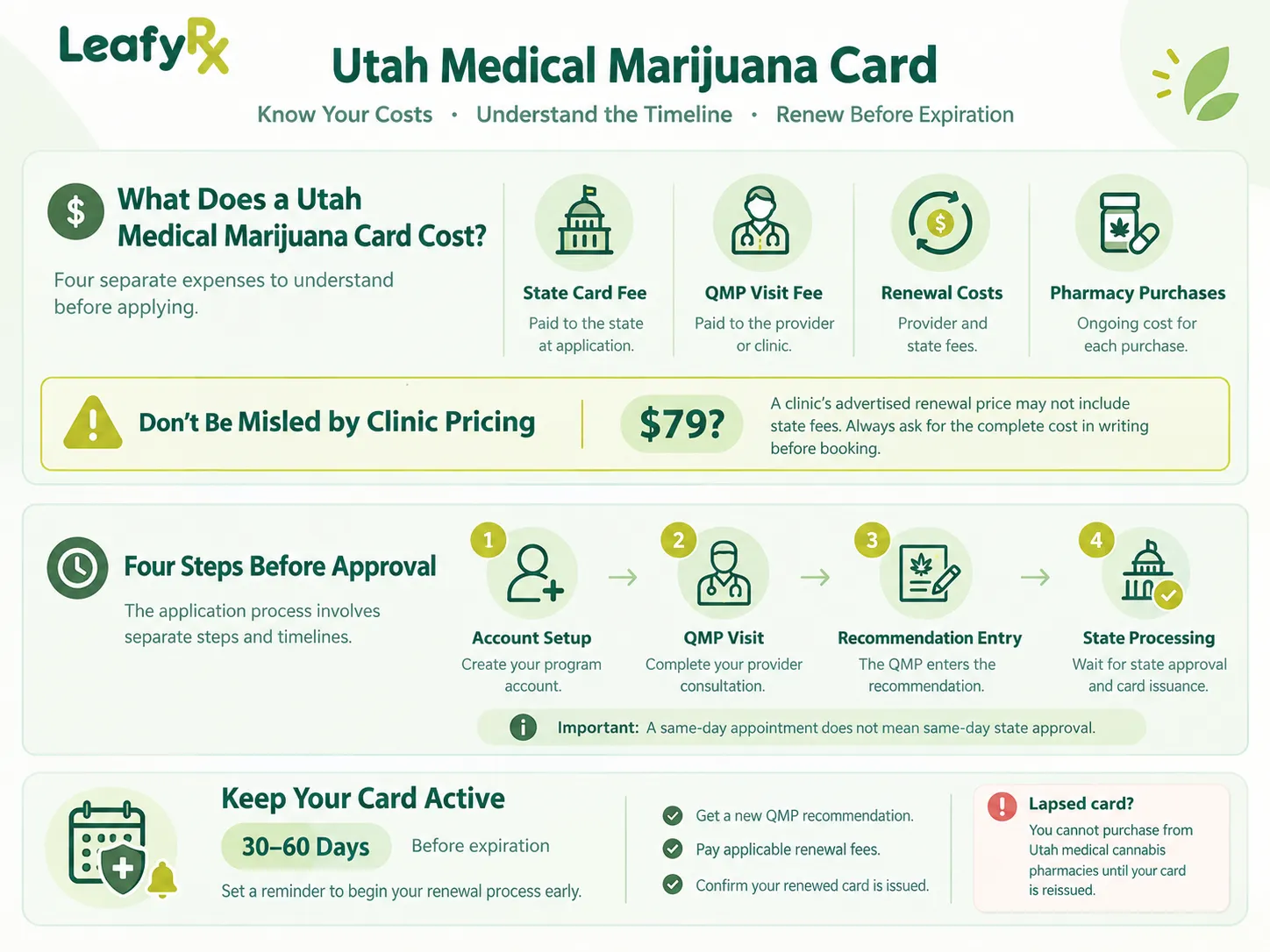
A Utah Medical Marijuana Card has three cost types: the state card fee, the provider (QMP) visit fee, and renewal costs. Pharmacy purchases are a separate, ongoing expense. Fee amounts change, so check the Center for Medical Cannabis fee page before you pay.
| Cost | Who charges it | When it’s due | What to verify |
|---|---|---|---|
| State card fee | State program | At application | Current amount on the state fee page |
| QMP visit | Provider or clinic | At the visit | Whether the state fee is included |
| Renewal | Provider and state | Before expiration | Both fees, in writing |
| Pharmacy purchases | Licensed pharmacy | Each purchase | Prices and limits |
A clinic may advertise a $79 renewal price. That figure doesn’t say whether state fees are included or whether it applies only to new patients. Ask for the full total before you book.
Plan for four separate waits: account setup, the provider visit, recommendation entry, and state processing. A same-day appointment speeds up only the provider step, not state approval.
Card Validity, Renewal, and Lapsed Cards
Card validity depends on the recommendation type your QMP issues, so confirm the period on your approval. According to the University of Utah medical cannabis overview, Utah law lets people with a state-issued card legally possess cannabis in medical dosage forms.
Renewal usually needs a new QMP recommendation and a renewal fee before the card expires. Set a reminder 30 to 60 days ahead. If your Utah Medical Marijuana Card lapses, you can’t buy at pharmacies until a new recommendation is entered and the card is reissued.
Utah Medical Marijuana Card for Minors and Caregivers

A patient under 18 can’t apply alone. A parent or legal guardian applies on the child’s behalf and holds a guardian card. For that reason, a Utah Medical Marijuana Card for a minor follows a different path than an adult card. The state may add extra review for some younger patients.
The Compassionate Use Board is a state panel that reviews cases outside the standard qualifying conditions or involving younger patients. According to the Utah Legislature, state law covers conditional cards and Compassionate Use Board approval requirements. Check the state site to confirm when the board applies to your family.
A guardian or designated caregiver may buy and handle products for a patient who can’t do so alone. Card types and eligibility rules can change, so verify them with the Center for Medical Cannabis before you apply.
Using Your Utah Medical Marijuana Card: Buying, Travel, Employment, and Driving
You buy products at a licensed Utah medical cannabis pharmacy, such as WholesomeCo. Bring your card and ID. Ask the pharmacy and the state about purchase limits and delivery options.
A Utah Medical Marijuana Card gives you no rights under federal law. Carrying products across state lines or onto a plane is a legal risk. Check each destination’s rules before you travel.
What to Check Before You Act
| Area | Card allows | Not covered | Verify |
|---|---|---|---|
| Buying | Licensed pharmacy purchases | Unlicensed sellers | Limits, delivery |
| Travel | Use in Utah | Federal protection | Destination rules |
| Employment | Legal patient status | Automatic job protection | Employer policy |
| Driving | Nothing extra | Impaired driving | State rules |
Your card doesn’t automatically protect you from workplace drug policies or federal testing rules. Read your employer’s policy, and talk with HR or an attorney if you’re unsure. Driving while impaired is illegal even with a card, so ask your provider about timing and effects. Then check Utah’s current impaired-driving rules on state sites.
Conclusion
A Utah medical marijuana card has three pieces: a listed qualifying condition, a recommendation from a QMP, and the state card itself. Most delays start when someone skips a piece or pays before checking the rules.
Before you spend money, visit the official state site. Confirm the current fees, the adult age rule, and the steps for minors and caregivers. Rules change, and the state page is the final word.
Next, get your paperwork ready. Gather your photo ID, proof of residency, medical records, and a list of current medications. Costs come in three parts: the state fee, the provider visit, and renewal. Set a reminder 30 to 60 days before your card expires so you don’t lose access to the pharmacy.
Confirm that you have a listed condition and collect your records. Then start a LeafyRX online evaluation to speak with a licensed provider about your Utah medical marijuana card.




 Ask ChatGPT
 Ask Claude
 Ask Perplexity