
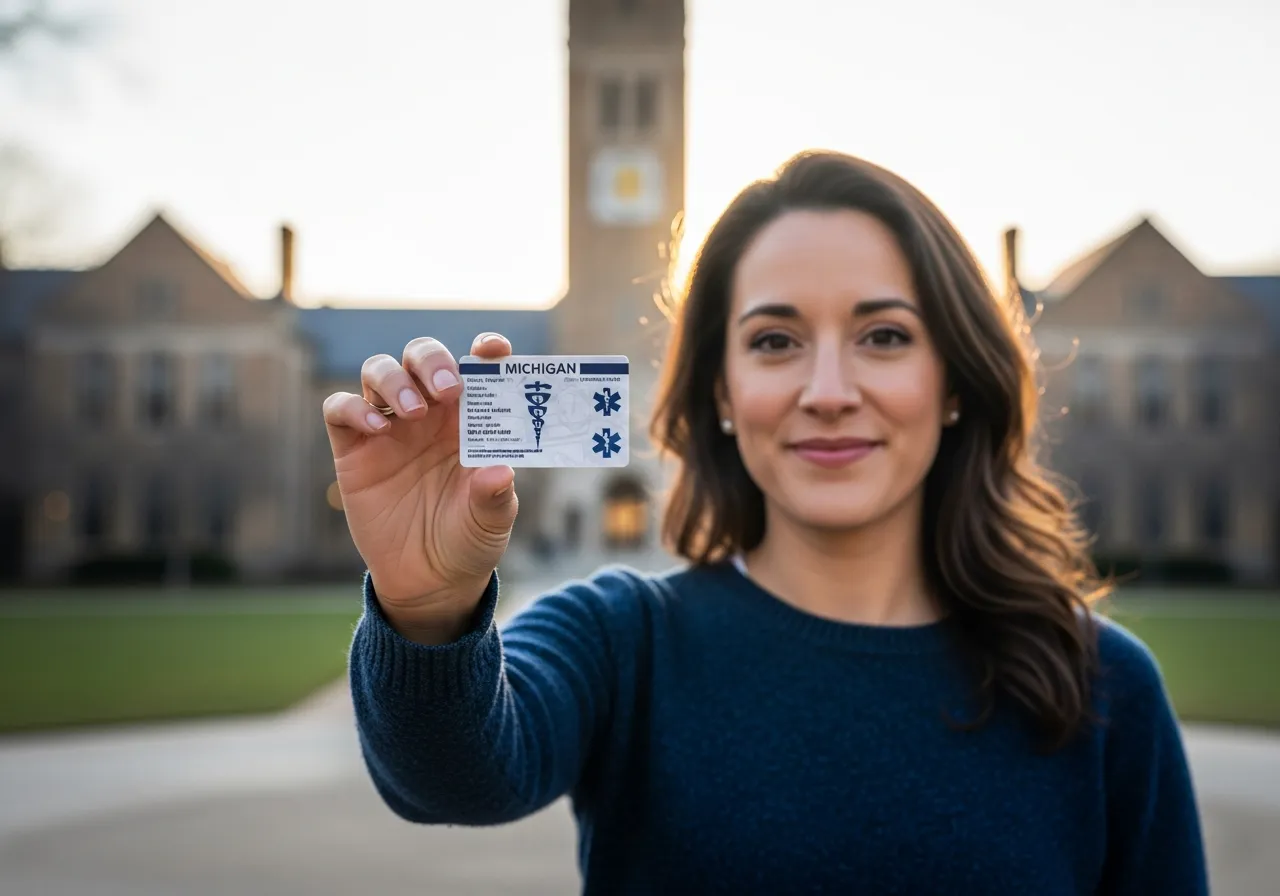

Getting a Michigan Medical Marijuana Card is one of the most important steps a qualifying patient can take toward accessing safe, legal, and regulated cannabis treatment. A Michigan Medical Marijuana Card grants cardholders the legal right to purchase, possess, and use medical cannabis in amounts permitted by state law. Whether you are managing a chronic condition, dealing with persistent pain, or seeking relief from a debilitating illness, understanding how to apply online for your Michigan Medical Marijuana Card can make the entire process far less daunting.
This guide walks you through every aspect of the process, from understanding eligibility requirements and gathering required documentation, to submitting your application online and renewing your card. We also cover how to link with a caregiver, update your personal information, and withdraw from the registry if needed. By the end of this article, you will have everything you need to confidently navigate the state’s medical marijuana patient registry system.
What Is a Michigan Medical Marijuana Card?
A Michigan Medical Marijuana Card, also referred to as a patient registry card, is an official identification card issued by the state to patients who have been certified by a licensed physician as having a qualifying medical condition. The card serves as legal proof that the holder is enrolled in the state’s Medical Marihuana Monitoring Program (MMMP) and is authorized to obtain medical cannabis from licensed provisioning centers.
Without this card, patients cannot legally purchase medical cannabis from a dispensary under the protections of the state’s medical marijuana laws. The card also protects cardholders from prosecution for possession up to the allowable amounts defined under state statute. Patients who have a registered caregiver can also have their caregiver cultivate or obtain cannabis on their behalf.
For a broader look at how medical marijuana cards work across different states, visit leafyrx to explore patient resources and telehealth options available in your area.
Who Qualifies for a Michigan Medical Marijuana Card?

Qualifying Medical Conditions
To qualify for a Michigan Medical Marijuana Card, a patient must have been diagnosed with one or more of the conditions recognized by state law. These qualifying conditions include but are not limited to:
-
Cancer
-
Glaucoma
-
HIV or AIDS
-
Hepatitis C
-
Amyotrophic lateral sclerosis (ALS)
-
Crohn’s disease
-
Agitation of Alzheimer’s disease
-
Nail patella syndrome
-
Cachexia or wasting syndrome
-
Severe and chronic pain
-
Severe nausea
-
Seizures, including epilepsy
-
Severe and persistent muscle spasms, including multiple sclerosis
-
Post-traumatic stress disorder (PTSD)
-
Rheumatoid arthritis
-
Inflammatory bowel disease
-
Any other medical condition approved by the state
Age and Residency Requirements
To apply for a Michigan Medical Marijuana Card, you must be a resident of Michigan. Adult patients aged 18 and older can apply on their own. Minor patients under the age of 18 may also be registered, but their application requires additional documentation including written certification from two physicians and a parent or legal guardian who serves as their registered caregiver.
The Role of a Physician Certification
Before you can submit a patient application to the state, you must obtain a written certification from a physician licensed to practice medicine in the state. This physician certification must state that, in the physician’s professional opinion, the patient is likely to receive therapeutic or palliative benefit from the medical use of marijuana.
The physician’s certification must include the patient’s name and date of birth, the physician’s signature, the date of the certification, and the debilitating medical condition the patient has been diagnosed with. The certification is only valid for a limited period, so patients should begin the application process promptly after receiving it.
If you do not have a doctor who can certify you, telehealth platforms like LeafyRx connect patients with licensed medical professionals who can evaluate your condition and issue the required certification quickly, often from the comfort of your own home.
Ready to Get Certified? LeafyRx makes it simple to connect with a licensed physician who can evaluate your condition and provide the medical marijuana certification you need. Start your consultation today and take the first step toward your Michigan Medical Marijuana Card.Get Your Certification, Fast, Easy, and 100% Online
How to Apply for a Michigan Medical Marijuana Card Online

The state has developed a streamlined online portal to make it easier for patients to apply for their registry card from home. The following steps outline the complete process for a first-time patient application.
Step 1: Gather Your Required Documents
Before logging into the online portal, you should have the following ready:
-
A completed physician certification form signed by a licensed physician
-
Proof of Michigan residency (such as a current driver’s license, state ID, or utility bill)
-
Patient’s date of birth and Social Security Number (or equivalent ID number)
-
Payment for the application fee
You can review the full list of application requirements by consulting the MMMP online application resources provided by the state’s Cannabis Regulatory Agency.
Step 2: Create an Online Account
Navigate to the state’s online patient registry application portal and create a new account. You will need to provide a valid email address, create a secure password, and verify your identity. Once your account is set up, you can begin filling out your application at any time and return to it before submitting.
Step 3: Complete the Patient Application
Once logged in, select the option to apply for a new patient registry card. The patient-only registry card application guide walks you through each section of the form in detail.
The application will ask for your personal information, your physician’s information and the details from your certification, your qualifying condition, and your caregiver information if applicable. You will also be asked to upload a copy of your physician certification and proof of residency.
Step 4: Pay the Application Fee
After completing your application, you will be prompted to pay the required application fee. The state offers reduced fees for patients who qualify based on income. Payments are typically made online via credit or debit card. Once payment is processed, your application will be submitted for review.
Step 5: Await Processing and Receive Your Card
The state processes applications in the order they are received. Once your application has been approved, your registry card will be mailed to the address on file. Processing times can vary, so it is advisable to apply well in advance if your current card is expiring or if you need access to a dispensary soon.
For a detailed look at the full MMMP program structure and regulatory framework, visit the Michigan Cannabis Regulatory Agency’s MMMP section.
How to Link a Caregiver to Your Patient Account
Michigan law allows registered patients to designate up to five registered caregivers to assist them in obtaining and using medical marijuana. Linking a caregiver to your account is done through the same online portal used to apply for your patient card.
The caregiver linking guide outlines the exact steps required to connect a patient and caregiver within the registry system. Both the patient and caregiver must have active registry accounts, and the caregiver must already be registered with the state before the link can be established.
Caregivers play a critical role for patients who may have mobility issues, cognitive limitations, or other barriers that make it difficult to obtain cannabis on their own. Patients with Multiple Sclerosis and other progressive conditions in particular often rely on caregivers to assist them with their medical needs.
How to Renew Your Michigan Medical Marijuana Card
Your Michigan Medical Marijuana Card must be renewed annually. The renewal process is similar to the original application but typically requires less documentation if your information has not changed. You will need an updated physician certification and must pay the renewal fee.
It is strongly recommended that you begin the renewal process at least 30 to 60 days before your card expires to avoid any lapse in coverage. During a lapse, you would not be protected under the state’s medical marijuana laws and could not legally purchase cannabis from a licensed dispensary.
The patient registry card renewal guide provided by the state’s Cannabis Regulatory Agency includes all the steps needed to complete your renewal online. Log in to your existing account, select the renewal option, update any necessary information, upload your new physician certification, and submit your payment.
How to Update Your Name or Address
Life changes, and so does personal information. If your name or address changes after you have received your Michigan Medical Marijuana Card, you are required to update your registry information to keep your card valid and ensure your replacement card is mailed to the correct address.
The name and address change guide explains how to log into your registry account and submit the necessary documentation to process either type of change. Supporting documents such as a new government-issued ID or official change of name documentation may be required.
How to Withdraw from the Michigan Medical Marijuana Program
If you no longer wish to participate in the Medical Marihuana Monitoring Program, you have the option to voluntarily withdraw. Withdrawing means your registry card will be deactivated, and you will no longer have the legal protections or purchase privileges associated with your card.
The withdrawal from MMMP guide details how to log into your account and complete the withdrawal request. Once processed, withdrawal is permanent for that registration period, and you would need to reapply if you wished to rejoin the program in the future.
Understanding the Michigan Medical Marijuana Application Form
For patients who prefer to review the complete application offline before completing it online, a printable version of the Michigan Holistic Health Application is available. This form provides a comprehensive overview of the information and documentation you will need, making it easier to prepare everything in advance.
The application collects detailed patient information, physician certification details, and caregiver designations if applicable. Reviewing this form in advance can help reduce errors during your online submission and speed up the overall review and approval process.
Finding a Licensed Dispensary After Receiving Your Card
Once your Michigan Medical Marijuana Card has been approved and you have received it in the mail, you are ready to visit a licensed provisioning center. Licensed dispensaries carry a wide range of cannabis products, including flower, edibles, tinctures, topicals, and concentrates. Budtenders at these locations are trained to help you find the right product and dosage for your condition.
Local dispensaries such as Grand Rapids Mary Jane serve as an example of the type of licensed provisioning centers patients can visit with their valid registry card. Always bring your physical card or a digital copy when visiting a dispensary, as it will be checked at the point of sale.
For additional guidance on qualifying medical conditions and the online application process, visit the online medical marijuana card resource page at LeafyRx to learn more about how to get started.
Tips for a Successful Application
Double-Check All Documentation
One of the most common reasons applications are delayed or rejected is missing or incomplete documentation. Before submitting your application, review every section carefully. Make sure your physician certification is signed and dated, that your proof of residency shows your current address, and that all personal information matches exactly across documents.
Apply Early for Renewals
Do not wait until your card is about to expire before initiating the renewal process. Begin gathering your renewal documents, including an updated physician certification, at least four to six weeks before your expiration date. This gives you a comfortable buffer in case of processing delays.
Keep Your Account Information Updated
Log into your registry account periodically to confirm that your contact information is accurate. If the state needs to reach you with questions about your application or send your card to a new address, having current information on file is essential.
Use the Official Application Resources
Always rely on official state resources when completing your application. The Michigan Cannabis Regulatory Agency provides step-by-step guides for every stage of the process, and consulting these official documents can prevent errors and misunderstandings.
Consult a Telehealth Provider for Certification
If you are unsure whether you qualify or if you do not have a regular physician who handles medical marijuana certifications, a telehealth provider can be an efficient and confidential option. Many patients find the convenience of an online consultation to be a significant advantage.
Costs Associated with the Michigan Medical Marijuana Card
There is a fee associated with both new applications and annual renewals. The standard fee applies to most applicants, but reduced fees are available for individuals who participate in certain public assistance programs or who can demonstrate financial need. The state provides documentation requirements for fee reductions on its official application portal.
Patients should factor in the cost of the physician certification as well. Telehealth providers and medical marijuana clinics typically charge a consultation fee for their services. The total cost of obtaining your card will therefore include both the state fee and the physician certification fee.
How Long Does It Take to Get a Michigan Medical Marijuana Card?
Processing times can vary depending on the volume of applications the state is handling at any given time. After submitting a complete application with all required documentation and payment, patients can generally expect processing to take several weeks. Once approved, the physical card is mailed to the address on file.
Incomplete applications will not be processed until all required information is provided. To avoid delays, ensure that your application is complete before submission and that all uploaded documents are legible and in the accepted file format.
Caregiver Registration and Responsibilities
A registered caregiver in the state’s medical marijuana program is an adult aged 21 or older who assists a patient with their medical marijuana needs. Caregivers may cultivate plants on behalf of their registered patients and may also assist with purchasing from licensed provisioning centers if the patient designates them for that purpose.
Caregivers must register with the state and undergo a background check. Each caregiver can be linked to a maximum of five patients at one time. Caregivers do not need to have a qualifying medical condition themselves, but they must not have been convicted of certain felony offenses.
The process of linking a caregiver to a patient account is handled through the same online portal used for patient applications. Once both the patient and caregiver have active accounts, the linking process is straightforward and can be completed in minutes by following the official caregiver linking instructions.
Protecting Your Legal Rights as a Cardholder
Holding a valid registry card provides important legal protections. Cardholders are protected from arrest and prosecution for the use and possession of marijuana within the limits set by state law. Registered patients may possess up to 2.5 ounces of usable marijuana, while registered caregivers may possess up to 2.5 ounces per registered patient they serve.
However, it is important to note that while state law provides these protections, federal law still classifies marijuana as a controlled substance. Medical marijuana cardholders should be aware of this distinction and avoid activities such as transporting cannabis across state lines or possessing cannabis in federally designated areas.
Conclusion
Getting a Michigan Medical Marijuana Card does not have to be a complicated or confusing experience. By following the steps outlined in this guide, gathering the right documentation, obtaining your physician certification, and submitting your application through the official state portal, you can complete the process from start to finish in a matter of weeks.
Whether you are a first-time applicant or renewing an existing card, understanding each step of the process gives you confidence and helps prevent common mistakes that lead to delays. For patients managing conditions like Multiple Sclerosis, chronic pain, or PTSD, securing your card is the gateway to consistent, legal access to medical cannabis that may meaningfully improve your quality of life.
LeafyRx is here to support patients throughout every stage of the journey, from physician certification to navigating the state’s online registry. Visit leafyrx.org to learn more about telehealth consultations, qualifying conditions, and state-specific guidance.







 Ask ChatGPT
  Ask Claude
  Ask Perplexity