


Michigan’s medical marijuana program serves over 300,000 patients who need legal cannabis access. But first-timers often feel lost in the application maze. You might wonder which conditions qualify, what the real costs are, or if online certifications actually work. These questions delay applications or lead to denials.
This guide walks you through every step of getting your Michigan Medical Marijuana Card in 2026. You’ll learn exactly how to determine eligibility, complete your application, and receive certification. We cover updated regulations, current pricing, and insider tips to avoid common mistakes. You’ll discover qualifying conditions, possession limits, home growing rules, and how to use medical marijuana telemedicine in Michigan services.
The process is simpler than you think. Michigan streamlined its system to make access easier for patients. You can complete everything online without visiting a doctor’s office. From understanding Michigan MMJ card qualifying conditions to shopping at dispensaries, this comprehensive resource answers your questions. Let’s start with the basics of getting and renewing your Michigan Medical Marijuana Card.
Getting and Renewing Your Michigan Medical Marijuana Card
Getting a Michigan medical marijuana card is straightforward. The state streamlined its process in 2026. You can now complete everything online through telemedicine platforms.
Is it easy to get a medical marijuana card in Michigan?
Yes, it’s easy. Michigan offers online evaluations through licensed providers. You don’t need to visit a doctor’s office in person.
Here’s what makes the process simple:
-
Complete your application online in 15-20 minutes.
-
Connect with a licensed physician via video call.
-
Get certified the same day if approved.
-
Submit your application to the state electronically
The state processes online applications in about 15 days. Approval rates exceed 95% when applications are complete. Understanding medical marijuana card costs across different states helps you budget for the process.
Most online providers offer money-back guarantees. This protects you if your application isn’t approved. The entire process takes less than three weeks from start to finish.
How long does a medical marijuana card last in Michigan?
Your Michigan medical marijuana card certification and application process results in a card valid for two years. The expiration date appears on your card. You can renew 60 days before it expires.
Mark your calendar when you get your card. This prevents gaps in coverage. You lose legal protections if your card expires.
Can I renew an expired medical marijuana card in Michigan?
You can renew if your card expired less than 60 days ago. The renewal process mirrors the initial application. You need a new physician certification and must pay the state fee again.
If your card expired more than 60 days ago, you must reapply as a new patient. This means starting from scratch. You lose legal protections during any gap in coverage.
Online providers make renewal fast. Many offer same-day certifications. Processing times are typically faster for renewals than for new applications.
Who Should Get a Michigan Medical Marijuana Card?
A Michigan Medical Marijuana Card offers clear advantages over recreational access. You get lower taxes, higher possession limits, and stronger legal protections. The card makes sense if you use cannabis regularly for medical reasons.
Who needs a medical card in Michigan?
You need a card if you’re under 21. Recreational cannabis is only legal for adults 21 and older. Patients under 21 can only access cannabis legally with a medical card.
The card also helps if you have chronic conditions that qualify for medical cannabis, like chronic pain, anxiety, or PTSD. You’ll save money on every purchase. Medical patients avoid the 10% excise tax that recreational buyers pay.
That said, you’ll save $10-30 per purchase on average. Over time, these savings add up. You also get access to higher potency products and medical-grade quality standards.
Cardholders receive unique legal protections under the Michigan Medical Marihuana Act. These include employment considerations and housing rights. Recreational users don’t get these protections.
Can I buy recreational marijuana in Michigan?
Yes, you can buy recreational cannabis in Michigan if you’re 21 or older. However, the benefits of having a card still outweigh recreational access for regular users.
| Feature | Medical Cardholders | Recreational Users |
|---|---|---|
| Possession Limit | 2.5 oz | 2.5 oz |
| Excise Tax | None | 10% |
| Product Access | Medical-only dispensaries + recreational | Recreational only |
| Legal Protections | Employment and housing rights | None |
Platforms like Leafy Rx make getting your Michigan Medical Marijuana Card simple. You can complete the entire process online with licensed healthcare providers.
Age Requirements and Caregiver Rules
Michigan doesn’t set a minimum age for medical marijuana cards. Any patient with a qualifying condition can apply. However, minors face additional requirements that adults don’t.
How old do you have to be to get a medical marijuana card in Michigan?
Patients under 18 need parental consent to get a Michigan medical marijuana card. A parent or legal guardian must agree to serve as their caregiver. This person handles all marijuana-related activities for the minor.
The process works differently for minors. Two physicians must certify the qualifying condition instead of one. Both doctors review the patient’s medical history and confirm the diagnosis. This extra step protects young patients.
Adult patients 18 and older don’t need a caregiver. They can buy and possess marijuana on their own. Many still choose caregivers for convenience or mobility reasons.
What is a caregiver card in Michigan?
A caregiver helps registered patients get and use medical marijuana. They buy products from dispensaries on behalf of patients. They also assist with administration when needed.
Caregivers must meet specific requirements:
-
Be 21 years or older.
-
Live in Michigan
-
Have no felony drug convictions
-
Pass a state background check.
Each caregiver can assist up to five patients. They follow the same possession limits per patient: 2.5 ounces of usable marijuana and 12 plants. Caregivers cannot consume their patients’ marijuana under any circumstances.
The designation costs $25 per patient. You can add it during your initial application or later. Platforms like Leafy Rx streamline the caregiver registration process alongside patient certifications. Caregivers must register with the state separately from patients. Understanding how long the approval process takes helps caregivers plan accordingly.
Caregivers are required for all minors. They’re also helpful for patients with mobility issues or those unable to visit dispensaries regularly.
Possession Limits and Home Growing
Michigan medical marijuana cardholders enjoy specific legal protections. These rights differ from recreational users in key ways.
How much marijuana can I possess with a medical card in Michigan?
You can legally possess up to 2.5 ounces of usable marijuana. This limit applies to what you carry outside your home. At home, you can store up to 10 ounces if it’s secured properly.
All marijuana must stay in a locked space. Minors can’t access it under any circumstances. Proper storage protects your legal status and keeps others safe.
Going over these limits removes your legal protections. You could face misdemeanor charges if caught with excess amounts. Your Michigan medical marijuana card won’t shield you from prosecution.
Can I grow marijuana at home with a medical card in Michigan?
According to the Michigan Medical Marihuana Act, you can grow up to 12 plants at home. This count includes seedlings and mature plants. Recreational users don’t get this right in many municipalities.
Your plants must stay in an enclosed, locked facility. This means a room, greenhouse, or closet with a lock. Outdoor growing requires fencing and security measures.
Check your lease before you start growing. Many landlords prohibit home cultivation in rental agreements. Violating lease terms can lead to eviction even if you follow state law.
Proper ventilation helps control odors and prevent mold. Good airflow keeps your plants healthy and neighbors happy. Install carbon filters if the smell becomes an issue.
Breaking plant count rules can cost you your card. Law enforcement may charge you with illegal cultivation. Stay within limits to maintain your medical protections.
Medical Marijuana for Qualifying Conditions
Michigan approves medical marijuana for a broad range of health conditions. The state recognizes cancer, GLAUCOMA, HIV/AIDS, hepatitis C, and ALS as qualifying conditions. You can also get a Michigan medical marijuana card online for Crohn’s disease, cachexia, and severe chronic pain.
Beyond that, the list includes severe nausea, seizures, and persistent muscle spasms. PTSD, autism, and arthritis also qualify under state law. Michigan’s physician discretion provision lets doctors certify conditions not explicitly listed.
Can medical marijuana help with epilepsy?
Epilepsy and seizure disorders qualify for Michigan MMJ card treatment. Research on qualifying conditions shows cannabinoids can reduce seizure frequency in some patients. CBD and THC ratios matter for effective seizure management.
Your doctor evaluates your seizure history before certification. You need medical records showing diagnosis and treatment attempts. Most physicians require documentation of seizure frequency and severity.
To qualify, bring these documents to your evaluation:
-
Neurologist’s diagnosis records
-
Current anti-seizure medication list
-
Seizure frequency logs from the past six months
-
Previous treatment outcomes and side effects
Does marijuana help with rheumatoid arthritis?
Rheumatoid arthritis qualifies as a chronic pain condition in Michigan. Cannabinoids show anti-inflammatory properties that may reduce joint swelling. Many patients use medical marijuana as an alternative to opioids.
You need arthritis documentation from a rheumatologist or primary care doctor. Your records should show diagnosis, treatment history, and symptom severity. Pain management attempts with traditional medications strengthen your application.
Recent updates expanded PTSD criteria and clarified chronic pain requirements. Autism spectrum disorder gained explicit approval in 2026. These changes make it easier to get your Michigan medical marijuana card qualifying conditions met.
Your physician reviews all documentation during the evaluation. They determine if medical marijuana suits your specific condition. The approval process takes into account your overall health and treatment goals.
Employment and Legal Protections
Understanding your rights as a Michigan medical marijuana card holder helps you avoid workplace issues. State law offers some protections, but gaps remain. Let’s break down what you need to know.
Can a felon get a medical marijuana card in Michigan?
Yes, you can. Michigan doesn’t run criminal background checks on patients applying for a medical marijuana card. Your felony record won’t block your application.
The state only checks backgrounds for caregivers, not patients. This means past convictions don’t affect your ability to get certified. You still need a qualifying condition and a doctor’s approval.
Can nurses or teachers get a medical marijuana card in Michigan?
Healthcare workers and educators can legally obtain a Michigan medical marijuana card. No state law prevents licensed professionals from getting certified. However, your licensing board may have separate rules.
Some professional boards require disclosure of medical marijuana use. Others may restrict use during work hours or on-call periods. Check with your specific licensing authority before applying. Your employer’s policies also matter, especially in safety-sensitive roles.
Does my employer have to accommodate my medical card in Michigan?
No, employers don’t have to accommodate on-site use or impairment at work. According to the Michigan cannabis laws overview, companies can maintain drug-free workplace policies. They can’t discriminate against you solely for having a card, though.
Drug tests showing marijuana metabolites don’t prove current impairment. Some court rulings favor employee protections in these cases. Federal employees face stricter rules since federal law overrides state protections.
Private employers can still enforce zero-tolerance policies. Safety-sensitive positions often have stricter testing requirements. You’re protected from prosecution for legal possession, but workplace rules vary widely.
Housing discrimination protections exist for cardholders. Child custody cases may consider medical marijuana use, but having a card shows legal compliance. Know your specific workplace policies before using your Michigan medical marijuana card online certification.
Traveling With Your Michigan Medical Marijuana Card
Your Michigan medical marijuana card protects you within state borders. But those protections vanish the moment you cross into another state. Understanding travel restrictions helps you avoid legal trouble and stay compliant.
Can I use my Michigan medical marijuana card in another state?
Michigan doesn’t have formal reciprocity agreements with other states. However, some states accept out-of-state medical cards for purchases at dispensaries. According to out-of-state medical card reciprocity guidelines, Arizona, Arkansas, Maine, Nevada, New Hampshire, Oklahoma, and Rhode Island may honor your Michigan card.
Always verify current laws before you travel. State regulations change frequently. What worked last year might not apply today. Contact dispensaries in your destination state directly to confirm they accept Michigan cards.
Federal law creates the biggest travel challenge. Cannabis remains illegal at the federal level. You can’t legally transport products across state lines. This applies even when traveling between two legal states.
TSA agents don’t actively search for cannabis. But they must report it to law enforcement if discovered. Flying with cannabis products isn’t worth the risk. You could face federal charges.
Within Michigan, you must transport products properly. Keep them in sealed containers. Don’t store them where the driver can reach them. Medical patients face the same DUI laws as everyone else. Don’t drive impaired.
Traveling to states without medical programs offers zero protection. Possession remains illegal there. Your Michigan card means nothing in those states. Leave your products at home when visiting non-legal states.
The safest approach? Don’t travel with cannabis products at all. Research your destination’s laws thoroughly. Some states offer temporary cards for visiting patients. Apply for one if available. This keeps you legal and protected during your trip.
Buying Medical Marijuana in Michigan
Once you have your Michigan medical marijuana card online, you can shop at licensed dispensaries. The Michigan Cannabis Regulatory Agency maintains a directory of all approved locations. You can search by city or zip code.
Medical-only dispensaries serve cardholders exclusively. Dual-license shops serve both medical and recreational customers. Location matters for convenience and product selection. You can explore this further in Medical Marijuana Card.
Where can I find a dispensary in Michigan?
Most major cities have multiple options. Detroit, Grand Rapids, and Ann Arbor offer dozens of dispensaries. Rural areas have fewer choices, but still provide access.
Check the state directory before you visit. It shows current licenses and operating status. Some shops require appointments for first-time patients.
What do I need to bring to a Michigan dispensary?
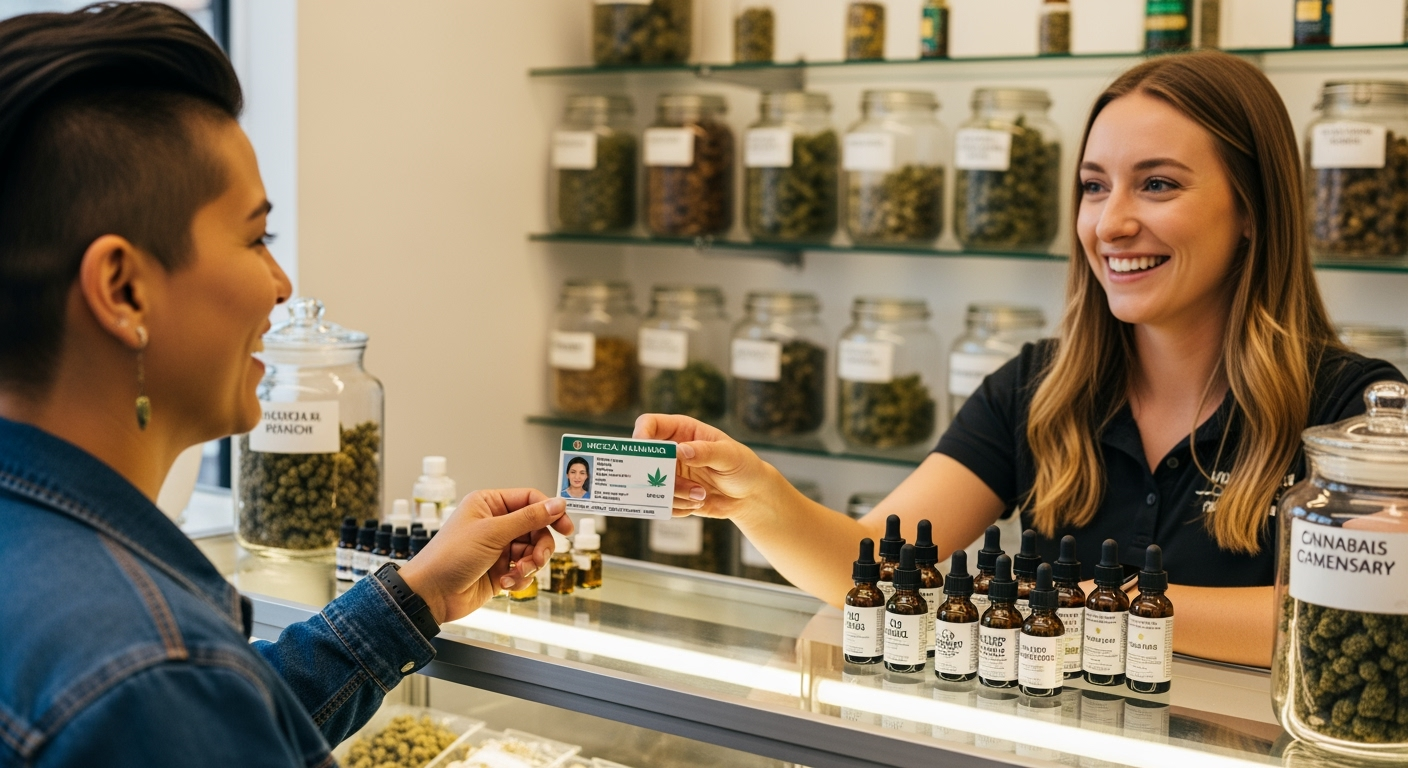
You need two items every time. Bring your valid Michigan MMJ card and a government-issued photo ID. The name on both documents must match exactly.
Most dispensaries operate cash-only due to federal banking restrictions. Some accept debit cards with ATM fees. Call ahead to confirm payment options.
Your first visit includes a consultation with a budtender. They’ll explain product types and help you choose. Options include flower, concentrates, edibles, tinctures, and topicals.
Medical patients access higher potency products than recreational buyers. You also skip the 10% excise tax. This saves you 10-20% on every purchase.
Purchase limits are 2.5 ounces per transaction. Dispensaries track all sales through the state system. Daily limits are enforced automatically.
Some shops offer separate entrances or priority service for medical patients. This reduces wait times during busy periods. Medical products often cost less due to tax exemptions.
Step-by-Step: How to Apply for Your Michigan Medical Marijuana Card
Getting your Michigan medical marijuana card involves two main paths. You can visit a doctor in person or complete an evaluation online. Both methods lead to the same state-issued card. The process you choose depends on your schedule and budget.
Option 1: In-Person Doctor Visit vs. Option 2: Online Telemedicine Evaluation
The choice between in-person and online evaluations affects your time and money. Here’s how they compare:
| Factor | In-Person Visit | Online Telemedicine |
|---|---|---|
| Cost | $100-200 | $50-150 |
| Availability | Schedule weeks ahead | Same-day appointments |
| Convenience | Travel required | From home |
| Consultation | Face-to-face | HIPAA-compliant video |
Online evaluations through medical marijuana telemedicine Michigan services save time and money. You’ll join a video call with a licensed physician. They’ll review your medical history and discuss your symptoms. Legitimate providers require actual physician interaction. Skip any service that offers instant approval without a real consultation.
Completing the Michigan MMP Application
Once you get a physician certification, you’ll need specific documents. Gather these items before starting:
-
Valid Michigan driver’s license or state ID
-
Proof of residency, like a utility bill or lease agreement
-
Medical records showing your qualifying condition
-
Passport-style photo meeting state specifications
According to Michigan’s medical marijuana program, you’ll create an account on their portal. Fill out the application form completely. Upload your photo and documents. Double-check everything before submitting. Common mistakes include expired IDs and incorrect photo formats.
Submission and Processing Timeline
The state charges $40 for standard applications. Veterans and SSI or SSDI recipients pay just $25. Your physician certification fee is separate. That runs $50-200 depending on your provider.
Online applications process takes 15 business days. Paper applications take up to 30 days. You’ll get an email when approved. Your digital card becomes available right away. The physical card arrives within five business days.
Avoid delays by submitting complete forms. Use current identification documents. Follow photo specifications exactly. Include sufficient medical documentation for your condition.
Conclusion
Getting your Michigan medical marijuana card opens doors to legal protections and real savings. You’ve learned how to qualify, apply online, and access medical-grade products. The process is simple when you have proper documentation and choose licensed providers.
Medical cardholders enjoy tax exemptions, higher possession limits, and home growing rights. These benefits far exceed what recreational users can access. You also gain workplace protections and clear legal standing within Michigan.
The application takes just a few steps. First, confirm your qualifying condition matches state requirements. Then, get your physician certification through a trusted telemedicine service. Finally, submit your complete application to avoid delays.
Our licensed physicians provide same-day certifications through secure medical marijuana telemedicine Michigan evaluations. You’ll join over 100,000 patients who’ve simplified their path to legal cannabis access with our money-back guarantee and HIPAA-compliant service.
Start your Michigan medical marijuana card journey today with Leafy RX.




 Ask ChatGPT
  Ask Claude
  Ask Perplexity